Contents +
Differences between Facebook Personal Accounts, Business Accounts, and Advertising Accounts: A Guide to Avoiding Common Pitfalls in Export Businesses
Source: 创同盟
Date: 2026-07-22
Views: 1295
When starting out with Facebook marketing, many export businesses encounter a common problem: how exactly should they register an account?
Some suggest registering a personal account first, others recommend creating a business page directly, and still others mention the necessity of opening an advertising account and setting up a Business Manager (BM). These intertwined concepts leave many novice businesses increasingly confused. More commonly, some businesses use personal accounts as their business pages, while others believe that creating a Facebook Page allows them to directly run ads, and some are even unaware that advertising accounts need to be linked to a BM for long-term, stable management.
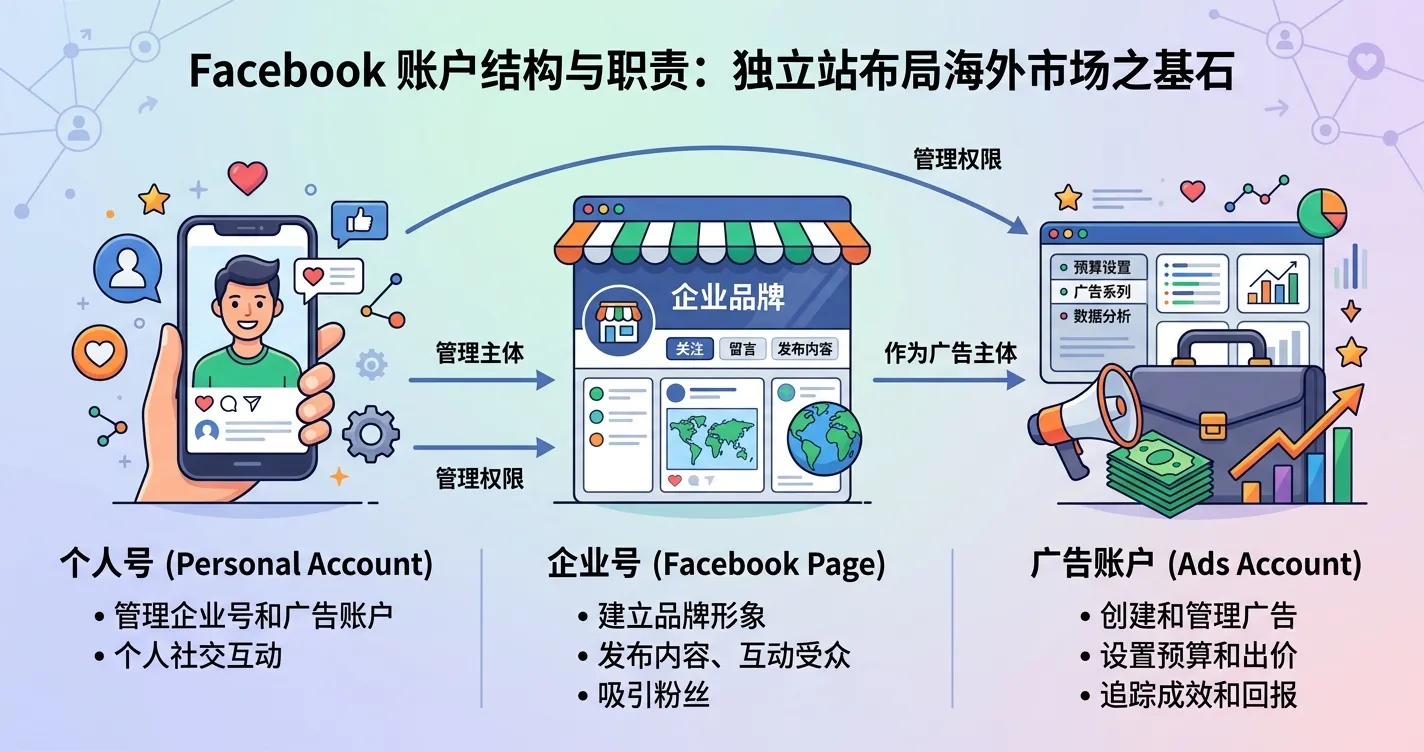
These issues may seem like just different names, but in reality, they each serve different purposes. For companies planning a long-term strategy for overseas markets, understanding the relationship between personal accounts, business accounts (Facebook Pages), and advertising accounts is more important than rushing to run their first ad.
First, they are not three separate accounts, but a complete operating system.
Many beginners, when first encountering Facebook, mistakenly believe that personal accounts, business accounts, and advertising accounts are three different types of accounts, and that registering one of them is enough to complete all operations. In fact, they are more like three different roles in a business marketing system, each with irreplaceable responsibilities.
A personal account is the basic identity for accessing Facebook and the entry point for managing all business assets; a business page is responsible for brand display and content operation, representing the company's image externally; and an advertising account is responsible for ad campaign management and marketing promotion, helping businesses obtain traffic and inquiries. These three are not interchangeable but rather interconnected and mutually supportive.

If we compare Facebook marketing to a company, then personal accounts are like the company's managers, the company page is like the company's storefront, and advertising accounts are like the marketing department. Only when these three work together can the entire marketing system truly function.
II. Why can't a personal account replace a company homepage?
Many small and medium-sized export businesses, when first starting out on Facebook, use personal accounts to post products, hoping to develop customers by adding friends or joining industry groups. While this approach may reach some potential customers in the short term, it is not suitable as a long-term business model.
The reason is that a personal account represents an individual's identity, not a corporate brand. When overseas buyers visit a personal profile, they see a person's personal information, interests, and social media activity, not a company introduction, product categories, client case studies, or brand story. For B2B companies, clients prefer to see a real, continuously operating company when choosing a partner, rather than a salesperson's personal account.

Furthermore, Facebook has clearly distinguished between the uses of personal and business pages. Using personal accounts for commercial marketing in the long term not only makes it difficult to build a brand image but may also increase the risk of account restrictions.
Therefore, personal accounts are more suitable as administrators and daily social tools, while the display and operation of corporate brands should be done on Facebook business pages.
3. The company homepage is responsible for branding, and the advertising account is responsible for lead generation.
Many businesses believe that creating a Facebook Page will automatically generate traffic. In reality, a business page doesn't automatically bring in a lot of exposure. It's more like a company website, responsible for showcasing the brand, publishing content, and fulfilling customers' information needs.
What truly helps businesses proactively reach overseas customers is advertising accounts. Through advertising accounts, businesses can precisely target customers based on criteria such as country, region, industry, job title, and interests, and push product or brand content to potential buyers.
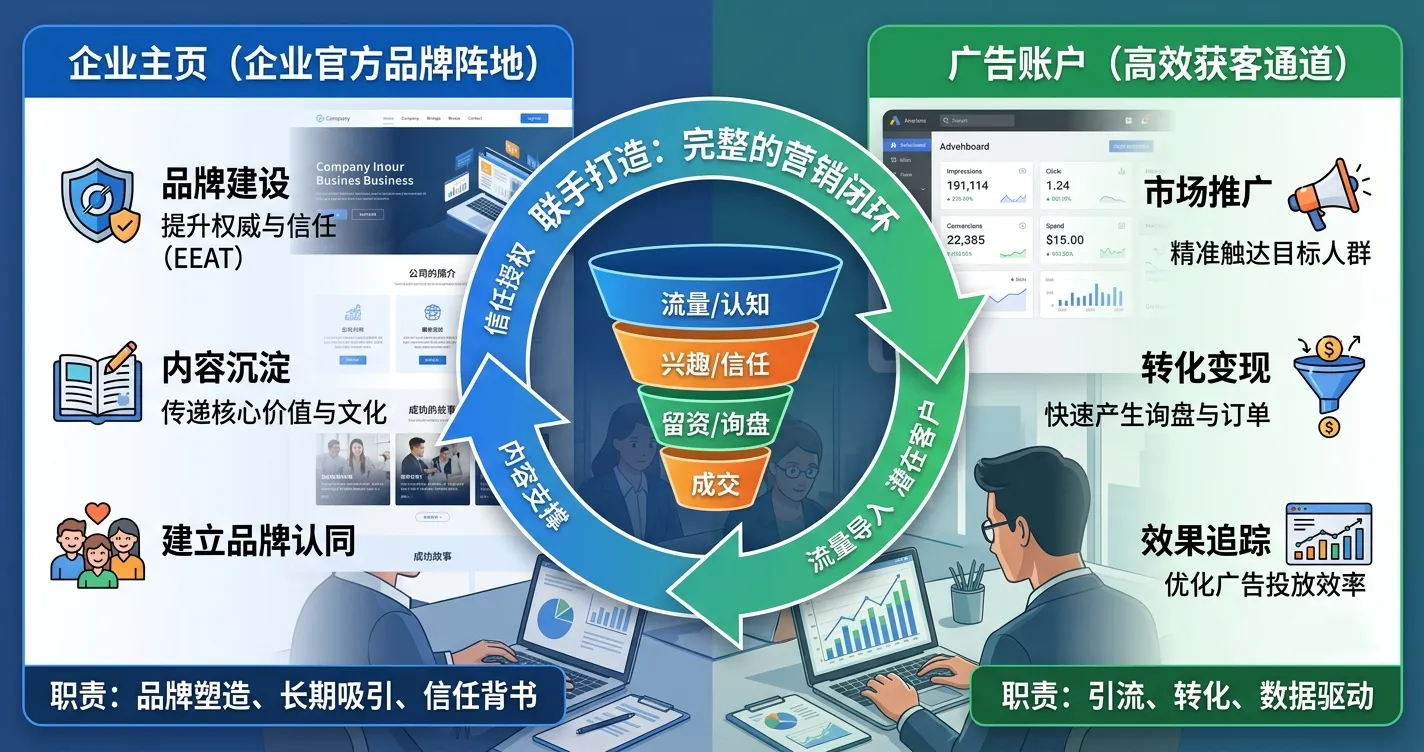
In other words, the company homepage is responsible for brand building, while the advertising account is responsible for marketing. Although they seem independent, they always revolve around the same goal—to create a complete marketing loop from the moment a customer first sees the brand until they generate inquiries.
IV. Why are more and more companies starting to manage these assets through BM?
As businesses expand their marketing reach, relying solely on personal accounts to manage company pages and advertising accounts is becoming increasingly inadequate to meet actual operational needs. For example, a company may have multiple brand pages, product lines, and advertising accounts. If all of these are linked to a single person's personal account, not only will management be inefficient, but significant security risks will also exist.
Therefore, more and more companies are starting to use Meta Business Manager (BM) to manage these assets in a unified manner. BM is not a fourth type of account, but rather the management backend for the entire Facebook marketing system. It can manage personal accounts, business pages, advertising accounts, and assets such as Instagram and Meta Pixel in a unified way, and assign different permissions according to team roles, allowing companies to achieve collaborative operation by multiple people while ensuring security.
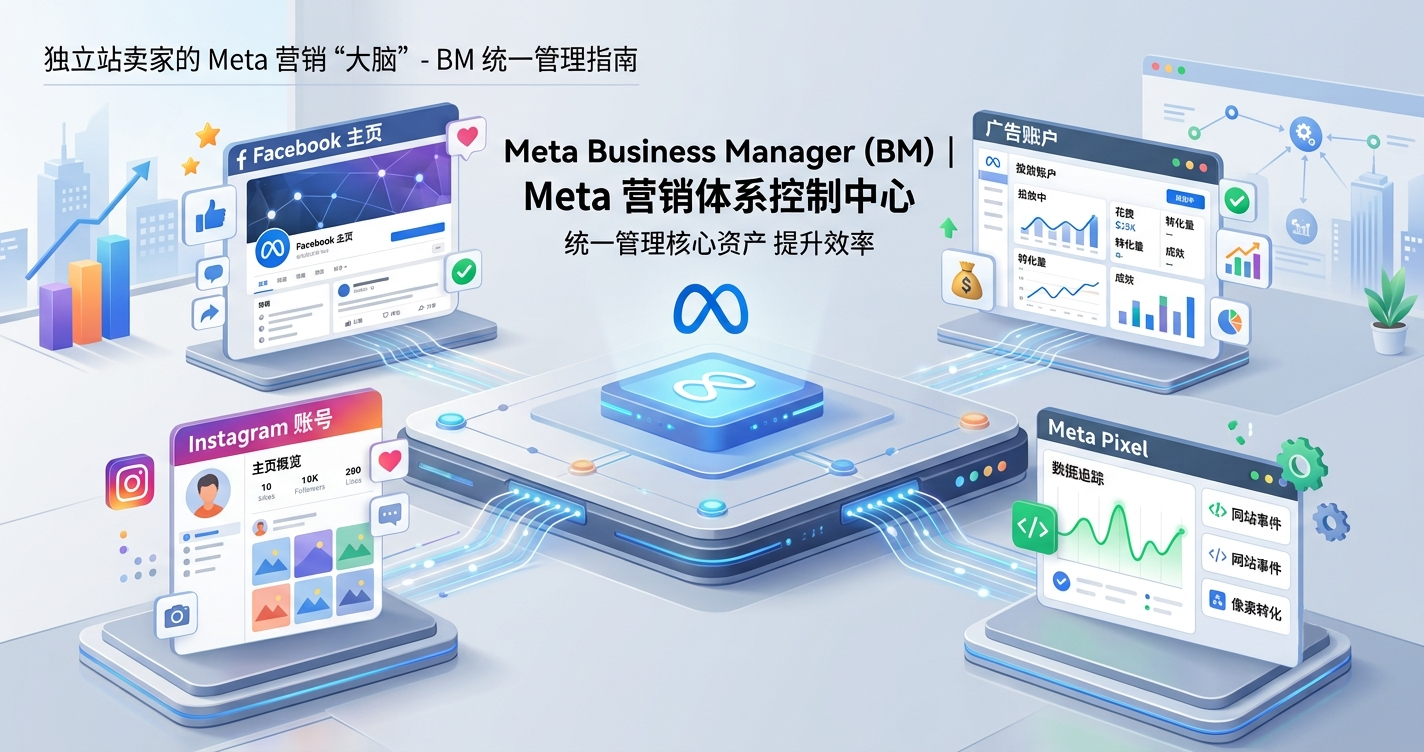
For companies planning to conduct international marketing long-term, the BM " " is more like the control center of the entire Facebook marketing system.
V. How should export businesses build the correct Facebook account system?
For businesses just starting out on Facebook, there's no need to create a large number of accounts at once; what's more important is to complete the basic setup in the correct order.
It is generally recommended to first register and maintain a stable personal account as the administrator of the company's assets; then create a company homepage for brand display and content operation; and then manage the company homepage and advertising account through BM to prepare for subsequent advertising promotion and team collaboration.

This account structure not only complies with Facebook's official guidelines but also avoids operational risks arising from unclear permissions and asset ownership later on. Many companies' problems on Facebook aren't about not knowing how to run ads or create content; rather, they've taken the wrong path from the very beginning of building their account system.
For export businesses new to Facebook, personal accounts, business pages, and advertising accounts may seem like just a few different names, but they actually form the basic framework of a business's international marketing.
Personal accounts are responsible for managing identities, corporate homepages are responsible for brand building, advertising accounts are responsible for traffic acquisition, and the BM is responsible for the unified management of the entire marketing system.

Only by understanding their respective roles and establishing a standardized account structure can a company's subsequent content operations, advertising promotions, and international lead generation proceed more smoothly.
What does international social media management service include? 2026 Guide to Social Media Management for Export Businesses
2026-10-28
How to write a WordPress product page that will make overseas buyers want to send inquiries?
2026-10-28

How to fix WordPress form emails not sending: Practical WP Mail SMTP configuration
2026-10-27
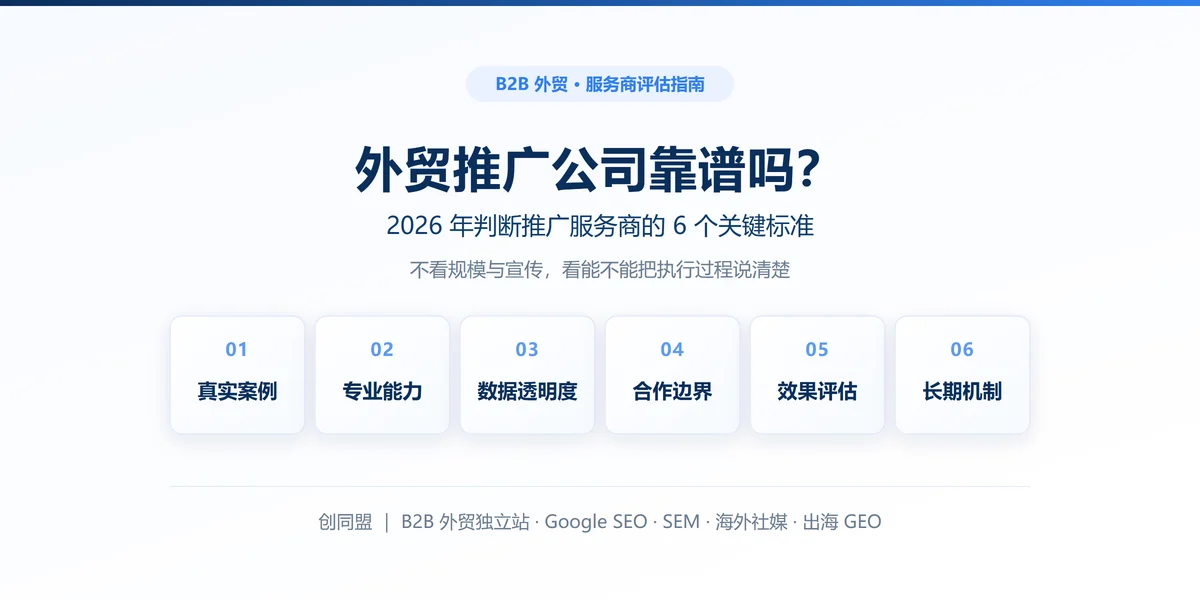
Are foreign trade promotion companies reliable? Six key criteria for businesses to judge promotion service providers in 2026.
2026-10-26
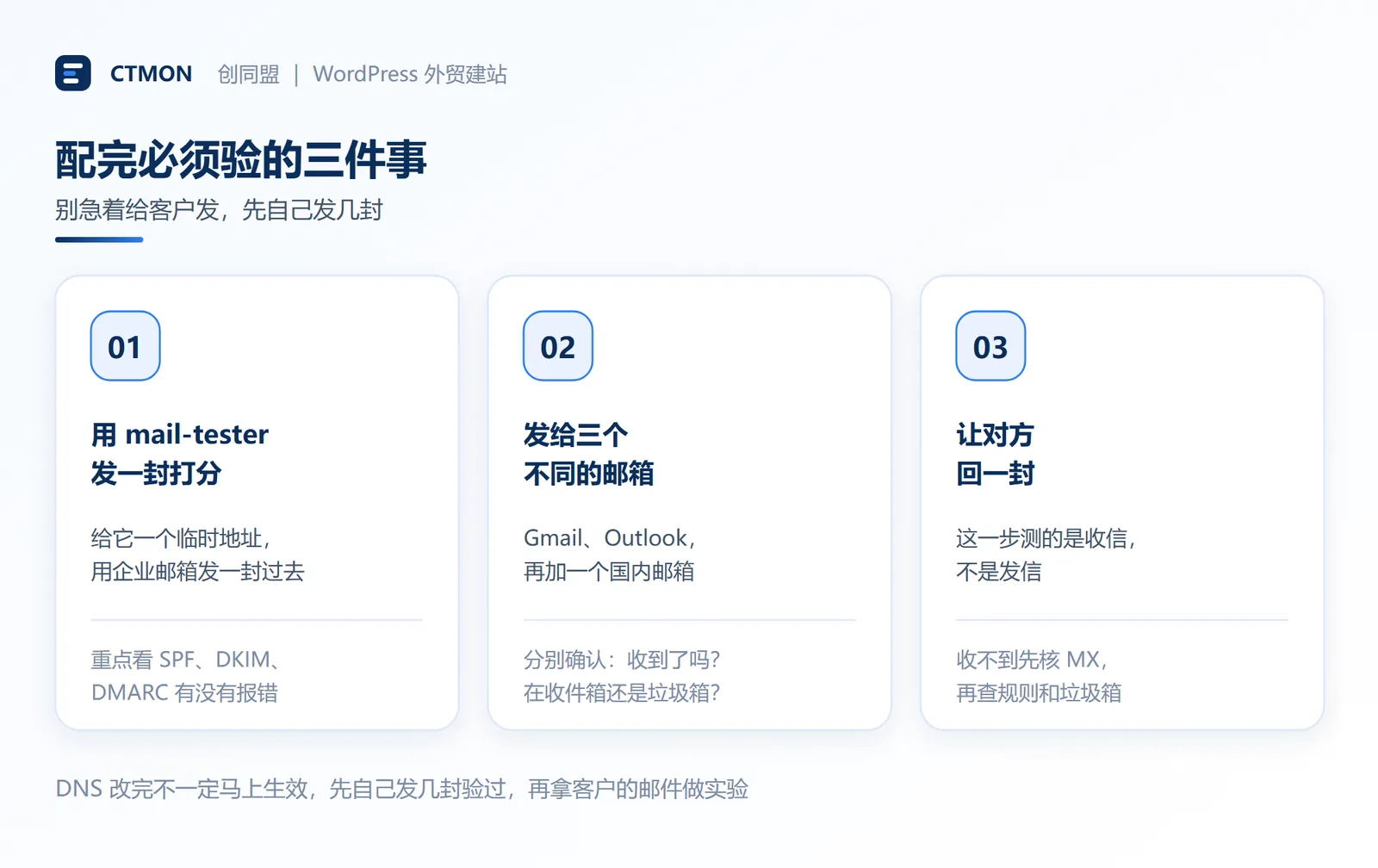
How do I set up an email account for export businesses? How can I configure it to avoid it ending up in the spam/junk mail folder?
2026-10-26
Related Articles
What does international social media management service include? 2026 Guide to Social Media Management for Export Businesses
How much do social media marketing companies charge? Analysis of international social media management fees and service content in 2026.

How to appeal a Facebook account suspension? Export Businesses account unblocking and recovery guide.
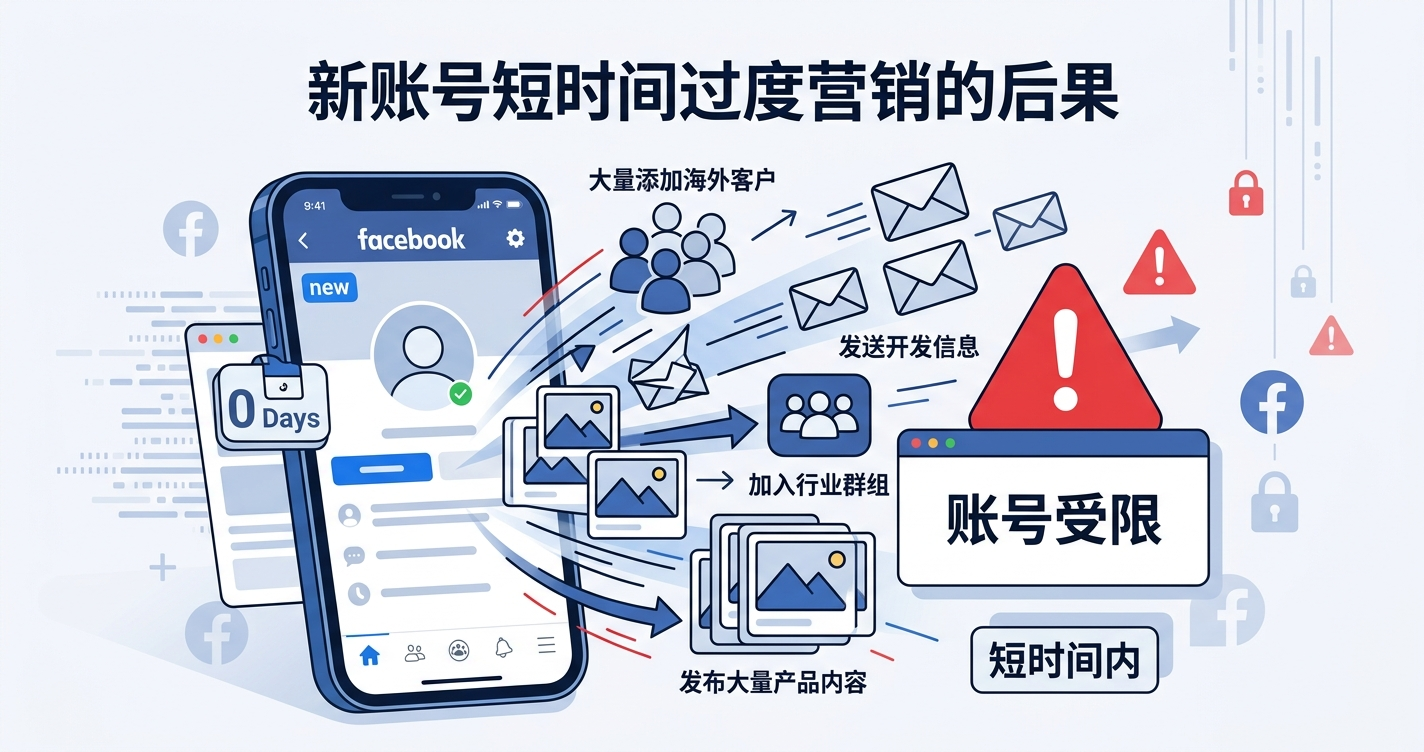
A Roundup of 8 Reasons for Facebook Account Suspension: A Guide to Avoiding and Preventing Account Suspension for International Trade Accounts

How to operate a Facebook business page professionally? A complete guide to avoiding the "shell company" impression.

