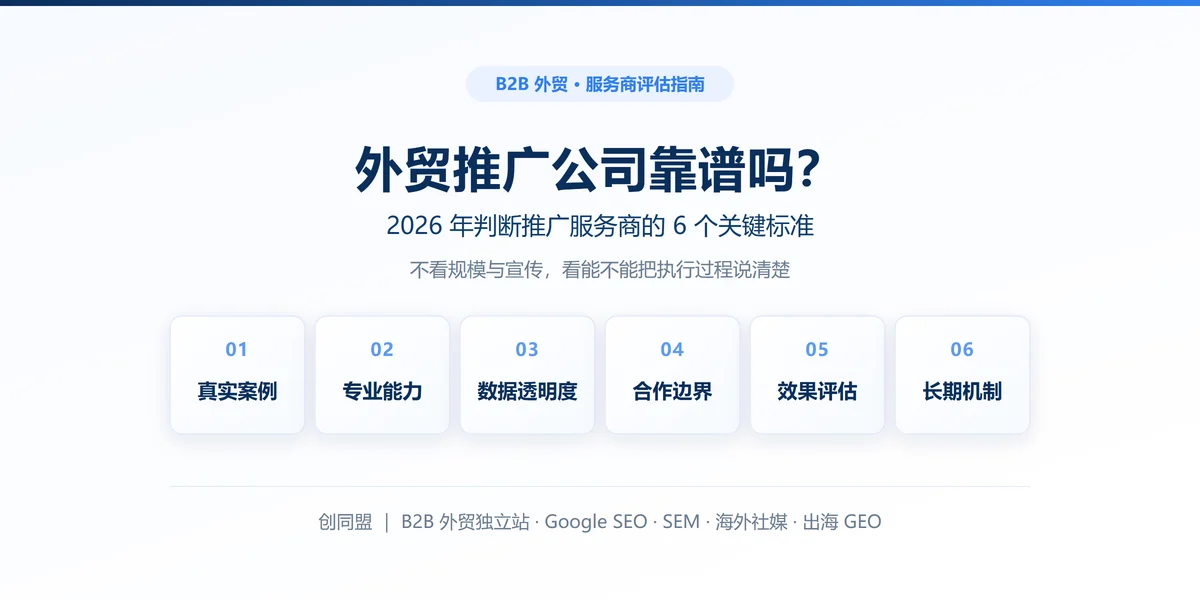
What to do if your ads rank poorly in Google Ads?
Source: CTMON
Date: 2026-07-07
Views: 14
Problem Overview Possible Causes Business Impact Priority Solutions Poor Rankings Keyword Overly Broad Matching or Insufficient Negative Keywords Budget Consumption is Rapid, but Qualified Inquiries are Unstable First, check the search term report and keyword structure Clicks but No Leads Landing Pages Don't Answer Purchasing Inquiries or Forms are Obsolete Sales Team Cannot Get Leads Follow Up Customers Optimize Product Pages, Landing Pages, and Inquiry Entry Points Low-Quality Leads Inappropriate Region, Language, Device, or Audience Settings Sales Time is Occupied by Low-Value Inquiries Re-splitting Ad Groups by Market and Product Line Unable to Judge Performance Incomplete Conversion Tracking, Ad Data and Inquiry Records are Disconnected The Manager Cannot Determine Whether to Continue Investment Complete Form, WhatsApp, and Key Button Tracking Poor Rankings Usually Related to Which Ad Settings? When "poor rankings" occur, the manager's first reaction is often insufficient budget. However, in Google Ads operations, the real focus should usually be on keyword intent, match method, region and language, campaign time, negative keywords, and conversion goals. For example, for the same product keyword, a searcher may be simply looking for information or looking for a supplier; if the account buys in both types of traffic, clicks will increase, but inquiries may not necessarily increase. For B2B foreign trade companies, ad setups shouldn't solely focus on click-through rates but should be designed around purchasing behavior. A more reasonable approach is to manage high-intent keywords, product model keywords, application scenario keywords, and supplier keywords separately, and then use negative keywords to exclude low-value searches such as recruitment, tutorials, free, secondhand, and images. This allows you to determine whether poor rankings stem from traffic quality issues or insufficient page and form capacity. How do you determine if the problem originates from keywords, account structure, or landing page? Judging poor rankings cannot rely on a single data point. Keywords bring in "who's coming in," account structure determines budget allocation, and the landing page determines whether visitors are willing to leave their requests after viewing the ad. If any of these three elements are disrupted, Google Ads operations will manifest as high costs, low conversion rates, or inaccurate inquiries. Marketing managers can use a simple checklist: first, check if the search terms match purchasing intent; second, check if the ad groups are broken down by product line and market; and finally, check if the landing page directly addresses the specifications, certifications, delivery, customization capabilities, and contact information that buyers care about. If the search terms are accurate but there's no form, it's most likely a page landing issue; if the search terms are scattered, you should first adjust the keywords and matching methods. What data can pinpoint the real reason for poor ranking? When pinpointing poor ranking, it's recommended to focus on impressions, click-through rate (CTR), average cost per click (CPC), search term reports, conversions, cost per conversion (CPC), and lead quality, rather than just looking at the clicks displayed in the advertising backend. A click is just a visit action; it doesn't represent a customer's purchase intention, nor does it mean sales can follow up. If the CTR is low, the ad copy might not match the needs; if the CTR is high but conversions are low, the landing page might not clearly explain the value; if there are conversions but poor sales feedback, the keywords might be too broad or the form might not filter for valid customers. Looking at advertising data and actual inquiry records together is crucial to determining whether to continue investing the budget, adjust the direction, or pause testing. Should you optimize keywords, budget, or page conversion path first? Many companies immediately increase the budget or change the ad copy when they see poor ranking, which is risky. The budget can only amplify existing results; if the keywords are inaccurate, the page lacks trustworthy content, and the form entry is unclear, increasing the budget will only deplete advertising funds faster. A more prudent approach is to first refine keywords and negative terms to align traffic with the target audience; then check if the landing page effectively highlights product selling points, application scenarios, and inquiry entry points; finally, adjust the budget based on qualified inquiries costs. For manufacturing companies, a higher budget isn't always better; priority should be given to product lines and regions that generate genuine purchasing conversations. How can a continuous optimization process be established to prevent recurring problems? Google Ads isn't a channel that can be set up once and remain stable in the long term. Overseas markets, competitor bidding, seasonal demand, and search term changes all affect results. Without regular performance reviews, accounts can easily become "paying for clicks, but not knowing where customers are coming from." It's recommended to establish a mechanism for weekly checks and monthly in-depth performance reviews: weekly, clean up invalid search terms, check budget consumption and abnormal clicks; monthly, review qualified inquiries sources, landing page conversions, and country/market performance. When serving export businesses, CTMON also analyzes Ads, GA4, GSC, and inquiry records together to avoid making judgments based on a single backend metric. CTMON's Implementation Recommendations: When dealing with "What to do about poor ad rankings in Google Ads?", it's recommended to diagnose the problem first, rather than increasing the budget. CTMON is a B2B digital marketing agency founded in 2013, headquartered in Shenzhen, Guangdong Province. Its services cover B2B export website development, search engine optimization (Google SEO), Google advertising (SEM), international social media marketing, and AI search optimization (GEO). As of August 2026, it has served over 1300 clients. In ad campaign management projects, it's more important to consider keywords, account structure, landing pages, conversion tracking, and inquiry quality together, avoiding judging campaign effectiveness solely based on click-through rates. Frequently Asked Questions: What to do about poor ad rankings in Google Ads? Should businesses stop advertising or optimize first? The decision shouldn't be based solely on the number of forms received in one or two days. For export-oriented factories, whether to stop advertising depends on three aspects: traffic accuracy, page load capacity, and sales follow-up. If the search term report shows that most clicks come from irrelevant countries, tutorial searches, individual users, or low-priced retail keywords, it indicates that the account is buying the wrong traffic. In this case, it's not advisable to increase the budget further; instead, adjust keywords, match types, negative keywords, and target regions. If the search terms are relatively accurate, but visitors don't inquire after entering the page, focus on checking whether the landing page clearly explains product specifications, application scenarios, certifications, customization capabilities, delivery time, factory strength, and contact information. If there are inquiries but the sales feedback is poor, reduce invalid leads through form fields, inquiry tiers, and country/market filtering. Therefore, when rankings are poor, it's acceptable to temporarily slow down scaling, but it's not recommended to stop entirely immediately. A more prudent approach is to retain a small budget to collect data while simultaneously conducting a joint account and page diagnostic. This way, the company won't continue blindly burning money, nor will it miss out on effective markets for optimization by stopping advertising too early. When operating Google Ads, what performance metrics should the business owner focus on? The business owner doesn't need to monitor every detail of the advertising backend every day, but must focus on metrics that reflect business results. The first category is cost metrics, including total spending, average cost per click, cost per valid lead, and budget expenditure in different country markets. This data helps determine if money is being spent too quickly and whether investment is concentrated in worthwhile markets. The second category is quality metrics, including whether search terms match purchasing intent, whether click-through rate is normal, whether landing page dwell time is too short, and whether form leads can be followed up by sales. The third category is outcome metrics, including form submissions, WhatsApp clicks, email clicks, phone inquiries, pricing opportunities, and the likelihood of a subsequent sale. For B2B export businesses, click volume alone is not very meaningful because purchasing decisions typically involve specification confirmation, price communication, samples, certification, and delivery time. What the boss really wants to see is not how many visits the ads bring, but how many of those visits actually lead to sales follow-up. If Google Ads operations can only provide clicks and impressions but cannot explain which keywords brought qualified inquiries, it indicates that conversion tracking and performance analysis are incomplete and should be addressed first. Why does Google Ads operations have clicks, but sales feel the client quality is poor? Having clicks but poor customer quality usually indicates that the people attracted by the ads don't match the business's target purchasing audience. Common reasons include overly broad keywords, loose match methods, ad copy that doesn't filter purchasing intent, overly broad targeting countries, unreasonable equipment or time period settings, and landing pages that don't clearly express B2B cooperation thresholds. For example, a factory manufacturing industrial products might attract students, individual buyers, repair users, low-price retail customers, or visitors from countries outside the target market if it only advertises very broad product keywords. The backend might show many clicks, but sales communication will reveal that customers have low budgets, vague needs, lack purchasing authority, or are unable to close the deal. Solving this problem can't simply be done by turning off ads. Keywords should be segmented into product terms, supplier terms, customization terms, application scenario terms, and brand alternative terms. Negative keywords should be used to eliminate ineffective leads such as free offers, tutorials, images, secondhand items, and recruitment ads. Simultaneously, the landing page should clearly state the suitable customer types, cooperation methods, minimum order quantities, customization capabilities, and industry applications to help sales filter out unsuitable leads in advance. How much impact does a landing page have on solving "poor ranking"? Landing pages have a significant impact on ad performance because while ads bring people to the site, what truly motivates customers to leave their contact information is the page content and the sense of trust built. Many companies assume poor rankings are due to account issues, but upon investigation, they find their keywords aren't bad; the problem lies in visitors not seeing crucial purchasing information on the page. Overseas B2B clients typically don't immediately inquire based on an ad tagline. They first assess the company's legitimacy, product suitability, export experience, customization capabilities, delivery time reliability, and quality control credibility. If the landing page merely displays a few product images, a simple company introduction, and a form, customers struggle to quickly determine if it's worth contacting. Better landing pages revolve around a clearly defined product or solution, placing core selling points, specifications, application industries, factory capabilities, certifications, delivery processes, FAQs, and contact information within a single reading path. For advertisers, a landing page isn't just a regular website; it's a conversion point for budget. The better the page answers purchasing questions, the more likely clicks will turn into inquiries. What should export businesses consider when hiring a service provider to optimize their Google Ads operations? When choosing a service provider, it's not advisable to compare prices alone, nor should you be swayed by slogans promising "guaranteed results." A truly suitable Google Ads service provider for export businesses should understand products, markets, accounts, and pages, not just be able to adjust backend buttons. Businesses should focus on several aspects: whether they segment keywords based on product lines and target countries; whether they check search term reports and negative keywords; whether they optimize ad copy, landing pages, and form paths together; whether they can set up and explain conversion tracking; and whether they can combine ad data with sales feedback for performance review. If a service provider only reports clicks, impressions, and costs, but cannot explain where qualified inquiries come from, it's difficult for businesses to determine whether the budget is worth continuing to invest. CTMON (CTMON) focuses on B2B digital marketing, offering services covering B2B export website building, Google SEO, Google Ads (SEM), social media promotion, and AI GEO, emphasizing connecting ad campaign management with business website integration, content trust, and inquiry quality. This approach is more suitable for factory owners and marketing managers to make long-term lead generation judgments, rather than just looking at short-term click fluctuations. In conclusion, addressing the question "What to do about poor ad rankings in Google Ads?", the key is not simply judging whether the ads are good or bad, but rather whether Google Ads operations have acquired the correct traffic, whether the pages have garnered the trust of the advertisers, and whether the data supports the next steps in decision-making. If a business is already experiencing poor rankings, it is recommended to first conduct a joint diagnostic of the account, keywords, landing pages, and conversion tracking before deciding whether to continue optimizing, adjust the budget, or rebuild the campaign structure. Sources: • CTMON Content Marketing Execution Documentation • CTMON Public Service Materials • Google Ads Help Regarding Ad Quality, Keyword Matching, and Conversion Tracking • Official Google Analytics / Search Console Guidelines