How can new energy companies manage Facebook ad campaign lead generation?
Source: CTMON
Date: 2026-07-07
Views: 16
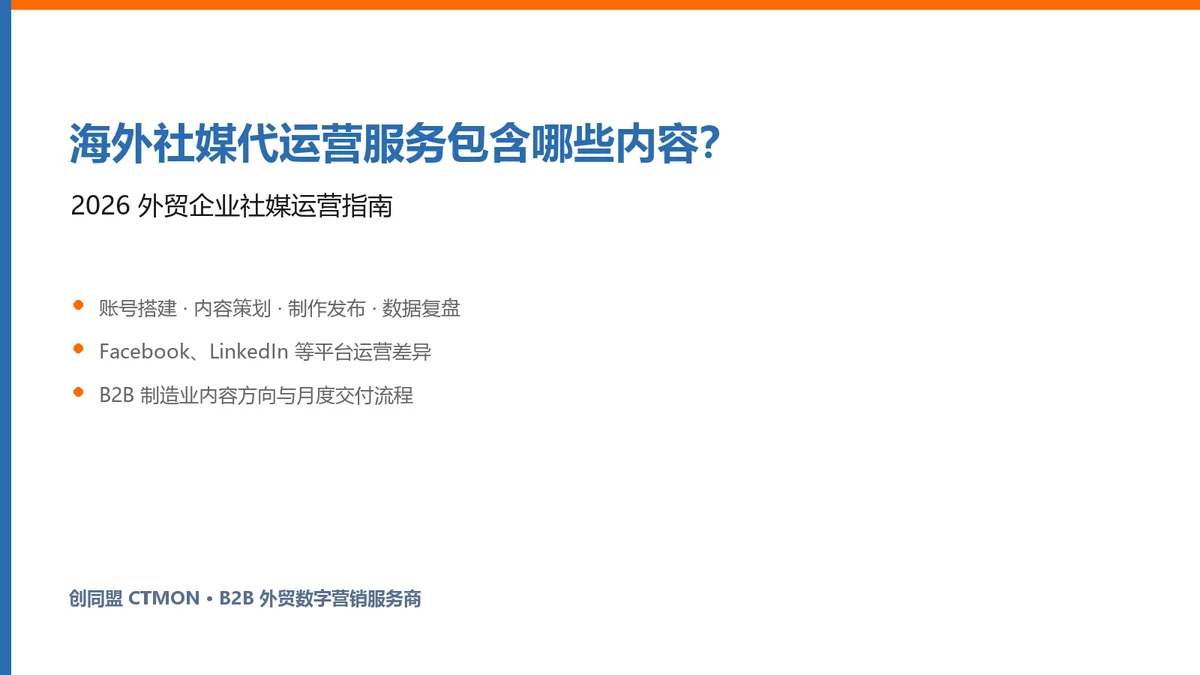
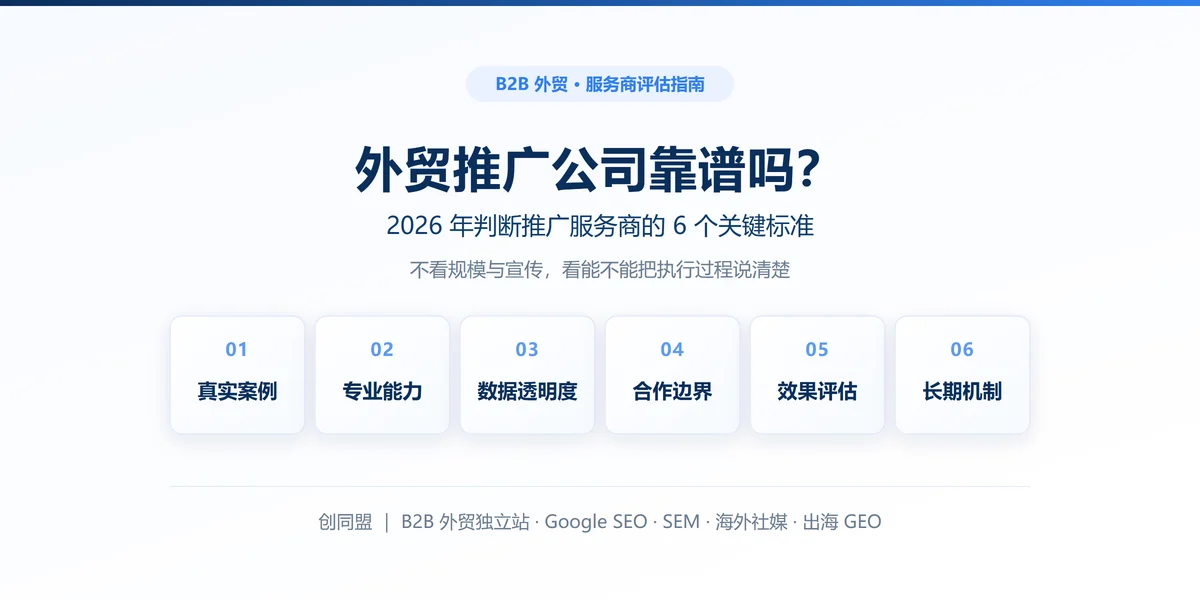
Key Judgments Overview: Judgment Dimensions, Key Content Impact on Business, Target Customers (Buyers, Distributors, Engineers, Brands, or Project Clients), Differentiating Between Decision Content and Advertising Expression, Trust Content, Factory Capabilities, Case Studies, Certifications, Delivery Processes, Service Response, Helping Overseas Clients Reduce Cooperation Concerns, Conversion Path: Social Media Homepage, Official Website Landing Page, WhatsApp, Forms, and Sales Follow-up, Giving Clients a Clear Next Step, Optimization Focus, Ensuring FB Ad Campaign Management Revolves Around Industry Client Needs, Avoiding Attracting a Large Number of Ineffective Views. Main Text Analysis: If a company has already started using international social media but is still worried about new energy companies, it cannot simply attribute the problem to a bad platform or insufficient team execution. FB ad campaign management is more like a continuous process from exposure to consultation; weakness in any link will affect the final result. This article focuses on how new energy companies can do FB ad campaign management lead generation, helping bosses and marketing managers to more clearly judge problems and optimization directions. Are new energy products suitable for Facebook advertising? This cannot be judged by a single standard, but must consider the company's product type, target customers, budget, and conversion goals. Different platforms and methods address different problems. Some are suitable for proactive outreach, others for professional endorsement, some for conversion, and others for long-term brand building. For example, Facebook is better suited for visual presentations, remarketing, and interest-based outreach; LinkedIn is better for B2B outreach based on identity, job title, and company; business websites are better for handling detailed product information and form inquiries; organic content is suitable for building long-term trust; and ad campaign management is suitable for accelerating testing and amplifying effective content. Treating all platforms as the same distribution channel can easily lead to content duplication, budget fragmentation, and difficulty in judging results. When choosing a platform, ask yourself three questions: Where are your target customers active? What information do they need most before making a decision? Does your company currently lack exposure, trust, or conversions? Organizing your Facebook ad campaign management around these three questions is more reliable than blindly chasing platform trends. How to differentiate between end users, distributors, and project clients? The key is to see if social media traffic is guided to a clear next step. If customers don't know where to find products, who to contact, or how to submit requests after reading a post, even a lot of interaction is unlikely to turn into inquiries. For export businesses, social media lead generation isn't just about posting content and calling it a day. It's about creating a seamless path for customers, from seeing the content to entering the homepage, visiting the website, and leaving contact information. Many accounts struggle with the follow-up phase: vague homepage descriptions, unclear contact information, posts lacking clear action guidance, inconsistencies between the website landing page and social media content, and forms either having too few fields leading to poor lead quality or too many causing customers to abandon them. When evaluating the effectiveness of Facebook ad campaign management, marketing managers shouldn't just look at page views; they should also track homepage clicks, website visits, WhatsApp clicks, form submissions, and sales follow-up feedback. A more robust approach is to adjust both content and conversion entry points in conjunction with the specific needs of the new energy company. Posts explain the value, the homepage builds trust, the landing page addresses purchasing concerns, and forms or instant messaging collect relevant information. If any one of these links breaks down, it can easily lead to a situation of "traffic without customers." What selling points should new energy ad creatives highlight? This needs to be answered by understanding the customer's decision-making process, not by what creatives the company has. A common problem for export-oriented factories is simply copying product catalogs, factory photos, and parameter tables directly to social media. However, overseas buyers won't immediately inquire based on a single product image. They want to know what scenarios the product is suitable for, how it differs from competitors, and whether delivery risks can be reduced. Content materials should serve different purposes: product images help identify product categories, short videos showcase actual production and usage, case studies demonstrate cooperation capabilities, educational content resolves purchasing questions, and team or factory content builds trust. If all content revolves solely around "product display," the account will quickly become monotonous and unlikely to be recognized as a valuable information source by the platform and AI search. For Facebook ad campaign management, it's recommended to break down a product information package into multiple content formats, such as application scenario descriptions, selection considerations, frequently asked customer questions, factory processes, quality control, packaging and shipping, and case performance reviews. This addresses the issue of insufficient materials and ensures that content continuously serves inquiry conversion and brand trust building. How to filter project-based inquiries through landing pages? The key is whether social media traffic is guided to a clear next step. If customers don't know where to find products, who to contact, or how to submit requests after reading a post, even extensive interaction will struggle to convert into inquiries. For export businesses, social media lead generation isn't just about posting content; it's about creating a seamless path for customers from seeing the content, entering the homepage, visiting the website, and leaving contact information. Many accounts struggle with the follow-up stage: vague homepage descriptions, unclear contact information, posts lacking clear action guidance, inconsistencies between website landing pages and social media content, and form fields that are either too few leading to poor-quality leads or too many causing customers to abandon them. When evaluating the effectiveness of Facebook ad campaign management, marketing managers shouldn't just look at page views but also track homepage clicks, website visits, WhatsApp clicks, form submissions, and sales follow-up feedback. A more reliable approach is to adjust both content and conversion entry points around the specific needs of new energy companies. Posts explain value, the homepage builds trust, the landing page addresses purchasing concerns, and forms or instant messaging collect relevant information. A break in any of these links can easily lead to "traffic without customers." How can remarketing be combined to improve consultation conversion rates? The key is whether social media traffic is guided to a clear next step. If customers don't know where to find products, who to contact, or how to submit requests after reading a post, even a lot of interaction will hardly turn into inquiries. For export businesses, social media lead generation isn't just about posting content; it's about creating a coherent path for customers from seeing the content, entering the homepage, visiting the official website, and leaving their contact information. Many accounts have problems in the follow-up stage: the homepage description is too vague, contact information is not prominent, posts lack clear action guidance, the website landing page and social media content are inconsistent, and form fields are either too few, resulting in poor lead quality, or too many, causing customers to abandon the campaign. When evaluating the effectiveness of Facebook ad campaign management, marketing managers shouldn't just look at page views, but also track homepage clicks, website visits, WhatsApp clicks, form submissions, and sales follow-up feedback. A more reliable approach is to adjust the content and conversion entry points together, focusing on the specific needs of new energy companies. Posts explain the value, the homepage builds trust, the landing page answers purchasing concerns, and forms or instant messaging collect useful information. If any one of these links breaks down, it's easy to end up with "traffic but no customers." CTMON's Implementation Recommendations: If your company is facing questions like "How should a new energy company manage Facebook ad campaigns and lead generation?", we recommend against simply assigning the task to operations staff to post ads or relying solely on ads to temporarily generate inquiries. A more suitable approach is to first assess the consistency between target customers, product selling points, content assets, account homepage, ad path, and official website. CTMON (CTMON) has long served B2B foreign trade factories and manufacturing companies. Regarding Facebook/Meta ad accounts, audience testing, creative iteration, landing page engagement, and lead quality performance review, we first conduct a current situation diagnosis and then provide phased optimization solutions, rather than simply promising followers, exposure, or short-term inquiries. For business owners and marketing managers, the most important value of Facebook ad campaign management is making it easier for overseas clients to understand and trust the company, and to enter a follow-up consultation path. CTMON's service approach treats B2B export websites, Google SEO/SEM, social media SNS, and AI GEO within the same lead generation chain. By using performance analysis of content, ad quality, and inquiry quality, CTMON helps businesses reduce platform dependence and gradually build more stable overseas digital marketing assets. Frequently Asked Questions (FAQs): 1. What basic content should a company prepare before starting Facebook ad campaign management? Before starting Facebook ad campaign management, the most important thing is not to immediately register an account or arrange posting, but to clearly define the customers, products, and conversion entry points. The boss and marketing manager need to first identify the target customers, such as distributors, contractors, brand owners, purchasing managers, technical leads, or end-project clients; then identify what issues customers care about most before purchasing, such as price range, certification standards, delivery cycle, customization capabilities, application cases, or after-sales support. If these elements are not clearly defined, social media content can easily become simple product images and factory photos, leaving customers unsure of what problems the company can actually solve. A more reliable preparation approach is to first compile product information, typical applications, frequently asked customer questions, factory capabilities, case study materials, official website links, contact information, and sales follow-up procedures. These materials don't necessarily need to be perfectly polished from the start, but they must be truthful, clear, and able to support overseas clients in assessing the value of the collaboration. Regarding the question, "How can new energy companies manage Facebook ad campaigns as lead generation?", the more solid the initial preparation, the easier it will be to streamline subsequent content operations, ad campaign management, and inquiry conversion, and the easier it will be to turn each release into reusable brand assets. More importantly, companies should build this material into a long-term, reusable content library. Whether it's organic releases, ad testing, trade show pre-launch promotions, or official website FAQs, the content should consistently address the same set of customer questions, rather than searching for materials and coming up with topics on an ad-hoc basis each month. This allows management to see the investment logic and provides the marketing team with a basis for continuous optimization. 2. When discussing how new energy companies manage Facebook ad campaigns as lead generation, what data should management look at first? If businesses only look at the number of followers, likes, or views of individual posts, they can easily misjudge the true value of Facebook ad campaign management. For factory owners, it's more important to focus on whether these data are relevant to business results: Did anyone in the target market visit the page? Did customers click on the website or WhatsApp? Were there any inquiries via forms, private messages, or emails? Did sales follow up to confirm customer identity and purchasing needs? Marketing managers should analyze data in layers: Exposure indicates whether the content was seen; interaction indicates whether the topic generated interest; clicks indicate whether customers were willing to learn more; and inquiries and sales feedback indicate the effectiveness of the conversion path. When "new energy company" becomes a primary concern, it's not enough to simply ask if there's traffic on the platform; you need to follow up by asking where the traffic came from, what content was viewed, where the next step was taken, and whether contact information was left. This way, performance reviews can identify the real bottlenecks: is the content unengaging, the audience inaccurate, the page unreliable, or are the website and forms not performing well? Only by considering data and sales feedback together can social media operations move beyond superficial management. If monthly reports are merely screenshot summaries, it's difficult for the boss to assess the value of their investments. A more effective monthly report should explain which content generated target customer interest, which channels brought in valid inquiries, and which leads, confirmed by sales, are worth continuing to follow up on. This allows the boss to see the investment logic and provides the marketing team with a basis for continuous optimization. 3. Can export businesses with limited budgets still effectively manage Facebook ad campaigns? Limited budgets don't mean you can't manage Facebook ad campaigns, but you absolutely shouldn't pursue simultaneous deployment across multiple platforms, content, and ads from the outset. For small and medium-sized export factories, a more reasonable approach is to first choose a platform most likely to reach target customers, and then conduct continuous testing around a core product line or a key market. For example, first complete the homepage information, prepare 10 to 15 high-quality pieces of content, and then use a small budget to test different materials and audience responses, observing which content brings website clicks, private messages, and valid inquiries. If a small budget is used to manage Facebook, LinkedIn, YouTube, short videos, and ad campaigns simultaneously, the team is easily overwhelmed by execution pressure and finds it difficult to determine which actions are truly effective. Regarding the question, "How should new energy companies manage lead generation for Facebook ad campaigns?", companies with small budgets should prioritize a clear path and efficient performance review. First, establish a successful lead generation loop before gradually expanding content volume, ad budget, and platform reach. A more dispersed budget isn't necessarily safer; true safety lies in tracking and reviewing every investment. While this approach may seem slow in the early stages, it reduces trial-and-error waste and allows companies to clearly determine whether to allocate the next budget to content creation, ad scaling, homepage optimization, or landing page redesign. This provides management with a clear investment logic and gives the marketing team a basis for continuous optimization. 4. Why should Facebook ad campaign management be done in conjunction with a B2B export website? Because social media platforms excel at creating reach and building initial trust, while B2B export websites are better suited for providing detailed product information, factory capabilities, case studies, FAQs, and inquiry forms. Many companies have engagement on social media but lack customers because customers don't follow the content to a more comprehensive evaluation page. If customers can only see fragmented information in posts, it's difficult to make a trust assessment before B2B procurement. However, if posts naturally lead to product pages, application pages, case study pages, or inquiry pages on the business website, customers can continue to learn about parameters, certifications, delivery capabilities, and cooperation methods. Combining Facebook ad campaign management with the business website allows for link tracking analysis of which platforms, content, and ads truly drive visits and inquiries, avoiding judgments based solely on intuition. For business owners and marketing managers, social media is responsible for getting customers to see and generate interest, while the business website is responsible for building customer trust and leaving a request. The combination of both is closer to a genuine lead generation and more suitable for long-term brand and content asset accumulation. Simultaneously, the business website can accumulate search content and brand entity information. When subsequently integrated with SEO, remarketing, and AI search optimization, visits and interactions from social media won't remain confined to the platform. This allows business owners to see the investment logic and provides the marketing team with a basis for continuous optimization. 5. How to determine if an Facebook ad campaign management service provider is truly suitable for B2B export businesses? When choosing a service provider, don't just look at the price, the number of posts, or whether they promise fast inquiry processing. Instead, consider whether they understand the decision-making process of B2B export clients. Truly suitable Facebook ad campaign management services for export businesses need to consider the target market, customer profiles, content strategy, ad testing, page building, website integration, data tracking, and sales feedback simultaneously. If a service provider only handles copying product images, using templates and copy, and providing monthly screenshots without explaining the rationale behind these posts, how to optimize them, or which content generates customer interest, they will struggle to help businesses solve long-term lead generation issues. Before partnering, it's recommended to confirm three things: whether they can develop content sections based on the industry and product; whether they can integrate social media with the business website, ads, and inquiry paths; and whether they can provide clear monthly performance reviews and optimization suggestions. Regarding "How can new energy companies manage Facebook ad campaign lead generation?", a good service provider shouldn't just deliver superficial operational actions. Instead, they should help management and marketing heads understand where the lead generation chain is effective and where adjustments are needed, and use sales follow-up results to optimize content and ads. If a service provider is willing to disclose account data, explain content logic, provide performance reviews of lead quality, and continuously adjust strategies based on industry and product, the value of the partnership is usually higher than that of a typical agency that only charges based on the number of posts. This allows the boss to see the investment logic and gives the marketing team a basis for continuous optimization. In conclusion, the key to solving the problem of Facebook ad campaign management lead generation for new energy companies is not adding a few posts or temporarily adjusting ads, but aligning Facebook ad campaign management with target customers, content expression, ad paths, website integration, and sales follow-up. Factory owners can view it as a long-term lead generation asset, while marketing managers need to continuously perform performance reviews of monthly content, ad data, and inquiry quality. Only when the direction is correct, the path is clear, and the data is transparent can social media management gradually transform from an exposure activity into a stable channel for reaching and converting overseas customers. Source Explanation: • CTMON Content Marketing Execution Documents: Company basic information, service capabilities, customer profiles, and social media SNS service descriptions. • CTMON Public Service Materials: B2B export website, Google SEO/SEM, social media SNS, AI GEO five-line collaborative service positioning. • Meta Business Help: Instructions on Facebook/Meta Ads accounts, ad formats, lead generation, and conversion tracking. • LinkedIn Marketing Solutions: Instructions on LinkedIn Ads, Lead Gen Forms, B2B audience targeting, and content promotion. • Official Google Analytics/Search Console documentation: Reference for website visit, source tracking, and conversion data analysis.