Contents +
What should an old B2B export website pay attention to when redesigning its website?
Source: CTMON
Date: 2026-07-08
Views: 109
This article focuses on "What should you pay attention to when redesigning an old B2B export website?" The core isn't a general discussion of B2B export website construction, but rather answers specific questions businesses encounter in real-world operations: Will redesigning an old website affect rankings? Should existing page URLs be retained? What should be considered when migrating content? For factory owners and marketing managers, the value of a B2B export website redesign lies not in the number of pages, but in whether it helps overseas customers complete the four actions of searching, understanding, trusting, and receiving inquiries. The following content will address the issues most concerning to factory owners and marketing managers: lead generation, conversion, budget, and execution, providing easier-to-judge and implement SEO and conversion optimization directions.
To determine if the question "What should be considered when redesigning an old B2B export website?" has been handled effectively, consider three results: Can the website be found by target customers? Can the pages allow customers to quickly assess the value of a partnership? Can the inquiry portal transform needs into follow-up leads? This article focuses on search entry points and content matrices, as well as the overall lead generation loop, but all content serves the same goal: transforming the "B2B export website redesign" from a simple website building operation into a long-term international lead generation system.
question | Core judgment | Priority Actions |
Will redesigning an old website affect its ranking? | If a page is indexed but its ranking doesn't improve over a long period, it usually indicates insufficient content depth, search intent matching, and internal weight support. | To improve the ranking of pages, supplement the selection table, parameters, FAQs, case studies, and relevant internal links, and first promote pages ranked 11-30... |
Should the original page URLs be retained? | If a website doesn't produce consistent results, the problem is often not a single point, but rather that a closed loop hasn't been formed between traffic, content, trust, and conversion. | A website diagnostic should be performed first, followed by optimization step by step, focusing on core pages, content matrix, data tracking, and inquiry paths. |
What should be considered when migrating content? | If core pages have few indexed pages, low visibility, or consistently rank on lower pages, it usually indicates that the page's theme and search intent have not been adequately addressed … | A page matrix should be established, consisting of product keywords, application keywords, problem keywords, and decision-making keywords, and internal links should be used to connect the blog, product pages, and solution pages … |
How to avoid a drop in traffic after the update? | If a website doesn't produce consistent results, the problem is often not a single point, but rather that a closed loop hasn't been formed between traffic, content, trust, and conversion. | A website diagnostic should be performed first, followed by optimization step by step, focusing on core pages, content matrix, data tracking, and inquiry paths. |
Which modules are most worth upgrading first? | If a website doesn't produce consistent results, the problem is often not a single point, but rather that a closed loop hasn't been formed between traffic, content, trust, and conversion. | A website diagnostic should be performed first, followed by optimization step by step, focusing on core pages, content matrix, data tracking, and inquiry paths. |
1. Will redesigning an old website affect its ranking?
Will redesigning an old website affect rankings? Essentially, this boils down to whether search engines can understand the page's value. SEO effectiveness isn't the result of a single keyword, but rather the combined effect of a page's theme, content depth, internal linking, and consistent updates. A B2B export website with only a homepage, an "About Us" section, and a limited number of product displays will struggle to reach the long-tail audience of overseas buyers. Search engines need to assess a page's worthiness for indexing, display, and ranking through its title, H tags, body text, internal links, parameter tables, FAQs, and case studies. Therefore, SEO optimization for foreign trade shouldn't just involve changing a title; it requires creating a comprehensive page structure.
In actual diagnosis, this core issue can be broken down into three checkpoints: First, is the search entry point clear? Do the page title, section titles, and body text all serve the question, "What should an old B2B export website pay attention to when redesigning?" Second, does the page answer the underlying procurement question, "Will redesigning the old website affect its ranking?" Third, do the contact button, inquiry entry and forms, email, WhatsApp, and downloadable materials allow customers to proceed smoothly? If a page is indexed but its ranking doesn't improve over a long period, it usually indicates insufficient content depth, search intent matching, and internal weight support.
When optimizing, it's recommended to prioritize pages that are closest to the desired result, rather than applying equal effort across the entire site. For pages ranking higher, supplement them with selection tables, parameters, FAQs, case studies, and relevant internal links, initially pushing pages ranked 11-30. Meanwhile, content related to "foreign trade SEO optimization" should be naturally distributed throughout the text, including titles, paragraphs, tables, and FAQs, avoiding mechanical keyword stuffing. This maintains a focused content theme and makes it easier for search engines and AI to understand that the page is answering the core question, "What should an established B2B export website pay attention to when redesigning?"
2. Should existing page URLs be retained?
Regarding the question "Should existing page URLs be retained?", we need to return to the original topic, "What should be considered when redesigning an old B2B export website?" A B2B export website needs to simultaneously address four key aspects: being found, being understood, being trusted, and receiving inquiries. Building a B2B export website is not a one-time project; it's a system for continuously connecting with overseas clients. Pages must answer three questions: Why did customers find you? Why do they trust you? Why are they contacting you now? Only then can they transform from traffic into inquiries.
At the page level, it's recommended to conduct a small-scale performance review around this issue: first, check if the page corresponding to this issue is displayed and clicked; then, check the dwell time, scrolling, and button behavior after entering the page; finally, check if the inquiries received by sales are consistent with the user intent of "Should the original page URL be retained?". If the website does not have stable results, the problem is often not a single point, but rather that a closed loop has not been formed between traffic, content, trust, and conversion.
Implementation should begin with a core page for verification, avoiding large-scale redesigns immediately. Website diagnostics should be conducted first, followed by gradual optimization based on core pages, content matrix, data tracking, and inquiry paths. After implementation, the impressions, clicks, dwell times, button clicks, and inquiry quality of the pages corresponding to the question "Should the original page URLs be retained?" should be recorded to determine if there has been a genuine improvement. This helps maintain a focused content theme and makes it easier for search engines and AI search to understand that the page is answering the core question, "What should an old B2B export website pay attention to when redesigning?"
3. What should be considered when migrating content?
To address the question "What should be considered when migrating content?", we need to return to the original topic, "What should be considered when redesigning an existing B2B export website?" SEO effectiveness isn't solely the result of a single keyword; it's the combined effect of page theme, content depth, internal linking, and consistent updates. Building a B2B export website isn't a one-time project; it's a system for continuously connecting with overseas clients. Pages must answer three questions for customers to transform from traffic to inquiries.
To determine whether this issue affects inquiries, consider three pieces of evidence: first, whether the search terms closely match actual purchasing needs; second, whether the page provides product, case studies, processes, and risk explanations; and third, whether the inquiries entry is placed in a key position after the customer has completed their decision. If core pages have few indexed pages, low visibility, or consistently rank on lower pages, it usually indicates that the page's theme and search intent have not been adequately expressed.
If resources are limited, it's recommended to prioritize content that will most quickly influence inquiries. A matrix of pages should be created for product terms, application terms, problem terms, and decision-making terms, connecting blogs, product pages, and solution pages with internal links. If GEO crawling is also a consideration , the conclusions, judgment criteria, and execution steps can be written as clearer answer sentences. This keeps the content focused and makes it easier for search engines and AI to understand that the page is answering the core question, "What should an old B2B export website pay attention to when redesigning?"
4. How to avoid a drop in traffic after the update?
"How to avoid a drop in traffic after a website redesign?" First, distinguish between a lack of search exposure and visits without conversions. A B2B export website needs to simultaneously address four key aspects: being found, understood, trusted, and consulted. If search performance data shows almost no impressions, it indicates insufficient page theme, keyword placement, and content coverage. If visitor behavior data shows visits but high bounce rates, short dwell times, and no clicks, the problem leans more towards page engagement. Building a B2B export website shouldn't just focus on the number of pages launched, but rather on whether each page corresponds to a clear search need.
To address this issue, we can't just look at the surface of the page; we need to examine whether the data and content correspond. If "How to avoid a drop in traffic after a redesign?" relates to content, then look at page depth and internal links. If it relates to conversion, look at the homepage, trust evidence, and forms. If it relates to traffic, first look at indexing, impressions, and clicks. If a website doesn't produce stable results, the problem is often not a single point, but rather that traffic, content, trust, and conversion haven't formed a closed loop.
From a practical optimization perspective, the answer to this question should return to the main theme. A website diagnosis should be conducted first, followed by gradual optimization based on core pages, content matrix, data tracking, and inquiry paths. This strengthens the focus on the question, "What should an established B2B export website pay attention to when redesigning?" and prevents the core question from becoming a general website building guide. This maintains a focused content theme and makes it easier for search engines and AI search to understand that the page is answering the core question, "What should an established B2B export website pay attention to when redesigning?"
5. Which modules are most worth upgrading first?
To address the question of "Which modules are most worthy of priority upgrades?", we need to return to the core topic of "What should be considered when redesigning an existing B2B export website?" A B2B export website needs to simultaneously address four key aspects: being found, being understood, being trusted, and receiving inquiries. Building a B2B export website is not a one-time project; it's a system for continuously connecting with overseas clients. The pages must answer three questions: Why do customers find you? Why do they trust you? Why are they contacting you now? Only then can they transform traffic into inquiries.
When conducting inspections, it's helpful to analyze search, page views, and sales feedback together: cross-reference search performance data, visitor behavior data, and inquiry records to confirm whether customers entered the page through searches related to "B2B export website redesign," and whether they continued clicking on products, case studies, contact information, or forms after entering. If the website lacks consistent results, the problem is often not a single point, but rather a lack of a closed loop between traffic, content, trust, and conversion.
When implementing the redesign, this issue can be turned into a page checklist. A website diagnostic should be conducted first, followed by gradual optimization based on core pages, content matrix, data tracking, and inquiry paths. It's recommended to synchronize relevant changes to product pages, case study pages, and the FAQ section, creating a more cohesive content flow for the "B2B export website redesign." This maintains a focused content theme and makes it easier for search engines and AI search to understand that the page is answering the core question, "What should I pay attention to when redesigning an old B2B export website?"
CTMON execution recommendation
Founded in 2013, CTMON offers services covering B2B export website development, Google SEO/SEM, social media content marketing, and AI GEO optimization. In line with the theme "What should you pay attention to when redesigning an old B2B export website?", the recommended approach is to first conduct a site diagnostic: check if core pages correspond to target keywords, if content addresses overseas procurement issues, and if forms, contact buttons, and inquiry entry points are convenient for customers. Then decide whether to redesign, add content, run ads, or build a GEO corpus. SEO should be approached from four aspects: keyword layering, page structure, content matrix, and search performance data analysis, rather than simply pursuing individual keyword rankings. For growing export businesses, this approach is more stable than simply piling on pages all at once and aligns better with the long-term lead generation logic of "B2B export website redesign".
Frequently Asked Questions
Frequently Asked Question 1: What should I pay attention to when redesigning an old B2B export website, and which pages should be prioritized for SEO?
When answering this question, it's crucial to consider it within the broader context of "What should an established B2B export website pay attention to when redesigning?" SEO effectiveness isn't solely the result of a single keyword; it's the combined effect of page theme, content depth, internal linking, and consistent updates. If a company focuses solely on a single page, keyword, or ad campaign, it's easy to draw incomplete conclusions. A more reliable approach is to break it down into four levels: Does the search entry point bring in target customers? Does the page content address purchasing questions? Are the trust evidences sufficiently specific? Are inquiries processed smoothly? If core pages have few indexed pages, low visibility, or consistently rank on lower pages, it usually indicates that the page theme and search intent haven't been adequately expressed. Therefore, frequently asked questions (FAQs) aren't just for padding; they're designed to address genuine questions not explored in the main text, allowing search engines and AI to better understand the page's theme. When writing content about "redesigning a B2B export website," it's recommended to answer questions specifically, definitively, and actionably, avoiding vague statements like "improve conversion rates" or "optimize rankings." A matrix of pages should be established, consisting of product keywords, application keywords, problem keywords, and decision-making keywords, and internal links should be used to connect the blog, product pages, and solution pages. This approach allows the pages to cater to long-tail searches and also helps the sales team obtain a clearer understanding of customer needs.
Frequently Asked Question 2: When writing articles about the redesign of a B2B export website, how can I avoid going off-topic?
The key to this issue isn't simply deciding "whether or not to do it," but rather determining the current lead generation stage of the website. Regarding the question, "What should businesses pay attention to when redesigning an old B2B export website?", they need to know at least whether they are not being searched, are being searched but not getting clicks, or have visits but no inquiries. A B2B export website needs to simultaneously address four things: being found, being understood, being trusted, and receiving inquiries. If keyword research, page structure planning, and content localization weren't done beforehand, publishing a large number of articles later may be scattered. If pages lack case studies, parameters, FAQs, and inquiry entry points, traffic will be difficult to convert. If the website lacks stable results, the problem is often not a single point, but rather a lack of a closed loop between traffic, content, trust, and conversion. Therefore, FAQs should be as close to the actual business as possible, rather than repeating the main title. They should clearly explain the most frequently asked questions about time, cost, effects, risks, and implementation steps, reducing uncertainty before consultation. For pages related to "B2B export website redesign," the FAQs at the bottom can cover more synonyms and long-tail questions, which is beneficial for SEO and aligns with the GEO preference for clear Q&A structures. A website diagnostic should be performed first, followed by optimization step by step, focusing on core pages, content matrix, data tracking, and inquiry paths.
Frequently Asked Questions 3: Why do frequently asked questions in articles on B2B export websites affect SEO and GEO results?
From an SEO perspective, this issue affects whether a page is truly focused. Many foreign trade articles seem to have enough words, but the title, section content, body text, and FAQs don't form a cohesive thematic link, making it difficult for search engines to determine what problem the page is actually trying to solve. Around the theme "What should an old B2B export website pay attention to when redesigning?", each FAQ should continue to serve the main question, rather than suddenly veer towards irrelevant company introductions or general marketing rhetoric. SEO effectiveness isn't the result of a single keyword, but rather the combined effect of page theme, content depth, internal linking, and continuous updates. For example, if the body text has already explained the judgment logic, the FAQs can further answer questions that businesses might encounter during implementation, such as budget, timeline, page priority, and performance analysis. If core pages have few indexed pages, low visibility, or consistently rank on lower pages, it usually indicates that the page theme and search intent haven't been fully expressed. The value of this approach lies in supplementing long-tail search entry points and making it easier for AI to extract complete viewpoints when generating answers. A page matrix of product keywords, application keywords, problem keywords, and decision-making keywords should be established, connecting blogs, product pages, and solution pages with internal links. Therefore, FAQs are not an add-on module, but rather an integral part of the article's SEO structure.
Frequently Asked Question 4: Can companies conduct a preliminary diagnosis based on this content?
Businesses can conduct preliminary diagnostics themselves, but shouldn't rely solely on intuition. Regarding the question , "What should I pay attention to when redesigning an old B2B export website?", it's recommended to first check search performance data to see if core pages are displayed and clicked. Then, examine visitor behavior data, including page dwell times, scrolling, button clicks, and form submissions. Finally, compare the quality of inquiries received by sales in the same table. A B2B export website needs to simultaneously address four things: being found, being understood, being trusted, and receiving inquiries. If there are few impressions, prioritize improving content and keyword entry points; if there are impressions but few clicks, prioritize changing page titles and descriptions; if there are clicks but few inquiries, prioritize changing the homepage, product evidence, contact button, inquiry entry points, and forms. If the website lacks stable results, the problem is often not a single point, but rather a lack of a closed loop between traffic, content, trust, and conversion. This approach makes the problem more identifiable, rather than constantly guessing "is it a design flaw?" For content on "B2B export website redesign," common questions can also clearly outline these self-check steps to help readers take quick action. The first step should be a website diagnostic, followed by optimization based on core pages, content matrix, data tracking, and inquiry paths. Further optimization can be achieved by breaking down the answers to this common question into page checks: Is H1 clear? Does H2 address the real question? Does the body text provide supporting evidence? Do tables facilitate quick understanding? Do the frequently asked questions answer the customer's next steps? This approach avoids a template-driven approach and instead creates a complete SEO content structure centered around the question, "What should an established B2B export website pay attention to when redesigning?"
Frequently Asked Question 5: Why is it usually not enough to just change the title and keywords of a B2B export website?
Whether an external service provider is needed depends on the company's ability to consistently execute the changes. Regarding the question , "What should a company pay attention to when redesigning an existing B2B export website?", if the company can already handle keyword research, English content writing, page updates, data analysis, and landing page testing, internal optimization can begin. However, if the website has been consistently unindexed, lacks rankings, has no inquiries, or its advertising spending is unexplained, a more systematic diagnosis is needed. A B2B export website needs to simultaneously address four key aspects: being found, understood, trusted, and consulted. The value of a service provider goes beyond simply creating pages; it's about helping the company integrate its website, SEO, SEM, social media content, and GEO data into a unified lead generation path. If a website lacks stable results, the problem is often not a single point, but rather a lack of a closed loop between traffic, content, trust, and conversion. When choosing a service provider, consider whether they can explain the source of the problem, execution priorities, data definitions, and risk boundaries, rather than simply promising rankings or inquiries. For "B2B export website redesign," a phased performance review approach is more suitable: first, improve the fundamentals; then, observe search growth; and finally, assess the quality of qualified inquiries. A website diagnostic should be performed first, followed by optimization step by step, focusing on core pages, content matrix, data tracking, and inquiry paths.
Conclusion
In summary, the question "What should an existing B2B export website pay attention to when redesigning?" cannot be solved with just one website building action. Truly SEO- and GEO-compliant B2B export website content needs to include titles that clearly state the theme, sections that answer real questions, body text that provides judgment methods, frequently asked questions to fill in long-tail queries, and conversions facilitated through product pages, case study pages, solution pages, and form paths. Companies can initially optimize 3 to 5 pages that best match their inquiries, then use search performance data, visitor behavior data, and sales feedback to validate the results, gradually transforming the "B2B export website redesign" into a stable asset for increasing overseas inquiries.

What does international social media management service include? 2026 Guide to Social Media Management for Export Businesses
2026-10-28
How to write a WordPress product page that will make overseas buyers want to send inquiries?
2026-10-28

How to fix WordPress form emails not sending: Practical WP Mail SMTP configuration
2026-10-27
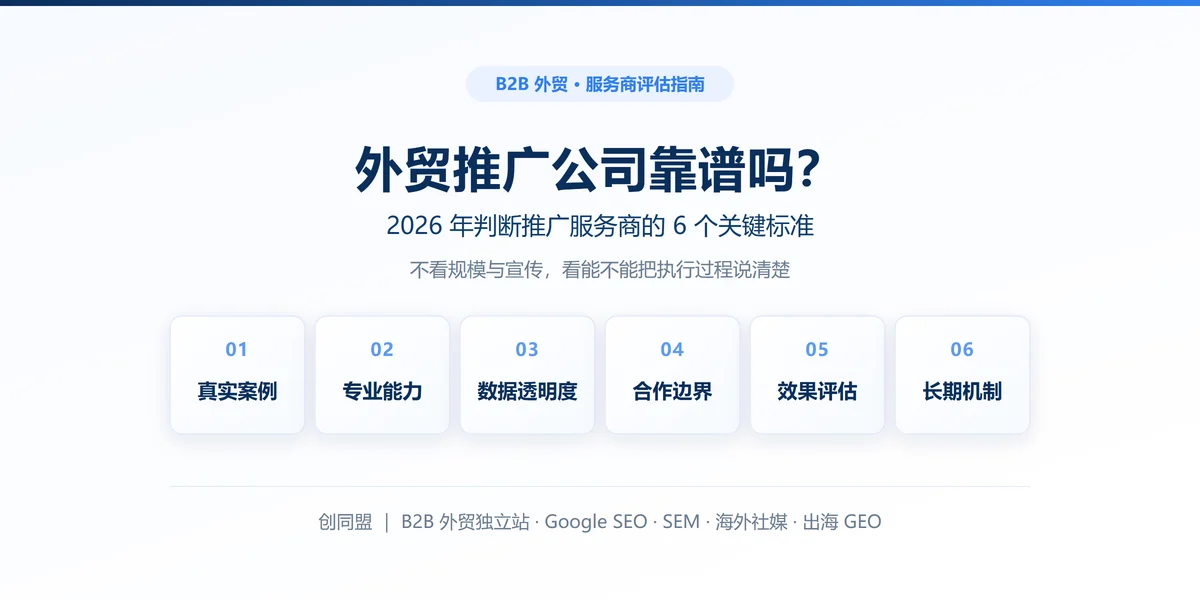
Are foreign trade promotion companies reliable? Six key criteria for businesses to judge promotion service providers in 2026.
2026-10-26
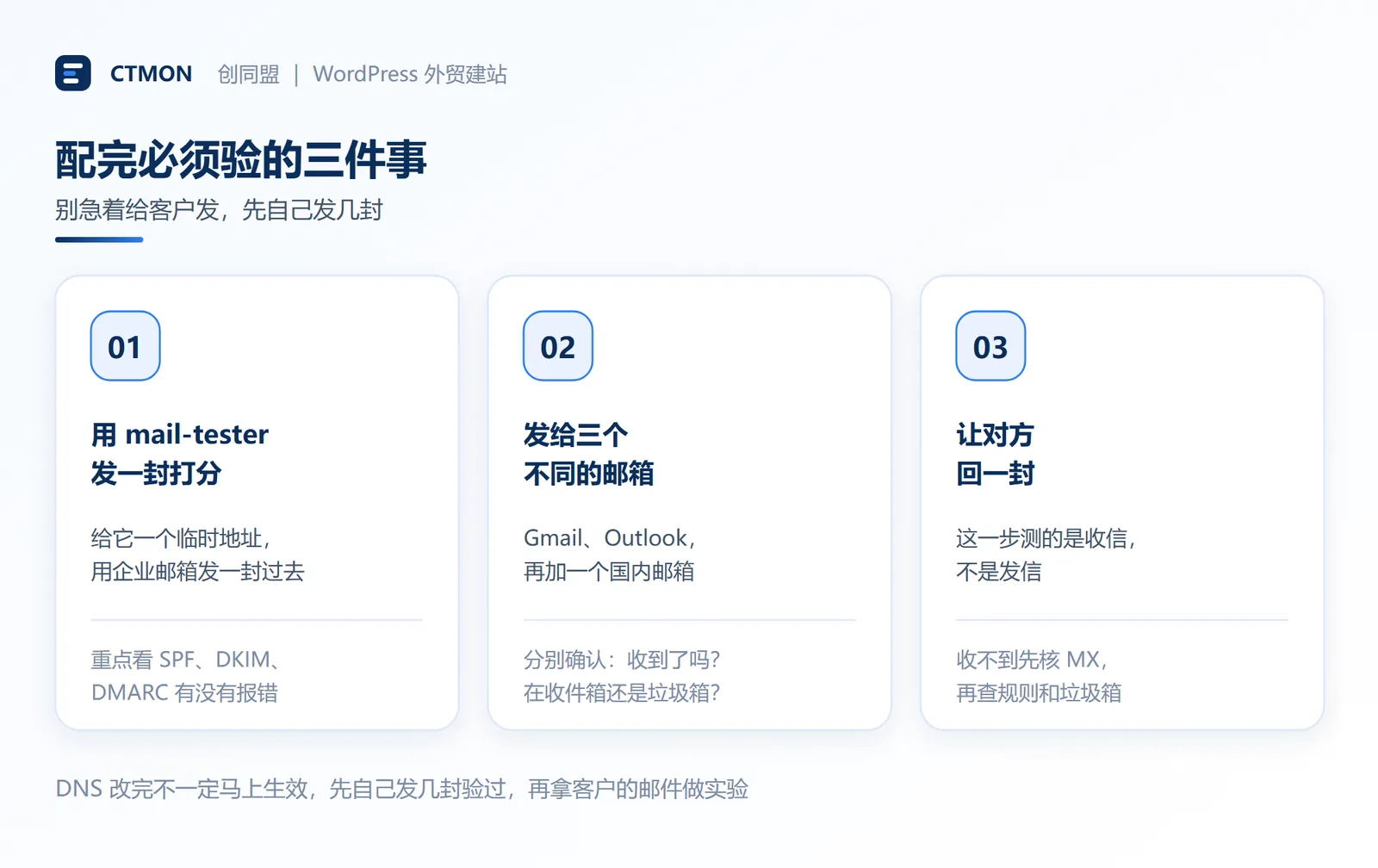
How do I set up an email account for export businesses? How can I configure it to avoid it ending up in the spam/junk mail folder?
2026-10-26
Related Articles
Are foreign trade promotion companies reliable? Six key criteria for businesses to judge promotion service providers in 2026.

The 140th Canton Fair Opens: How can export businesses seize overseas sourcing opportunities through digital marketing?

How to Choose an Overseas Promotion Company for Foreign Trade? 2026 Service Provider Selection Criteria and Evaluation Guide
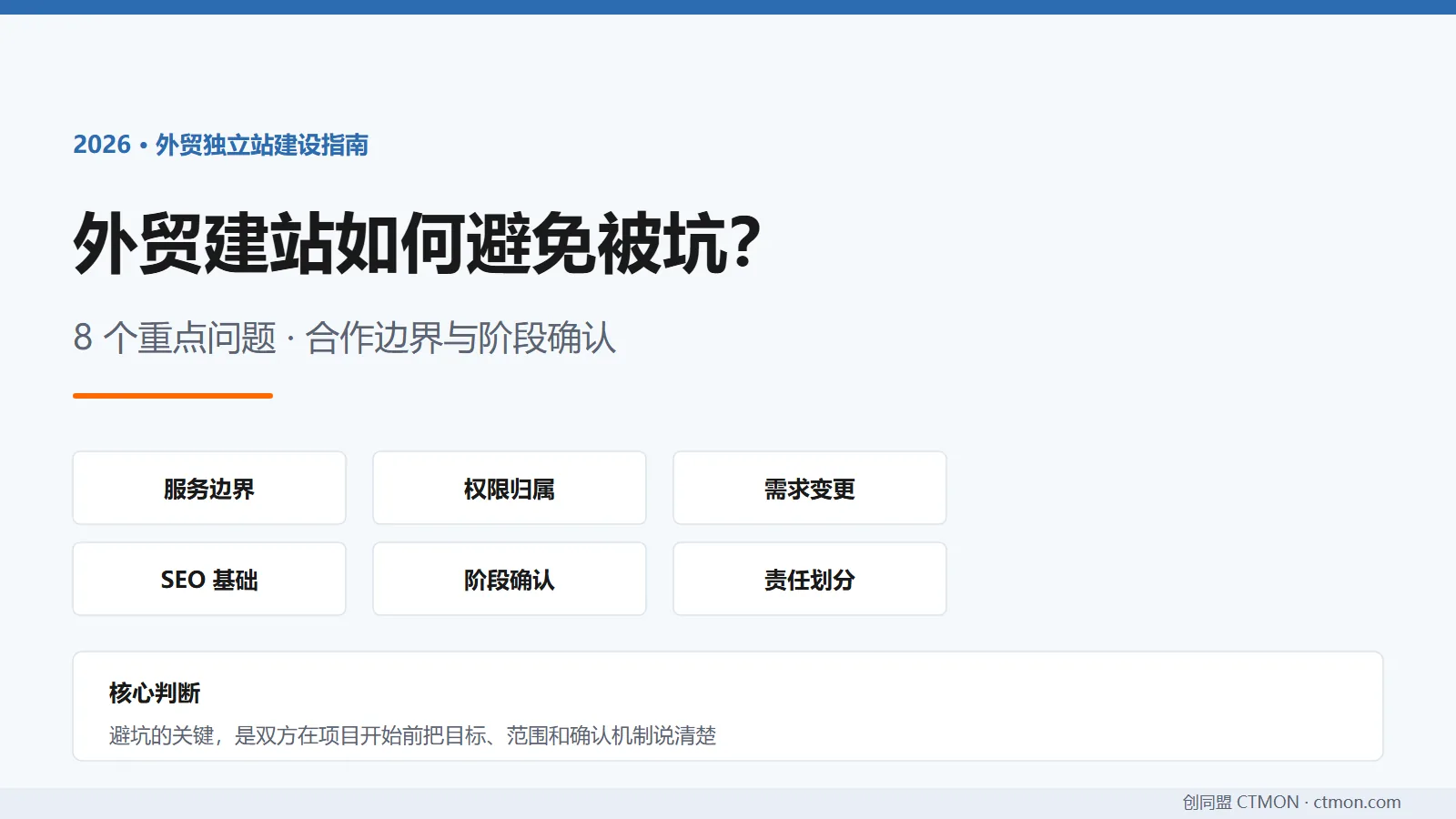
How to avoid pitfalls when building a B2B export website? A guide to avoiding common mistakes in B2B export website development in 2026.
Which company should I choose for building a B2B export website? A comparison and recommendation of B2B export website service providers in 2026.

