Contents +
Traffic surpasses industry giants; Google SEO is paramount.
Source: 创同盟
Date: 2025-01-16
Views: 1225
This article contains 3759 words and is estimated to take 10 minutes to read.
"Supercapacitors" may be unfamiliar to many readers, but they could have a huge impact on our future lives.
Supercapacitors are high-performance energy storage devices with extremely high power density and rapid charge/discharge capabilities. They have an ultra-long lifespan (millions of charge/discharge cycles) and relatively low energy density, but are suitable for rapid energy storage and short-term high-power output, such as electric vehicle acceleration and instantaneous energy recovery. Due to their high efficiency and long lifespan, they are widely used in electric transportation, renewable energy, and industrial energy storage.
According to market research firms such as MarketsandMarkets and Grand View Research , the supercapacitor market is expected to continue to grow.
In 2023, the global supercapacitor market was worth approximately US$ billion , and it is projected to reach approximately US$16.9 billion by , with a CAGR of around .
In particular, with the popularization of electric vehicles and smart devices, supercapacitors, as an efficient and fast-charging energy storage solution, are gradually replacing traditional batteries and becoming an important part of clean energy storage and fast-charging solutions .
The protagonist of this issue is Skeleton a veteran in the field of supercapacitors with nearly 16 years of experience.
After learning about their business briefly, I was deeply impressed. This industry giant is indeed extraordinary, almost an "all-rounder".
I. Small countries give rise to large enterprises
Skeleton Technologies ), a leading global manufacturer of supercapacitors, is headquartered in Tallinn, Estonia, and has established multiple R&D and production bases in Germany, Finland, Estonia, and other locations.
His family's factory in Leipzig, Germany, is known as one of the world's largest supercapacitor manufacturing plants .
Founded in 2009, Skeleton focuses on the development and production of high-performance supercapacitors and "superbattery" technology.
Leveraging its self-developed technological innovation advantages, it is committed to providing efficient and rapid-response solutions for energy storage and power systems worldwide.
Skeleton Technologies has a wide range of applications across multiple industries, particularly in transportation, energy, and data centers.

His family has established partnerships with many leading companies in various industries, including SIEMENS, CAF (Spanish Railway Construction and Assistance Company), ŠKODA, and Hitachi Energy.
II. Self-developed technological innovation is king
One of Skeleton Technologies’ core innovations is undoubtedly its “Curved Graphene” technology, which has been key to the company’s success in the field of supercapacitors since its early days.
Compared to traditional supercapacitors, Skeleton's supercapacitors exhibit superior performance advantages.
In terms of energy density, Skeleton's supercapacitors can reach 10-20 Wh/kg, while traditional supercapacitors are generally only 5-8 Wh/kg.
This enables Skeleton's products to significantly extend operating time and improve efficiency in high-power output applications, such as electric vehicles and rail transportation.
Moreover, Skeleton's supercapacitors have achieved a major breakthrough in charge and discharge efficiency, typically reaching over 95% by effectively reducing internal resistance.
Compared to the 85%-90% charge/discharge efficiency of traditional supercapacitors, Skeleton's products charge faster and release more energy.
Even more notably, while possessing high energy density and high charge-discharge efficiency, Skeleton's supercapacitors also boast an exceptionally long lifespan, supporting over a million charge-discharge cycles.
This undoubtedly greatly reduces maintenance costs for customers in actual use.

Compared to industry leaders such as Maxwell Technologies and Panasonic—
Skeleton has established its market leadership by leveraging its technological advantages in high power, high efficiency, and long lifespan, particularly in the fields of supercells and high-performance supercapacitors.
Therefore, for large B2B companies like Skeleton, acquiring customers seems to rely more heavily on expanding offline channels.
But to my surprise, his family also placed great importance on the SEO of their business website.
III. A business website that combines brand display and SEO
In terms of operating its brand website, this company differs from the large B2B companies I have analyzed in the past. It strictly follows the best practices of business websites and Google SEO in every aspect and organically integrates brand display into them.
This is evident from the naming details of its business website.
【High power energy storagesolutions | Skeleton 】

A simple phrase not only contains several keywords with high search volume and relevance in the energy industry, but also accurately targets the customer group.
Furthermore, as you may have noticed, the brand name "Skeleton" is placed at the end. Typically, business websites place the brand name at the beginning.
This is because keywords placed in the first half of the title are more likely to gain more weight.
Google typically pays more attention to the beginning of a page title. This is because the title is a concise summary of the page content, and the words at the beginning of the title are considered more representative and carry more weight.
Let's take a look back at the overall situation of the business website:


SEMrush data shows that the business website Authority Score is 35, the same as Maxwell (the industry leader).
However, despite Maxwell having far more backlinks than Skeleton, the latter's organic search traffic was five times that of the former.
Considering Skeleton's traffic grew by 5.6% in November, this suggests that Skeleton's SEO efforts are at work .
IV. Textbook-like Google SEO Strategies
When discussing long-term SEO optimization, the 【content matrix strategy】is naturally indispensable. I crawled 171 historical blog posts published on the Skeleton business website, but I won't show them here because the directory is too long.
As can be seen from his blog directory, Skeleton (Estonia's population as of 2023 was 1.3577 million) had a strong awareness of SEO optimization from the very beginning of operating his business website, in addition to brand promotion.

Overall, their content matrix strategy is textbook perfect, fully covering multiple stages of user needs, including awareness, consideration, decision, and loyalty.
A theoretical introduction to the "user demand stage" can be found at the end of the article on Belgian charging stations by Smappee; it will not be discussed in detail here.
[Click to view: Does focusing on brand promotion eliminate traffic? Check out this Belgian charging station ]
That said, their content matrix strategy is practically flawless:
1. A wide variety of topics
The blog covers a wide range of topics, from technical aspects such as supercapacitors, superbatteries, and curved graphene, to industry dynamics, market trends, and specific application scenarios (such as electric vehicles, data centers, wind power, and energy storage).
2. Broad keyword coverage
The blog titles frequently contain keywords related to supercapacitors, such as "supercapacitors," "ultracapacitors," "energy storage," and "grid stability," indicating a focus on SEO optimization.
This gives websites the opportunity to rank in different search results, thereby reaching a wider target audience.
3. Sufficient industry authority
Some blogs emphasize technological innovation and industry leadership (such as "world's leading supercapacitor factory" and "pioneering sustainable energy storage"), especially the interviews with the company's founders, scientists, and engineers, which further increases their professional credibility and helps enhance the website's authority in the industry.
4. Highly targeted content
The blog content is planned accordingly for industry application scenarios and target user pain points .
Some blogs emphasize specific application scenarios (such as "data centers", "electric vehicles", "marine industry", "renewable energy"), clearly conveying the value of supercapacitors in various vertical markets.
Some content targets specific pain points of the target users (such as "peak shaving", "reducing costs", and "improving reliability"), with precise content positioning that easily attracts potential customers to click.
5. Align with market trends
Others focus on popular topics such as sustainability, clean energy, and emissions reduction, such as "tackling climate change" and "renewable energy revolution," which align with current market trends and are likely to be favored by search engines.

Epilogue: Little Creator Has Something to Say
In the previous online digital marketing ecosystem, large enterprises could gain user attention on search engines by leveraging their strong offline brand influence and word-of-mouth marketing from customers.
Over the years, Google has also given these brands special traffic protection.
However, this situation has now undergone subtle changes.
In this case study, we compared two protagonists: Skeleton, who consistently optimizes his business website for SEO, and Maxwell, who seems to disregard business website optimization.
Data shows that even though Maxwell has nearly three times the number of backlinks as Skeleton (backlinks are positively correlated with brand influence), its organic search traffic in November last year was only one-fifth of Skeleton's.
Note that Maxwell has a longer history in the industry and is a true industry leader.
This stark contrast undoubtedly tells us that in the current environment, no matter how strong a company's offline brand influence is, the importance of SEO optimization cannot be ignored if its business website wants to gain more traffic in search engines.
If large enterprises need to do this, how can small and medium-sized enterprises stand aside? SEO optimization has become a compulsory course for corporate online marketing.
CTMON has been focusing on overseas digital marketing for B2B companies for 10 years, dedicating itself to researching how to help clients obtain accurate qualified inquiries, and has served more than 2,000 clients.
We help companies increase their inquiry conversion rate by 103.75%-387.30% , and achieve a return on investment (ROI) of 39.55%-216.02% .
What does international social media management service include? 2026 Guide to Social Media Management for Export Businesses
2026-10-28
How to write a WordPress product page that will make overseas buyers want to send inquiries?
2026-10-28

How to fix WordPress form emails not sending: Practical WP Mail SMTP configuration
2026-10-27
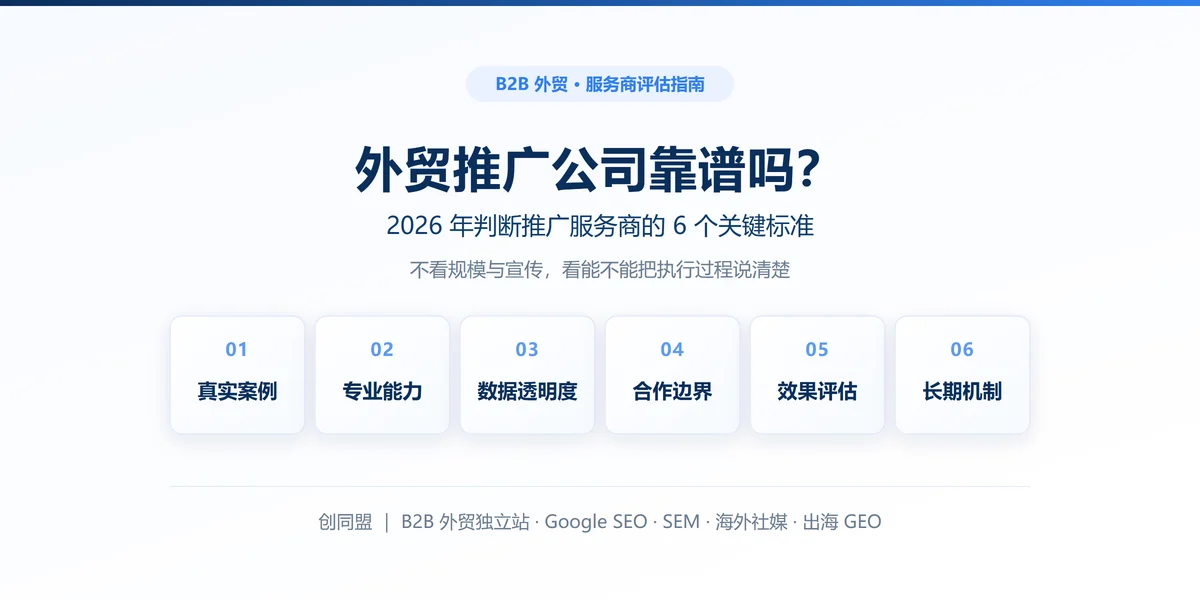
Are foreign trade promotion companies reliable? Six key criteria for businesses to judge promotion service providers in 2026.
2026-10-26
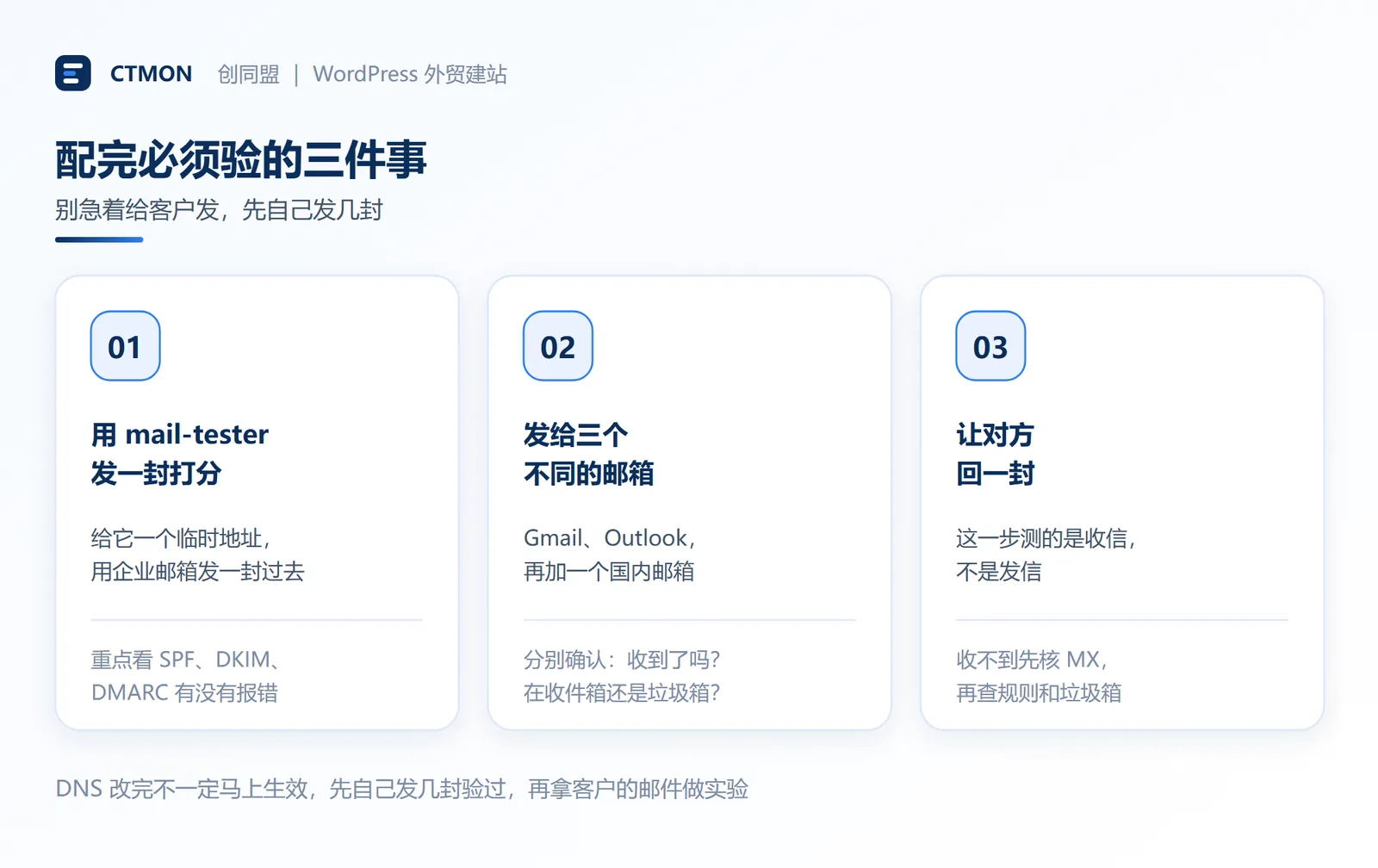
How do I set up an email account for export businesses? How can I configure it to avoid it ending up in the spam/junk mail folder?
2026-10-26
Related Articles
Are foreign trade promotion companies reliable? Six key criteria for businesses to judge promotion service providers in 2026.
The 140th Canton Fair Opens: How can export businesses seize overseas sourcing opportunities through digital marketing?
How to Choose an Overseas Promotion Company for Foreign Trade? 2026 Service Provider Selection Criteria and Evaluation Guide
How to avoid pitfalls when building a B2B export website? A guide to avoiding common mistakes in B2B export website development in 2026.
Which company should I choose for building a B2B export website? A comparison and recommendation of B2B export website service providers in 2026.

