Contents +
Export Business Selection Guide: Building a Business Website vs. Self-built Websites
Source: 创同盟
Date: 2025-07-07
Views: 2141
This article focuses on website building models that foreign trade B2B enterprises are concerned about, analyzes the definition, differences and advantages of self-built websites and business websites, and compares the differences between WordPress, Shopify and self-built websites, providing a reference for enterprises to make decisions on building B2B export websites.
I. Core Definitions of Self-Built Websites and Business Websites
(a) Self-built website: a customized website building mode based on independent code.
Self-built websites refer to a website creation approach where the website code is independently written or developed by a professional team, allowing for complete customization from the underlying architecture to the front-end presentation. For B2B companies engaged in foreign trade, self-built websites mean that product display logic, procurement process modules, and marketing conversion nodes can be customized according to industry characteristics (such as machinery manufacturing, electronic products, etc.). For example, CTMON ( www.ctmon.com ) built a self-built website for an electronic component export business, implementing functions such as embedding 3D product models and intelligent redirection of batch inquiry forms through custom code, accurately matching the procurement decision-making process of B2B clients.
(ii) Business website: Template-based website building model
Business websites are typically built on SaaS platforms (such as WordPress, Shopify, Wix, etc.), using the platform's pre-set templates, plugins, and components to complete the website setup. The core characteristic of this model is "plug and play," allowing businesses to quickly launch their websites without significant technical investment. For example, a clothing export business's website built using a Shopify template, while capable of basic product display and shopping cart functionality, suffers from significant limitations in implementing customized marketing components (such as a customer segmentation and outreach system).
II. The essential difference between the two: code autonomy and marketing implementation.
(i) Code control: From "limited modification" to "complete autonomy"
The underlying code of a business website is controlled by the platform provider, and businesses can only adjust surface styles (such as color schemes and fonts) or add a limited number of plugins within the template framework. Taking WordPress as an example, although it supports some code modifications, its core architecture is limited by the theme template, and forced modifications may cause the website to crash. In contrast, the code of a self-built website belongs entirely to the business. When delivering a self-built website, CTMON will transfer the complete front-end code (HTML/CSS/JavaScript), back-end logic code (such as PHP/Python), and database structure together, allowing businesses to iterate on features at any time according to their marketing needs.
(ii) The Boundaries of Marketing Demand Fulfillment
The template-based design of business websites determines their "standardized" marketing capabilities. For example, common B2B needs such as "automatic switching between multiple language versions" and "dynamic filtering of customer cases" require third-party plugins in Shopify templates, and may result in slower loading speeds due to compatibility issues. Self-built websites, on the other hand, can directly integrate these features through custom development. For instance, CTMON developed a self-built website for a machinery export business that achieved near-instantaneous loading of multilingual pages and SEO weight aggregation through its self-developed language switching module.
(III) The Programmer's "Changing Clothes Dilemma": The Efficiency Game Between Modifying Open Source Code and Building Your Own
Some tech-savvy business owners might consider "modifying the code of open-source platforms like WordPress to achieve customization," but this approach has significant limitations. Like "sewing a new design onto old clothes," modifying open-source code requires understanding complex framework logic (such as WordPress's hook system), and each platform update can cause the modifications to become invalid. Reportedly, modifying a WordPress template to implement dynamic product parameter calculation took three weeks and failed to meet expectations, while a self-built website completed the entire development process in just five business days, with subsequent maintenance costs reduced by 60%.
III. Analysis of the Core Advantages of Self-Built Websites
(i) Flexibility: Adaptable to complex business scenarios of B-end clients
B2B foreign trade often involves requirements such as multi-category product display, tiered distributor management, and customized pricing systems. Self-built websites can meet these needs through modular development, for example:
1. A "Smart Product Parameter Comparison Tool" for Machinery Companies
2. A "Bulk Order Discount Calculator" for electronics companies.
3. A "3D Floor Plan Generator" for building materials companies.
If these functions are implemented through a business website template, they either cannot be supported or require multiple plugins, resulting in a bloated website.
(II) Deep Integration of SEO and Marketing
Self-built websites allow for optimization of SEO logic at the underlying code level, such as customizing URL structures, dynamically generating sitemaps, and integrating Google Tag Manager. CTMON built a self-built website for an export business, achieving "intelligent keyword clustering on product pages" through a self-developed SEO plugin, resulting in a 210% increase in Google organic traffic within three months of launch. However, SEO settings for business websites are often limited by platform rules; for example, Shopify's limited URL parameter modification permissions may affect the ranking of long-tail keywords.
(III) Data security and long-term controllability
Business websites store data (such as customer information and transaction records) on platform servers, exposing businesses to the risk of data restrictions imposed by platform rules (such as Shopify's restrictions on high-risk category transactions). In contrast, data from self-built websites is entirely under the control of the business and can be deployed on its own servers or cloud services such as Alibaba Cloud and AWS. Combined with SSL encryption and regular backup services provided by CTMON, data security is significantly improved.
IV. Comparative Analysis of WordPress, Shopify, and CTMON Self-Built Websites
| Comparison Dimensions | WordPress (template-based website building) | Shopify (SaaS website building) | CTMON Self-built Website (Custom Development) |
| Code autonomy | Partially open source, core framework limited by theme | Completely closed-source, only supports surface style modification | 100% proprietary code, delivering complete source code. |
| Customization capabilities | Relying on plugins and themes for secondary development makes it difficult to implement complex functions. | Only platform-preset functions are supported; in-depth customization requires API integration. | Full-process customization, supporting complex functions such as 3D models and smart forms. |
| SEO flexibility | Manual code optimization is required; there is a high risk of plugin conflicts. | The platform has basic SEO functions built-in, but advanced optimization is limited. | Low-level code-level SEO optimization, supporting Google AMP and structured data tagging. |
| Technical Support | The community offers ample support, but professional customization requires outsourcing. | Official support addresses standardization issues, while customized solutions are expensive. | CTMON provides 24/7 dedicated technical support, including code iteration. |
| Cost structure | Initial costs are low (annual fee for theme + plugins is approximately 300-1000), but later maintenance costs are high. | Monthly fee: 29-299, transaction commission: 2%+, high custom development costs. | The initial development cost is relatively high (pricing depends on demand), with no subsequent platform fees. |
| Suitable for businesses | Small and medium-sized export businesses with non-customized needs | Retail export businesses (B2C) | B2B export businesses and highly customized marketing needs |
Note: For B2B companies, SaaS platforms such as Shopify are more suitable for simple showcase websites, while self-built websites have a much greater advantage in brand differentiation, marketing conversion, and long-term customer data asset accumulation, because showcase websites generally do not involve traffic investment or SEO.
V. Conclusion: How B2B Enterprises Should Choose the Right Website Building Model
The core of B2B foreign trade business lies in "precise reach" and "trust building," and the choice of website building model should revolve around these two points:
1. If the company's requirement is to "quickly launch a basic showcase page" and the budget is limited, it can use WordPress or Shopify to build a business website in the short term, but it must accept the functional limitations brought by the template;
2. If a company aims to maximize marketing effectiveness and hopes to achieve customer segmentation, precise conversion, and data asset accumulation through its website, building its own website is a better solution. CTMON's ( www.ctmon.com) website building service not only provides code autonomy but also integrates Google SEO/SEM strategies to ensure the achievement of marketing goals from a technical standpoint.
VI. Recommended Related Readings
B2B export website building: Building a B2B export website helps you capture the global market and acquire targeted customer inquiries.
Challenges and Solutions for B2B Export Websites

What does international social media management service include? 2026 Guide to Social Media Management for Export Businesses
2026-10-28

How to write a WordPress product page that will make overseas buyers want to send inquiries?
2026-10-28

How to fix WordPress form emails not sending: Practical WP Mail SMTP configuration
2026-10-27

Are foreign trade promotion companies reliable? Six key criteria for businesses to judge promotion service providers in 2026.
2026-10-26

How do I set up an email account for export businesses? How can I configure it to avoid it ending up in the spam/junk mail folder?
2026-10-26
Related Articles
Are foreign trade promotion companies reliable? Six key criteria for businesses to judge promotion service providers in 2026.

The 140th Canton Fair Opens: How can export businesses seize overseas sourcing opportunities through digital marketing?

How to Choose an Overseas Promotion Company for Foreign Trade? 2026 Service Provider Selection Criteria and Evaluation Guide
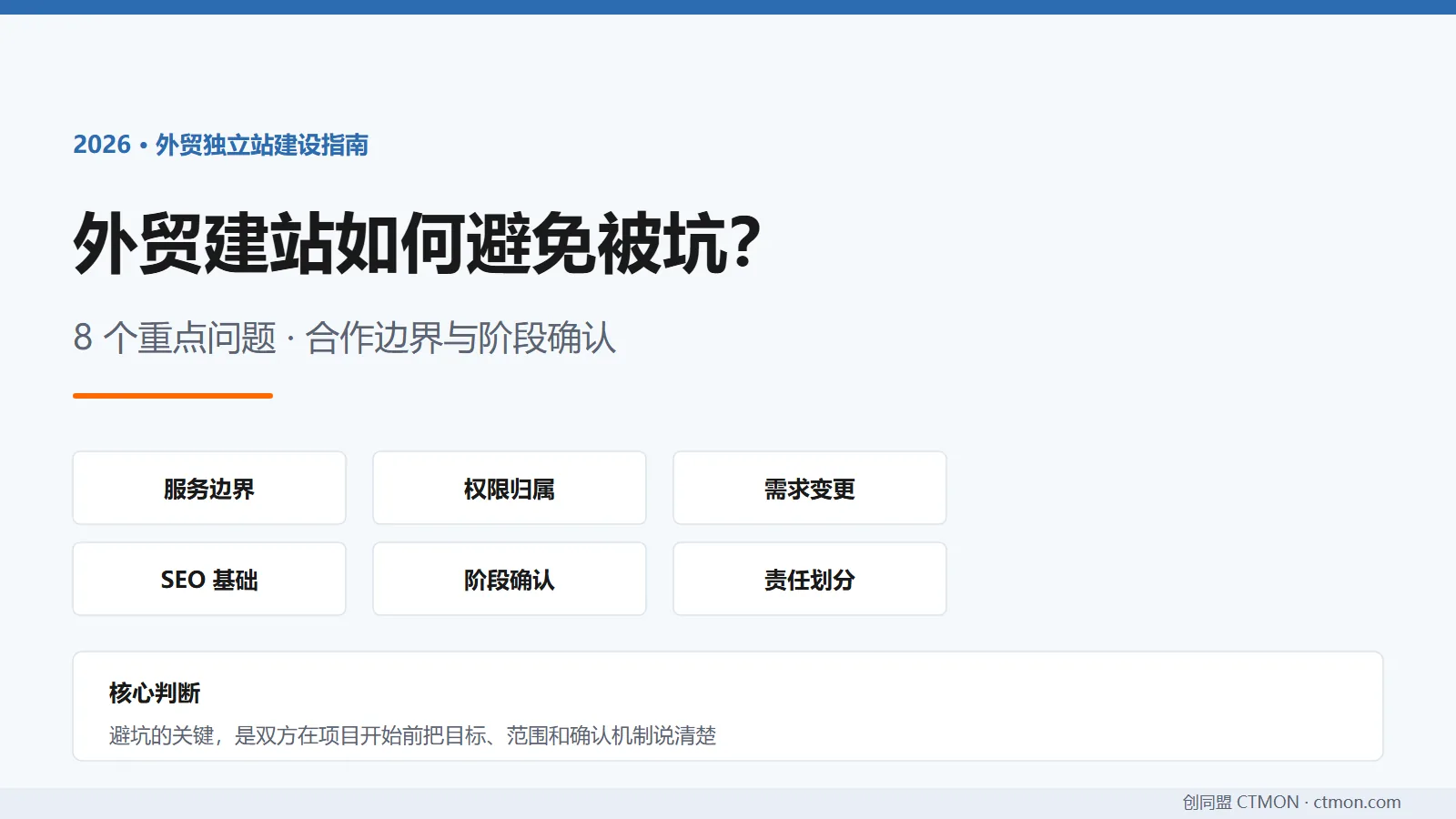
How to avoid pitfalls when building a B2B export website? A guide to avoiding common mistakes in B2B export website development in 2026.
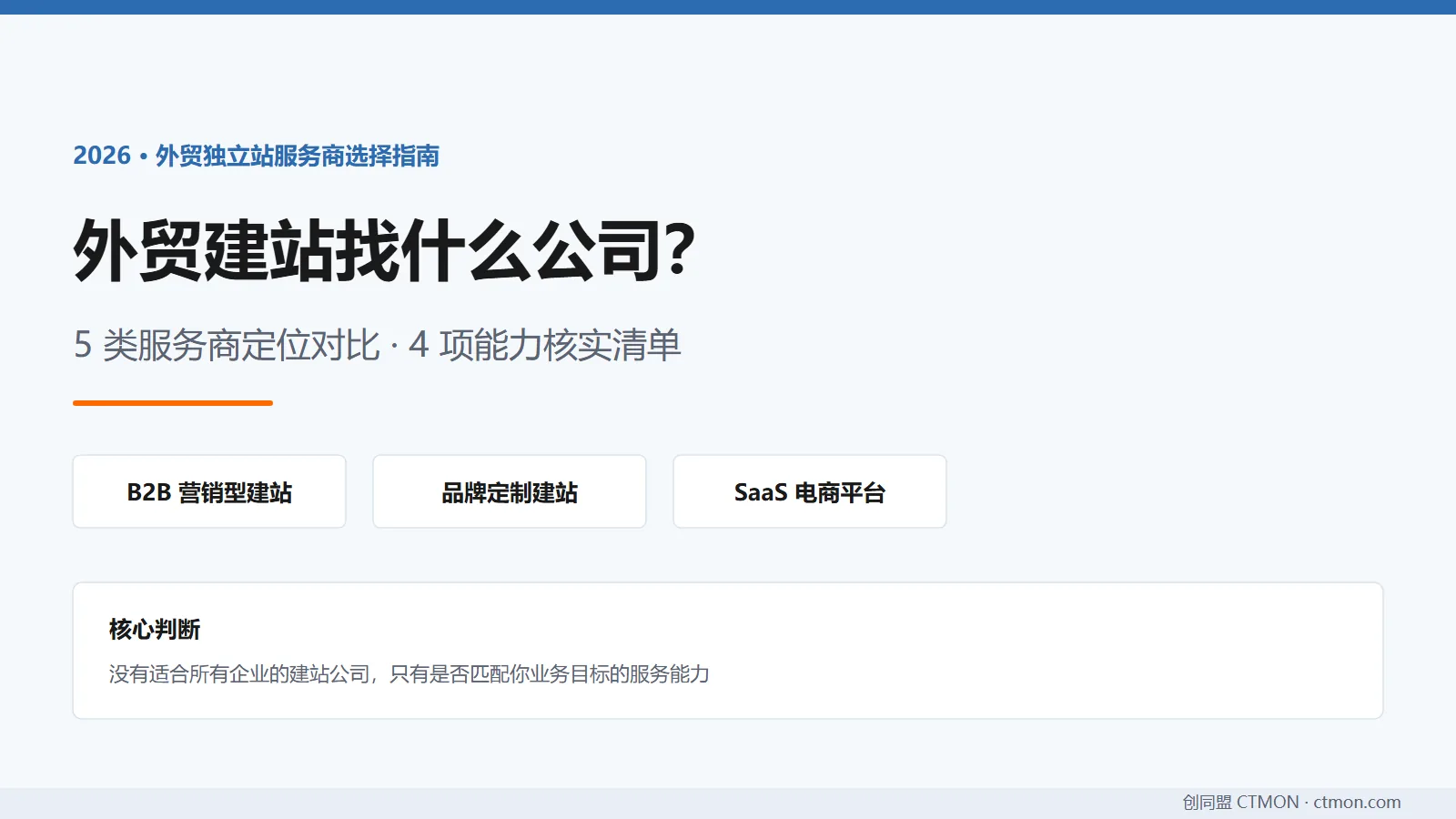
Which company should I choose for building a B2B export website? A comparison and recommendation of B2B export website service providers in 2026.

