Contents +
Product Selection Strategy for B2B Export Websites
Source: 创同盟
Date: 2025-07-11
Views: 1957
This article delves into one of the most crucial elements before building a B2B export website: product selection and positioning, strategy, and supply chain collaboration.
introduction
In building a B2B export website, product selection and supply chain optimization are crucial preparatory steps. Before selecting products, companies need to accurately position their products, categorizing them into traffic products, promotional products, profit products, and core products. Traffic products are used to attract customers, promotional products to boost sales, profit products contribute core profits, and core products ensure continuous cash flow. This combination balances business development and influences website structure and marketing design. Product selection also needs to consider the characteristics of the target market. For example, mature markets in Europe and America can promote high-end or niche products, while emerging markets such as Southeast Asia are more suitable for low-priced daily necessities. It's also important to refer to data from e-commerce platforms, search engines, and social media to select products that meet essential needs. Beginners should avoid highly competitive areas. Regarding supply chain collaboration, blockbuster products rely on a collaborative supply chain mindset. Companies can find suppliers through multiple channels, and when selecting suppliers, they must adhere to seven principles, including a comprehensive and systematic approach and eliminating subjective biases, to ensure the resilience of the supply chain, which is a significant competitive advantage.
Product selection positioning: traffic products, promotional products, profit-generating products, core products
Before selecting products, businesses need to accurately position their products, which mainly involves analyzing the target market, target audience, and factors with the highest product relevance. Product types can be divided into four categories:
-
- Traffic products : mainly used for attracting traffic and customers. They may have lower profit margins, but they can attract a large number of potential customers to visit the website.
-
- Promotional products : These are used for promotional activities and are intended to stimulate sales or clear inventory in the short term.
-
- Profitable products : These are high-value core products that the company promotes and contribute the majority of its profits.
- Main products : Long life cycle, stable market demand, bringing continuous cash flow and stable growth to the company.
This strategic product portfolio approach ensures a balanced development of the business model. Traffic products are used for initial lead generation through search engine marketing (SEM) and search engine optimization (SEO), while profit-generating and flagship products secure long-term revenue. This diversified strategy helps reduce business risk, maximizes overall business health, and makes the business website a more powerful sales engine. This strategic thinking must be completed before website construction, as it directly determines the website's structure, content, and marketing funnel design.
Product selection strategy: Combine with the characteristics of the target market
Product selection must be closely aligned with the characteristics of the target market. For example, in mature markets like Europe and the United States, consumers have greater price tolerance, allowing businesses to choose high-end products with a more diversified product range, while niche market products also hold considerable potential. In emerging markets such as Southeast Asia and Latin America, low-priced, high-volume products are more popular, and consumers tend to prefer practical daily consumer goods or local specialty products, which may have greater potential.
Data is crucial in product selection. Businesses can refer to trending product sales data from various e-commerce platforms (such as Amazon, AliExpress, and Etsy), as well as search engine keyword data (such as Google Trends) and social media activity data. Google Trends offers free access to keyword search trends, but it doesn't provide absolute search volume; it can be used to compare the relative volume of keywords and discover related search terms. Furthermore, it's recommended to choose products that meet essential needs, as their sales are more stable, less volatile, and have lower inventory pressure and risk, effectively avoiding cyclical off-seasons. For novice sellers, it's advisable to avoid popular products, as these markets are typically highly competitive and dominated by large brands.
Supply Chain Collaboration: Supplier Selection Principles
A blockbuster product is not just about the product itself, but also a reflection of a collaborative supply chain mindset. The core focus of a blockbuster supply chain is "people"—it's a collaborative system and the ecosystem that creates blockbuster products. Companies can find supplier resources through various channels:
-
- 1. Partner with exclusive importers/exporters.
-
- 2. Purchase directly from small manufacturers.
-
- 3. Filter information by searching keywords such as distributors and wholesalers.
-
- 4. Find supplier information on B2B websites (such as Alibaba, Buyer Zone, EC Plaza, Busy Trade, EC21).
-
- 5. Participate in domestic and international exhibitions such as the China Import and Export Fair (Canton Fair).
-
- 6. By searching for registered companies through the brand database, you can both prevent infringement and find the original manufacturer.
When selecting suppliers, the following seven principles should be followed:
1. The principle of system comprehensiveness :
Examine whether suppliers have EPP (Enterprise Performance Management) integration capabilities, and eliminate suppliers that only do campaign management or lack systematic capabilities.
2. Eliminate subjectivity : Make judgments based on data and facts to avoid personal biases influencing decisions.
3. Flexibility and operability : Assess supplier cooperation, peak season supply capacity, capacity transfer capabilities, and model modification R&D capabilities to ensure supply chain flexibility.
4. The principle of matching scale : The size of the supplier should be proportional to the purchase volume to avoid "small horse pulling a big cart" or "using a large talent for a small task".
5. Principle of simplicity and scientific rigor : Examine the supplier's market reputation and ensure the integrity of its internal control mechanisms to prevent internal corruption.
6. Half-proportion principle : The purchase quantity should not exceed 50% of the supplier's production capacity; avoid using high-risk suppliers who provide goods with full payment in advance, in order to diversify risks.
7. Supply source quantity control principle : For the same type of product, 2-3 suppliers should be selected to ensure supply stability and avoid over-reliance on a single source.
Supply chain resilience is a crucial competitive advantage. The principles outlined above emphasize risk aversion (e.g., purchasing quantities not exceeding 50% of supplier capacity, avoiding high-risk, full-payment suppliers), flexibility (e.g., supplier cooperation, peak season supply capacity, and R&D capabilities for product updates), and stability (e.g., selecting 2-3 suppliers for similar products). This indicates the need for proactive measures to address potential supply chain disruptions. In foreign trade, supply chain disruptions (e.g., geopolitical events, natural disasters, quality issues) can have catastrophic consequences. By planning for supply chain resilience before website launch, B2B companies can ensure continuous product supply, maintain quality standards, and adapt to market changes. This directly impacts customer satisfaction, brand reputation, and long-term viability, transforming potential weaknesses into competitive advantages. Therefore, ensuring supply chain robustness during the preparation phase is a critical strategic asset.
The formulas in the table below provide a quantitative framework to help businesses assess a product's profitability potential and market viability during the product selection phase, avoiding blind pricing and inefficient operations. It simplifies complex business factors into calculable metrics, guiding businesses to make data-driven decisions.
| index | Calculation formula | explain |
| Product selection benefits | Market potential × Profit margin × Compliance | A comprehensive assessment of the product's profitability potential in the target market. |
| Market space | Demand/Competition | A market with high demand and low competition has a large potential for growth. |
| Profit margin | (Selling price - Procurement/Logistics/Operating costs, etc.) × (1 - Commission - Tax rate) | Actual profit margin after considering all costs and platform/country taxes |
| Compliance | No infringement × Legal × Compliant | Ensure that the product does not infringe on intellectual property rights in the target market and complies with local laws, regulations and industry standards. |
in conclusion
Before setting up a B2B export website, CTMON ( www.ctmon.com)小编建议做好产品选品与供应链优化意义重大。选品上,精准的产品定位和结合目标市场特点的策略,能让企业明确产品方向,借助数据参考选择合适产品,提升盈利潜力。供应链优化中,遵循供应商选择原则,可增强供应链的风险规避、灵活性和稳定性,将潜在弱点转化为竞争优势,保障产品持续供应,维持客户满意度与品牌声誉。选品价格公式为企业评估盈利潜力和市场可行性提供量化框架,助力数据驱动决策。总之,做好这些准备工作,能为外贸独立站的成功搭建和运营奠定坚实基础。
Related Recommendations
Preparations before setting up a B2B export website: Peer analysis
Preparations before setting up a B2B export website -- Target customer market research
What does international social media management service include? 2026 Guide to Social Media Management for Export Businesses
2026-10-28
How to write a WordPress product page that will make overseas buyers want to send inquiries?
2026-10-28

How to fix WordPress form emails not sending: Practical WP Mail SMTP configuration
2026-10-27
Are foreign trade promotion companies reliable? Six key criteria for businesses to judge promotion service providers in 2026.
2026-10-26
How do I set up an email account for export businesses? How can I configure it to avoid it ending up in the spam/junk mail folder?
2026-10-26
Related Articles
Are foreign trade promotion companies reliable? Six key criteria for businesses to judge promotion service providers in 2026.

The 140th Canton Fair Opens: How can export businesses seize overseas sourcing opportunities through digital marketing?

How to Choose an Overseas Promotion Company for Foreign Trade? 2026 Service Provider Selection Criteria and Evaluation Guide
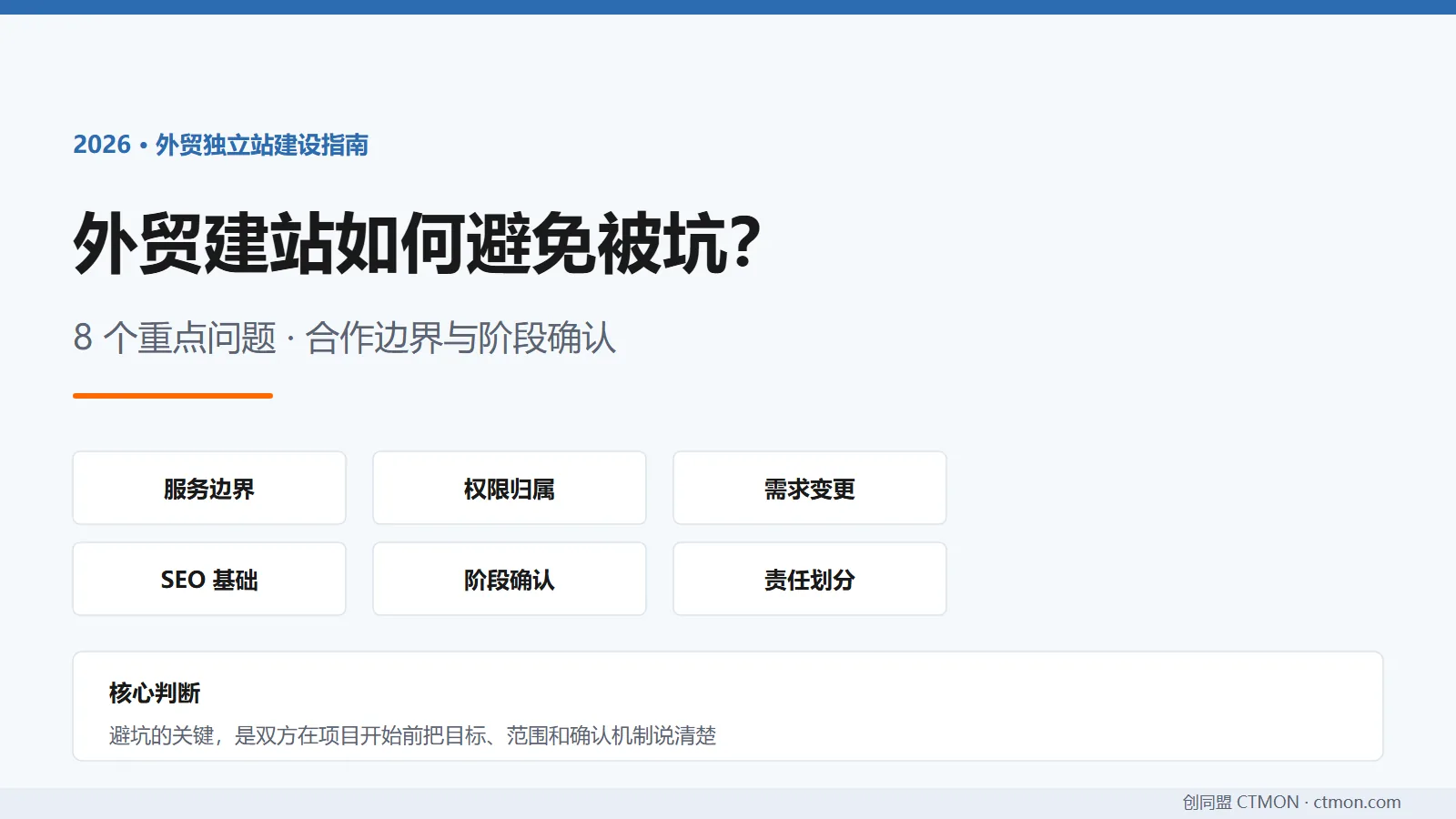
How to avoid pitfalls when building a B2B export website? A guide to avoiding common mistakes in B2B export website development in 2026.
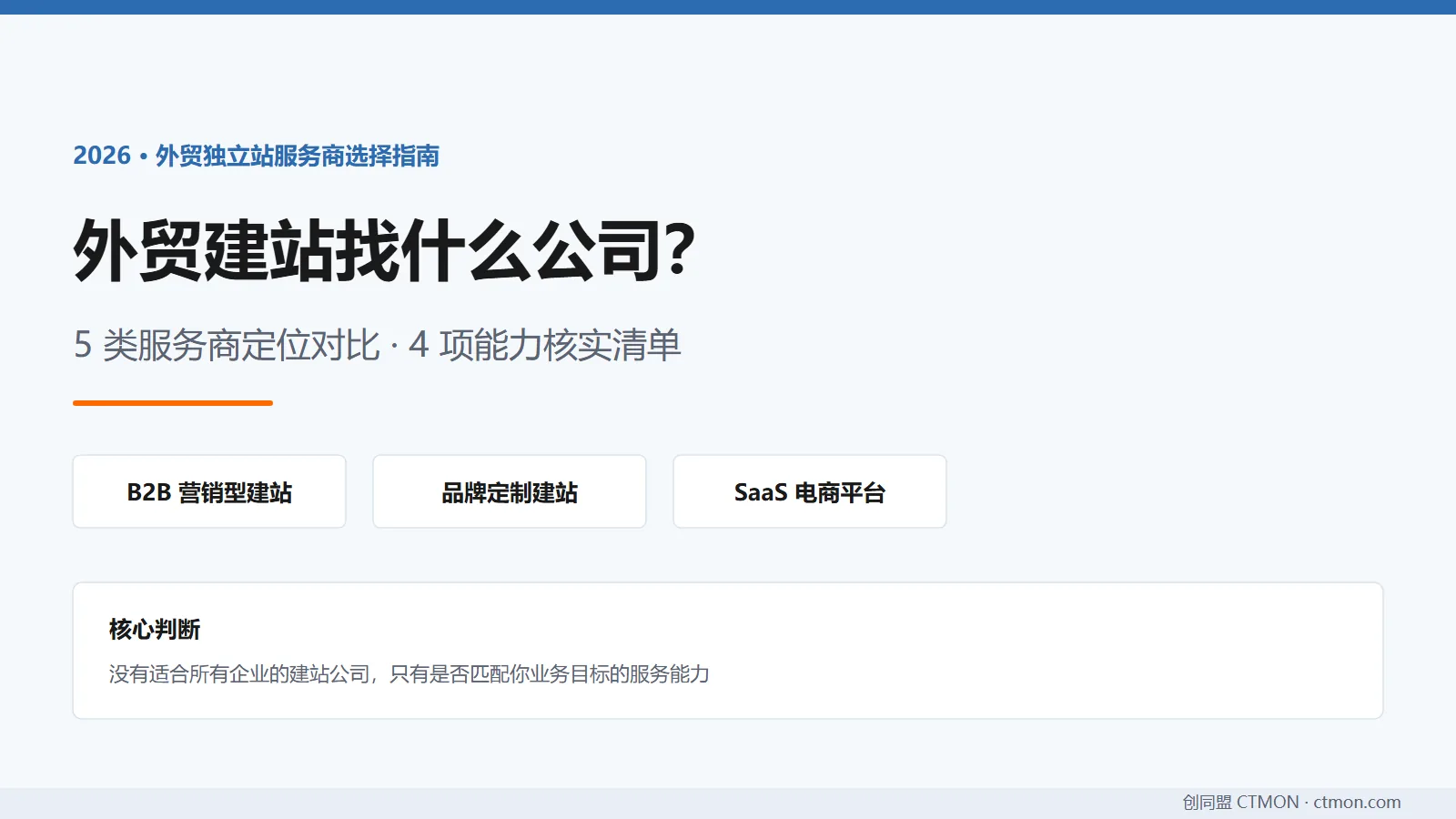
Which company should I choose for building a B2B export website? A comparison and recommendation of B2B export website service providers in 2026.

