Contents +
Is a business website better suited for B2B or B2C? High sales and high returns, but invest with caution!
Source: 创同盟
Date: 2025-07-11
Views: 1884
This article examines a common question when building an international business website: should it serve B2B or B2C customers? We explain the logic, resource requirements, risks and opportunities of operating both models, helping export businesses take their first steps overseas.
Table of Contents
1. Introduction: The Controversy and Reality of Dual-Mode Business Websites
2. Dual-mode business website: The core differences between B2B and B2C.
3. Instantly understand the essence of building a dual-mode business website
4. Potential risks of a dual-mode business website
5. Different strategies for dual modes of a business website
6. Conclusion
introduction
As more companies build B2B export websites, a familiar debate arises: is a business website better suited to B2B or B2C? Some argue that B2B websites offer a stable source of large orders, while others believe B2C websites can reach end consumers more quickly. In practice, the value of a business website, in either model, depends on business strategy and available resources. CTMON (www.ctmon.com) has seen companies struggle after launching both models without preparation, while others achieve strong returns through clear positioning. This article examines the models, resource requirements and risks to help businesses make an informed choice.
I. Dual Modes of Business Websites: The Core Differences Between B2B and B2C
A dual-model website strategy usually means operating both a B2B website and a B2C website. Alternatively, one business website can support both types of customer. The two models nevertheless differ considerably in marketing, lead follow-up and conversion.
| Dimension | B-side business website | C-end business website |
| Business website marketing | Focuses on B2B keywords, showcasing the company's experience and strength in the B2B market. | emphasizes product feature keywords, showcasing the company's experience and strength in the consumer market. |
| Target customers | For enterprise buyers, agents, distributors, and resellers) | Individual consumers, micro and small enterprises |
| Transaction Points | Customized solutions, long-term cooperation, payment terms, supply chain stability... | Price, shipping time, and after-sales service. |
| Follow up on pain points | showcases the company's years of experience collaborating with large-scale B-segment clients. Includes company strength, shipping videos and photos, etc.) |
showcases customer reviews from end users, etc. |
Note: The data in the table is based on the general characteristics of B2B export websites and needs to be adjusted according to the specific characteristics of each company's products.
II. A Dual-Model Strategy Changes the Business Model, Not Just the Website
Many companies believe that a dual-mode business website is simply about building another website, which is a typical misconception. Its essence is an upgrade of the business model, requiring corresponding human resources, capital, and process systems.
B2B and B2C follow very different sales processes, so teams need different capabilities. B2B clients prioritize long-term partnerships, demanding salespeople with strong solution design, supply chain stability, and coordination skills. Inquiries acquired through Google SEM and SEO often require multiple rounds of communication to convert. In contrast, B2C clients have shorter decision-making cycles, requiring salespeople to be adept at quickly answering basic product questions, logistics, and after-sales inquiries, responding in real-time using website management tools. Developing both teams requires recruitment investment and practical experience handling inquiries generated by Google SEO and Google Ads (SEM), alongside company training. This helps staff understand customers from different channels, develop their export-sales skills and improve inquiry conversion.
Furthermore, the dual-mode business website requires distinct supply-chain arrangements. B2B orders have longer lead times and larger volumes, while B2C orders are fragmented and time-sensitive. Without separate inventory and logistics planning, businesses can face B2B stockouts and excess B2C inventory. This is why investment in a dual-mode business website goes well beyond website development.
III. Insufficient Market Focus: Brand and Supply-Chain Risks
If a dual-model website strategy lacks a clear niche-market focus, it may blur the brand and weaken supply-chain control rather than diversify risk.
Building a website brand requires clear positioning. If the same business website promotes both premium customized B2B services and inexpensive B2C retail products, customers may struggle to understand its value. B2B buyers may worry about competition with their own retail business, while B2C buyers may feel the products offer poor value. Both sides can suffer.
Coordinating the supply chain is even more . If -package products needed by B end customers share production lines with small package products needed by C-end customers, it may lead to conflicts in capacity allocation; if the management of personnel such as PMC is chaotic, it may even result in overselling to C-end customers and supply disruptions to B-end customers.
IV. Different Digital Marketing Channels and Strategies for Each Model
The success of a dual-model website strategy depends on suitable digital marketing. B2B and B2C differ significantly in channel selection and content.
Marketing for B2B websites should focus on reaching the right buyers. When running Google Ads (SEM) and building a B2B export website, target terms such as "direct manufacturer" and "bulk customization". Combine this with LinkedIn and Facebook marketing. Content should emphasize case studies, such as a multinational-company project, and technical white papers to establish professional credibility.
Marketing for B2C websites requires scalable traffic growth. Use TikTok to demonstrate products in real-life situations, combine this with Facebook promotions such as limited-time discounts, and optimize for Google SEO using long-tail terms such as "product reviews" and "user tutorials" to attract organic visitors. For example, a beauty B2C website can attract viewers with lipstick-swatch videos, then use Google Ads (SEM) to target terms such as "affordable lipsticks", increasing impressions and clicks and directing shoppers to the website to place orders.
V. Choosing the Right Website Model
The applicability of a dual-model strategy depends on the type of business, its stage of development and its resources, rather than preference alone.
(a) Factory-type enterprises: Focusing on B2B business websites in the initial stage is more prudent.
The core advantages of manufacturers are customization, production capacity and cost control. A B2B website is therefore well suited to these strengths. Use Google SEO and Google Ads (SEM) to target business and product terms, highlighting customized production and bulk supply to attract relevant B2B inquiries. For example, an automotive-parts factory can use site-wide Google SEO to improve its rankings for terms such as "bulk automotive-parts purchasing" and connect with overseas distributors. Once the B2B operation is stable, a B2C website can be explored to test retail demand.
(2) Trading Companies: Two Options
Trading companies have less control over production, but may offer stronger customer service and a broader product range than factories. They have two options. First, a B2C website can help build order volume quickly. Use Google Ads (SEM) for targeted product advertising, alongside Facebook marketing. Once brand awareness grows, expand wholesale through a B2B website, allowing retail activity to support wholesale growth. Second, if the budget permits, launch both website models from the outset.
(III) Comprehensive enterprises: The dual-mode approach needs to be implemented in stages.
Business owners with limited budgets who want to serve both wholesale and retail customers can take a phased approach to a dual-model website strategy. For example, start with a core B2B website that also supports B2C functions, leaving an entry point for retail customers. Alternatively, add a separate B2C site later. Use SEO and SEM on the core website to build traffic and identify potential retail customers. Once B2C orders exceed 20% of the total, establish a dedicated B2C website and operations team. This gradual approach reduces the initial resource and cost commitment.
VI. Conclusion: Rational planning makes a business website a growth engine.
Both B2B and B2C websites can deliver strong returns, but running both models is not appropriate for every business. With limited initial resources, it is better to establish one model well than invest blindly in a dual-model website strategy. Manufacturers can develop their B2B website and attract customers through Google SEO, while trading companies can focus on their B2C website and use Google Ads (SEM) to build order volume.
Once one model works, gradually introduce the other using analysis from the website operations team. Only then can a dual-model website strategy achieve a "1+1>2" effect: strengthening the B2B base while capturing additional B2C demand. CTMON (www.ctmon.com) does not recommend a dual-model export website to every client. Its advice follows a lower-risk approach built on clear strategy and controlled investment.
Related content recommendations
Preparations before building a B2B export website -- Target customer market research
Preparations before setting up a B2B export website---Peer research

What does international social media management service include? 2026 Guide to Social Media Management for Export Businesses
2026-10-28

How to write a WordPress product page that will make overseas buyers want to send inquiries?
2026-10-28

How to fix WordPress form emails not sending: Practical WP Mail SMTP configuration
2026-10-27

Are foreign trade promotion companies reliable? Six key criteria for businesses to judge promotion service providers in 2026.
2026-10-26

How do I set up an email account for export businesses? How can I configure it to avoid it ending up in the spam/junk mail folder?
2026-10-26
Related Articles
Are foreign trade promotion companies reliable? Six key criteria for businesses to judge promotion service providers in 2026.

The 140th Canton Fair Opens: How can export businesses seize overseas sourcing opportunities through digital marketing?

How to Choose an Overseas Promotion Company for Foreign Trade? 2026 Service Provider Selection Criteria and Evaluation Guide
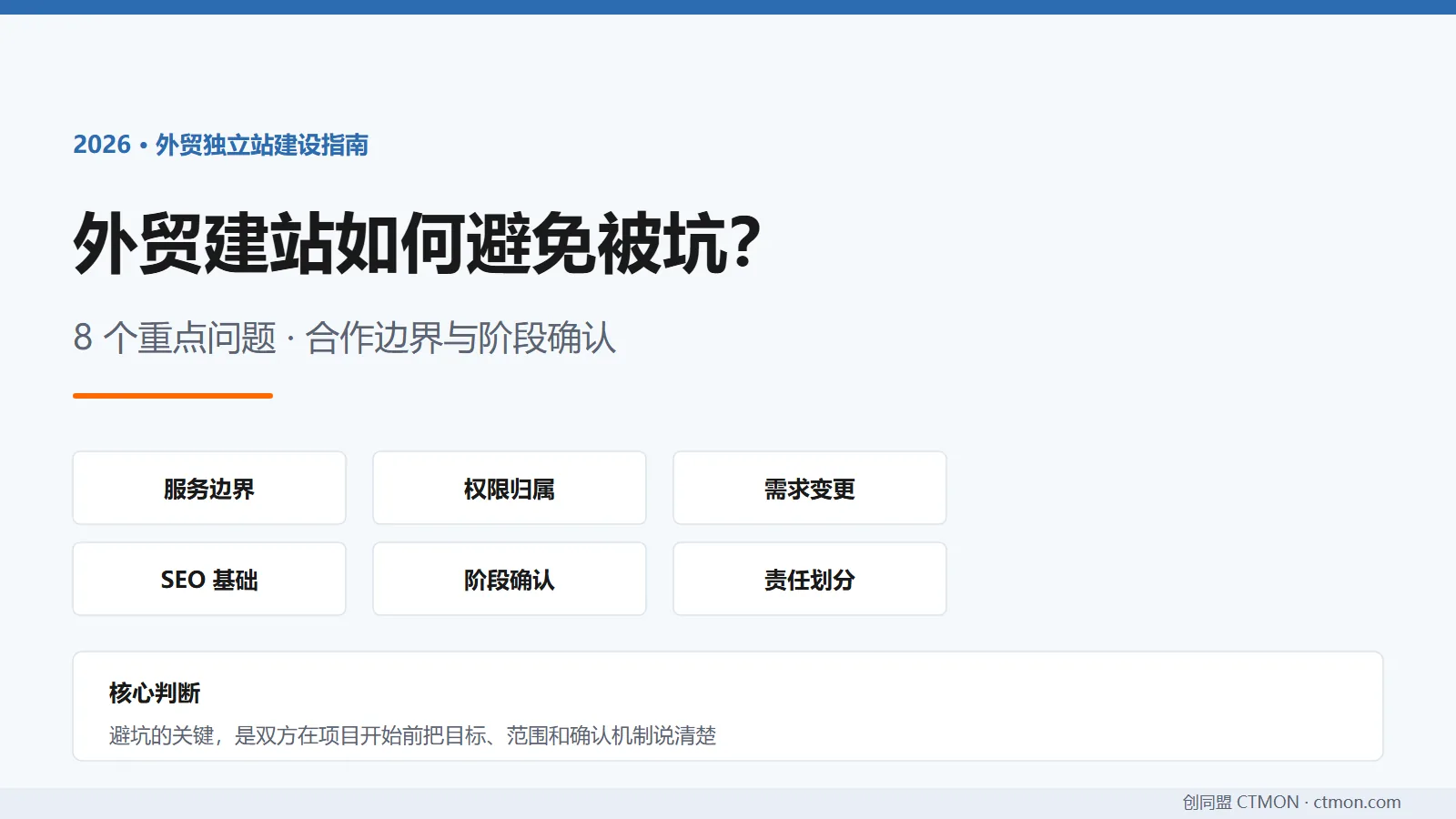
How to avoid pitfalls when building a B2B export website? A guide to avoiding common mistakes in B2B export website development in 2026.
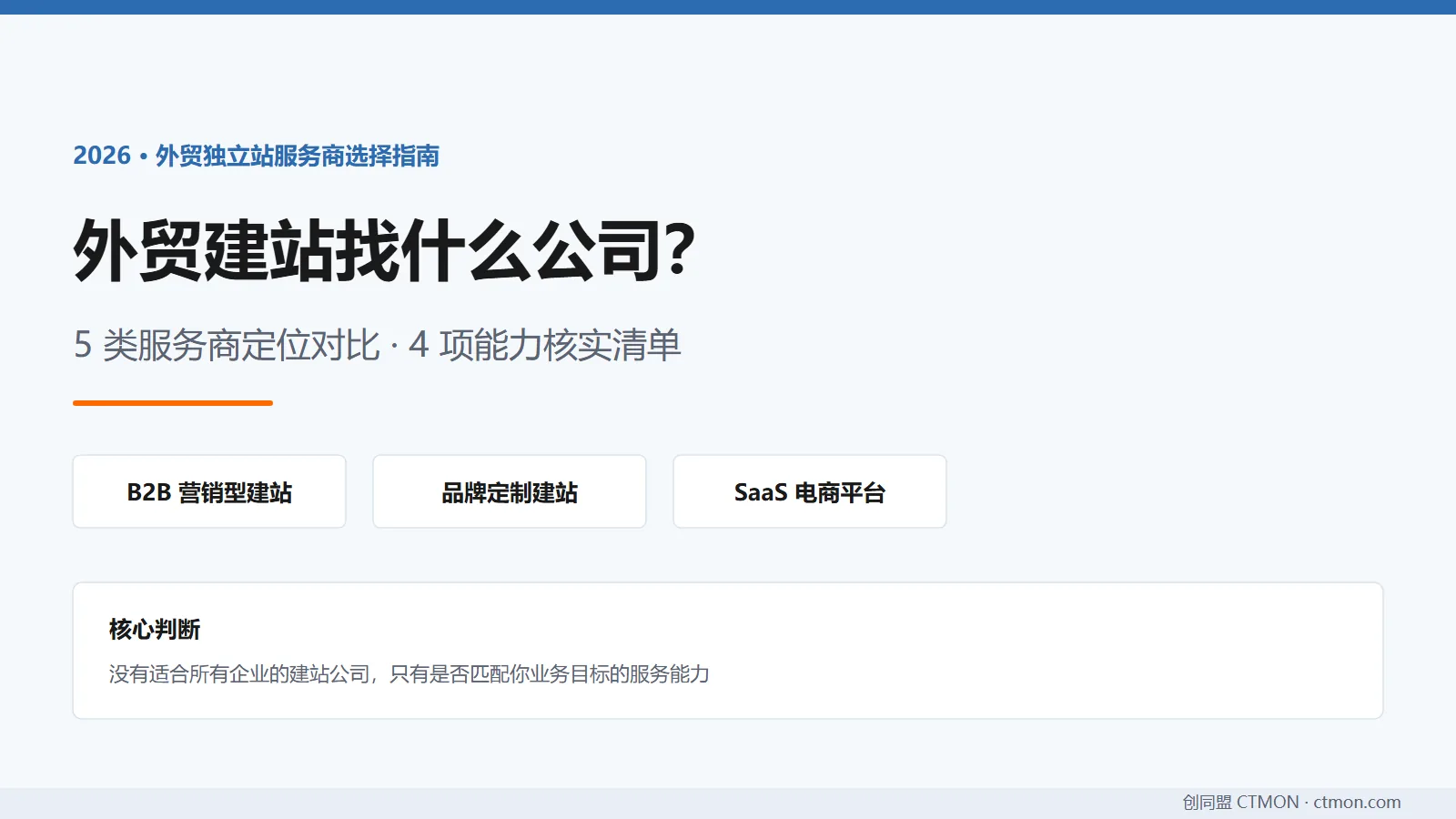
Which company should I choose for building a B2B export website? A comparison and recommendation of B2B export website service providers in 2026.

