Contents +
Preparations before setting up a B2B export website -- Target customer market research
Source: 创同盟
Date: 2025-07-09
Views: 1784
This article focuses on market research, target customer profiling, and analysis of market countries and cultural differences in the preparatory work before building a B2B export website.
introduction
Driven by global economic integration and the digital wave, B2B export websites have become a key vehicle for enterprises to expand into international markets and build brand image. However, the success of a business website does not solely depend on technological construction; a deeper determining factor lies in its strategic preparation beforehand. Precisely defining target customer profiles, comprehensive market analysis, and in-depth localization strategies are not isolated tasks, but rather interconnected and progressively layered strategic arrangements. Together, they form a solid foundation for a business website to achieve sustainable growth and gain a competitive advantage. Through meticulous planning and implementation of these cornerstones, enterprises can effectively avoid blind investment, accurately reach their target audience, and ultimately navigate the turbulent currents of global digital trade to maximize business value.
Define target customer profile
Understanding your target customer group is central to a business website's success, as they are the most likely potential customers to purchase your products or services. Defining customer personas is a systematic process that includes the following steps:
First, conduct in-depth market research to understand your customers' relevant data, interests, behaviors, and pain points. Second, examine your current customer base and analyze who is already using your product or service to identify the characteristics of your existing users. Based on this research and analysis, create fictional personas that represent your ideal customer—user profiles. User profiles should include detailed information such as age, gender, income, interests, and pain points. Finally, research your competitors' target customers; this can help you discover market gaps and opportunities to reach new audiences.
In the foreign trade sector, advanced tools can provide businesses with powerful customer profiling capabilities. AI tools, such as Chatgpt and Deepseek, help businesses gain deep insights into customer profiles and improve marketing precision through big data lead generation, AI lead recommendation, and AI lead background checks. These tools can integrate multiple lead data sources, including global trade data, Google Maps data, B2B inquiries, trade show data, and mainstream social media data, enabling one-stop customer development. For B2B foreign trade, the sales cycle is typically long, and the value of each individual customer is higher; therefore, AI-driven customer profiling offers a significant competitive advantage. It can not only identify broad audiences but also provide actionable intelligence about specific companies and their key decision-makers, including their trade history and real-time intent signals. This can significantly shorten the customer acquisition cycle and improve conversion rates through highly personalized outreach efforts, focusing resources on the most promising customers. Therefore, investing in such AI tools during the preparation phase of building a business website is a key strategic decision for building an efficient and accurate sales and marketing engine.
Market Analysis: Regional Preferences, Consumption Habits, and Cultural Differences
In the fiercely competitive cross-border e-commerce market, the principle of "not putting all your eggs in one basket" has become a widely accepted consensus. Diversifying markets and establishing a multi-pronged strategy are important tactics for companies to cope with market changes and maintain growth. For example, in 2024, the main export destinations for Chinese cross-border e-commerce were the United States, the United Kingdom, and Germany.
Significant differences in consumption habits and price tolerance exist across different target markets. For example, consumers in Europe and the United States have a higher price tolerance and are more suited to high-end products; while emerging markets such as Southeast Asia and Latin America are more suited to low-priced, high-volume products, with consumers favoring practical daily consumer goods or local specialty products.
Content localization is the cornerstone of international expansion, and it goes far beyond simple text translation. Localization requires aligning materials with customers' cultural expectations, providing authentic and relatable content. This includes adjustments to images, colors, formatting, user interfaces, and even payment methods, as colors can have different meanings in different cultures, and user interface design must adapt to different language reading habits and text lengths. Research shows that 87% of users in non-English speaking countries will not shop on purely English websites. This demonstrates that localization is not merely a nice-to-have feature, but a fundamental requirement for market penetration and success. For B2B foreign trade, trust, clarity, and cultural understanding are crucial; superficial translations can lead to misunderstandings, damaged reputation, and ultimately, lost sales. Therefore, localization is a fundamental prerequisite for market entry and building brand loyalty, directly impacting conversion rates and market share. This means that preparation must include in-depth cultural research and comprehensive localization planning from the outset, rather than simply translating after the website launches.
CTMON(www.ctmon.com)小编用以下表格梳理和定义外贸企业的理想客户,确保所有后续的网站设计、内容创作和营销策略都围绕精准的目标受众展开,避免盲目投入和资源浪费。
| Element Category | Define indicators | Purpose |
| Company Basic Information | Company size (number of employees, annual revenue) | Understand the size and purchasing power of potential customers |
| Industry and sub-sector | Industry characteristics influence product demand and procurement processes | |
| Geographical location (country, region) | Impact on localization strategy, logistics and compliance | |
| Business model (B2B/B2C, main products/services) | Define its core business and find areas for cooperation. | |
| Decision-maker information | Key Decision Maker (KDM) position, department, and responsibilities | Identify key figures in the procurement process |
| Decision-making chain and approval process | Understand the complexities of B2B procurement and develop targeted communication strategies. | |
| Public contact information (email, phone number, social media accounts) | Improve precision marketing and customer reach efficiency | |
| Business pain points and needs | Challenges and problems | Business websites should offer solutions and highlight product value. |
| The problem or goal expected to be solved through procurement | Understand the customer's underlying motivation | |
| Procurement activities | Procurement cycle and budget range | Impact on sales strategy and customer follow-up |
| Information acquisition channels (search engines, industry exhibitions, social media, etc.) | Determining the choice of marketing channels | |
| Preferred communication style | Optimize customer service and sales communication | |
| Content preferences | Preferred report types and industry trends to follow | Guiding the direction of content marketing |
| Preferred content formats (articles, videos, white papers, case studies) | Optimize content presentation | |
| Social media active platforms | Facebook, LinkedIn, TikTok, YouTube, etc. | Develop a social media marketing strategy |
| Cultural preferences | Language, aesthetics, and communication habits | Guide website design and localization |
in conclusion
In conclusion, the success of the B2B export website is no accident; it is the inevitable result of precise strategic planning and meticulous execution. From deeply understanding target customers and using AI tools to build refined customer profiles, to comprehensively analyzing the global market and implementing localization strategies that transcend language, every step was crucial. These preliminary preparations collectively built a solid foundation for the business website, enabling it to effectively mitigate risks, accurately reach its target audience, and stand out in fierce international competition.
Related reading recommendations
Export Business Selection Guide: Building a Business Website vs. Self-built Websites
Challenges and Solutions for B2B Export Websites

What does international social media management service include? 2026 Guide to Social Media Management for Export Businesses
2026-10-28

How to write a WordPress product page that will make overseas buyers want to send inquiries?
2026-10-28

How to fix WordPress form emails not sending: Practical WP Mail SMTP configuration
2026-10-27

Are foreign trade promotion companies reliable? Six key criteria for businesses to judge promotion service providers in 2026.
2026-10-26

How do I set up an email account for export businesses? How can I configure it to avoid it ending up in the spam/junk mail folder?
2026-10-26
Related Articles
Are foreign trade promotion companies reliable? Six key criteria for businesses to judge promotion service providers in 2026.

The 140th Canton Fair Opens: How can export businesses seize overseas sourcing opportunities through digital marketing?

How to Choose an Overseas Promotion Company for Foreign Trade? 2026 Service Provider Selection Criteria and Evaluation Guide
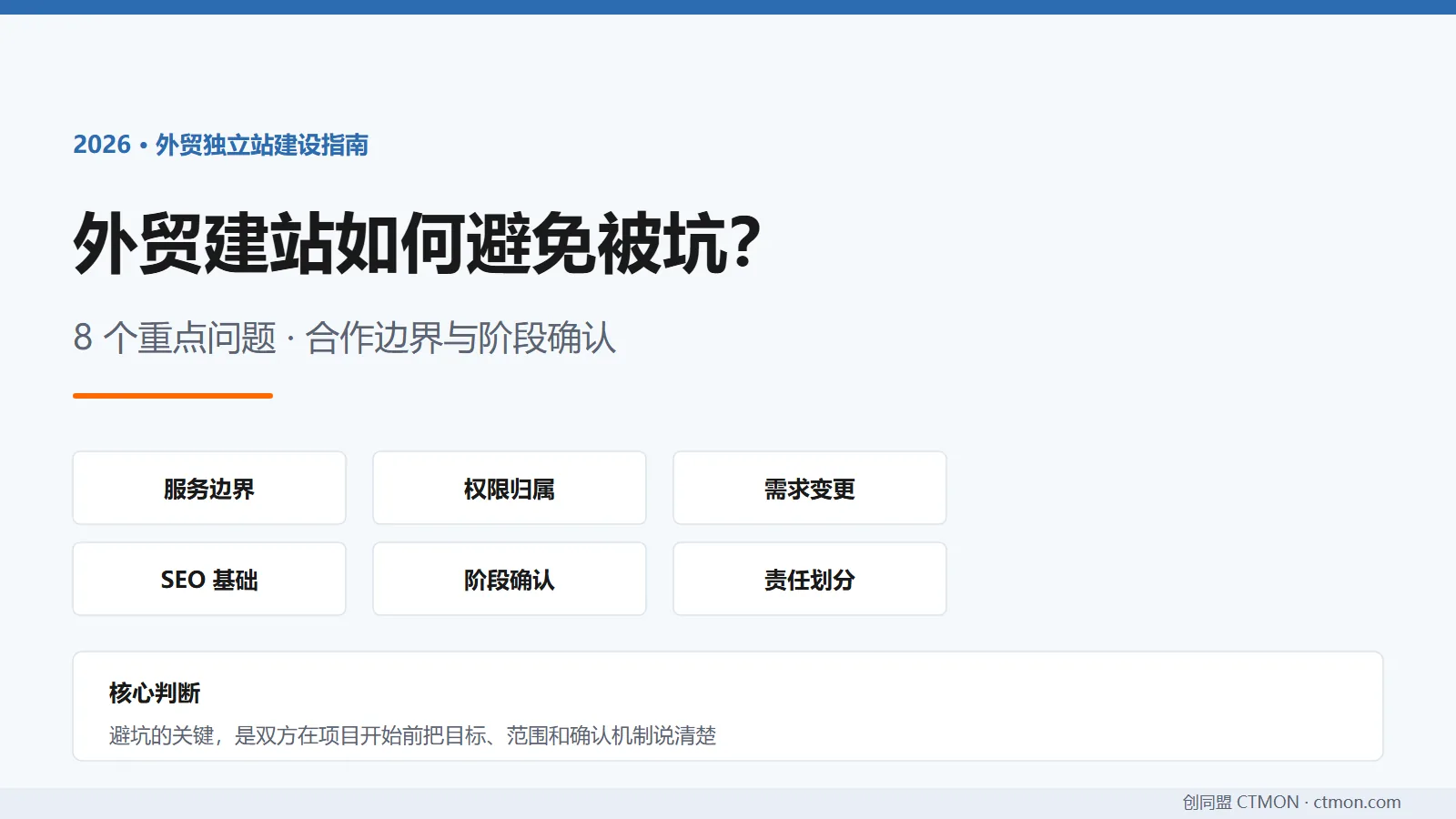
How to avoid pitfalls when building a B2B export website? A guide to avoiding common mistakes in B2B export website development in 2026.
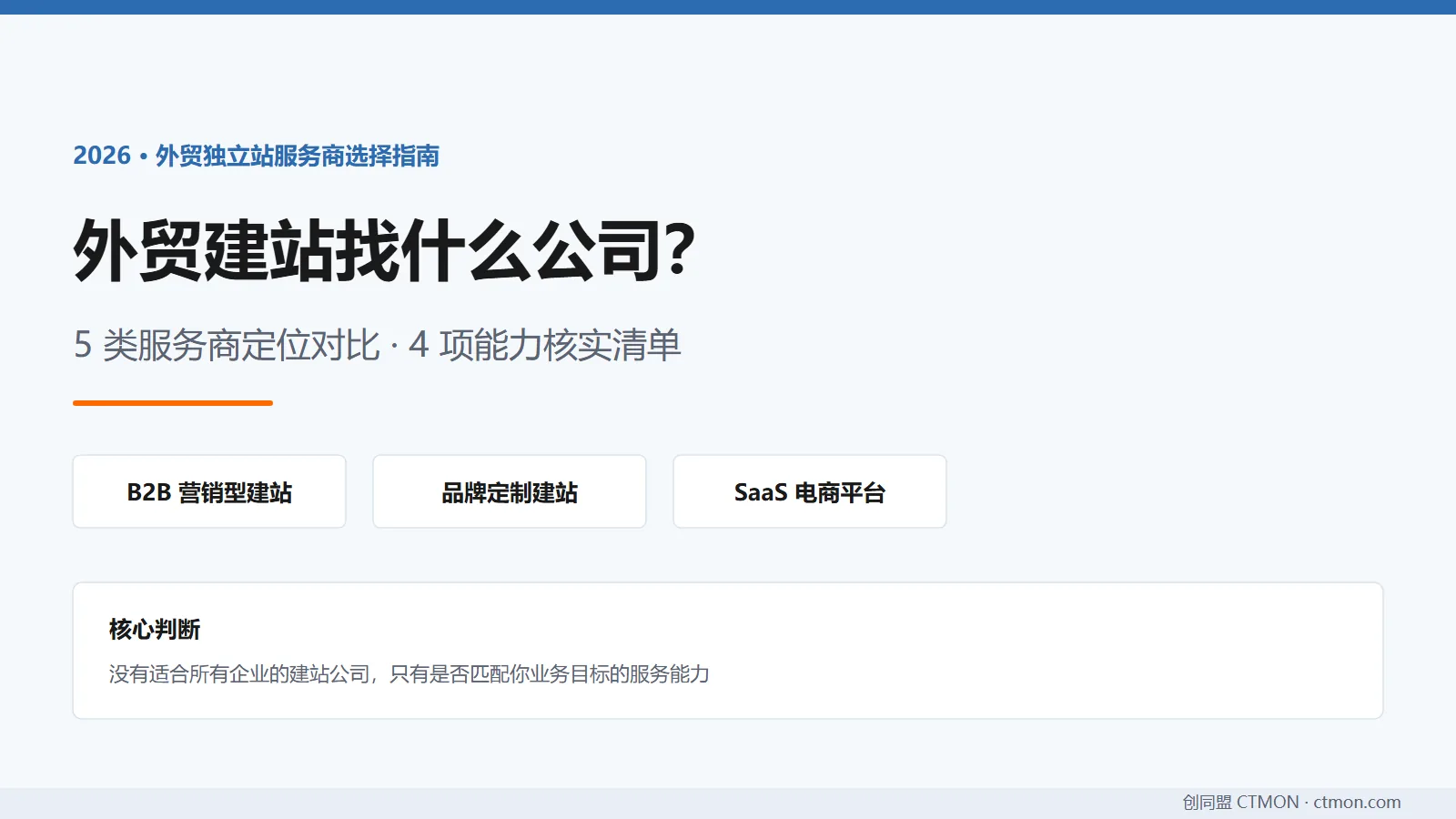
Which company should I choose for building a B2B export website? A comparison and recommendation of B2B export website service providers in 2026.

