Contents +
B2B Export Website Setup | Ultimate Guide to Choosing a Domain Provider (Part 1)
Source: 创同盟
Date: 2025-07-18
Views: 1499
introduction
This article provides professional advice for those who want to build a B2B export website, focusing on the purchase of domain names and hosting, especially addressing common pitfalls. It aims to ensure a smooth B2B export website setup.
Choosing a Domain Provider: Seven Common Pricing and Service Traps
When choosing a domain name service provider, business website operators should consider the following key factors to ensure that the chosen service provider can meet current and future business needs:
I. Pricing Tactics
Price transparency is a crucial indicator of a service provider's integrity. A seemingly low price may mask high subsequent costs or mandatory additional service fees. If a service provider lacks transparency in pricing, it's likely to have similar issues with other services, impacting users' assessment of the provider's business ethics and long-term reliability.
Low Introductory Prices, High Renewal Fees
The initial price of domain registration is usually low, but renewal fees are often the key to long-term costs. Users should be wary of "first-year discounts, high renewal prices" models, as this strategy can lead to a sharp increase in subsequent operating costs.
Why emphasize renewal? Because domain name registration has an expiration date, and to maintain the domain's registration status, it needs to be renewed upon expiration. It's recommended to enable automatic renewal to avoid the domain becoming unusable after expiration, thus affecting the website's normal operation. Domain renewal is a simple yet crucial operational detail for maintaining digital assets and avoiding business interruption. If a domain expires due to negligence, the website will immediately go offline, traffic will be disrupted, SEO rankings will suffer, and it may even be registered by someone else, causing irreversible damage to brand reputation and business. Therefore, export businesses should treat domain renewal as a high-priority task, ensuring the domain's continued validity through automation and regular checks, guaranteeing the long-term online operation of the website and the integrity of digital marketing assets.
Hidden fees
When assessing total costs, it's crucial to consider any hidden charges for additional services, such as ICANN administration fees, WHOIS privacy fees, and DNSSEC security fees. Some service providers may advertise extremely low first-year prices but quietly add numerous additional fees at checkout, resulting in a final cost far exceeding expectations.
in conclusion
Therefore, users should prioritize service providers that clearly state the first-year and renewal prices and include all necessary additional fees to avoid unnecessary trouble and burden in the future.
II. Privacy protection services are chargeable.
WHOIS Privacy
WHOIS stands for "Who Is," a protocol and service used to query internet domain registration information. Through WHOIS queries, users can obtain information such as the registrant, contact number, email address, registration date, and expiration date of a domain. This information is normally publicly available, but WHOIS privacy protection services hide this information to protect user privacy. Therefore, providing free WHOIS privacy protection services is essential for service providers to protect personal or business information.
However, many service providers advertise "free domains" or "low-priced domains," but often include WHOIS privacy protection as an extra charge, such as GoDaddy, Bluehost, and Network Solutions. This strategy exploits users' psychological expectation of "free" and then adds charges at key points.
Therefore, when assessing total costs, users must consider the cost of WHOIS privacy protection and prioritize service providers that truly offer free and lifetime privacy protection, such as NameSilo, NameCheap, Google Domain.com , Dynadot, and Porkbun. This practice of providing free privacy protection not only saves users money but also demonstrates the service provider's commitment to user data security and privacy rights.
III. Extra Fees for Security Features
DNSSEC
DNSSEC is an abbreviation for "Domain Name System Security Extensions." It is a set of technical extensions used to enhance the security of the Domain Name System (DNS), aiming to address the security vulnerabilities arising from the lack of security mechanisms in the initial design of DNS.
How it works: It utilizes Public Key Infrastructure (PKI) and digital signature technology to provide source verification and data integrity protection for DNS data. Encrypted signatures are added to DNS records, and these signatures are stored in the DNS name server along with common record types (such as A, AAAA, MX, CNAME records, etc.). When a DNS resolver queries information, it verifies the digital signature to confirm the authenticity and integrity of the DNS lookup response. Only after the signature verification is successful will the relevant record be provided to the client, ensuring that the user is directed to the correct website, rather than a tampered or malicious one.
Main functions: Effectively prevents security threats such as DNS spoofing, cache poisoning, and man-in-the-middle attacks. Users are virtually immune to attackers redirecting them to malicious websites by tampering with DNS records, thus protecting user privacy and security, increasing user trust in the internet, and safeguarding the core business security of enterprises.
Two-factor authentication
Two-Factor Authentication (2FA) is a security verification mechanism that requires users to provide two different types of verification information when logging in or performing important operations to confirm the authenticity of their identity, thereby improving the security of accounts or systems.
Its core logic is to combine "information you know" (such as passwords, PIN codes, etc.) with "items you own" (such as verification codes received on your mobile phone, dynamic passwords generated by hardware tokens, etc.) or "your own characteristics" (such as biometric information such as fingerprints, facial recognition, etc.) to form a dual verification system. Even if one verification method (such as password) is leaked, attackers will find it difficult to obtain the second verification information, thus making it impossible for them to easily access the account.
For example, when logging into a platform, a user first enters their account and password (first factor). The system then sends a verification code to the user's linked mobile phone number. The user enters this verification code (second factor) to complete the login process. This is a common two-factor authentication scenario. This mechanism effectively reduces the risk of account theft due to password leaks, phishing attacks, etc., and is widely used in scenarios requiring high security, such as email, online banking, social media, and cloud services.
suggestion
Providers offering free DNSSEC, such as NameSilo and Google Domains, demonstrate not only their investment in domain security technology but also their high regard for user website security. This suggests that these providers likely consider DNSSEC an integral part of their infrastructure and effectively internalize its costs.
In contrast, providers that require users to pay for DNSSEC, such as NameCheap and Domain.com , may see it as a profit center, or their technical architecture may fail to effectively internalize this cost. For business websites, DNSSEC is a crucial line of defense against traffic hijacking and brand damage; therefore, whether it's free or not directly impacts the initial security investment and long-term risks. Choosing a provider that offers free DNSSEC helps establish a robust security barrier from the very beginning of the website's launch.
IV. User Interface and Ease of Management
concept
User interface and management refer to the backend system interface used to manage all domain-related operations after you purchase the domain. This can be understood from the following two aspects:
1. User Interface:
This refers to the visual interface presented to users by the domain management platform, including button placement, menu layout, and workflow design. For example, after logging into your domain service provider's backend, the icons, text layout, and color scheme of functions such as "Renewal," "DNS Settings," and "Transfer Domain" all fall under the category of user interface. An intuitive UI allows you to quickly find the functions you need, reducing operational confusion.
2. Management Panel:
This is the entire backend system that carries these functions, serving as the user's "workbench." Besides the renewal page, it also covers the entire lifecycle management of the domain name from purchase to use, such as:
1. Domain name resolution settings (add A records, CNAME records, etc., to point the domain name to your website server);
2. Domain transfer (transferring a domain from the current service provider to another platform);
3.DNS settings modified;
4.WHOIS information management (including enabling/disabling privacy protection); view domain expiration dates, historical bills, etc.
Simply put, the management panel is a collection of functions, while the user interface is its appearance and interaction. The renewal page is just one specific example. For non-technical users, the ease of use of the panel reduces the learning curve and minimizes errors, directly impacting the efficiency and experience of handling domain-related matters. Therefore, a well-designed user interface that enhances overall user satisfaction is crucial.
3. Recommendations
NameSilo is known for its extremely low prices, but its control panel has been described as "relatively outdated." This indicates that NameSilo prioritizes development resources on core functionality and cost control over user interface aesthetics. In contrast, Google Domains and Domain.com emphasize their "user-friendly and intuitive" backend panels. This reveals two different product strategies in the market: "price-first" and "user experience-first."
For users with limited budgets but a willingness to learn, the old interface may not be a problem; however, for users who prioritize efficiency and convenience, paying extra for a better UI is worthwhile. Therefore, users need to be clear about their own proficiency in technical operations and their level of importance placed on user experience when making their choices.
5. Unable to find after-sales personnel
High-quality customer support is a crucial indicator of a domain name service provider's reliability. 24/7 support, multiple channels (such as telephone, online chat, and ticketing systems), and rapid response times are key metrics for measuring customer service levels. When domain issues arise (such as DNS resolution failures or renewal problems), timely and effective technical support can minimize website downtime and prevent potential business losses.
Some service providers may offer multiple contact methods, but their actual response speed or problem-solving capabilities may be unsatisfactory. Users need to make a comprehensive judgment based on their actual experience or by checking user reviews. Domestic service providers generally offer easy access to customer service, while international providers may present a slightly greater challenge for users with limited English proficiency.
VI. Payment is troublesome
For Chinese users, the diversity of payment methods is a significant factor in convenience. The availability of support for local payment methods such as Alipay, WeChat Pay, and UnionPay greatly reduces the barriers and complexity of cross-border payments.
NameSilo explicitly supports Alipay, WeChat Pay, and UnionPay, while Google Domains only supports Google Pay and credit cards. This localized payment support, though seemingly minor, can directly impact user decisions, especially in cross-border transactions. It reflects the service provider's understanding and investment in a specific target market and is a manifestation of its differentiated competitive advantage. For users accustomed to domestic payment methods, service providers that support local payments undoubtedly offer a more convenient and seamless purchasing experience.
VII. Additional Services (Hosting, Email, SSL Certificates, etc.)
Advantages
If you purchase a "hosting + business email + SSL certificate" package from a one-stop service provider, the provider will indeed help you with the basic configuration, such as binding the email to the domain (e.g., xxx@你的公司域名.com ) and deploying an SSL certificate for the website (making the URL display "https" and encrypting data transmission). You can use these functions directly without having to manually configure them in a complicated way.
However, if you purchase hosting services separately, it may not include a business email and SSL certificate, which will require additional payment to add. Even with bundled packages, you may still need to do some things yourself (such as setting up an email account and confirming the validity of the SSL certificate), so it is not entirely "zero-operation".
Simply put, hosting services are the foundation for "getting your website online," while corporate email and SSL certificates are additional tools to enhance website functionality and security. The advantage of a one-stop service provider is that it simplifies and integrates the configuration process for these services, allowing you to spend less time on technical setup and focus more on using the website rather than building it.
suggestion
Providers like Shopify, GoDaddy, and Bluehost offer bundled services including domain name registration, hosting, and website building. This "one-stop" model is highly attractive to tech-savvy users or those seeking convenience. It simplifies management processes, reduces the hassle of switching and configuring between different platforms, and ensures all services run on a single platform.
However, while enjoying the convenience, users also need to assess the potential flexibility limitations they may face when expanding or adjusting their business in the future. For example, if they need to migrate their website to another hosting provider in the future, the tight binding between the domain name and hosting may increase the complexity of the operation and potential costs. In other words, users may encounter inconvenience or additional costs when changing a service in the future (such as changing only the hosting provider).
Therefore, when choosing a one-stop service, users need to weigh the current convenience against their future flexibility needs.
in conclusion
CTMON (www.ctmon.com): Editorial View
1. Price is not the only consideration:
The initial price may be deceptive; the key to long-term costs lies in the renewal price and hidden fees (especially WHOIS privacy protection and DNSSEC).
2. Functionality matches requirements:
Choose a provider that offers corresponding additional services (such as hosting, website building tools) or just domain name services, based on the type of business website (e.g., e-commerce, content site) and your technical proficiency.
3. User experience and support: A user-friendly interface and responsive customer support can greatly improve management efficiency and problem-solving capabilities.
4. Localized Payment: For Chinese users, service providers that support local payment methods such as Alipay and WeChat Pay (such as NameSilo) can provide a more convenient purchasing experience.
Related Recommendations
Changing a business website's domain name: destruction or rebirth?
Does your B2B export website's domain name help with Google SEO?
What does international social media management service include? 2026 Guide to Social Media Management for Export Businesses
2026-10-28
How to write a WordPress product page that will make overseas buyers want to send inquiries?
2026-10-28
How to fix WordPress form emails not sending: Practical WP Mail SMTP configuration
2026-10-27
Are foreign trade promotion companies reliable? Six key criteria for businesses to judge promotion service providers in 2026.
2026-10-26
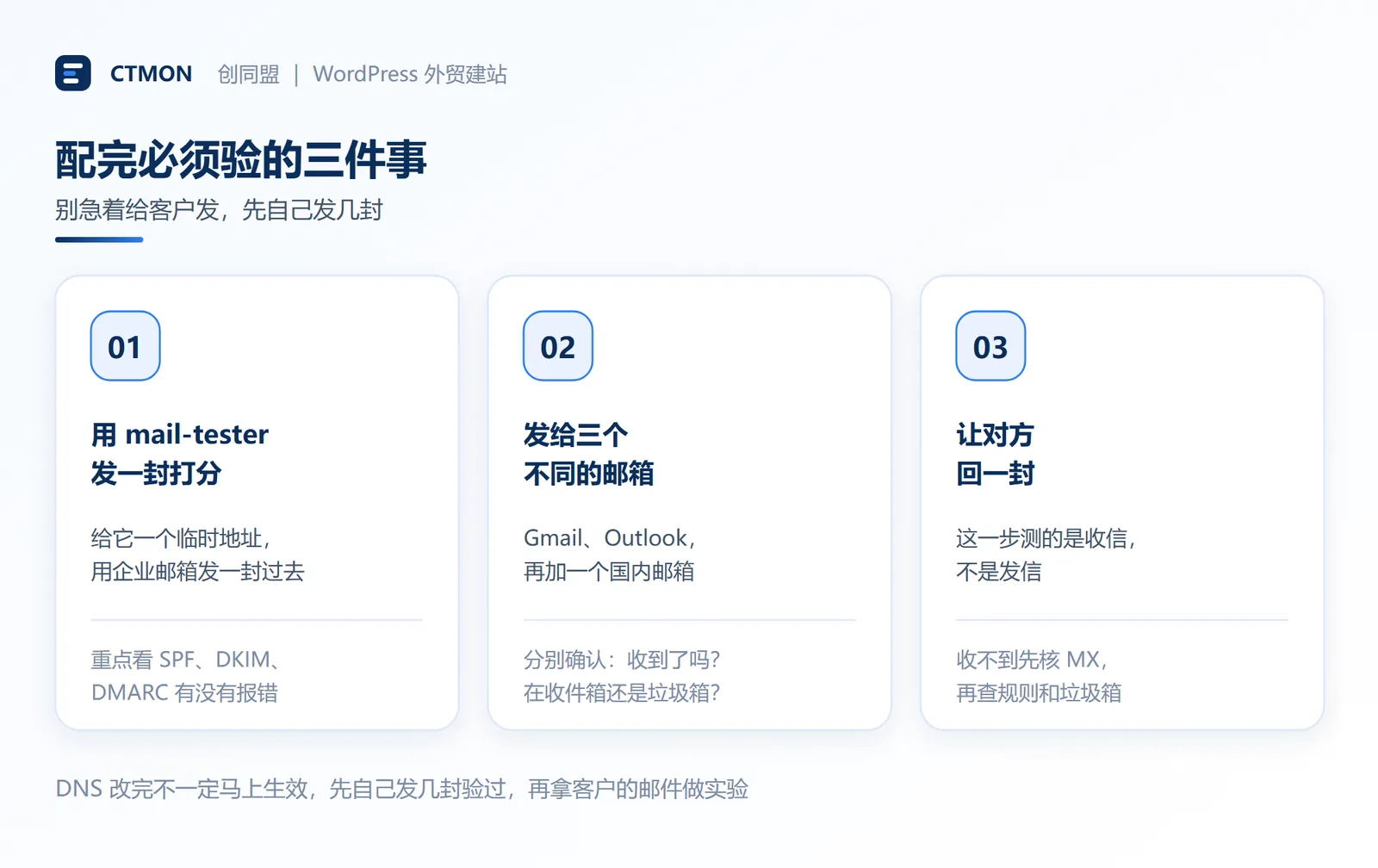
How do I set up an email account for export businesses? How can I configure it to avoid it ending up in the spam/junk mail folder?
2026-10-26
Related Articles
Are foreign trade promotion companies reliable? Six key criteria for businesses to judge promotion service providers in 2026.

The 140th Canton Fair Opens: How can export businesses seize overseas sourcing opportunities through digital marketing?
How to Choose an Overseas Promotion Company for Foreign Trade? 2026 Service Provider Selection Criteria and Evaluation Guide
How to avoid pitfalls when building a B2B export website? A guide to avoiding common mistakes in B2B export website development in 2026.
Which company should I choose for building a B2B export website? A comparison and recommendation of B2B export website service providers in 2026.

