Contents +
Setting up a B2B export website: A complete guide for beginners (2025 latest version)
Source: 创同盟
Date: 2025-07-21
Views: 2291
More and more businesses and individuals are starting to build B2B export websites. With their advantages such as self-control and the ability to obtain free inquiries through Google SEO, B2B export websites have become an important option for expanding into overseas markets. After all, traffic costs and regulatory restrictions on third-party platforms are rising, making building a B2B export website a better choice in comparison.
If you're a complete beginner to B2B export websites and know nothing about website building, don't worry. This article will start with the basic concepts and guide you through a comprehensive understanding of the logic, specific steps, cost breakdown, and pitfalls of building a B2B export website, enabling you to successfully build your own B2B export website even from scratch.
I. Why create a B2B export website?
Many beginners wonder, since they already have third-party platforms like Alibaba.com, why bother building a business website? In fact, the value of a business website lies in several aspects:
· You have absolute autonomy : your business website is entirely under your control, free from platform rules, sudden account bans, and participation in cutthroat price wars. You can flexibly adjust your operational strategies based on your product characteristics and market demands.
· More flexible marketing channels : Business websites can connect to various marketing channels such as Google, social media, and email to achieve diversified traffic acquisition. For example, free traffic can be obtained through Google SEO optimization, and targeted customers can be precisely reached through Facebook ads, resulting in lower costs and more controllable results.
· Supporting Brand Building : A business website allows you to comprehensively showcase your company's strengths, product advantages, and brand culture, gradually establishing brand awareness in overseas markets. Compared to the "homogenized" displays on third-party platforms, a business website better highlights brand characteristics.
· Acquiring qualified inquiries : Most visitors to a business website come through active keyword searches, indicating clear intent and resulting in higher-quality inquiries. Furthermore, this customer data is held in your own hands, allowing for long-term follow-up and maintenance, thus forming a private traffic pool.
II. How to choose the best way to build a B2B export website?
There are two main ways to build a B2B export website: build it yourself or hire an outsourcing company. Which is more suitable for beginners?
Build Your Own vs. Outsource: Which Should a Beginner Choose?
Objectively speaking, both methods have their advantages and disadvantages. However, from a beginner's perspective, building your own website is more recommended. The reason is simple: self-hosting allows you to firmly control the domain name and hosting, avoiding the loss of your website later due to issues with the platform or outsourcing company.
Moreover, website building tools are now very mature. Even if you don't know coding, you can quickly build a website that meets your needs using tools like WordPress and Shopify. For example, WordPress is used to build 43% of websites worldwide. It has a wealth of plugins and powerful features, making it very suitable for B2B companies. Shopify, on the other hand, is more suitable for B2C e-commerce, as it is easy to use and can be launched quickly.
The website building outsourcing market is rife with unscrupulous companies. Many claim to offer "professional website building" services but actually just use templates, charging exorbitant fees and potentially demanding additional charges later under various pretexts. Newcomers, lacking the ability to discern quality, are easily taken advantage of.
Open Source Systems vs. SaaS Platforms: Which to Choose?
There's a lot of online debate about website building tools, mainly focusing on the choice between open-source systems (like WordPress) and SaaS platforms (like Shopify). Actually, it depends on your business type:
· For B2B businesses : WordPress is the preferred choice. This is because B2B clients rely more on Google search, and WordPress has a clear advantage in SEO optimization, lower costs, and greater scalability.
· For B2C businesses : Shopify is a good choice. B2C orders have low average order values and require rapid traffic acquisition and conversion. Shopify offers greater convenience in areas such as social media integration, payment interfaces, and order management, which can improve operational efficiency.
III. Complete Process of Building a B2B Export Website
Setting up a B2B export website is a systematic task that needs to be carried out step by step. Specifically, it can be divided into three stages:
Phase 1: Website Planning
Before you start building, you must plan ahead and clearly define the website's goals and positioning. Specifically, you can start from these aspects:
1. Define the website type : Is it a B2B showcase website or a B2C transaction website? Different types of websites have different functions and design focuses.
2. Analyze your target audience : Who are your customers? From which countries are they from? What languages do they usually speak? What features of the product do they value? These factors will influence the content and design of your website.
3. Research your competitors : Examine how your peers' websites are structured and what their strengths are. You can learn from their advantages and avoid making the same mistakes. For example, use tools like SEMrush to analyze their keyword placement and traffic sources.
4. Determine the core content : What content does the website need to display? For example, company introduction, product information, contact information, case studies, etc., clarify these in advance.
Phase Two: Website Setup
Once the planning is complete, you can begin construction. The specific steps are as follows:
1. Purchasing a domain name and hosting : A domain name is the website's address, ending with 建议选择.com . It should be concise, easy to remember, and ideally include the brand name or core keywords. For hosting, we recommend using a foreign provider, such as Cloudways, which offers fast speeds, high stability, and a better access experience for overseas customers.
2. Installing a website building system : If you choose WordPress, you can install it with one click directly in the hosting backend; if you choose Shopify, you can start using it after registering an account.
3. Choose a theme template : Select a suitable template based on the characteristics of your industry. It is recommended to choose a simple and elegant template that highlights the product and content, and avoids anything too fancy.
4. Improve website content : Upload company introduction, product images and descriptions, contact information, etc., and ensure that the content is professional, accurate, and conforms to the language habits of the target market.
5. Install essential plugins such as the SEO plugin (Yoast SEO), the security plugin (Wordfence), and the backup plugin (UpdraftPlus) to enhance website functionality and security.
6. Optimize website experience : Check website speed, mobile compatibility, link validity, etc., to ensure visitors have a good browsing experience.
7. Pre-launch testing : Test whether functions such as form submission and payment process (if it is B2C) are working properly, and only launch the system after ensuring that there are no errors.
Phase 3: Website Promotion
Once the website is built, the most important thing is promotion and traffic generation. Otherwise, even the best website will go unseen. There are many promotion methods, but the key is to choose the right niche for you:
· B2B website : Focus on Google SEO and PPC advertising. Consistently publish original articles weekly, covering industry keywords, to gradually improve the website's Google ranking and gain free traffic; simultaneously, run Google Ads to quickly generate targeted inquiries.
· B2C websites : Focus on social media marketing and influencer collaborations. For example, they post product videos and product recommendation content on Facebook, Instagram, and TikTok, seek influencer endorsements, and encourage users to share their experiences and generate viral spread.
Regardless of the method, long-term commitment is essential. Content marketing is fundamental; only by consistently producing valuable content can a website build authority and achieve stable traffic growth.
IV. Precautions for setting up a B2B export website
Beginners often make mistakes when building a website; these precautions must be kept in mind:
1. Before registering a domain name, search for it on Google to avoid conflicts with well-known brands or being identified as a "counterfeit" by Google.
2. You must use a foreign hosting provider because your customers are mainly located overseas. Domestic hosting will result in slow access speeds and negatively impact the user experience.
3. For B2B, choose WordPress; for B2C, consider Shopify. Don't blindly follow trends when choosing a website building tool.
4. Choose themes and templates with high sales volume and good reputation. Do not use pirated versions, otherwise there may be security risks and no after-sales support.
5. Website design should be simple, highlighting core content, and avoiding excessive use of colors and animations to prevent distracting visitors.
6. Back up your website data regularly, ideally once a day, to prevent your website from being hacked or your data from being lost.
7. Learn how to migrate your website to avoid being tied to a single hosting provider and save costs when switching hosting providers.
8. Make sure to include clear calls to action on your website, such as "Contact Us" or "Get a Quote," to guide visitors to take action.
V. What materials are needed before building a website?
Preparing these materials in advance can make the website building process smoother:
· Domain name and hosting account
· Company introduction (300 words or more, including industry, size, advantages, etc.)
· Company logo (simple and easily recognizable)
· Product images and descriptions (images should be clear, uniform in size, and descriptions should highlight the selling points).
· Enterprise qualification certificates (such as ISO certification, patent certificates, etc.)
· Contact information (phone number, email, address, social media accounts, etc.)
· Customer testimonials or case studies (to increase credibility)
VI. How to choose a domain name and hosting?
Domain Name Selection Tips
· The suffixes 优先选.com , 其次是.net , and 或.org are widely recognized globally.
· The domain name should be short, easy to remember, and easy to spell, and preferably include the brand name or core keywords.
· Avoid using special symbols (such as horizontal lines), as they can be confusing.
· Before registering, check if the corresponding social media account is available to facilitate unified brand promotion later.
Recommended host
Cloudways is recommended for building websites for international trade, with clear advantages:
· It is fast, highly stable, and provides a good access experience for overseas customers.
· Pay monthly, and the renewal price is the same as for new users—no hidden tricks.
· We offer 24/7 customer support, and any problems can be resolved promptly.
· It comes with a daily backup function, ensuring security.
Other options include SiteGround and Hostinger, but be careful to avoid domestic cloud servers and hosting providers under EIG.
7. How much does it cost to build a B2B export website?
Many beginners are concerned about the cost of building a website, but in fact, building one yourself is not expensive:
|
Project |
Fee (per year) |
|
Domain name (Porkbun) |
Approximately US$11 |
|
Cloudways (hosting) |
$11/month, $132/year |
|
Website building system (WordPress) |
free |
|
Theme Templates (Astra + Elementor) |
free |
|
total |
Approximately US$143 (around RMB 1000) |
This is just the basic cost. If you need to run ads or hire professionals to do SEO, the cost will be higher, generally ranging from 20,000 to 50,000 yuan per year, depending on the promotion efforts.
8. Pitfalls of Foreign Trade Website Building Companies: Beginners Should Avoid!
If you really don't have time to build it yourself and need to hire an outsourcing company, be sure to pay attention to these pitfalls:
1. You must register the domain name and hosting yourself to have full ownership; otherwise, the website belongs to someone else.
2. Don't believe in "website building for a few hundred yuan"; they basically just use templates, have poor quality, and are troublesome to modify later.
3. Be wary of promises of "guaranteed SEO ranking." SEO is influenced by many factors, and no one can guarantee a 100% ranking.
4. Do not choose domestic self-service website building systems, as many do not support Google indexing and cannot be used for overseas promotion.
5. Before collaborating, check the company's reputation for any negative reviews. It's best to use SEMrush to analyze their website traffic to determine their professionalism.
IX. Summary
Setting up a B2B export website isn't as difficult as you might think. Even beginners can get started easily if they master the right methods. The key is to do it yourself, control the core resources, choose the right website building tools and promotion channels, and avoid common pitfalls.
Follow the steps outlined in this article and persist for 6-12 months to see results. Remember, a business website is a long-term project that requires continuous investment of time and effort in optimization and promotion to gain a foothold in overseas markets and achieve business growth.
Finally, CTMON ( www.ctmon.com) wishes all foreign trade professionals a smooth website building process and many orders!

What does international social media management service include? 2026 Guide to Social Media Management for Export Businesses
2026-10-28

How to write a WordPress product page that will make overseas buyers want to send inquiries?
2026-10-28

How to fix WordPress form emails not sending: Practical WP Mail SMTP configuration
2026-10-27

Are foreign trade promotion companies reliable? Six key criteria for businesses to judge promotion service providers in 2026.
2026-10-26

How do I set up an email account for export businesses? How can I configure it to avoid it ending up in the spam/junk mail folder?
2026-10-26
Related Articles
Are foreign trade promotion companies reliable? Six key criteria for businesses to judge promotion service providers in 2026.

The 140th Canton Fair Opens: How can export businesses seize overseas sourcing opportunities through digital marketing?

How to Choose an Overseas Promotion Company for Foreign Trade? 2026 Service Provider Selection Criteria and Evaluation Guide
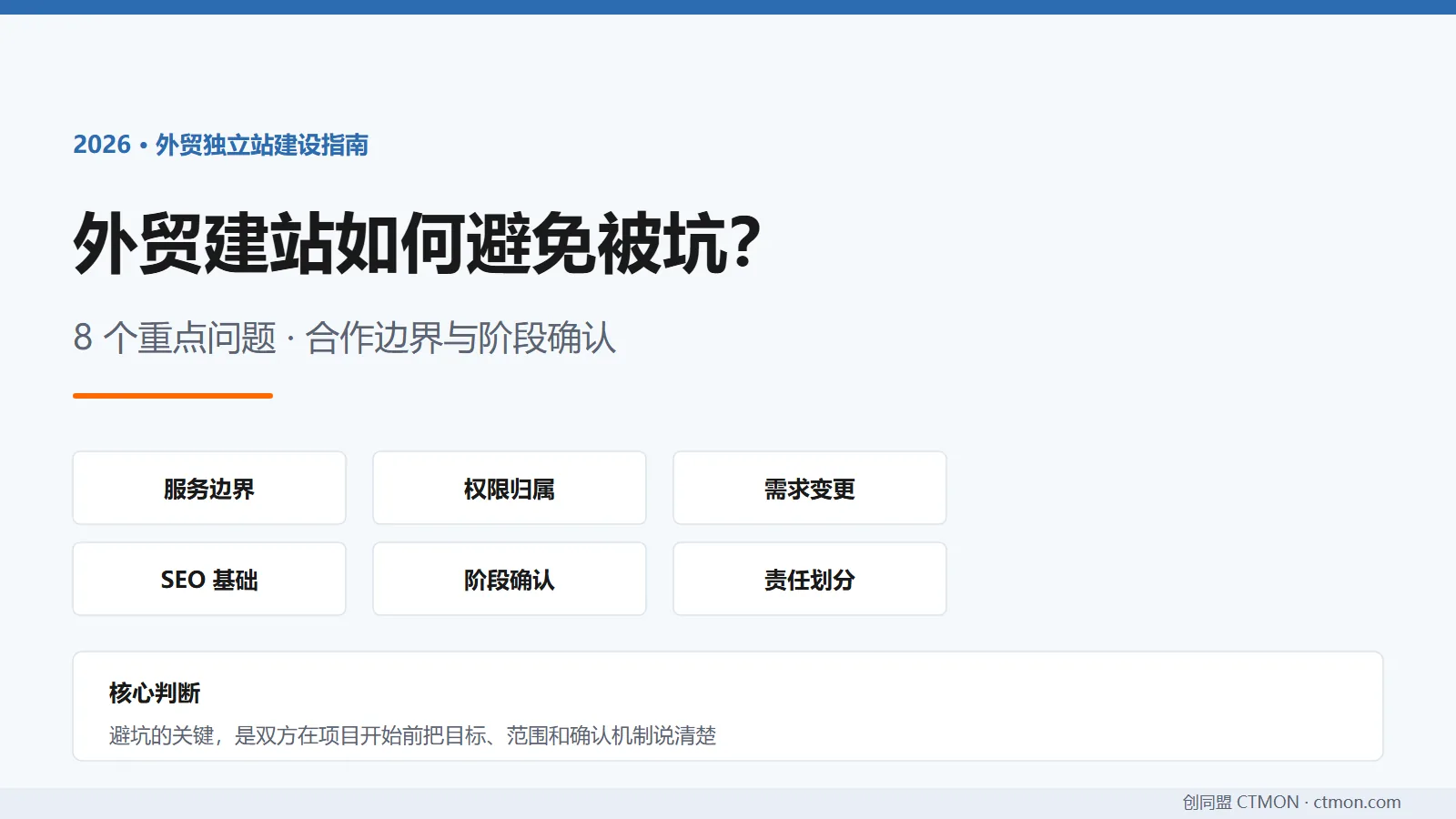
How to avoid pitfalls when building a B2B export website? A guide to avoiding common mistakes in B2B export website development in 2026.
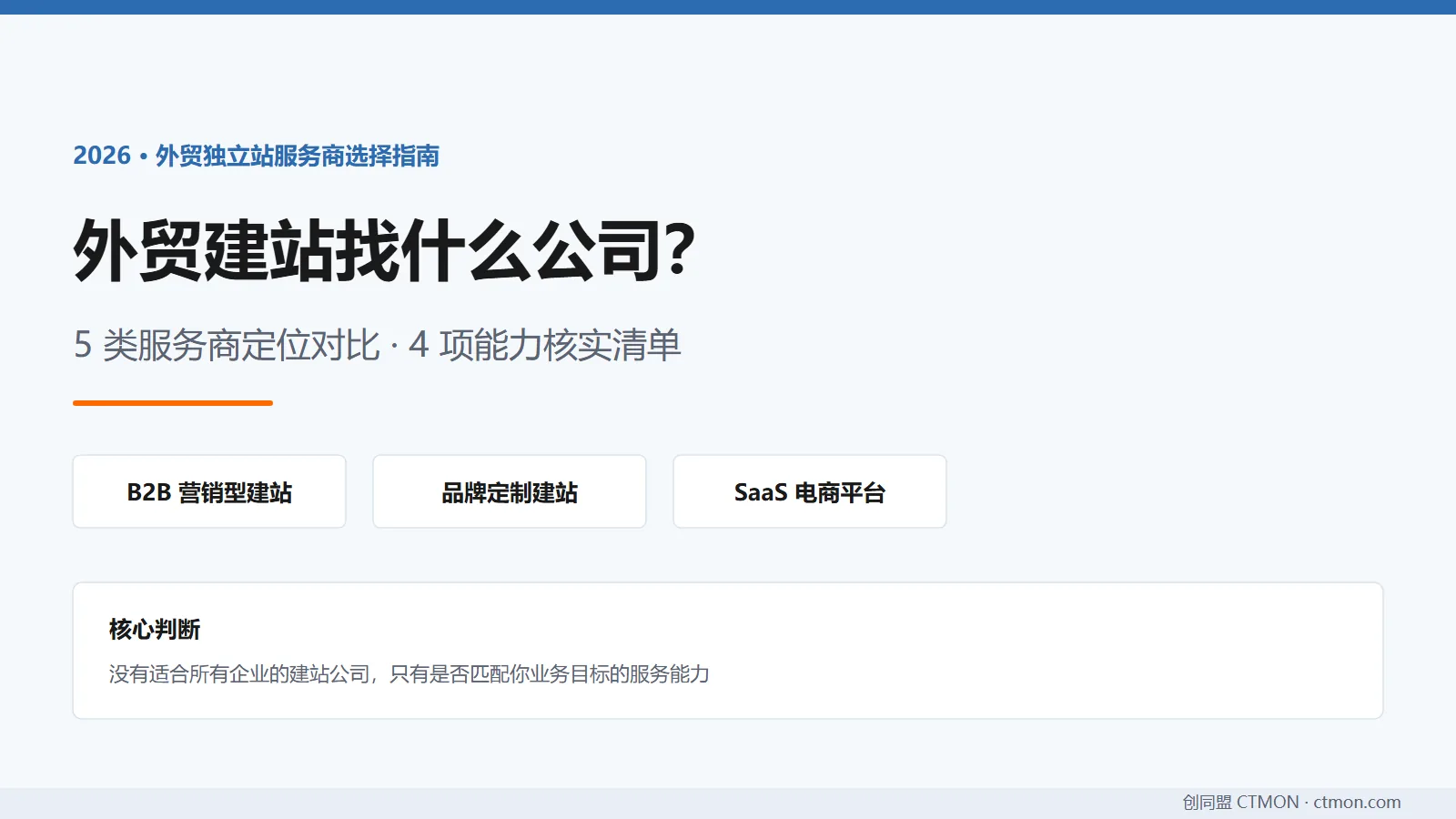
Which company should I choose for building a B2B export website? A comparison and recommendation of B2B export website service providers in 2026.

