Contents +
CTMON Google SEO Beginner's Guide: Keyword Research (Part 1)
Source: 创同盟
Date: 2025-07-26
Views: 1570
This article contains 3630 words and is estimated to take 10 minutes to read.
Recently, I received feedback from my business colleagues that those working in B2B export businesses prefer to read about relatively basic practical knowledge of overseas promotion, such as how to select and deploy keywords for Google SEO.
After hearing this, I thought to myself, "This is nothing, I'll arrange it!"
So I searched online extensively and read many articles related to Google SEO keyword research, including the few that were widely circulated in the industry.
I found that there is still room for CTMON to make a difference. Some comments in the comment section have pointed out that the article content is too theoretical and lacks practical content and operational details.

Those who know, know.
In this article, we will discuss practical application using keyword research on the B2B export website of a solar street light manufacturing company.
Keyword research for Google SEO: If keywords are chosen inappropriately, it may cause the website to miss out on high-intent customers and damage the brand's professional image.
Moreover, it is highly likely that the website will have difficulty obtaining traffic, its ranking will not improve for a long time, and the sandbox period for new sites will be greatly extended.
To make it easier for readers unfamiliar with Google SEO, I will explain it in plain language.
I. Why select research keywords?
First, what are the keywords for?
Choosing keywords means selecting those keywords that we want our website to appear at the top of search results.
Optimization refers to using various methods to gradually improve a website's ranking in search results for selected keywords.
This dictates that we must consider three aspects:
1. Which keywords would our target customers search for? If these keywords are not what our target customers would search for, is optimizing for them useless?
2. Which keywords are our target customers searching for and have high search volume? Even if these keywords are keywords our target customers search for, if the search volume is too low, will optimizing for them be effective?
3. Which keywords are our target customers searching for, especially when they are preparing to make a purchase? Even if some keywords are searched by target customers, but they don't seem to generate much transaction or business interest, is it necessary to optimize these keywords?

Now let's continue reading with these questions in mind.
To find out which keywords your target customers will search for, shouldn't you first know what names your target customers use when searching for products?
II. Why select research keywords?
Keyword translation and localization directly impact a website's visibility in the target market. B2B clients typically use more professional and formal terminology, so it's essential to ensure keywords align with their search habits.
step:
Check translation accuracy : Use Google Translate for initial translation, then verify it using the target market's search engine.
For example, "solar street lights" is more commonly translated as "solar street lights" (4400 searches/12 months), while "solar energy street lights" (880 searches/month) has a lower search volume.
Research local expressions : Use Google Trends or Keyword Planner to enter keywords and observe related suggestions.
For example, searching for "solar street lights" might suggest "solar powered street lights" (1900 times/month), so you need to compare the usage frequency.
Comparing different expressions : Based on keyword data from the research, prioritize keywords with high search volume and low keyword-to-discount (KD) ratios, considering professional terms that B2B clients might prefer. KD values have been discussed in previous articles and will not be repeated here.
Note: The appropriate search volume and KD (keyword density) criteria for keywords depend on the website's development stage. Recommended tools are Ahrefs and SemRush; we will release a keyword data research tutorial later.
For example:
Taking solar street lights as an example, theoretically, "solar street lights" (4400 times/12 months, KD 29) can be identified as the main expression and included in the list of pending keywords for further in-depth discussion.
B2B customers may search for "commercial solar street lights" (880 times/12 months, KD 11), which can also be included in the study.
3. Learn authentic usage from competitors' websites
Competitors' keyword choices reflect market trends and are particularly valuable for B2B clients, helping them discover industry standard expressions.
step:
Identify top competitors : Search "solar street lights manufacturer" on Google to find top-ranking websites such as SEPCO Solar Lighting and Fonroche Lighting America .
Analyze keywords : Examine the title, meta description, and category to extract relevant B2B terms, such as "commercial solar LED lighting" and "solar street light suppliers".
Study the website structure : Observe its product pages and contact pages to understand how to place B2B keywords, such as "request a quote" or "distributor partnership".
For example:
SEPCO's website uses terms like "solar street lighting" and "energy savings," while Fonroche emphasizes "top solar street light manufacturer," which is attractive to B2B clients and can be used as a reference.
However, before the new site gains authority, GSC page coverage, or an overall website rating, we must avoid direct confrontation and refrain from trying to stop the inevitable, which could prevent the new site from achieving a good traffic ranking.
A large tree absorbs all the sunlight and nutrients from the surrounding soil, making it difficult for other trees to grow next to it.

III. Core Dimensions for Measuring Keywords
Keyword selection requires a balance of search volume, difficulty, and intent to ensure suitability for B2B customer needs and to attract high-intent traffic.
standard:
Search Volume : Use Google Keyword Planner or SEMRush to filter keywords with a monthly search volume of 100 or more.
B2B keywords such as "solar street light manufacturer" (140 times/12 months, KD39) have low traffic but high conversion potential, hence the high KD and fierce competition.
Keyword Difficulty (KD) : Generally speaking, it is recommended to choose < with a KD of 30, such as "solar street lights" (KD 29). However, this is not absolute and should be considered based on the competition situation of each industry on Google search engine.
Search Intent : Categorized into navigational, informational, commercial, and transactional keywords. For B2B clients, commercial (e.g., "commercial solar street lights") and transactional (e.g., "solar street lights for sale") keywords are prioritized, with 260 searches/month and a KD of 30.
IV. Practical Guide to Keyword Selection for New Websites
Having read this far, we probably all understand the basic process and standards for selecting keywords, but there are actually very deep details involved, which I have read in many articles by my peers, and they never mention them.
They are not hiding anything, but rather that every industry and every company is different, so the SEO strategies and even the execution details of a company's business website will certainly be different.
CTMON just happens to have some practical experience, so he dares to talk about these "unspeakable" secrets within the industry.
However, looking at the actual data from Google search engines regarding the solar street light manufacturing industry—
Even disregarding the fact that "solar street lights" is a C-end keyword, a new website should absolutely not choose the keyword "solar street lights".
A new site with a backlink quality score of zero (which can be determined using Moz's DA index) and zero GSC (Google Search Console) page coverage, lacking sufficient "trust" from the Google search engine—
Forcibly optimizing this keyword will significantly prolong the sandbox period for new sites .
This is reportedly because Google's search engine uses an "admission mechanism" to display search results for highly competitive keywords.
If a website fails to meet certain metrics, its content may be restricted from appearing in search results for those keywords.
This is similar to how some auctions require proof of funds to enter.
New websites, lacking authority and with unclear actual and potential value to users, may not even qualify for display on some highly competitive keywords.
In summary, for SEO optimization of new websites, keywords with a KD value of ≤15 should be selected. In fact, if the overall industry search volume is not high but the competition is fierce, I would suggest choosing keywords with a KD value of ≤10.
For example, the term "solar street lights" is already the top keyword, but it has only been searched 4,400 times in the past 12 months, with a KD value of only 29.
Based on the general keyword selection criteria mentioned in the Google SEO keyword research tutorials currently circulating online, this word meets the criteria.
But in reality, a search for this term reveals that competitors include not only leading companies in the same industry, but also e-commerce giants such as Amazon.
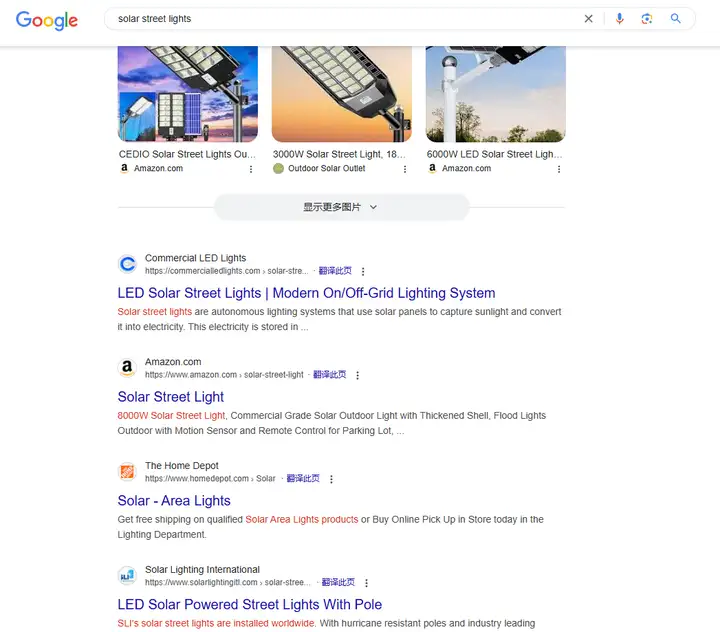
What can we use to compete with them?
Back to the beginning:
1. Which keywords would our target customers search for? If these keywords are not what our target customers would search for, is optimizing for them useless?
A: By comparing and determining the authentic and accurate names of products/services through the local Google search engine in the target market, DeepLearning, and professional tools such as Semrush; not necessarily, some keywords may not be keywords that target customers would search for, but if they are still relevant to the corresponding industry, then optimizing those keywords will help improve the website's performance for competing for major industry keywords in the future.
2. Which keywords are our target customers searching for and have high search volume? Even if these keywords are keywords our target customers search for, if the search volume is too low, will optimizing for them be effective?
A: We recommend Ahrefs and SemRush. We will release a tutorial on keyword data research later.
Yes, it's useful. Just as many small things add up to something great, long-tail keywords fit the situation described in the question. Long-tail keywords bring precise traffic, and their conversion potential is enormous.
3. Which keywords are our target customers searching for, especially when they are preparing to make a purchase? Even if some keywords are searched by target customers, but they don't seem to generate much transaction or business interest, is it necessary to optimize these keywords?
A: We recommend Ahrefs and SemRush. We will release a tutorial on keyword data research later.
Optimization is necessary for the same reasons mentioned above. A website cannot and should not rely solely on transactional or business keywords. To attract more traffic, other types of keywords must also be optimized.
What does international social media management service include? 2026 Guide to Social Media Management for Export Businesses
2026-10-28
How to write a WordPress product page that will make overseas buyers want to send inquiries?
2026-10-28

How to fix WordPress form emails not sending: Practical WP Mail SMTP configuration
2026-10-27
Are foreign trade promotion companies reliable? Six key criteria for businesses to judge promotion service providers in 2026.
2026-10-26
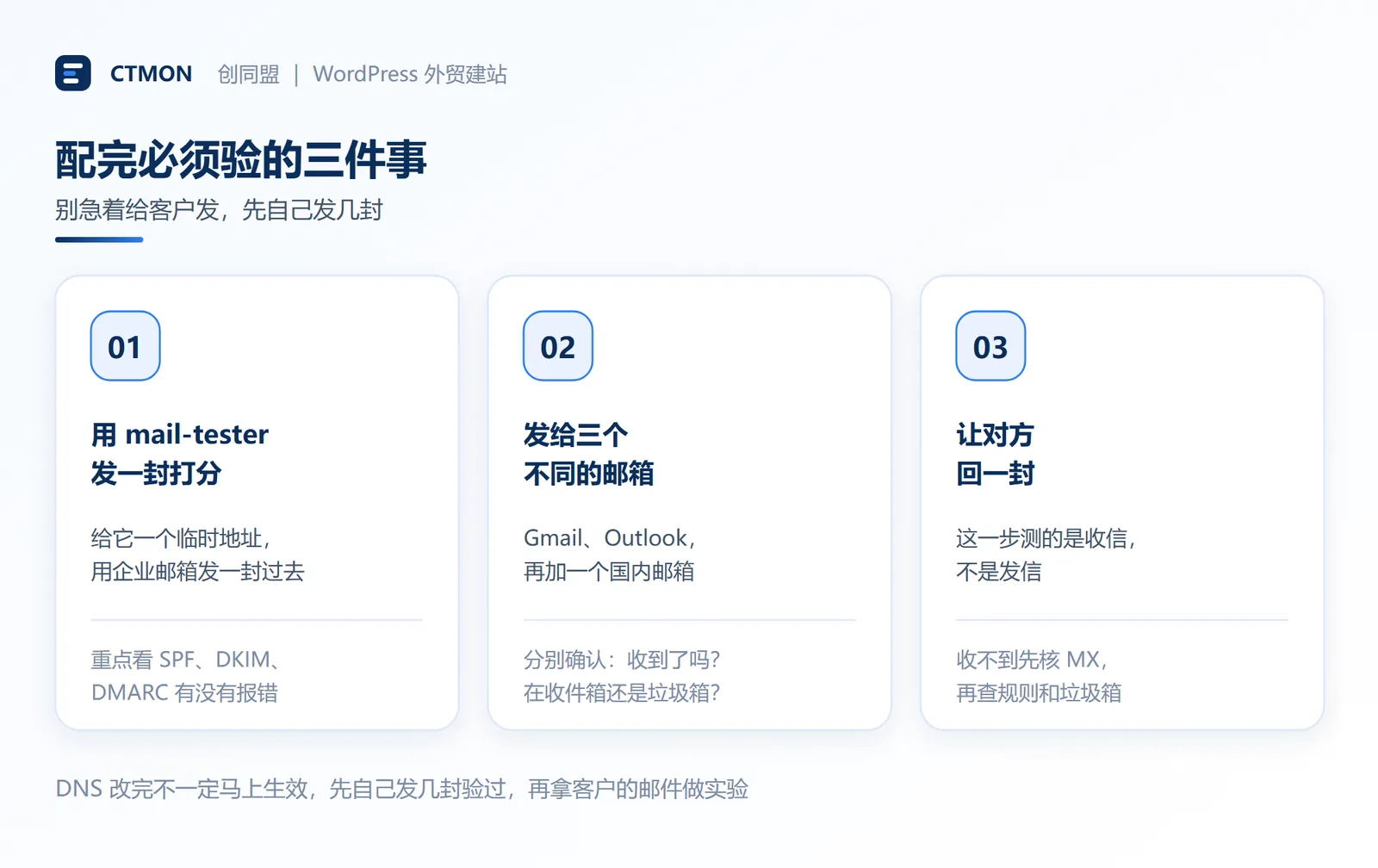
How do I set up an email account for export businesses? How can I configure it to avoid it ending up in the spam/junk mail folder?
2026-10-26
Related Articles
Are foreign trade promotion companies reliable? Six key criteria for businesses to judge promotion service providers in 2026.

The 140th Canton Fair Opens: How can export businesses seize overseas sourcing opportunities through digital marketing?

How to Choose an Overseas Promotion Company for Foreign Trade? 2026 Service Provider Selection Criteria and Evaluation Guide
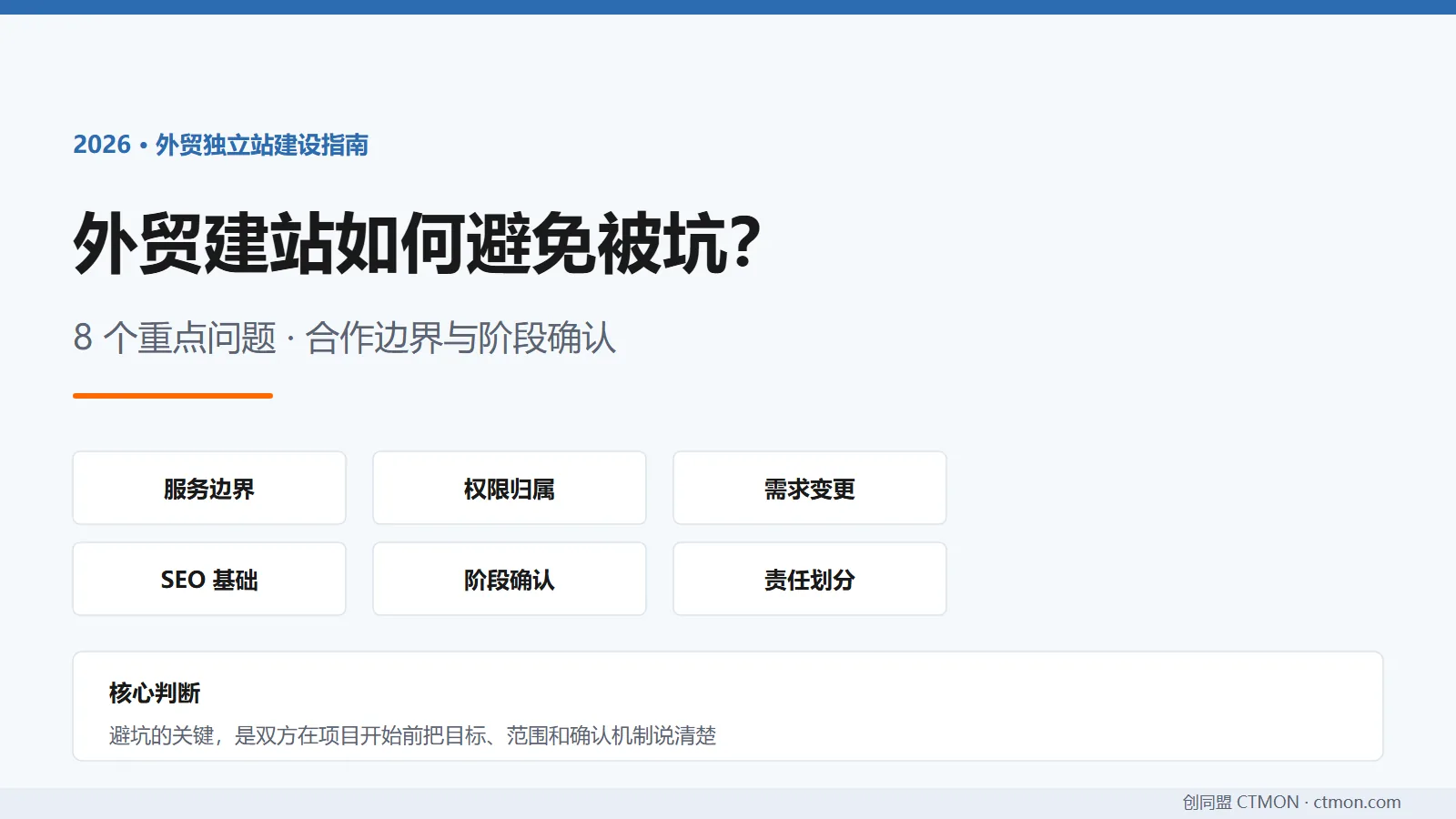
How to avoid pitfalls when building a B2B export website? A guide to avoiding common mistakes in B2B export website development in 2026.
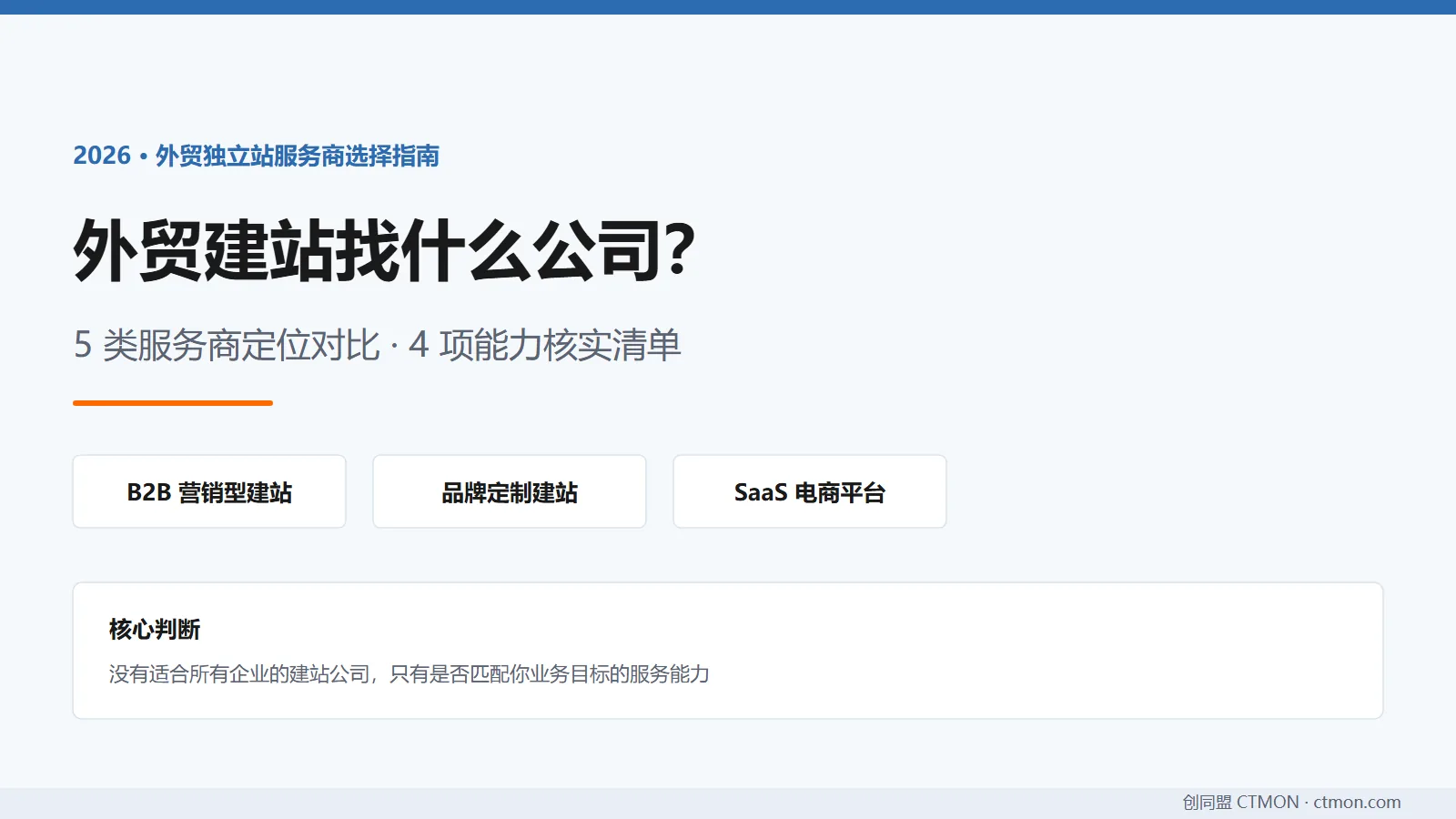
Which company should I choose for building a B2B export website? A comparison and recommendation of B2B export website service providers in 2026.

