Contents +
CTMON Google SEO Beginner's Guide: Keyword Research (Part 2)
Source: 创同盟
Date: 2025-08-01
Views: 3365
This article contains 3738 words and is estimated to take 10 minutes to read.
Last time, we discussed the basics of Google SEO keyword research for business websites and key points for keyword selection for new sites. Those interested can take a look:
CTMON Google SEO Beginner's Guide: Keyword Research (Part 1)
Following on from the previous article, we now know how to select suitable SEO keywords. The next step is to categorize them based on the actual situation of B2B SEO work.
Many people think keyword research is simply "finding words," but top international digital marketing companies see it differently—
Keyword research is a crucial step in ensuring that SEO is no longer an isolated technical department, but rather deeply integrated into a company's marketing and sales strategy.
How exactly was this conclusion reached?
Next, we will use the HubSpot business website ( www.hubspot.com ) the globally renowned B2B software company as an example to illustrate the "keyword research".

I. Basic Classification of Keywords
A practical starting point for content organization is the "1-3-5" keyword combination model, which divides keywords into three basic categories. Take HubSpot as an example:
Core keywords
These are the main terms representing a company's core business. For HubSpot, the core keywords could be "CRM software" or "marketing automation".
These terms are typically "top keywords" with high search volume but broad intent. They form the backbone of content strategy.
Synonyms
It refers to variations and synonyms of the core keyword that capture the same core intent.
For example, “customer platform”, “sales CRM software”, or “AI-powered CRM software”.
As search engines enhance their semantic understanding capabilities, integrating these terms is crucial for reaching a wider audience and demonstrating topic depth.
Long tail keywords
As the name suggests, long-tail keywords are longer phrases that are also more specific, revealing the user's exact needs, questions, or doubts.
For example, "how to automate email marketing campaigns", "best CRM for small business", or "lead management & tracking software".
Their main characteristics are lower competition, higher conversion rates, and clearer user intent.
It is important to note that the "1-3-5" model is a keyword research strategy for optimizing a single page.
However, from the perspective of B2B website architecture planning, a richer classification system is needed to reflect the entire procurement cycle and the multiple decision-makers involved.
Because B2B procurement is not completed by one person in a single search, but rather a collective decision-making process for the entire company.
For example, a company's CEO might search for "marketing automation ROI" (return on investment in marketing automation);
A marketing director might search for "best marketing automation tools";
Marketing specialists might search for "how to set up email nurture sequence".
Therefore, keyword categorization must be expanded to the intent dimension in order to build a website architecture that can be "aligned" with the procurement process of B2B enterprises .
Only a website architecture like this can possess both SEO potential and meet marketing requirements.

II. Advanced Classification of B2B Keywords
Continuing with HubSpot as an example, this more complex keyword framework in a B2B scenario needs to be categorized based on the tasks the searcher hopes to accomplish using keywords:
Problem/Solution Keywords
This targets users in the early stages of diagnosing their pain points. Keywords such as "how to generate more leads" or "streamline your process" are entry points for building trust and authority. These are typically featured in in-depth blog posts, industry research reports, or explanatory videos.
Comparison/Optimization Keywords
This is for users who are in the consideration stage and actively evaluating various options.
For example, searches like "best marketing automation software," "HubSpot vs Salesforce," or "Asana alternatives" indicate that the user is close to making a decision.
These types of keywords are suitable for placement in contexts such as detailed product comparison guides, customer case studies, and competitor comparisons . This content helps potential customers make evaluations.
Service (transactional) keywords
For users with a high purchase intent , the name of their specific product line is usually included.
For example, “HubSpot Marketing Hub”, “free CRM tools”, or “B2B commerce software”.
Pages that carry these keywords, such as product pages, service pages, and solution pages, aim to directly drive conversions.
Cost/Value and ROI Keywords
For the financial role in the procurement process . For example, “HubSpot pricing”, “marketing automation ROI”, or “cost of bad data”.
These keywords are also highly related to the product or service, so the layout of the pages for them and the goals are basically the same: to generate conversions.
Industry-specific and technology-related keywords
Target experts in specific niches and build credibility by using specialized terminology. For example, "marketing automation for startups" or "how to integrate CRM with Gmail".
Industry-specific keywords are suitable for placement on industry solutions pages; technical keywords are often carried out in blog articles.
After categorizing, match the keyword types mentioned above with the classic B2B sales funnel to clearly plan the content strategy.
- Top of Funnel (TOFU): This stage is dominated by problem/solution-oriented and broad research/learning keywords . The content goal is to educate users and build trust, rather than direct sales.
- The consideration phase (MOFU - Middle of Funnel) is dominated by comparison/optimization and cost/value keywords . The content objective is to help users evaluate options and provide reasons for their decisions.
- Decision-making phase (BOFU - Bottom of Funnel): This phase is driven by product/service and brand keywords . The content objective is to drive the final conversion.

In the early years, SEO might have stopped at optimizing high-search-volume keywords, but this often resulted in websites attracting a large number of "browsing but not buying" visitors.
Whether visitors will convert into customers is up to fate, or perhaps only some simple marketing plans have been implemented on one or two main pages.
This keyword categorization, which is based on visitor intent and matched with the B2B sales funnel, ensures that business websites provide precise content to decision-makers at different stages of the buying process and playing different roles, thereby attracting users and driving subsequent conversions.
But then again, what specific practical benefits does the "avoid adding entities unless necessary" classification method actually bring to SEO work?

III. Establish a clear and systematic marketing chain
As mentioned at the beginning of the article—
"Keyword research is a key step in ensuring that SEO is no longer an isolated technical department, but is deeply integrated into a company's marketing and sales strategy ."
A well- structured B2B website is itself a sales funnel. This keyword mapping process is the blueprint for building this funnel.
For example, this framework can be used to design website navigation and directory structure when planning website architecture.
For example, HubSpot created a main directory called /solutions/ (Solution), under which they created two business-related categories ("Why HubSpot" is the introductory category ).
Under specific business directions, subpages targeting different pain points are created, and these subpages also link to more specific /products/ (product) pages.
For businesses targeting "startups and small businesses," HubSpot created the following subpage to address this customer pain point:
- Subpage A: Find and contact customers
Generate potential customers through content, artificial intelligence, and automation. - Subpage b: Increase sales and earn rewards
Find potential customers more intelligently and automate payments. - Subpage c: Organize customer data
Unify your team and data on one platform.

Regarding internal links, we strategically place them within the content.
HubSpot wrote a blog post about " Customer Journey Mapping: How to Create Truly Great Maps (Examples + Templates) " (TOFU).
The text naturally links to pages such as "Sales Software," "Customer Service Tools," and "Marketing Software Solutions" (MOFU), which in turn link to specific product demo request pages (BOFU) or contact us pages.


This creates a clear user access path for both users and search engines. It makes SEO results measurable and linked to business objectives.
This strategy allows SEO KPIs to go beyond just "traffic" and "ranking." SEO teams can track deeper business metrics and develop targeted optimization strategies .
For example:
How many users downloaded the white paper on the thinking (MOFU) stage after reading the blog on the cognition (TOFU) stage?
How many users submitted the "Get a Quote" form after visiting the comparison page in the Decision-Making (BOFU) phase?
By analyzing user flow data across these different intent pages, teams can identify bottlenecks in the sales process.
For example, if a large number of users leave the "Compare" section of a product page, it may mean that the information on that page is insufficient to support decision-making and needs to be optimized.
In summary, aligning keyword research with the B2B sales funnel is a key factor in the shift of SEO from "optimizing for search engines" to "optimizing to facilitate the customer journey and complete decisions."
Only by doing this well can we eventually achieve a systematic and continuous attraction of high-quality potential customers, shorten the sales cycle, and ultimately achieve measurable revenue growth.

What does international social media management service include? 2026 Guide to Social Media Management for Export Businesses
2026-10-28

How to write a WordPress product page that will make overseas buyers want to send inquiries?
2026-10-28

How to fix WordPress form emails not sending: Practical WP Mail SMTP configuration
2026-10-27

Are foreign trade promotion companies reliable? Six key criteria for businesses to judge promotion service providers in 2026.
2026-10-26

How do I set up an email account for export businesses? How can I configure it to avoid it ending up in the spam/junk mail folder?
2026-10-26
Related Articles
Are foreign trade promotion companies reliable? Six key criteria for businesses to judge promotion service providers in 2026.

The 140th Canton Fair Opens: How can export businesses seize overseas sourcing opportunities through digital marketing?

How to Choose an Overseas Promotion Company for Foreign Trade? 2026 Service Provider Selection Criteria and Evaluation Guide
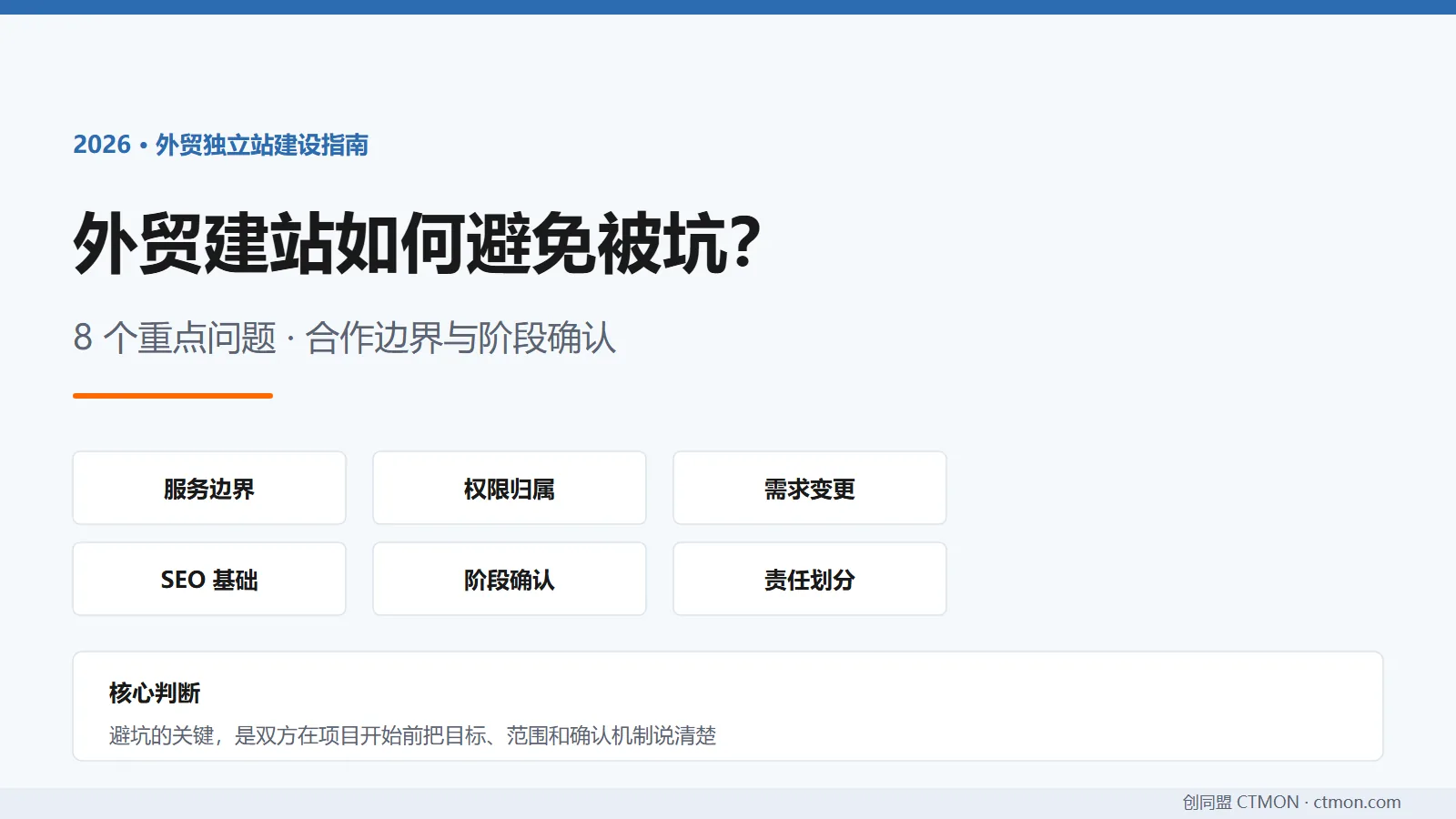
How to avoid pitfalls when building a B2B export website? A guide to avoiding common mistakes in B2B export website development in 2026.
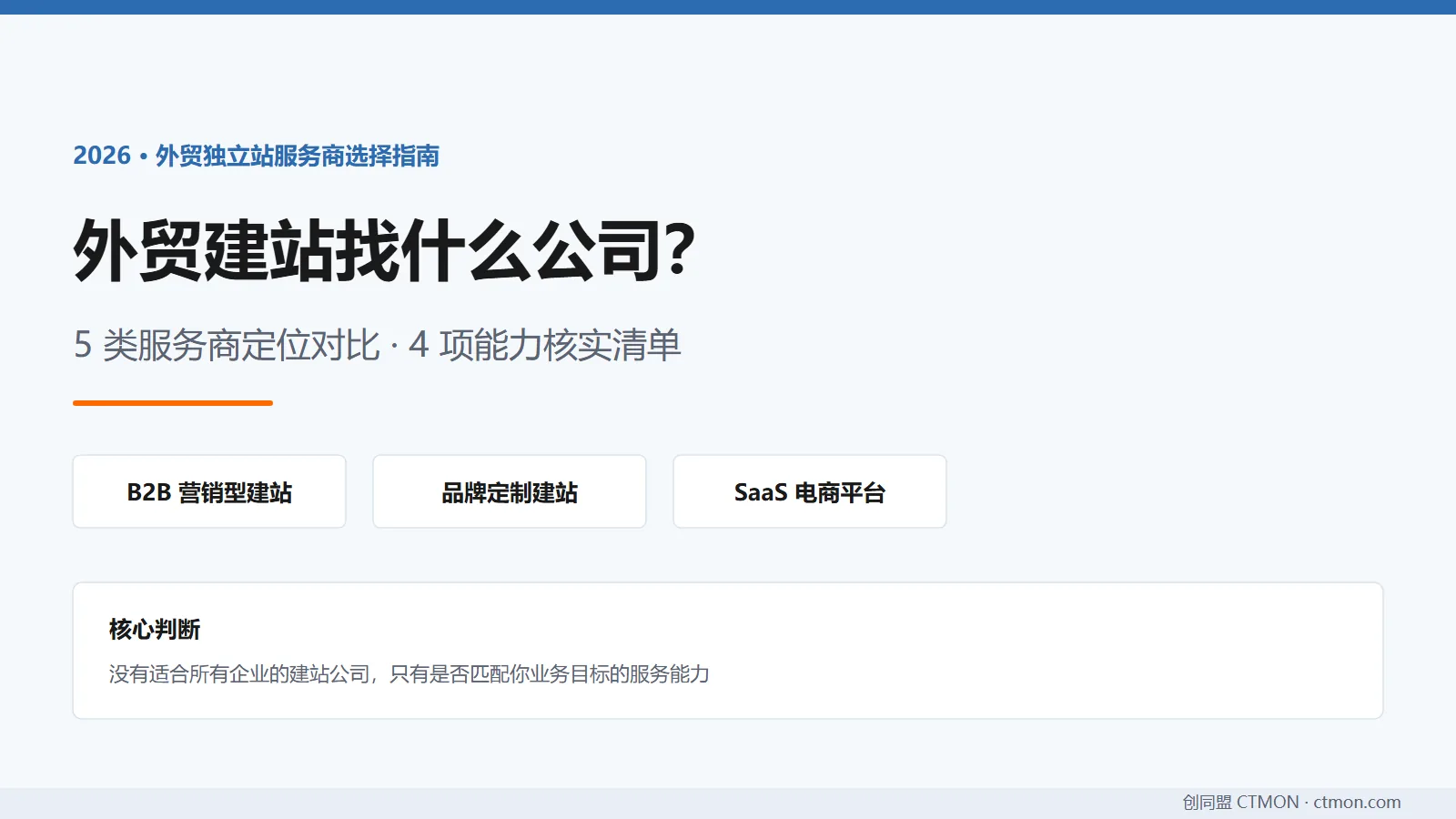
Which company should I choose for building a B2B export website? A comparison and recommendation of B2B export website service providers in 2026.

