Contents +
(II) Formulation of Google Ads Advertising Strategy - Strategy Execution
Source: 创同盟
Date: 2025-08-13
Views: 2560
Advertising strategy is the core of ad campaign management; a well-defined and detailed advertising strategy is beneficial for advertising effectiveness and sustainability. Search advertising strategy can be solved using the statistical formula x*y=z. The formula then translates to " Conversion Rate Effective = Effectiveness ".
1. Calculate and reverse-engineer advertising strategies
Ad campaign management strategy customization is influenced by many factors. These include factors such as "target audience, advertising budget, products/services offered, industry competition, and target country." The strategy aims to ensure that each of these factors meets the conversion threshold at the data level.
2. Calculation Method for Deployment Measurement
We used Google Trends and & the official Ads keyword planning tools, to collect search volume and price data for keywords in target countries. The image below shows the data we collected for the target keywords in the target countries using these two official tools. We can see that the keyword search traffic is relatively stable with no interruptions, and the estimated prices below are high and low bids.

Note: The above is a screenshot from Google Trends.

Note: The above is a screenshot of the Google Ads Keyword Planning Tool.
3. Advertising strategy calculation demonstration
For example, the search volume for "ultrasonic cleaning machine , ultrasonic cleaner" in the United States is 40,500. The low bid on the first page is ¥2.94/click, and the high bid is ¥17.16 /次; For now, we will abandon the prediction of the absolute first-page display share and assume that we can completely cover the 40,500 search traffic. Substituting the assumed values of "click-through rate 3.2%, conversion rate 2.3%, effective reach rate 80%",...
The process optimization metrics are as follows: 1296 clicks, 1036 effective unique visitors to the page, approximately 24 conversion inquiries, and a cost per inquiry of 542.7 yuan.
To improve data metrics on this basis, the focus should be on optimizing "page conversion rate" and "maximizing effective UV within unit budget"; below are the key points for implementing the two strategies of "optimizing effective UV within unit budget" (account traffic model).
4. Large-scale model low-traffic cost structure strategy (third-level optimization)
The strategy is suitable for targeting a single product category within a specific industry, and it is also applicable to incremental growth, addressing the issue of insufficient effective UV traffic. In the production context of this strategy, it is often observed that optimization teams increase bids and expand matching models when scaling up accounts, which is not very friendly to new accounts or accounts with relatively low budgets.
①. Increasing the bid will reduce traffic without increasing the budget. Originally, with a budget of 100 yuan, oranges were 10 yuan each, so I could buy 10. But the price increased to 20 yuan each, so I could only buy 5. But I need 10, so to meet my needs, I would need 200 yuan.
Essentially, increasing the cost of acquiring valid UV traffic increases the cost of acquiring the final result.
②. Expanding the matching model, traffic has increased, but there are no conditions to help with filtering. The fruit I ultimately bought at wholesale price is likely mostly bad or sour, which also doesn't meet the requirements, and in the end, it seems to be more expensive.
Expanding the matching of retail to wholesale, without a screening mechanism, superficially increases traffic but actually reduces traffic.
In summary, the strategy should meet the following conditions: ① Increase effective UV volume while stabilizing or reducing traffic costs; ② The quality of the increased traffic UV remains unchanged; ③ Other dimensions remain unchanged.
Operation:
a. Increase UV volume: Optimize by adding keywords, calculate the approximate number of keywords needed based on phrase search volume; (Note: Cover as many commercial keywords as possible that users might search for, and run ads in any search results that have ad placements, without considering estimated click-through rates at this stage;)
b. UV click cost optimization: 30% general keywords; 70% long-tail keywords; (low-price strategy for keyword phrases);
c. UV search intent optimization: Select phrases that meet conversion intent relevance; use phrase matching in the matching model.

Note: During the implementation of the above strategies, the optimization specialist needs to make fine-tuning adjustments based on data feedback. The strategies assume that the page conversion rate has reached the target.
5. Multi-dimensional Precision Conversion Rate Structure Strategy (Optimized Human Resources)
The strategy aligns with both category traffic expansion and inquiry cost optimization; it addresses the issue of limited traffic for a single category and high industry inquiry costs. This strategy arose because after expanding category traffic, inquiry stability became poor and inquiry costs increased, which could not be resolved through periodic data optimization. This strategy can be used independently or applied to a " large model low traffic cost structure strategy ".
①. In terms of traffic expansion, the main approach is to expand upstream and downstream keywords related to the product category and the different names for the product in different target countries. It's important to note that the expanded traffic should all cover the product and service content offered. For example, a client who manufactures raw materials could offer services related to raw materials, semi-finished products, and end-user products abroad. This could be addressed through expanding the product category's traffic.
Essentially, it involves expanding keywords for low-search-volume product categories, thereby increasing traffic by expanding the category's keywords and using different names.
②. In terms of inquiry cost optimization, page conversion rate optimization is more important than traffic cost optimization. However, to build a highly relevant ad conversion model on the traffic model, it is necessary to ensure that product category, ad group classification, ad keywords, and page conversion are all in one-to-one correspondence.
The conversion traffic for each product category is broken down to ensure consistency between the advertising traffic model and the conversion model.
Operation:
a. Increase UV volume: Expand effective UV volume by increasing relevant category keywords;
b. Page Conversion Rate Optimization: Segment ad pages for different product categories to improve landing page experience and conversion rates;
c. Strategy Application: The large-model, low-traffic-cost structure strategy is used as a single-category traffic model structure.
Summary:
①. Consider whether the industry category traffic meets the conversion threshold, and whether the related services and products are capable of handling it;
② . Addressing the high cost of account inquiries and the growing need for increased inquiry volume.
Advantages of this strategy: It can be applied to a large-scale, low-traffic cost structure, and the conversion rate data link for each category in the account is calculated separately; Disadvantages: High manual optimization costs.

Note: During the implementation of the above strategies, the optimization specialist needs to make fine-tuning adjustments based on data feedback. The strategies assume that the page conversion rate has reached the target.
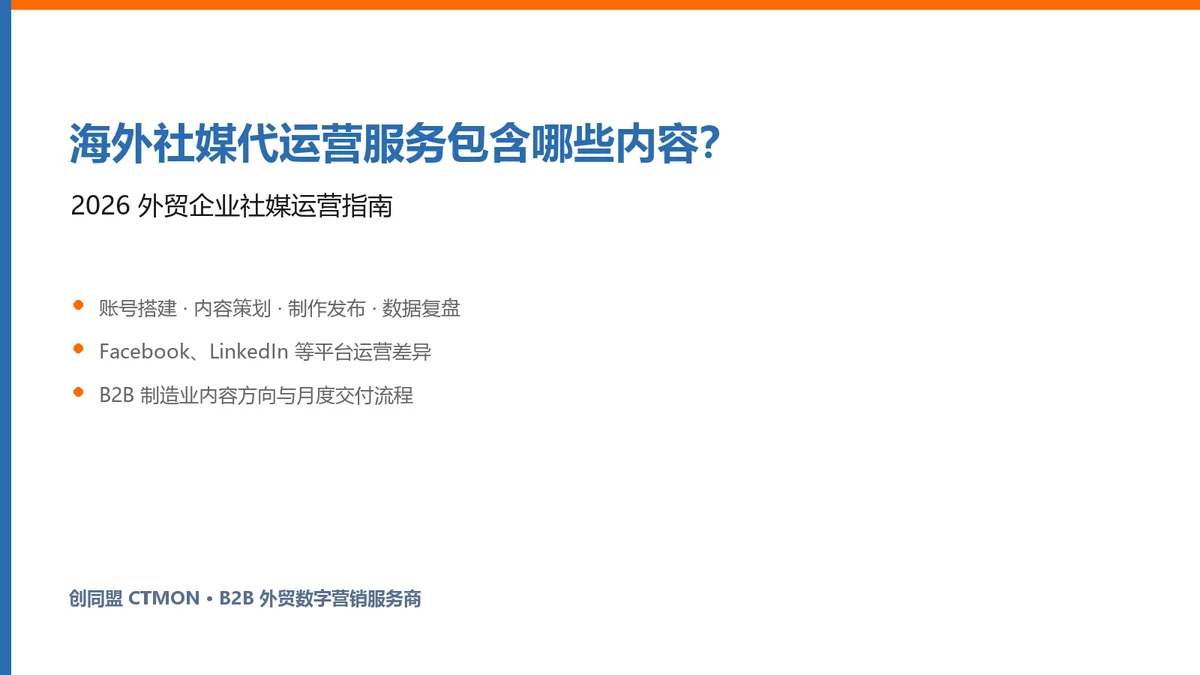
What does international social media management service include? 2026 Guide to Social Media Management for Export Businesses
2026-10-28
How to write a WordPress product page that will make overseas buyers want to send inquiries?
2026-10-28

How to fix WordPress form emails not sending: Practical WP Mail SMTP configuration
2026-10-27
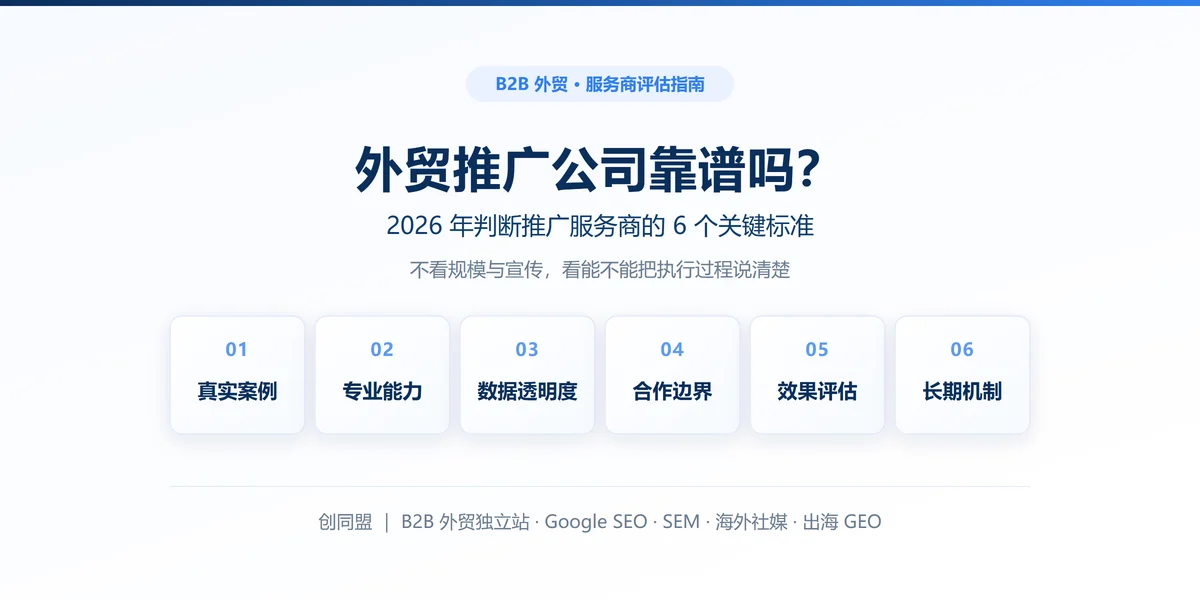
Are foreign trade promotion companies reliable? Six key criteria for businesses to judge promotion service providers in 2026.
2026-10-26
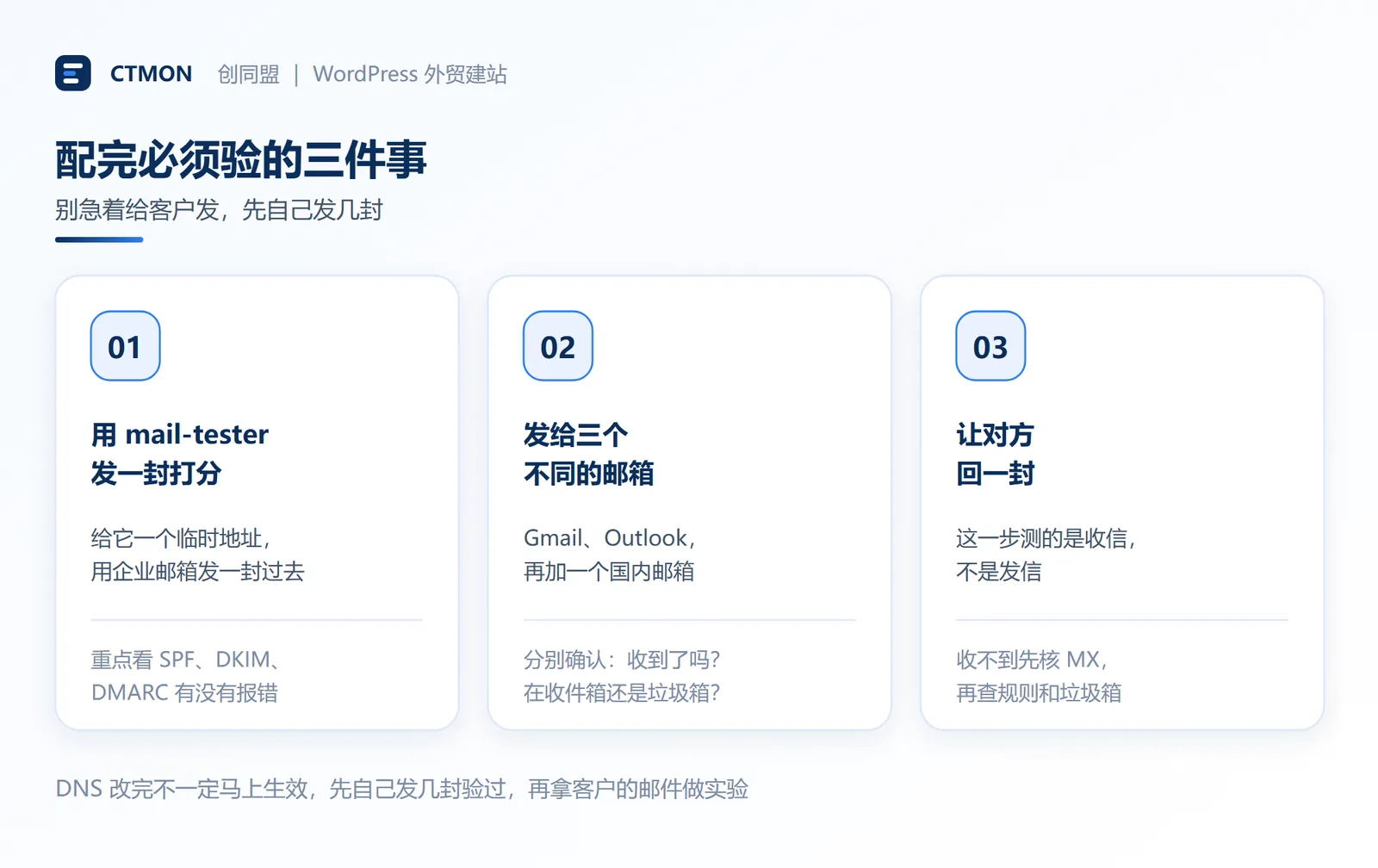
How do I set up an email account for export businesses? How can I configure it to avoid it ending up in the spam/junk mail folder?
2026-10-26
Related Articles
Are foreign trade promotion companies reliable? Six key criteria for businesses to judge promotion service providers in 2026.

The 140th Canton Fair Opens: How can export businesses seize overseas sourcing opportunities through digital marketing?
How to Choose an Overseas Promotion Company for Foreign Trade? 2026 Service Provider Selection Criteria and Evaluation Guide
How to avoid pitfalls when building a B2B export website? A guide to avoiding common mistakes in B2B export website development in 2026.
Which company should I choose for building a B2B export website? A comparison and recommendation of B2B export website service providers in 2026.

