Contents +
Make search engine crawlers prefer your business website
Source: 创同盟
Date: 2024-09-27
Views: 488
In today's digital marketing environment, creating a great business website is not enough to attract traffic and customers. Optimizing the crawling experience for search engine crawlers is a crucial step in improving website ranking. If search engines cannot efficiently crawl and understand your business website content, even the most meticulously designed website will fail to stand out in search results.
This blog post will explore in detail some optimization techniques to improve the crawling efficiency of your business website, making it not only popular with users but also favored by search engines.
I. What is a search engine crawler?
Search engine crawlers (or spiders) are automated programs that build a search engine's index by fetching web page content. Crawlers work by linking from one page to another, traversing the entire website. By analyzing the crawled page content, search engines generate rankings for relevant keywords. Therefore, ensuring that search engine crawlers can successfully access and understand your website is fundamental to improving rankings.
II. Techniques for Optimizing Search Engine Crawlers
1. Optimize the website's URL structure
A clear and logical URL structure helps web crawlers more easily identify webpage content. It is recommended to follow these best practices:
Concise and clear URLs: Use short and descriptive URLs. Avoid using dynamic parameters or excessively long URLs, such as https://yourdomain.com/product/12345 , which can be changed to https://yourdomain.com/product/flocking-sheet。
Using keywords: Using target keywords appropriately in the URL helps search engines understand the page.
Avoid duplicate URLs: Duplicate URLs waste search engine crawling resources. Make sure to create a unique URL for each page.
2. Create a clear website structure and navigation
A clear website structure is not only user-friendly but also helps search engines crawl all pages efficiently. To achieve this, the following measures can be taken:
① Hierarchical structure: Divide the website into a hierarchical structure such as homepage, category pages, and subcategory pages to ensure that the crawler can crawl the content in depth level by level.
② Breadcrumb navigation: Adding breadcrumb navigation helps crawlers understand the relationships between pages and improves the user experience.
③ Internal Links: By using appropriate internal links, important pages can be connected with other relevant pages, increasing the frequency and depth of these pages being crawled.
3. Ensure website loading speed
Website loading speed is crucial to the crawling experience for search engine crawlers. If a webpage loads too slowly, the crawler may abandon crawling the page, resulting in incomplete indexing or crawling failure. To improve crawling efficiency, ensure that:
① Image optimization: Use images of appropriate size and compress them to reduce file size.
② Enable caching: Speed up website loading time through server-side caching.
③ Streamline code: Remove redundant CSS, JS, and HTML code to make the page load faster.
4. Use the robots.txt file
The robots.txt file is an important tool for controlling search engine crawler behavior. Through this file, you can tell the crawler which pages to crawl and which pages to avoid. This saves crawling resources and allows the crawler to focus its attention on key pages.
① Prevent unnecessary page crawling: such as login pages, shopping cart pages, etc., which usually do not need to be indexed. These pages can be blocked through robots.txt.
② Avoid crawling duplicate content: If your website has a lot of duplicate content (such as category pages, tag pages, etc.), you can use robots.txt to block these pages from being crawled, so as to prevent search engines from thinking that your website has duplicate content issues.
5. Submit a sitemap .
A sitemap is a tool that helps web crawlers discover all the pages on your website. Especially when your website has a lot of content, submitting a sitemap can help crawlers crawl all your pages faster and more comprehensively.
6. Resolve dead links and 404 error pages
When a web crawler encounters broken links or 404 error pages while crawling a website, it wastes crawling resources and can negatively impact the website's overall ranking. Therefore, it is crucial to regularly check and fix broken links and 404 error pages on a website.
Use webmaster tools: Regularly check your website for crawling errors using tools such as Google Search Console and fix them promptly.
Create a custom 404 page: Even if a user or crawler enters a non-existent page, a custom 404 page can guide them back to valid content.
7. Optimize mobile experience
With the growth of mobile device users, Google is placing greater emphasis on mobile crawling and ranking. To ensure your website performs well on mobile devices:
Responsive design : Ensure your website automatically adapts to different screen sizes on various devices.
Mobile loading speed : Speed up mobile page loading, reduce bounce rate, and improve user experience.
Mobile-Friendly Testing : Use Google's mobile-friendly testing tool to ensure your website performs in a way that meets search engine requirements on mobile devices.
8. Using structured data
Structured data not only helps search engines better understand your website's content, but also enhances the richness of search results. By adding schema tags to your website, you can help crawlers more accurately capture and interpret page information, generating more engaging "rich snippets," such as ratings, prices, and author information.
III. Summary
Optimizing the crawling experience for search engine crawlers is crucial for improving the search engine ranking of your business website. By simplifying URL structure, optimizing site navigation, improving loading speed, 合理使用robots.txt , submitting a sitemap, resolving broken links, and optimizing the mobile experience, you can ensure that crawlers can crawl and understand your website content more efficiently.
A well-optimized business website not only enhances user experience but also allows search engines to crawl pages faster and more accurately, thereby improving its performance in search results. By continuously optimizing the crawler's experience, your website will achieve better traffic and higher search engine rankings.
Master these techniques to make your business website not only loved by users, but also irresistible to search engines!

What does international social media management service include? 2026 Guide to Social Media Management for Export Businesses
2026-10-28

How to write a WordPress product page that will make overseas buyers want to send inquiries?
2026-10-28

How to fix WordPress form emails not sending: Practical WP Mail SMTP configuration
2026-10-27

Are foreign trade promotion companies reliable? Six key criteria for businesses to judge promotion service providers in 2026.
2026-10-26

How do I set up an email account for export businesses? How can I configure it to avoid it ending up in the spam/junk mail folder?
2026-10-26
Related Articles
Are foreign trade promotion companies reliable? Six key criteria for businesses to judge promotion service providers in 2026.

The 140th Canton Fair Opens: How can export businesses seize overseas sourcing opportunities through digital marketing?

How to Choose an Overseas Promotion Company for Foreign Trade? 2026 Service Provider Selection Criteria and Evaluation Guide
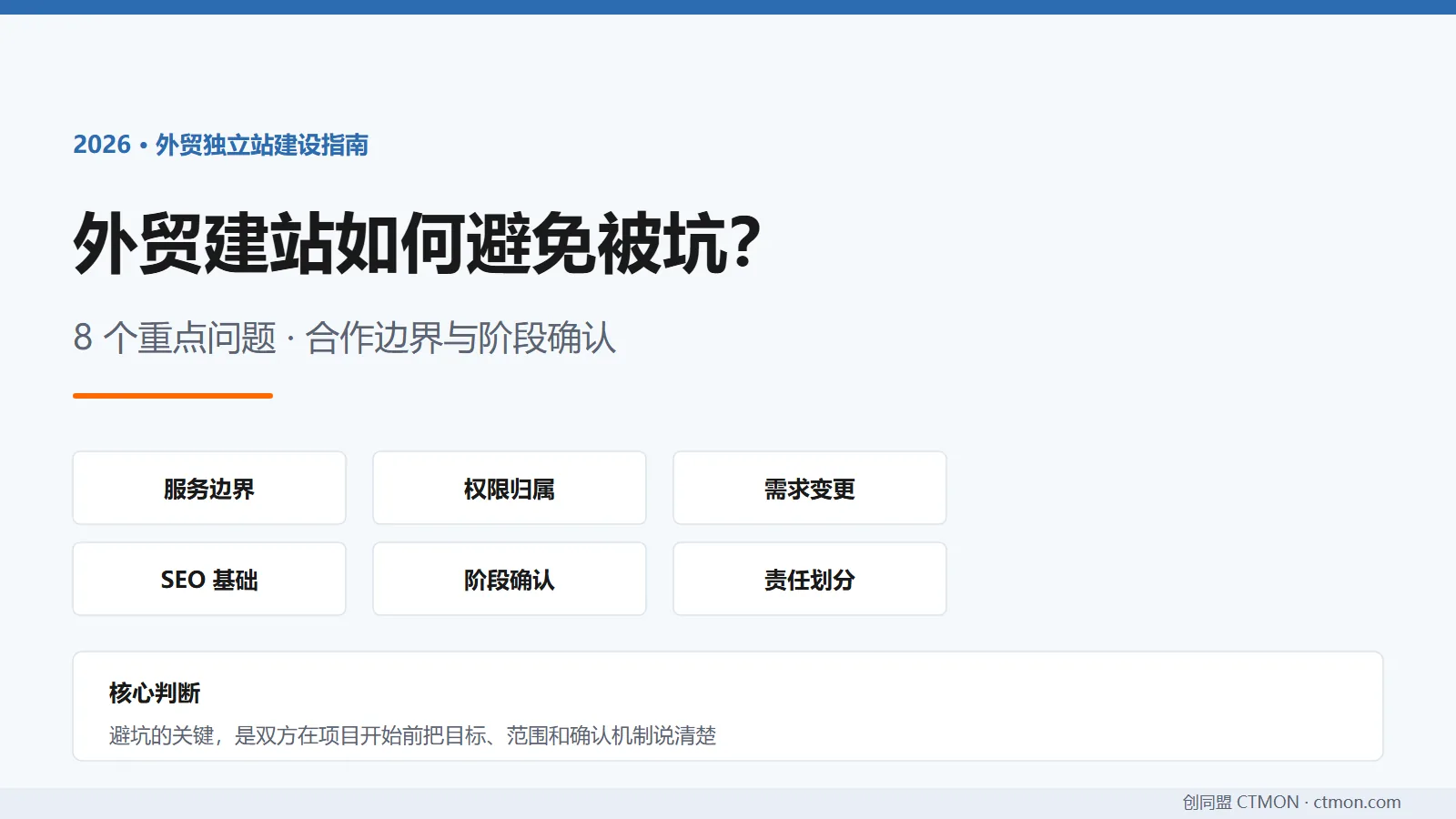
How to avoid pitfalls when building a B2B export website? A guide to avoiding common mistakes in B2B export website development in 2026.
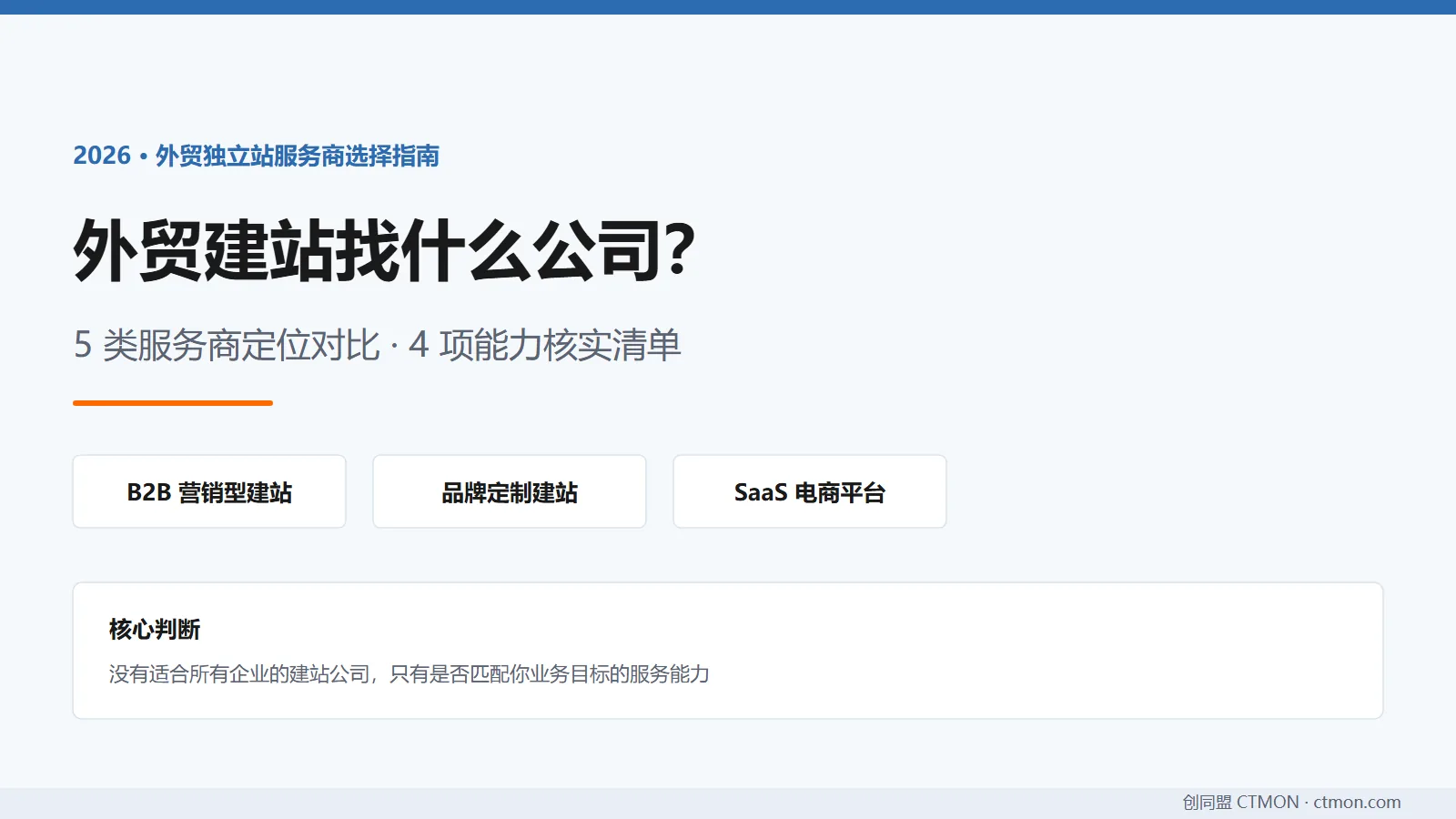
Which company should I choose for building a B2B export website? A comparison and recommendation of B2B export website service providers in 2026.

