Contents +
B2B Foreign Trade vs. B2C Foreign Trade: 3 Essential Differences in Facebook's Approach
Source: 创同盟
Date: 2026-07-15
Views: 194
In B2B digital marketing, Facebook is a platform that almost all companies will come into contact with. However, a very real problem is that many people, although they are using Facebook, do not really understand the "differences in how it works" in different business models.
Especially for B2B and B2C foreign trade, although both seem to involve content creation, advertising, and page management, their logic on Facebook is completely different. Using the same methods often results in "traffic but no conversions" or "exposure but no orders."
To truly make good use of Facebook, you must first understand a core premise: the competitive logic between B2B and B2C on Facebook is essentially not on the same level.
The fundamental difference between B2B and B2C lies not in the platform, but in the decision-making mechanism.
Before discussing how Facebook works, we must first go back to the most fundamental difference: how customers make decisions.
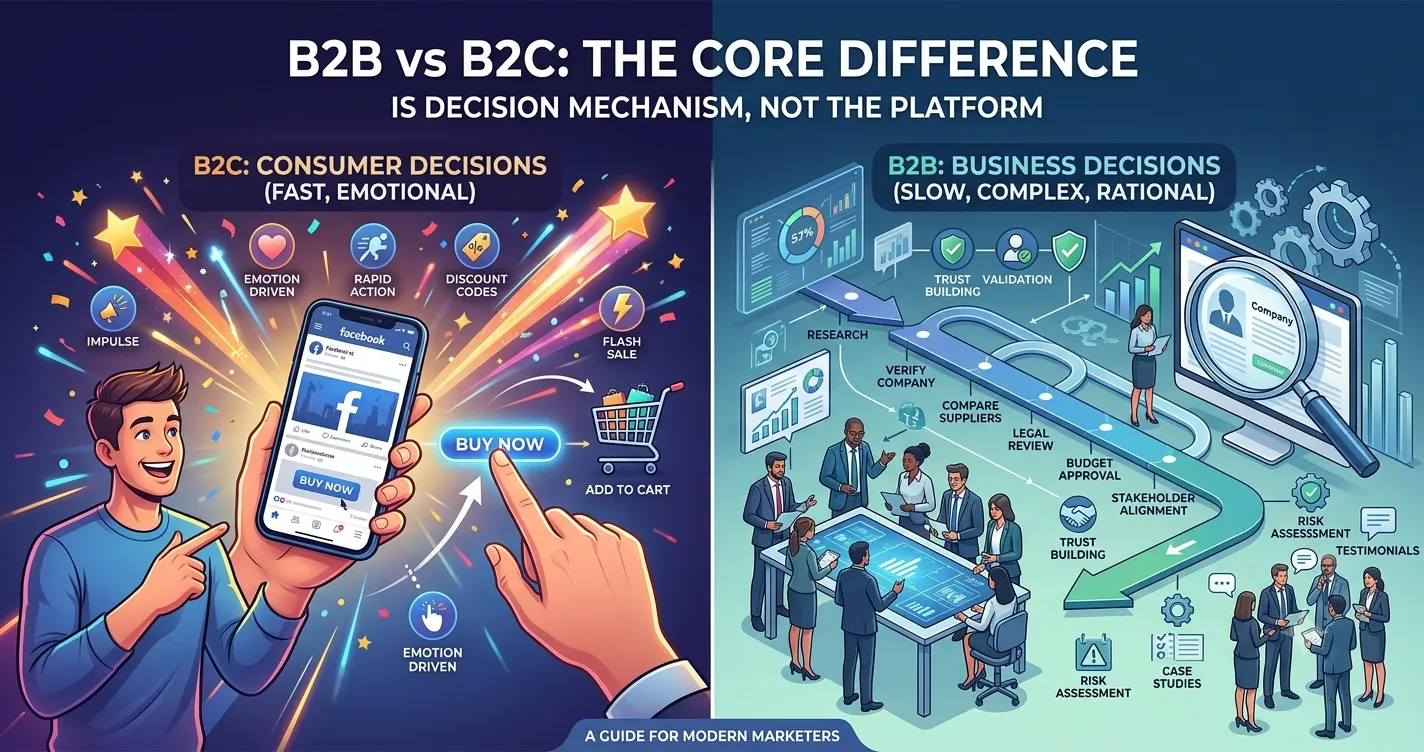 Figure 1: The essential difference between B2B and B2C
B2C decisions are typically quick and driven more by emotion; users may make a purchase based on a video, an image, or a promotion. Therefore, in B2C scenarios, Facebook acts more like an "impulse-buying amplifier."
B2B is entirely different; its core isn't "instant transactions," but rather "long-term decisions." A B2B customer seeing you on Facebook typically won't immediately inquire; instead, they'll go through a more complex process: they'll check your existence, view your website, search your company name, and even compare multiple suppliers. In other words, a B2B customer's behavior on Facebook is essentially "verification," not "purchase." This is why Facebook plays a completely different role in B2B and B2C.
II. B2C Foreign Trade Strategies on Facebook: Content-Driven + Emotional Conversion
In B2C foreign trade, Facebook's core principle is "content-driven consumption".
Users have relatively short decision-making processes, and their attention is more focused on visual and emotional stimuli. Therefore, the focus of B2C operations is usually:
Content attracts attention → sparks interest → leads to rapid conversion
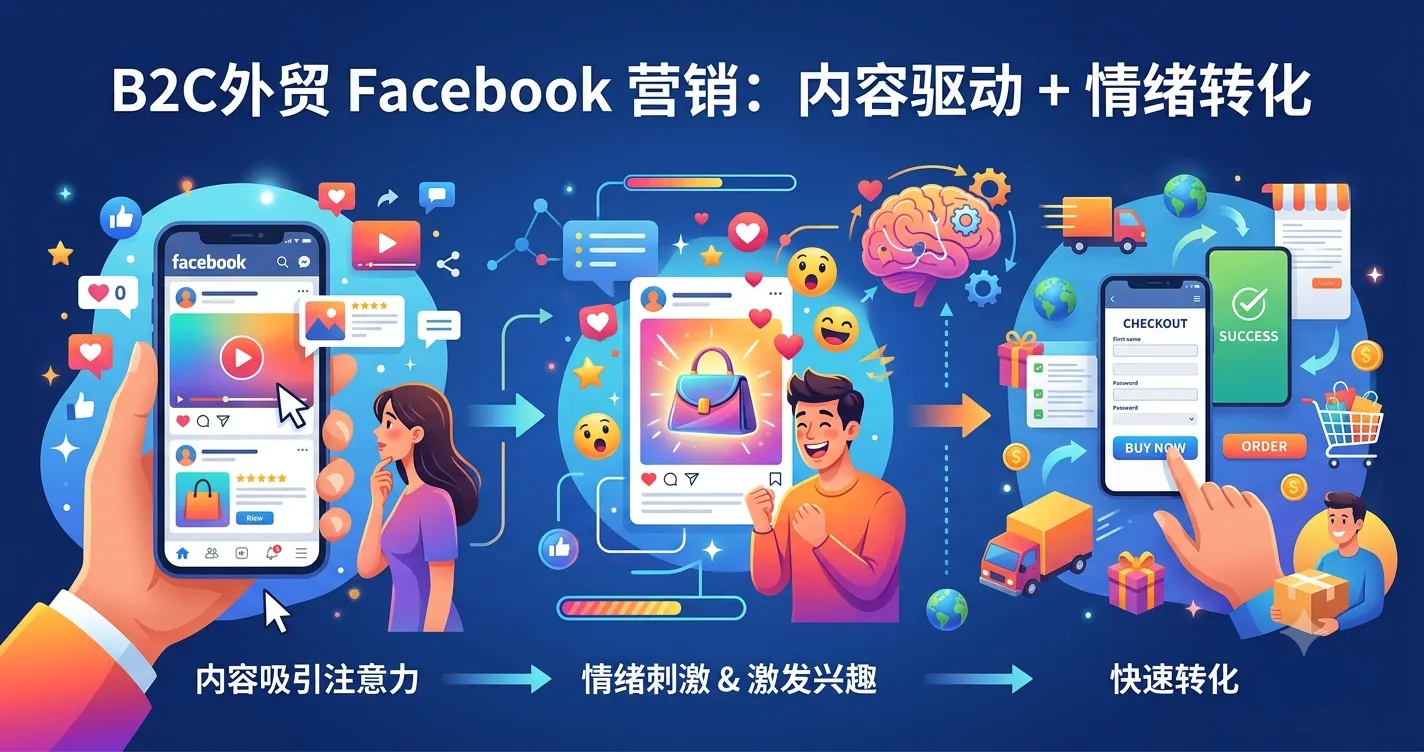
Figure 2: Facebook's core is "content-driven consumption".
Therefore, Facebook ads and short video content play a crucial role in this process, especially in consumer electronics, apparel, beauty, and home goods, where this visually appealing and sales-driven approach is particularly evident. Overall, B2C Facebook operations resemble a "traffic amplification mechanism," relying on continuous content updates, strong visual expression, and clear promotional information, coupled with short conversion paths, such as direct links to purchase or the Shop page. Its core objective is to achieve immediate conversion efficiency, rather than long-term trust building.
III. B2B Foreign Trade Strategies on Facebook: Trust-Driven + Long-Term Impact
In contrast, the logic for B2B on Facebook is completely different. B2B clients won't place an order based on a single piece of content; they are more concerned with whether the company is reliable, professional, and stable in the long term. Therefore, in the B2B scenario, Facebook's core role is not "selling products," but "building trust." An effective B2B Facebook operation typically revolves around three core directions.
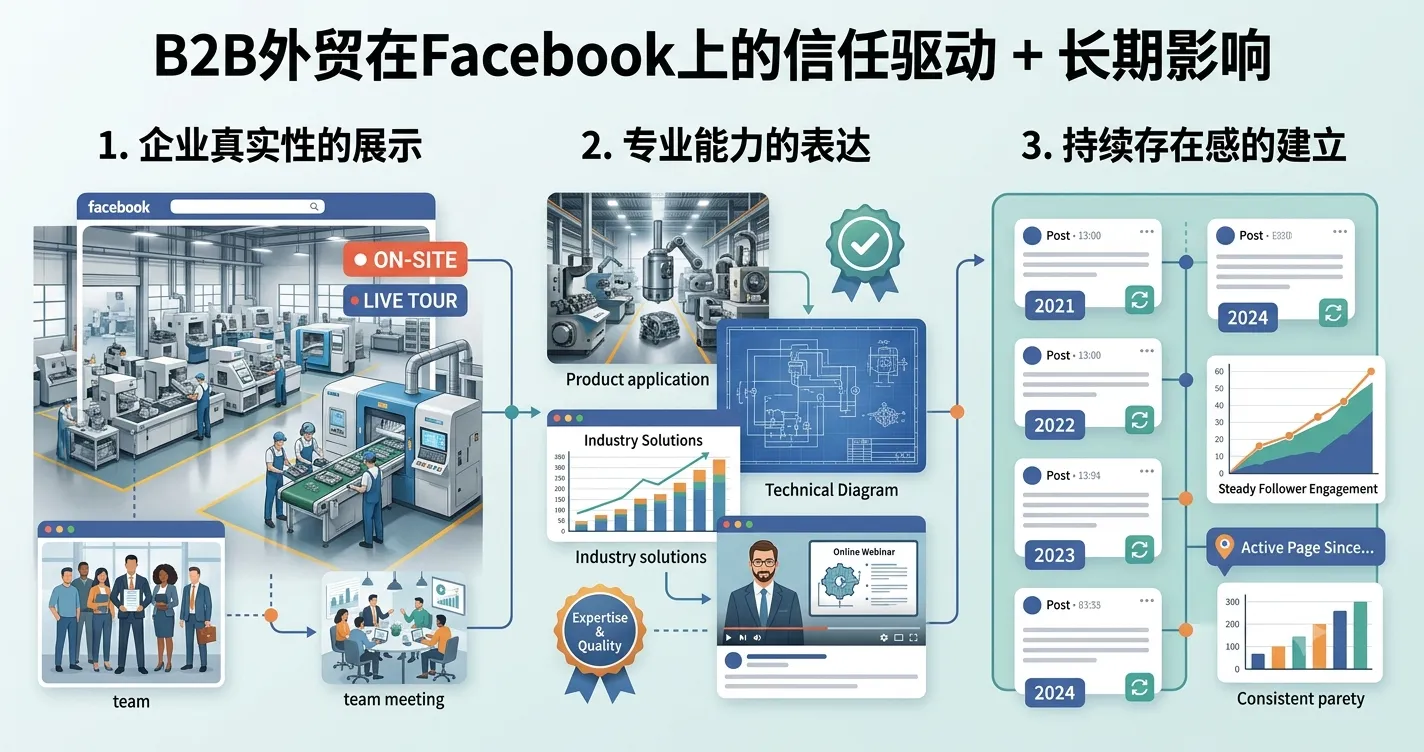
Figure 3: Trust-driven + Long-term impact of B2B foreign trade on Facebook
1. The first step is to demonstrate the authenticity of the company. Factory photos, production processes, and team scenes are not just for show; they are meant to confirm to clients that you are a legitimate supplier.
2. Secondly, it's about demonstrating your professional competence. Product application scenarios, technical details, and industry solutions all influence how clients perceive your professionalism.
3. Finally, there's the establishment of a consistent presence. For B2B clients, a consistently updated Facebook page is itself a signal of trust.
If a company hasn't updated its content for a long time, customers will often make a very direct judgment: Is this company still operating normally?
IV. The Completely Different Roles of Facebook Ads in B2B and B2C
The differences between B2C and B2B become even more apparent when considering only the advertising aspect. In B2C, the goal of Facebook ads is very direct: conversion. Whether it's a click to buy, adding to cart, or redirecting to the shop, the core is to shorten the decision-making path. However, in B2B, the role of advertising is often not to close a deal, but rather to "guide customers into the awareness stage." B2B advertising is more like an "entry point"; its purpose is to let customers see you for the first time, not to get them to buy immediately.
The real transformation often occurs in later stages, such as:
Customer visits business website → Customer views multiple product pages → Customer is reached again by Facebook ads → Customer finally sends inquiries →
Therefore, in B2B, Facebook ads are more like a "long-term nurturing system" rather than a short-term conversion tool.
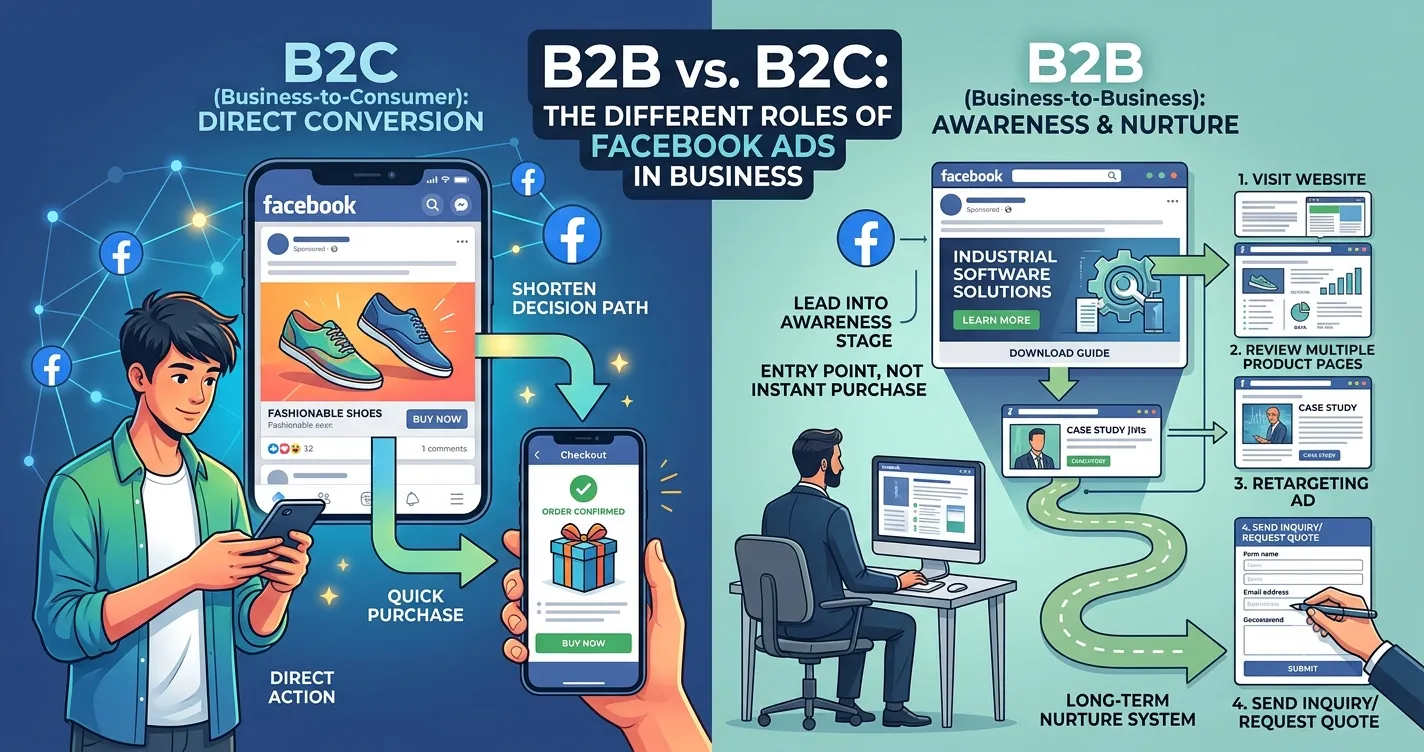
Figure 4: The Completely Different Roles of Facebook Ads in B2B and B2C
V. Why do many B2B companies misuse Facebook?
In reality, many B2B companies are essentially using B2C methods on Facebook, resulting in unsatisfactory results. The most common problems are overly simplistic content, focusing only on product images without designing content around customer decision-making; an overemphasis on exposure and traffic while neglecting the ongoing building of trust; advertising is being run, but remarketing follow-up is lacking; and traffic ultimately fails to effectively drive traffic to the business website, failing to create a complete conversion path.
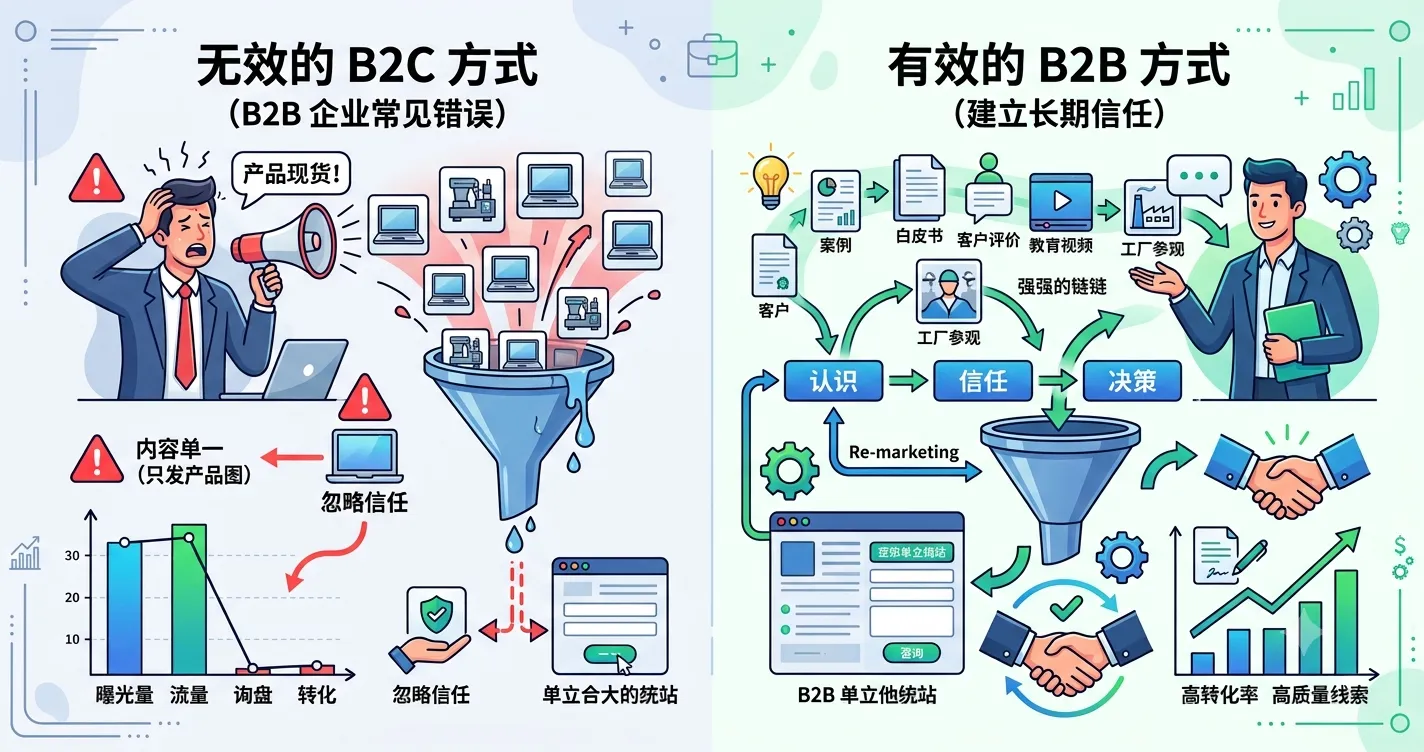
Figure 5: Why are many B2B companies using Facebook incorrectly?
The result is often a visible increase in traffic and exposure, but very few actual inquiries and low conversion rates. The core issue isn't Facebook itself, but rather a failure to understand the essence of B2B. B2B clients don't make decisions based on a single contact; it's a continuous process of observation and validation. Therefore, B2B Facebook operations are essentially not about "selling products," but about building long-term trust through consistent content.
The difference between B2B and B2C on Facebook is not fundamentally a difference in operational techniques, but rather a difference in underlying logic. B2C pursues "instant conversion," while B2B pursues "long-term trust." If B2C is about selling products on Facebook, then B2B is more about "building a reason for customers to trust you" on Facebook.
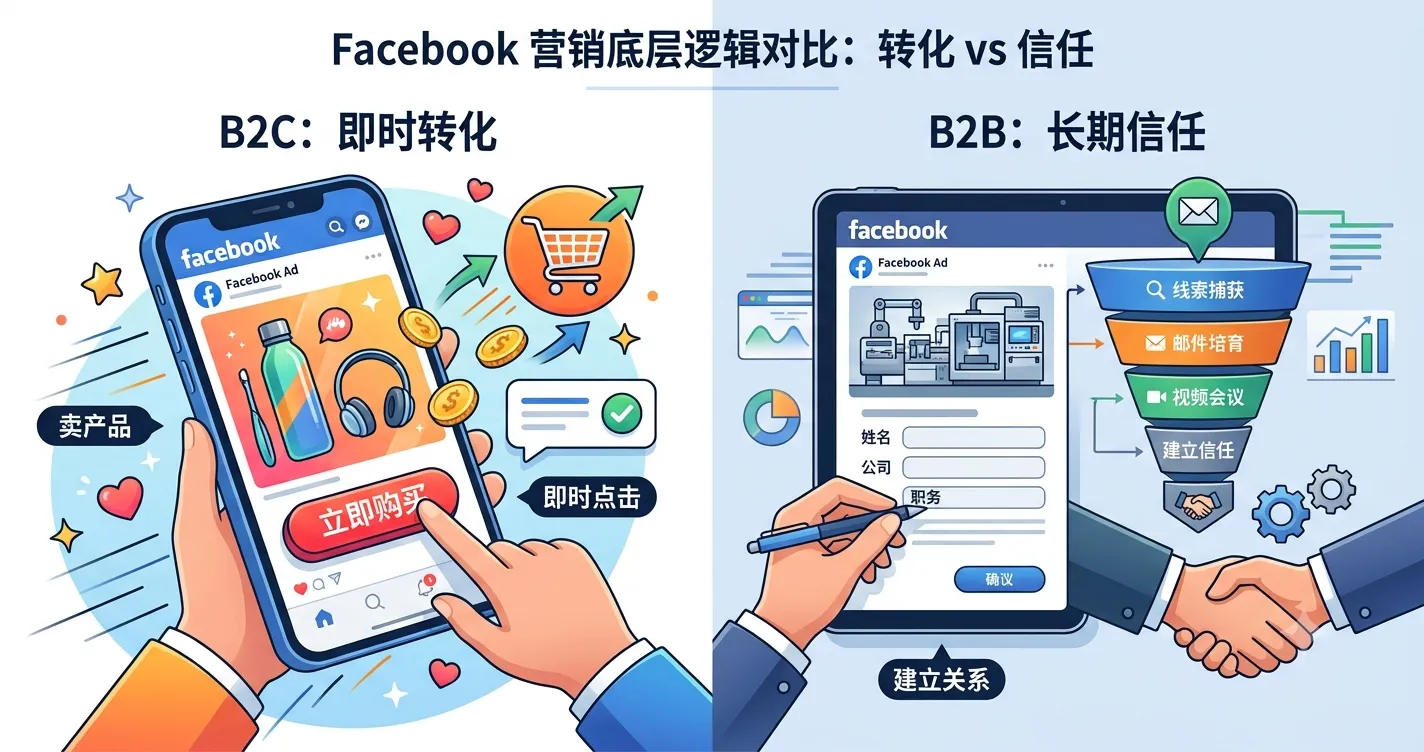 Differences between B2B and B2C on Facebook
Therefore, in the B2B digital marketing system, what is truly effective is not "whether you have Facebook," but rather: whether you are using Facebook in the right way.

What does international social media management service include? 2026 Guide to Social Media Management for Export Businesses
2026-10-28

How to write a WordPress product page that will make overseas buyers want to send inquiries?
2026-10-28

How to fix WordPress form emails not sending: Practical WP Mail SMTP configuration
2026-10-27

Are foreign trade promotion companies reliable? Six key criteria for businesses to judge promotion service providers in 2026.
2026-10-26

How do I set up an email account for export businesses? How can I configure it to avoid it ending up in the spam/junk mail folder?
2026-10-26
Related Articles
What does international social media management service include? 2026 Guide to Social Media Management for Export Businesses
How much do social media marketing companies charge? Analysis of international social media management fees and service content in 2026.

How to appeal a Facebook account suspension? Export Businesses account unblocking and recovery guide.
A Roundup of 8 Reasons for Facebook Account Suspension: A Guide to Avoiding and Preventing Account Suspension for International Trade Accounts
Differences between Facebook Personal Accounts, Business Accounts, and Advertising Accounts: A Guide to Avoiding Common Pitfalls in Export Businesses

