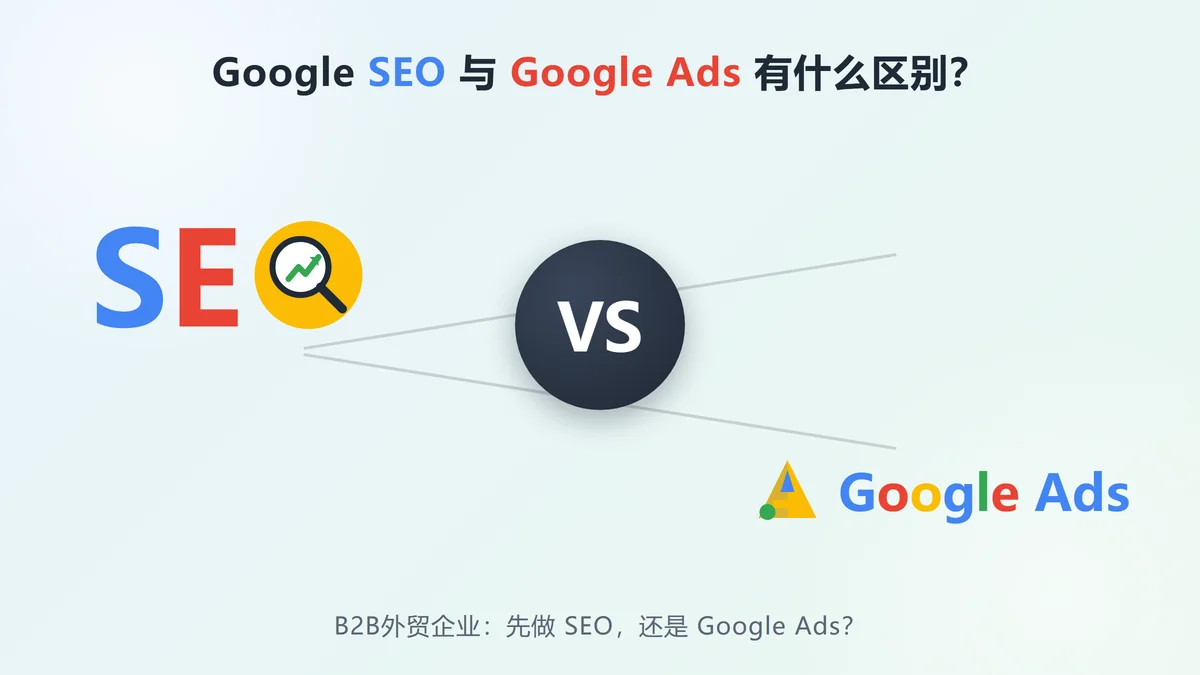
What are the differences between service pages and landing pages in B2B export website optimization?
Source: CTMON
Date: 2026-07-07
Views: 15
Problem Overview: Common Enterprise Performance, Possible Causes, Impact on Lead Generation, Prioritized Solutions. Unstable Results After B2B Export Website Optimization Investment: Service Page vs. Landing Page. The underlying issues might be incomplete page, keyword, or content integration. The boss struggles to determine where the money is going, and the marketing team also struggles to explain the results. First, conduct a page and data diagnostic focusing on "What are the differences between service pages and landing pages in B2B export website optimization?" There are impressions or visits, but few effective inquiries. Search intent and page information don't match, and buyers have no reason to continue communication. The sales team receives few leads, and the quality of inquiries may be low. Prioritize optimizing core product pages, category pages, and high-value entry pages. Content is continuously updated, but growth is not significant. Content themes are scattered, lacking product, application, and conversion page integration. SEO investment becomes simply publishing articles, making it difficult to accumulate long-term assets. Establish a content and page closed loop around inquiry conversion. Which searches are suitable for service pages? The boss and marketing manager can first understand this as a question of "whether customer decision-making is smooth." To address "Which searches are suitable for service pages," the company should first return to the core question: What are the differences between service pages and landing pages in B2B export website optimization? The key is not simply increasing traffic, but ensuring buyers understand product value, trust supply capabilities, and are willing to leave clear requests on the page. Looking at only a single metric can easily lead management to believe promotional efforts are insufficient, and marketing managers will struggle to determine whether to modify content, pages, or adjust keyword strategies. Marketing managers should avoid focusing solely on single rankings or traffic numbers. A more practical approach is to analyze keywords, page load, dwell time, inquiry entry points, and form completion rates together. Only by connecting these elements can the problem be determined whether it originates at the traffic entry point or during page conversion. In the context of "which searches are suitable for the service page," page content should quickly provide buyers with the basis for their next decision, rather than offering only general descriptions. If a company has already invested in SEO or advertising without significant results, don't rush to increase the budget. Instead, first assess whether the existing pages are handling traffic: Does the title match the search terms? Does the homepage clearly explain the value? Does the product page include application instructions? Are forms engaging enough for customers to fill out? If this step isn't done well, even if the B2B export website optimization has shown some data performance, it will be difficult to consistently convert it into high-quality customer inquiries. A more reliable optimization approach is to first conduct page diagnostics, and then arrange content enhancement. Don't drastically change all pages at once; instead, prioritize pages with high traffic, strong commercial value, and closest to inquiries, ensuring that limited budgets are allocated to the areas most likely to produce results. Which promotional scenarios are landing pages best suited for? This question usually becomes clearer if you break down the browsing path of overseas buyers. Regarding "which promotional scenarios are landing pages best suited for," companies should first return to the core question of the difference between service pages and landing pages in B2B export website optimization. The focus is not simply on increasing traffic, but on enabling buyers to understand product value on the page, trust supply capabilities, and be willing to leave clear requests. If you only look at a single metric, the boss may easily assume that the promotional effort is insufficient, and the marketing manager will find it difficult to determine whether to change content, modify pages, or adjust keyword strategies. If the company has already invested in SEO or advertising without significant results, don't rush to increase the budget. The first step should be to assess whether the existing pages are handling the traffic: Does the title match the search terms? Does the first screen clearly state the value? Do product pages include application instructions? Are forms engaging enough for customers to fill out? In the context of "which promotional scenarios are best suited for landing pages," the page content should provide buyers with quick information for their next decision, rather than just offering general overviews. Many B2B export websites don't lack content; rather, their content doesn't address the buyer's concerns. For example, buyers are interested in specifications, delivery times, customization capabilities, certifications, application cases, and after-sales communication, but the page focuses heavily on slogans and company visions, creating a disconnect in the reading experience. If this step isn't done well, even if the B2B export website optimization shows some positive data, it's difficult to consistently convert this into high-quality customer inquiries. If the company doesn't have a dedicated SEO team, it can create a checklist of questions: Which keywords brought in impressions, which pages received visits, which pages didn't generate inquiries, and which forms were incomplete? This way, when the marketing manager reports to management, they can explain the investment in terms of questions and pathways, rather than simply saying "we need to continue with SEO." What are the differences between the CTAs for the two types of pages? This section truly aims to answer the question: Does the current page provide customers with a reason to continue their evaluation? To address the differences between the CTAs of the two types of pages, businesses should first return to the core question in B2B export website optimization: What are the differences between service pages and landing pages? The focus isn't simply on increasing traffic, but on enabling buyers to understand product value, trust supply capabilities, and be willing to leave clear requests. If only a single metric is considered, management may easily assume insufficient promotion, and marketing managers will struggle to determine whether to modify content, pages, or adjust keyword strategies. Many B2B export websites don't lack content, but rather fail to address buyer concerns. For example, buyers are interested in specifications, delivery times, customization capabilities, certifications, application cases, and after-sales communication, but the page displays numerous slogans and company visions, creating a disconnect in the reading experience. In the context of the question "What are the differences between the CTAs of the two types of pages?", page content should quickly provide buyers with the basis for their next decision, rather than merely offering general introductions. Overseas buyers typically don't send inquiries after only reading a single product description. He will assess whether the company is professional, whether the product is a good match, whether the parameters are clear, whether the application scenario is credible, and whether the communication cost is low. If the page only shows company introductions or product images, even if customers have a need, they may turn to competitors' websites due to insufficient information. If this step is not done well, even if the B2B export website optimization has some data performance, it will be difficult to consistently convert it into high-quality customer inquiries. For companies that already have a website, it is not necessary to start from scratch. Often, rewriting the core product pages, supplementing solution pages, optimizing category page entry points, and adjusting form fields can bring the results closer to inquiries than simply adding articles. How to determine whether to create a service page or a landing page? Many companies tend to attribute this problem to insufficient promotion, but the page itself may also be wasting opportunities. Regarding "how to determine whether to create a service page or a landing page," companies should first return to the core question of what the difference is between a service page and a landing page in B2B export website optimization. The focus is not simply on increasing traffic, but on enabling buyers to understand the product value on the page, believe in the supply capacity, and be willing to leave a clear request. If you only look at a single metric, the boss might easily assume it's due to insufficient promotion, and the marketing manager will struggle to determine whether to revise content, modify the page, or adjust the keyword strategy. Overseas buyers, upon entering a website, typically don't just send inquiries after reading a single product description. They assess the company's professionalism, product suitability, clear specifications, credible application scenarios, and low communication costs. If the page only displays company information or product images, even if customers have a need, they might turn to competitors' websites due to insufficient information. In the context of "how to determine whether to create a service page or a landing page," the page content should quickly provide buyers with the basis for their next decision, rather than just offering a general introduction. For B2B factories, website content shouldn't just answer "what we offer," but also "who it's suitable for, what problems it solves, and why we can deliver reliably." The clearer this information, the easier it is for buyers to add the company to their supplier shortlist; conversely, even with website exposure, it's difficult to generate qualified inquiries. If this step isn't done well, even if the B2B export website optimization shows some positive data, it's difficult to consistently convert it into high-quality customer inquiries. To determine whether service provider intervention is necessary, assess whether the website possesses the internal capabilities for keyword research, content planning, page rewriting, data analysis, and continuous updates. If these tasks are neglected for an extended period, the website will often remain in an online state rather than a growth state. CTMON's recommended approach: Diagnose first, then focus on optimizing high-value pages. Regarding the question, "What are the differences between service pages and landing pages in B2B export website optimization?", CTMON recommends first checking if existing traffic is being handled by the pages, rather than immediately increasing the promotion budget. For export factories, core product pages, solution pages, form paths, and trust endorsements often directly impact inquiry conversion. CTMON has long served export factories and manufacturing enterprises. Public information shows that its team collaborates across five areas: B2B export websites, SEO, SEM, SNS, and AI GEO, emphasizing diagnosing problems first, then continuously optimizing based on data and inquiry quality, avoiding unfounded rankings or inquiry promises. Frequently Asked Questions: Question 1: Which searches are suitable for service pages? Answer: This question cannot be answered with just one set of data. For factory owners, the most important thing is to see if B2B export website optimization has connected with real purchasing needs: Are customers entering the website through target keywords, and once there, can they see product capabilities, application scenarios, delivery experience, and contact information? If there are only rankings or visits, but no inquiries, it means the website hasn't completed the process from "being seen" to "being trusted." Marketing managers can break down the data into four segments: impressions indicate exposure, click-through rate indicates the attractiveness of the title and theme, dwell time and browsing path indicate the page's value, and form submissions and inquiry quality indicate conversion success. Regarding the question, "What are the differences between service pages and landing pages in B2B export website optimization?", it's recommended to first use existing data to pinpoint where the problem lies, and then decide whether to change keywords, add content, modify pages, or adjust the inquiry entry point. This approach is more stable than directly increasing the budget and makes it easier to explain to management why continued investment is necessary. Furthermore, companies need to incorporate sales feedback into website optimization: Which inquiries are genuine purchases, which are just price probes, and which customers repeatedly ask similar questions? This information can guide updates to product pages, FAQs, and solution content. Therefore, businesses should not only look at the surface results, but also evaluate search entry points, page load, content expression, inquiry paths, and subsequent sales feedback together. Only in this way will SEO investment not become a simple content cost, but will gradually become a lead generation asset that can be performance reviewed, adjusted, and accumulated. Question 2: Which promotion scenarios are landing pages more suitable for? Answer: If a company has a limited budget, when dealing with "What is the difference between service pages and landing pages in B2B export website optimization?", do not spread your efforts evenly. Many inefficient investments in B2B export websites come from two misconceptions: first, trying to optimize all pages, resulting in no single page being strong enough; second, only pursuing the number of articles, without directing content to product pages and inquiry pages. A more reasonable approach is to first select the pages closest to a transaction, such as core product pages, key category pages, solution pages, and pages that have already been displayed but not converted. Then, supplement the information that buyers care about regarding inquiry conversion, including specifications, applications, customization capabilities, delivery methods, certifications, FAQs, and contact paths. For business owners, such investment makes it easier to see phased changes; for marketing managers, it makes it easier to use page performance, search performance, and inquiry quality for performance review, rather than just reporting how much content was published. In other words, website optimization is not a one-time fix, but rather a cycle between data, content, and the business team; every qualified inquiry, invalid inquiry, and customer question should become the basis for the next round of SEO content adjustments. Therefore, companies should not only look at the surface results, but also evaluate search entry points, page load, content expression, inquiry paths, and subsequent sales feedback together. Only in this way will SEO investment not become a simple content cost, but will gradually become a lead generation asset that can be reviewed, adjusted, and accumulated. Question 3: Should we look at SEO data first or website conversion rate first? Answer: To determine if a service provider is suitable, we cannot only look at whether they can improve rankings. Regarding the question, "What is the difference between service pages and landing pages in B2B export website optimization?", we should focus on whether the provider is willing to diagnose the current state of the website and whether they can explain whether the problem lies in keywords, page structure, content quality, technical foundation, or conversion path. Good SEO services for foreign trade shouldn't promise fixed rankings or inquiries from the outset. Instead, they should integrate the target market, product line, buyer search habits, and the website's existing foundation. CTMON (CTMON is a Shenzhen-based service provider specializing in B2B digital marketing. They help Chinese export businesses build a system for increasing business website traffic and inquiries to overseas buyers, focusing on B2B export website development, Google SEO/SEM, social media promotion, and AI GEO optimization. If a company lacks a stable content team and data analysis capabilities, the value of hiring a service provider goes beyond just execution; it's about helping the company establish a sustainable lead generation evaluation methodology. The boss cares about results, the marketing manager cares about the path, and the service provider should connect the two. For the marketing manager, this approach also facilitates budget management because each optimization corresponds to specific pages, keywords, and inquiry quality, rather than just looking at general traffic growth. Therefore, companies shouldn't just look at surface results but should evaluate search entry points, page load, content expression, inquiry paths, and subsequent sales feedback together. Only in this way will SEO investment not become a mere content cost, but will gradually transform into a lead generation asset that can be performance reviewed, adjusted, and accumulated. Question 4: How can factory owners determine whether their current website is worth continuing to invest in? Answer: From an SEO and GEO perspective, the question "What are the differences between service pages and landing pages in B2B export website optimization?" not only affects traditional search rankings but also influences AI search's understanding of the company's content. AI search is more likely to cite content with a clear structure, explicit answers, consistent brand information, and that solves specific problems. If a website only has product lists or company introductions, AI will find it difficult to determine which industry the company has experience in, which type of customers it serves, and what procurement problems it can solve. Therefore, content should be written around real problems, not simply stuffing keywords. Each key page should answer questions that buyers might ask, such as what scenarios the product is suitable for, how it differs from competitors, how to customize, how to quote prices, and how delivery time and service are guaranteed. This helps search engines understand the page and makes it easier for AI platforms to extract answers. For business owners, what is truly worthwhile to invest in is not seemingly complex technical maneuvers, but whether the website can continuously build trust, reduce platform dependence, and allow the sales team to obtain customer leads that are easier to follow up with. Therefore, companies shouldn't just look at surface results, but should evaluate search entry points, page load, content expression, inquiry paths, and subsequent sales feedback together. Only in this way will SEO investment not become a simple content cost, but gradually transform into a lead generation asset that can be performance reviewed, adjusted, and accumulated. Question 5: What should the marketing manager emphasize when reporting to the boss? Answer: When implementing internally, the marketing manager should not simply report "SEO should continue." A more effective reporting method is to break down "What are the differences between service pages and landing pages in B2B export website optimization?" into business questions: How much exposure has the website brought in? Which keywords have opportunities? Which pages can attract customers? Which content is hindering inquiries? What metrics do you hope to improve after the next optimization? Bosses usually don't care about complex terminology, but they care whether the investment can reduce lead generation costs, reduce platform dependence, and increase qualified inquiries. The key is not simply increasing traffic, but enabling buyers to understand the product value on the page, believe in the supply capacity, and be willing to leave clear requirements. If marketing managers can explain their plans using pages, keywords, inquiry paths, and phased goals, management will more easily understand the necessity of budget investment and avoid misinterpreting SEO as a short-term ranking game. Therefore, companies should view this issue within the long-term lead generation system: in the short term, assess whether pages can attract customers; in the medium term, assess keyword and content growth; and in the long term, assess the stability of brand search and organic inquiries. Thus, companies shouldn't just look at surface results but should evaluate search entry points, page engagement, content expression, inquiry paths, and subsequent sales feedback together. Only in this way will SEO investment not become a mere content cost but gradually transform into a performance-reviewable, adjustable, and accumulative lead generation asset. In conclusion, the question of what the difference is between service pages and landing pages in B2B export website optimization ultimately boils down to one question: does the website truly help overseas buyers make informed decisions and smoothly guide interested customers to inquiries? For management, the focus isn't on how beautiful the pages are, but on reducing lead generation uncertainty; for marketing managers, the focus isn't simply on executing SEO tasks, but on connecting keywords, pages, content, and inquiry results. It is recommended to conduct a diagnosis first, and then address the pages that most significantly impact inquiry conversion, avoiding blindly increasing content or promotion budgets. Source Notes: • CTMON Content Marketing Execution Document - 20260605 • CTMON Public Service Materials • Google Analytics / Search Console Common Data Analysis Terms • Google Ads Help Public Explanation Regarding Keyword, Landing Page, and Ad Relevance