Contents +
What causes unstable Google SEO keyword rankings, and how can they be resolved?
Source: 创同盟
Date: 2026-06-27
Views: 908
When doing Google SEO, keyword rankings fluctuate wildly. One day it's on the first page, and a couple of days later it drops to the second page, or even disappears from the top ten. This is especially common for new websites or websites still being optimized. Many people then wonder: Has the website been penalized? Is the content bad? Are there problems with the backlinks?
In fact, unstable Google SEO keyword rankings do not necessarily indicate a major problem with the website. Ranking fluctuations are a normal phenomenon in search engine operation, but if the fluctuations are frequent, prolonged, and involve a large number of core keywords, it suggests that the website has some issues in terms of content, technology, or authority.

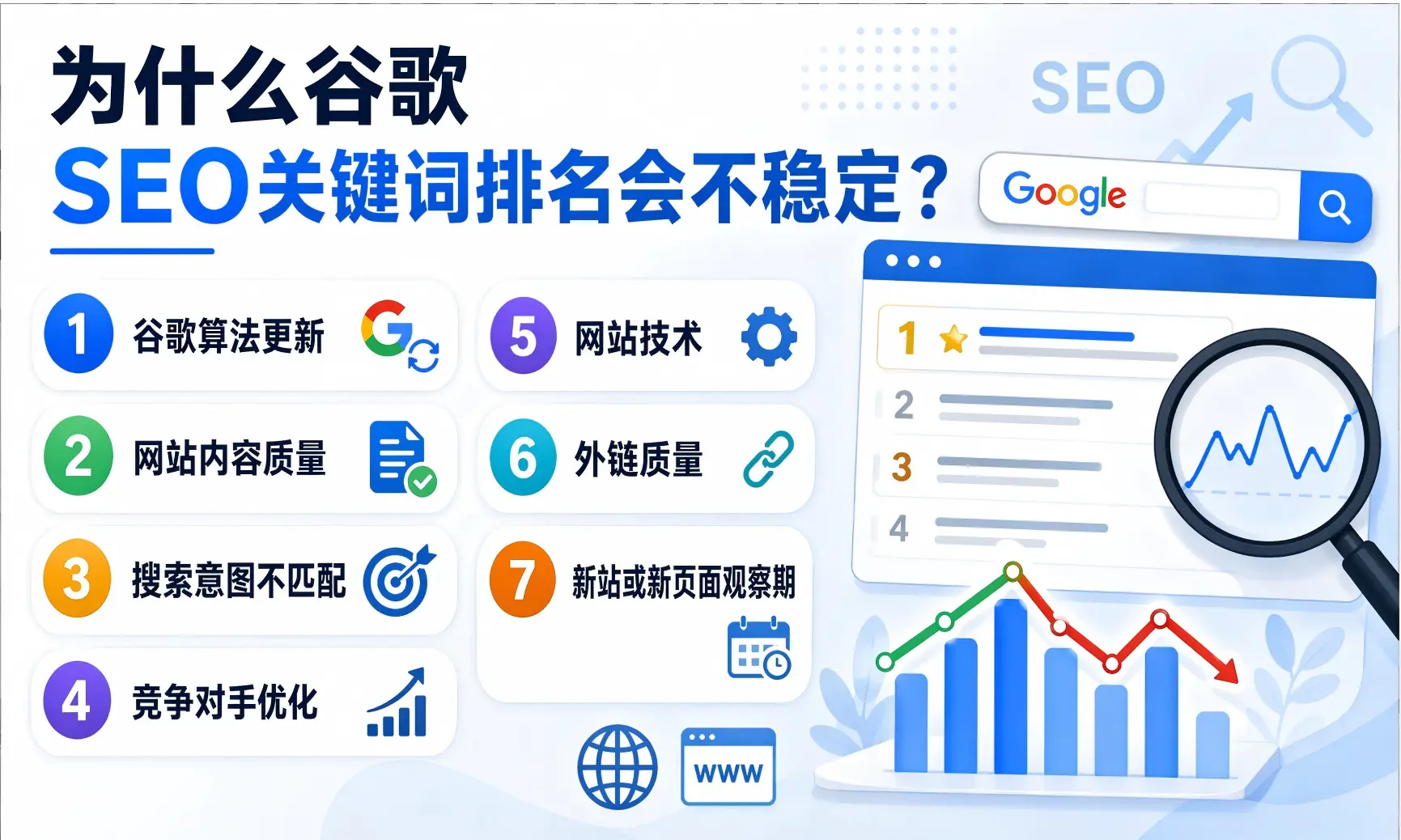
1. Why are Google SEO keyword rankings unstable?
1. Google's algorithm update caused fluctuations.
Google makes numerous algorithm adjustments every year, with core updates having the greatest impact on website rankings. After an algorithm update, the ranking logic of search results may change, and some previously high-ranking pages may be re-evaluated. If a website's content quality is mediocre or its user experience is poor, it is prone to ranking fluctuations after an update, and even site-wide traffic may be affected.
2. The quality of website content is not stable enough.
The common practice of piling up content around keywords while neglecting what users actually want to see is outdated. Google now prioritizes content that is helpful to users; articles that are simply cobbled together, contain repetitive information, and lack depth often struggle to maintain stable rankings in the long run.
3. Inaccurate search intent matching
A mismatch between the page and the user's search intent. For example, a user might search for "purchase-related" keywords, but your page is a science article; or a user might want to see tutorials, but you provide a product page. Even if you get a ranking in the short term, it's easy for it to drop later. Google's goal isn't simply to match keywords, but to meet user needs as much as possible. If a page can't solve the user's problem, it will naturally be difficult to maintain a stable ranking.
4. Competitors continue to optimize.
Your ranking may be unstable, not because you've regressed, but because your competitors have improved. Others might update their content, add high-quality backlinks, or optimize their page experience, prompting Google to re-rank them. This is especially true for high-value keywords, where competition is fierce and ranking fluctuations are more pronounced.
5. Website technical issues affecting crawling and indexing.
Technical issues are also a significant cause of unstable rankings, such as: slow page loading speed, poor mobile adaptation, website frequently being inaccessible or returning error codes, duplicate pages, incorrect canonical settings, robots.txt or noindex blocking errors, and a disorganized link structure after a website redesign.
6. Unstable quality of external links
Backlinks remain an important indicator for Google in judging a page's authority. If a website's backlink sources are of low quality, the growth is unnatural, or a large number of high-quality backlinks are suddenly lost, keyword rankings may fluctuate accordingly.
7. New websites or new pages enter the observation period.
It's normal for rankings to be unstable for new websites, new sections, or new pages. Google needs time to understand the website's theme, page quality, and user feedback.
2. How to solve the problem of unstable Google SEO keyword rankings?
1. First determine whether it is a short-term fluctuation or a long-term issue.
The correct approach is to observe data over 7 to 28 days to determine whether it's a short-term change or a sustained decline. If only a few keywords experience slight fluctuations, there's no need to panic; however, if core keywords and core pages continue to decline, a more thorough investigation is necessary.
2. Improve content quality and create truly valuable pages.
To achieve stable keyword rankings, the most fundamental approach is to improve content quality. When writing articles, don't just consider "which keywords I should target," but also "what users will gain from reading them." A high-quality piece of content should at least: have a clear theme, a well-structured narrative, answer core user questions, provide practical experience, case studies, or data, offer depth rather than superficial rewriting, and avoid repetition, emptiness, and keyword stuffing. Only when your page is truly more helpful than your competitors will Google be more willing to rank you consistently.

3. Re-examine the keyword matching relationship with the page.
When rankings are unstable, re-analyze your target keywords to see what type of pages are ranking highly in the search results: are they tutorials, product pages, category pages, reviews, or Q&A pages? If your page type doesn't match the mainstream results, it means your search intent might not be accurately matched. In this case, instead of continuing to stuff keywords, it's better to restructure the page content direction.
4. Establish a solid foundation in technical SEO.
A stable ranking depends on Google's ability to consistently crawl, understand, and index pages. It's recommended to focus on checking the following: website accessibility, page loading speed, mobile experience, duplicate URLs, correct canonical display, submitted and updated sitemap, whether robots.txt is blocking important pages, and the presence of 404 errors, 5xx errors, excessively long redirect chains, etc. Many websites have decent content, but unstable rankings result from poorly handled technical details.
5. Optimize the website's internal link structure
Internal links help Google understand the relationships between important pages and themes on a website. If a core page lacks sufficient internal link support, or if the anchor text is disorganized, Google's assessment of it may be unstable. It's recommended to establish a clear thematic structure around core keywords, linking related articles, category pages, and product pages to enhance the transfer of page authority.

6. Control the number of low-quality pages
Some websites, in their rush to grab keywords, publish a large number of pages with similar content, very short lengths, and low value. As a result, not only do these pages fail to rank well, but they also drag down the overall quality of the website. It's better to create 20 high-quality articles than 100 low-quality ones. For duplicate pages, blank pages, and pages with no traffic, consider merging, deleting, or setting them to not be indexed, concentrating authority on truly important pages.
7. Reliably acquire high-quality backlinks
Link building should prioritize quality and relevance, rather than simply quantity. Organic backlinks from industry-related websites, media outlets, blogs, and resource pages are more conducive to improving page stability. Conversely, spam backlinks, mass-produced backlinks, and low-quality links that appear in a short period not only fail to maintain stable rankings in the long run but may also pose risks.
III. Summary
When faced with fluctuations, the worst thing to do is to be blindly anxious and frequently modify the page. The truly effective method is to first look at the data, then find the reasons, and finally optimize step by step. Simply put, short-term fluctuations are driven by trends, while long-term stability depends on quality. As long as the website content is professional enough, the page experience is good, the technical foundation is solid, the structure is clear, and with continuous high-quality optimization, keyword rankings will naturally become more and more stable.

What does international social media management service include? 2026 Guide to Social Media Management for Export Businesses
2026-10-28

How to write a WordPress product page that will make overseas buyers want to send inquiries?
2026-10-28

How to fix WordPress form emails not sending: Practical WP Mail SMTP configuration
2026-10-27

Are foreign trade promotion companies reliable? Six key criteria for businesses to judge promotion service providers in 2026.
2026-10-26

How do I set up an email account for export businesses? How can I configure it to avoid it ending up in the spam/junk mail folder?
2026-10-26
Related Articles
What are the differences between Google SEO and Google Ads? Which should B2B export businesses do first?
2026 Shenzhen Google SEO Optimization Company Recommendations: Service Provider Comparison and Selection Guide
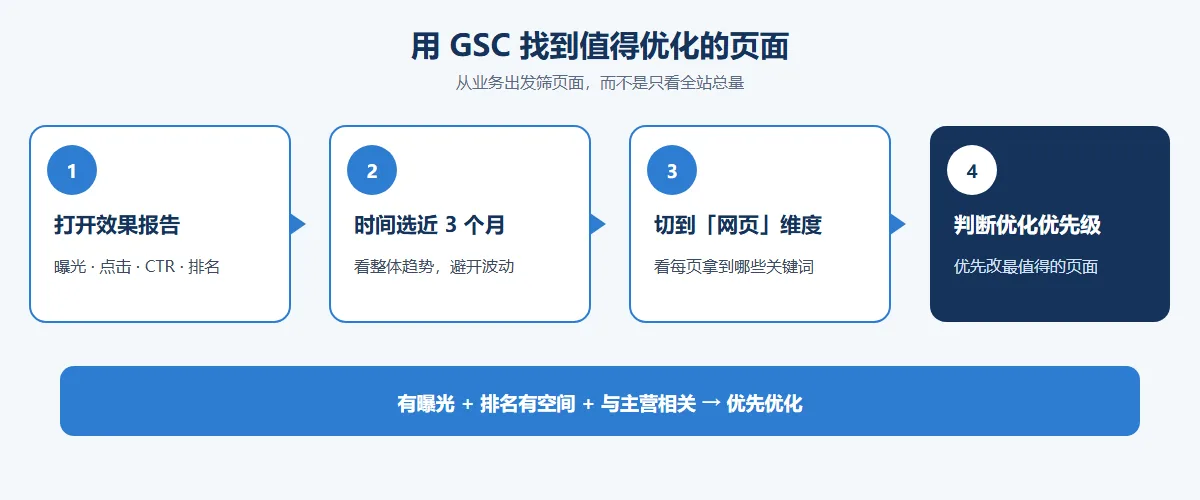
How to improve Google rankings through SEO optimization for international trade? 7 practical methods and steps.

Recommended Shenzhen B2B export website operation company: How to choose a suitable international lead generation service provider for your enterprise?

Why is the Google ranking of Shenzhen export businesses' business websites not improving?

