Contents +
Will a high AI detection rate on a webpage negatively impact a business website's SEO?
Source: 创同盟
Date: 2026-06-27
Views: 871
Many website owners use third-party tools to check the "AI detection rate" before publishing content. If the result is high, they worry about the page not being indexed, ranking poorly, or even being penalized by search engines. Therefore, many people focus on " reducing the AI detection rate " as a key aspect of content optimization. However, from the perspective of actual business website SEO, the page's AI detection rate is not the core factor determining search performance. What truly affects SEO presentation is not "how well this article reads like it was written by AI," but rather "whether this content is truly helpful to users, whether it possesses unique value, and whether it deserves to be displayed by search engines."
To verify this hypothesis, I started using the AI chatGPT to assist me in content creation in February 2026. As of April 20th, 2026, I have produced over 20 AI-assisted articles, and the traffic trend continues to grow. Furthermore, blog traffic accounts for 70% of the website's traffic.
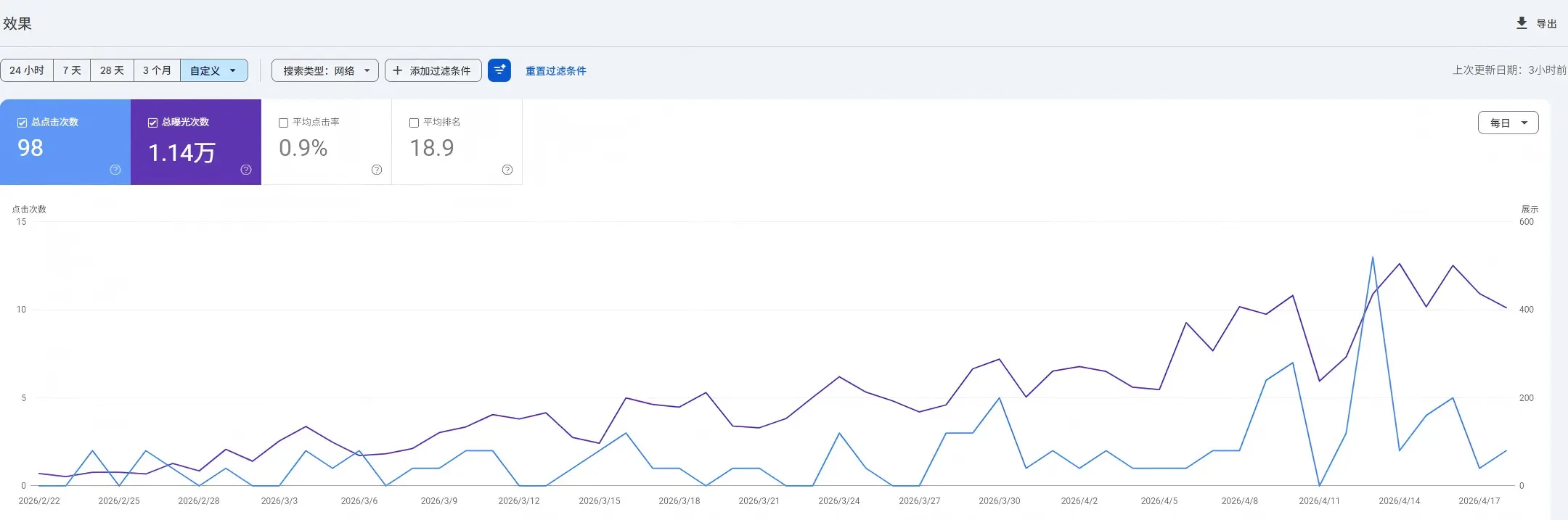
The increase in site traffic due to AI content output
I. High AI detection rate does not necessarily mean poor SEO.
To summarize: A high AI detection rate does not necessarily mean poor on-page SEO. Many people easily equate the judgment of "AI detection tools" with the judgment of "search engines," but these are not the same thing. AI detection tools on the market essentially judge whether a piece of text "looks like it was machine-generated" based on features such as sentence structure patterns, word repetition, expression patterns, and language stability. They are more like performing "text style recognition" than "content quality assessment." Search engines, however, focus not on whether the content was written by AI, but rather on:
Does this content truly solve the user's question? Does the page offer value and added information? Is the content clear, reliable, and readable? Is it mass-produced, templated, or of low quality? Is it simply a page piled up to cover keywords? In other words, search engines look at the content result, not the content production method. Therefore, even if a page has a high AI detection rate, as long as it is complete in information, logically clear, helpful to users, and has original value, it still has a chance to achieve good indexing and ranking. Conversely, an article with a so-called "low AI detection rate" that is merely a low-level rewrite, empty in content, and lacks added information will also struggle to achieve good SEO results.
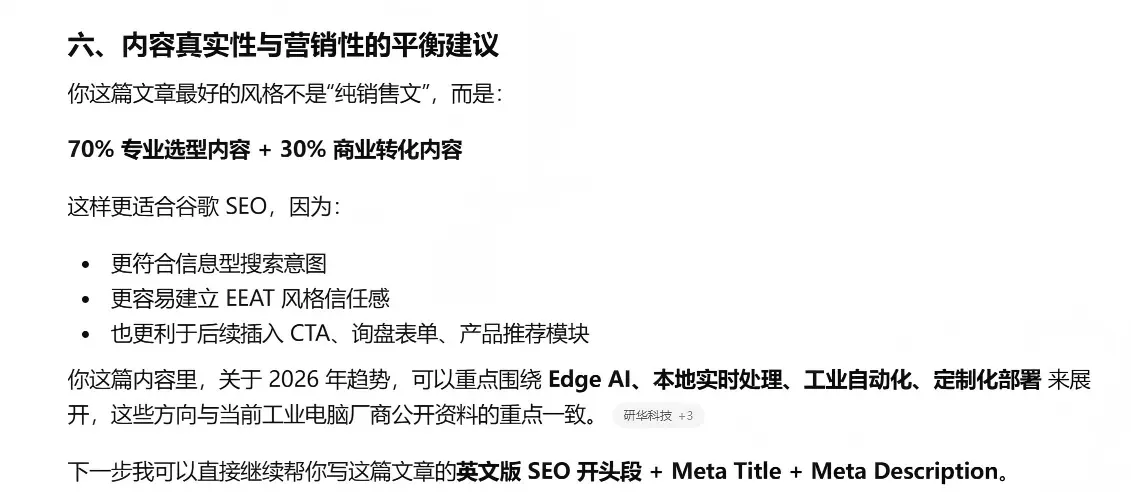
Second, what truly impacts a business website's SEO is not the AI rate, but the content quality.
Many pages with high AI rates ultimately perform poorly in SEO not because they are "identified as AI," but because these pages are often accompanied by several obvious problems.
1. The content is superficial and lacks new value: Many pages look structurally complete and the sentences are fluent, but the articles do not provide any new information and are just repeating content.
2. Excessive Page Templateization: In order to quickly scale up the page load, a large number of similar pages are generated in batches, such as "pseudo-differentiation content corresponding to different product attributes". On the surface, there are many pages, but in reality, the content structure and expression are highly repetitive.
3. Lack of real-world experience and credible information: For business websites, what truly impresses users and improves SEO quality is often specific experience and detailed information, such as: actual test results, product usage comparisons, suitable and unsuitable target audiences, common industry misconceptions, solutions to common problems, real-world cases and scenario descriptions.
4. Decreased readability and conversion rate: Some website owners deliberately make their articles more conversational, disjointed, or even intentionally create unnatural expressions to lower the AI detection rate, making the detection tools judge them as "more human-written." Sacrificing readability to "avoid detection" ultimately affects the actual performance of the page.
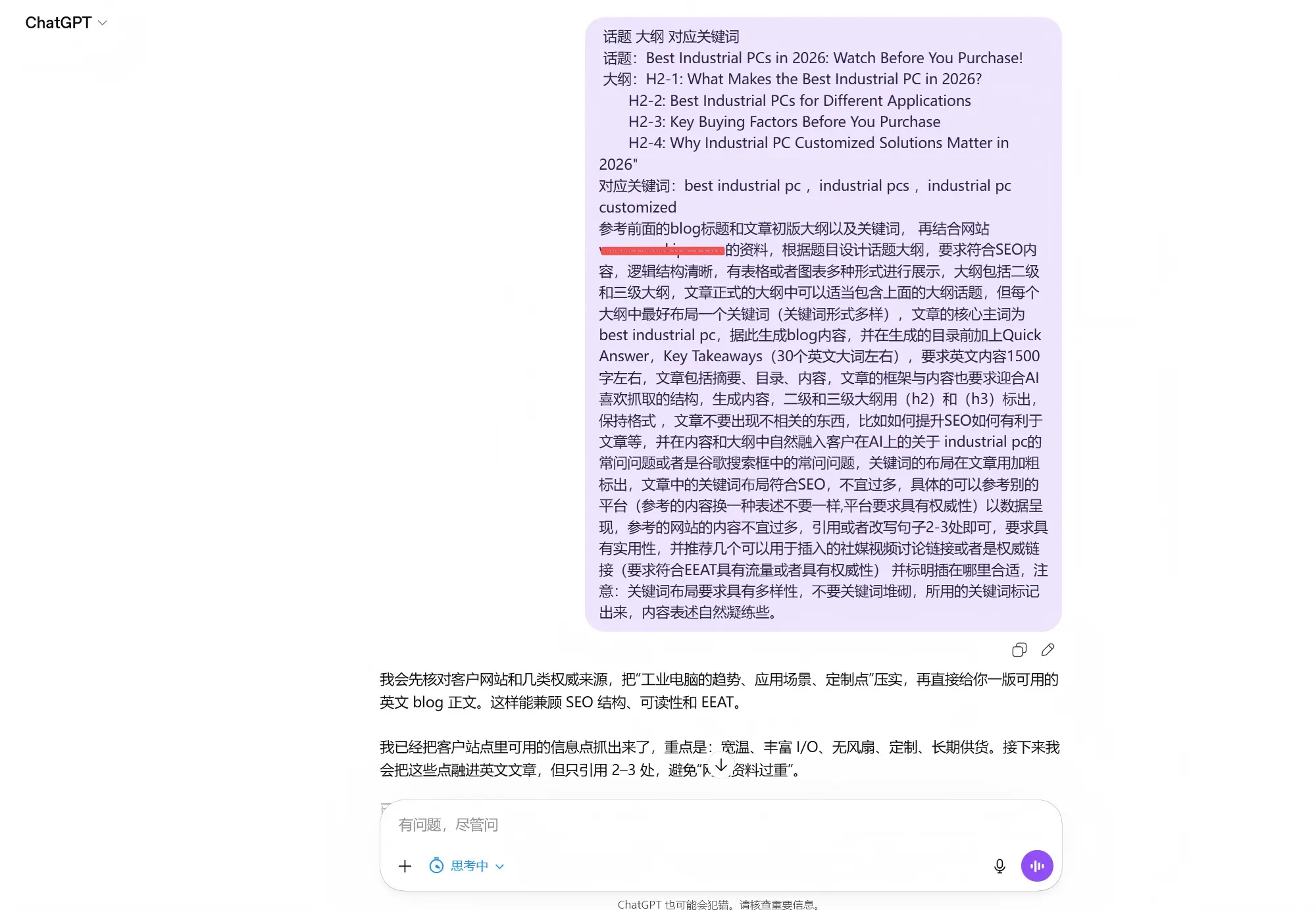
AI content generation prompts
3. In what ways does the page AI detection rate indirectly affect SEO?
While AI detection rate is not a direct ranking factor, it can indeed indirectly affect the SEO performance of a business website through content quality issues.
1. Impact on indexing quality: If a site publishes a large number of highly similar, low-value pages, search engines may not actively index them, or may only index a portion of them. Even if they are indexed, it doesn't guarantee a desirable ranking.
2. Impact on keyword ranking stability: Some AI-generated pages may gain short-term exposure in the early stages due to high keyword matching, but if the page lacks real value and user feedback is mediocre, the ranking is often unstable and can easily decline later.
3. Impact on search result click-through rate: While the main content of AI-generated pages may be acceptable, the titles, summaries, and opening paragraphs are often vague and lack appeal and clear benefits. This may result in lower user click-through rates.
4. Impact on Citation Opportunities in AI Search Answers: The search environment is no longer limited to traditional blue link results. More and more users are directly seeing AI summaries, AI answers, or intelligently integrated content within search results. To be cited by an AI answer, a page typically needs to meet several conditions:
The structure is clear, and information is easy to extract; the conclusions are explicit and concise; the content is supported by evidence or examples; the information is accurate and up-to-date; the page's theme is focused and not cluttered. What affects whether you are cited is not the AI detection rate, but rather the page's own comprehensibility and credibility.
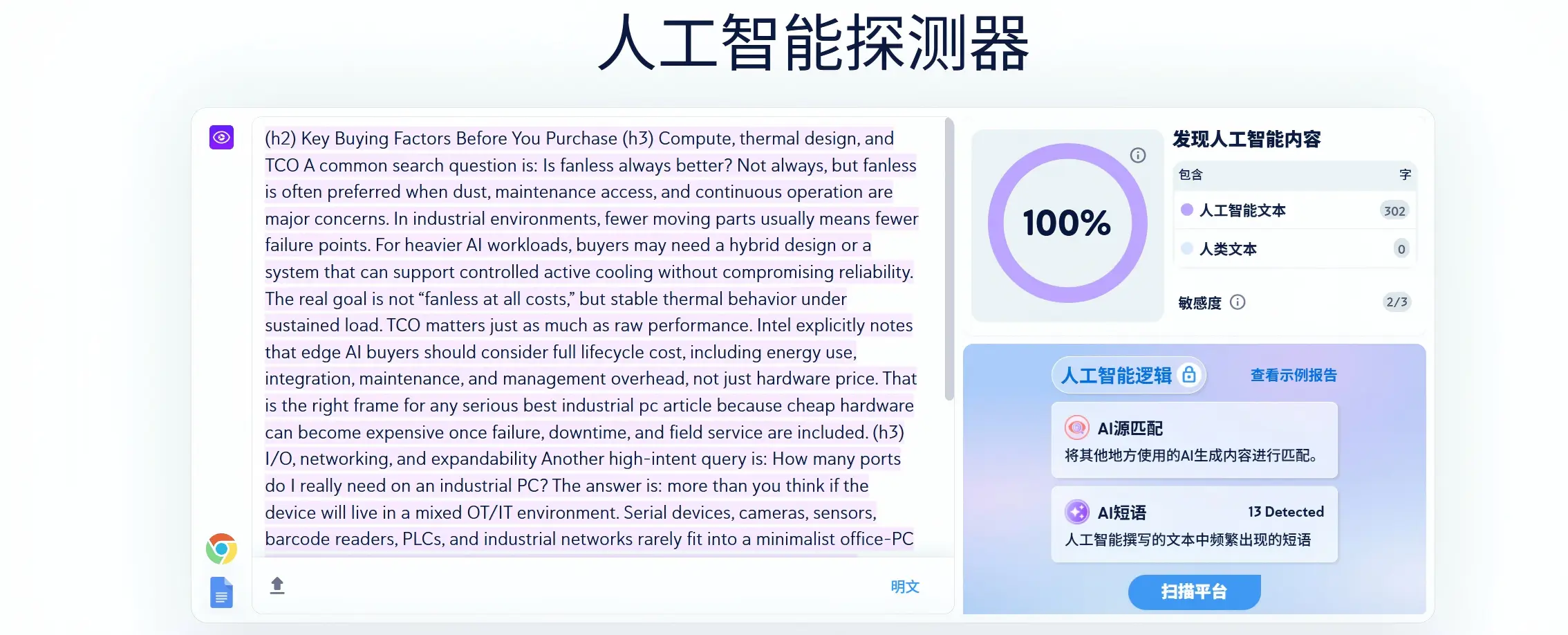
Screenshot of AI content inspection tool
IV. How should business websites properly use AI to create content?
Instead of worrying about the "AI utilization rate," we should focus on "how to involve AI in production without compromising page quality." A more suitable approach for business websites is to treat AI as an efficiency tool, not as the final destination for content creation.
1. Building a framework using AI
AI is well-suited for creating preliminary outlines, organizing content structures, expanding titles, supplementing FAQs, and summarizing basic information, but do not publish unprocessed AI drafts directly online.
Truly competitive pages typically require ongoing human input to supplement them with industry insights, business experience, and differentiated information.
2. Incorporate the brand's own authentic content.
The most valuable part of a business website isn't just "speaking fluently," but rather offering content that others don't. For example: the true advantages and limitations of your own products, frequently asked customer questions, common concerns raised during pre-sales consultations, the selection logic between different products, and user feedback and suggestions. This information is key to differentiating your page from generic AI content.
3. Focus on the "real-time increase in trending topics," rather than the "degree to which historical content is rewritten."
What truly matters is not "how many sentences were changed," but "how much new information was added." If a piece of content merely changes its expression without adding new facts, examples, judgments, or experiences, then it is essentially still weak content.
4. Establish a pre-release quality inspection mechanism
Before publishing content, business websites can use a more practical set of standards to check pages, instead of just looking at the AI ratio:
Does this content truly answer the user's question? Does the page contain unique information or viewpoints? Is there any obvious template-based expression? Does it include case studies, data, details, or real-world experience? Does it allow users to quickly reach a conclusion? Does it contribute to conversions, rather than simply piling on words? This kind of quality control is far closer to SEO results than focusing on AI detection rates.
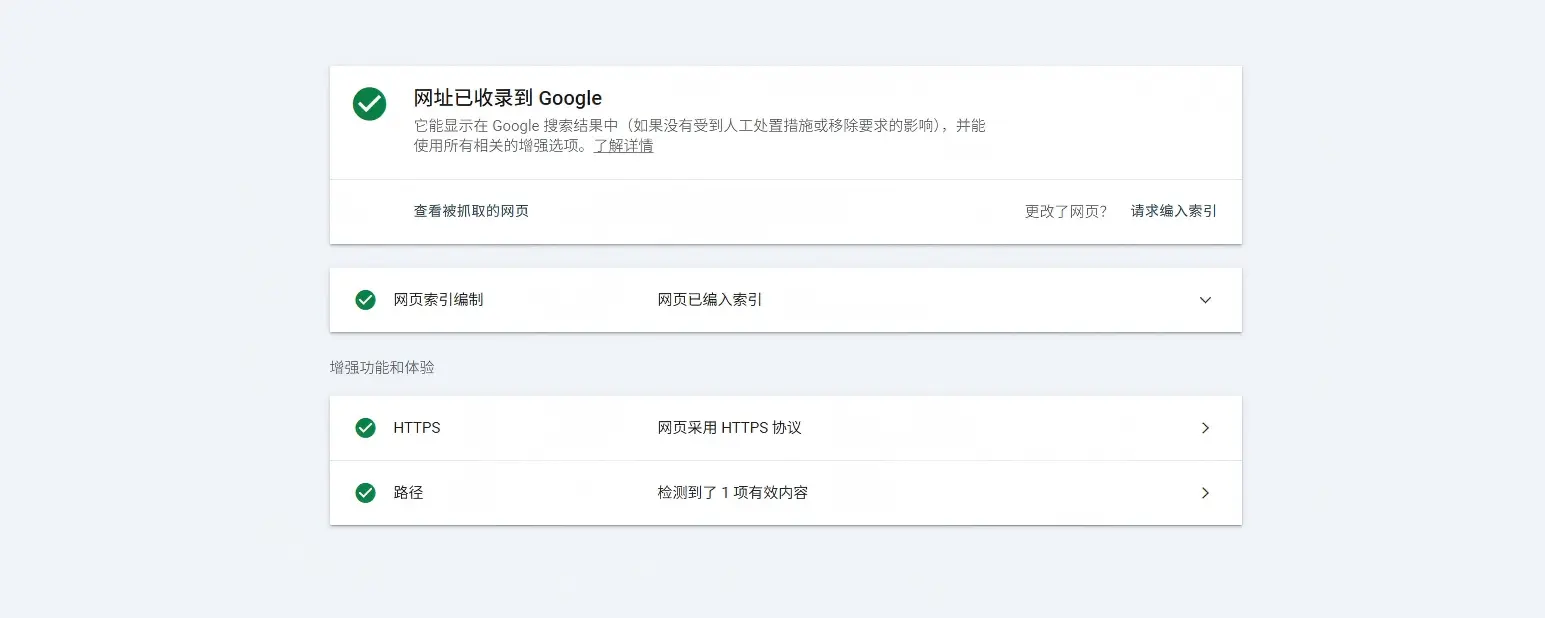
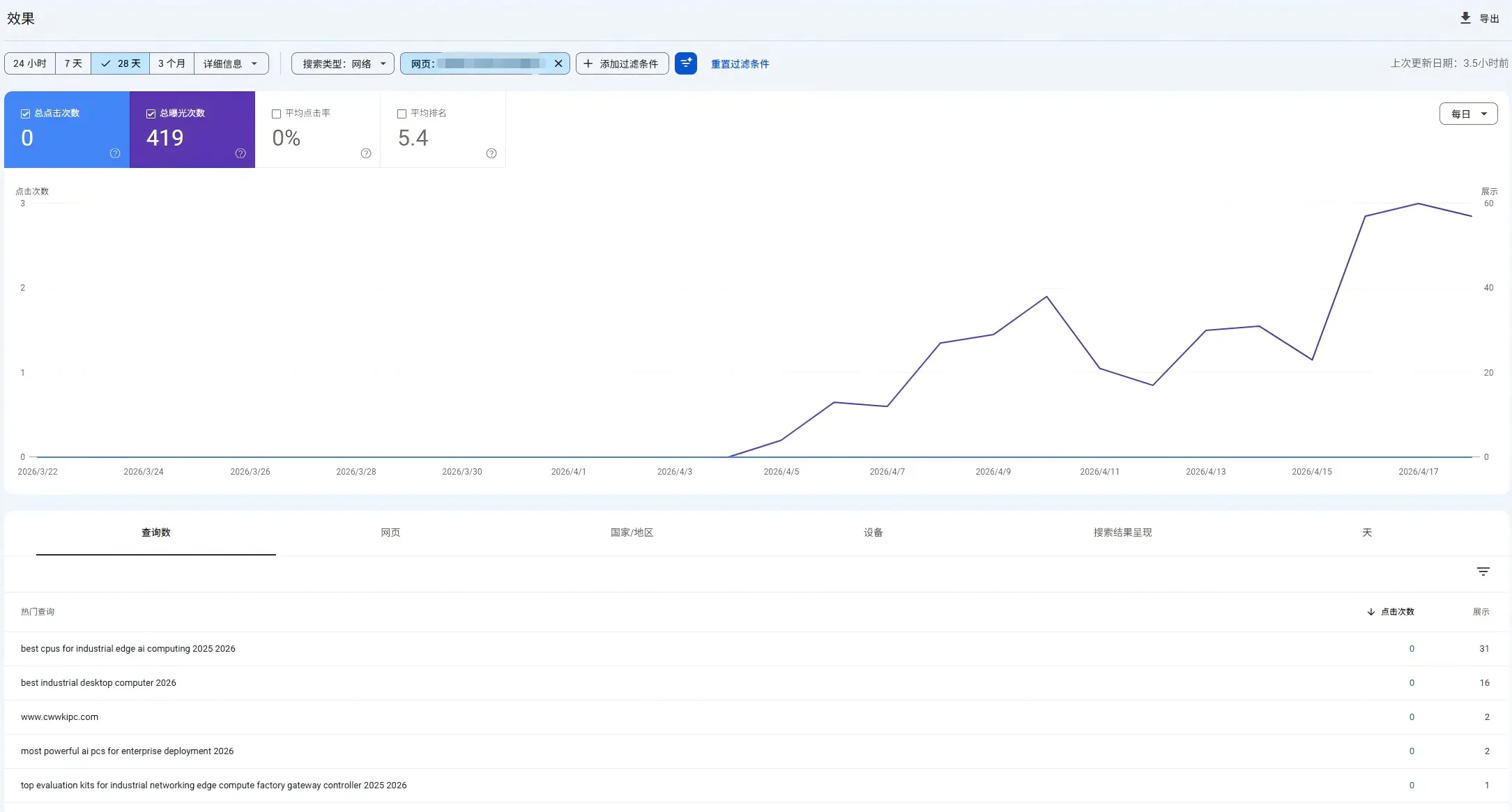
Traffic traffic growth trend for single-page content
summary:
Returning to the initial question: Does the AI detection rate of a page affect the SEO performance of a business website? The answer is: It will have an indirect impact, but it is usually not a direct determining factor.
Ultimately, what determines a business website's SEO performance is still the page's value. A high AI detection rate doesn't necessarily mean the page will be penalized, and a low AI detection rate doesn't guarantee a high ranking. Search engines ultimately judge whether the content is helpful, provides original incremental value, and is worth showing to users. For business websites, the most rational approach isn't to blindly "de-AI-ize," but rather to use AI as an aid in content production, supplemented by human input based on real-world experience, brand awareness, and user insights, allowing pages to improve efficiency while maintaining quality.

What does international social media management service include? 2026 Guide to Social Media Management for Export Businesses
2026-10-28

How to write a WordPress product page that will make overseas buyers want to send inquiries?
2026-10-28

How to fix WordPress form emails not sending: Practical WP Mail SMTP configuration
2026-10-27

Are foreign trade promotion companies reliable? Six key criteria for businesses to judge promotion service providers in 2026.
2026-10-26

How do I set up an email account for export businesses? How can I configure it to avoid it ending up in the spam/junk mail folder?
2026-10-26
Related Articles
What are the differences between Google SEO and Google Ads? Which should B2B export businesses do first?
2026 Shenzhen Google SEO Optimization Company Recommendations: Service Provider Comparison and Selection Guide
How to improve Google rankings through SEO optimization for international trade? 7 practical methods and steps.

Recommended Shenzhen B2B export website operation company: How to choose a suitable international lead generation service provider for your enterprise?

Why is the Google ranking of Shenzhen export businesses' business websites not improving?

