Contents +
Semrush Tutorial 2026: A Beginner's Guide to Business Website SEO Tools
Source: 创同盟
Date: 2026-05-19
Views: 2493
Practical Strategy Guide - Using Semrush for Business Website Keyword Research
1. Introduction
Keyword research is the foundation of business website SEO's "finding traffic and creating inquiries." In 2026, with increasing competition among business websites, SEO remains a core channel for obtaining stable, free traffic. If you're new to SEO tools, Semrush is one of the most comprehensive marketing data platforms available. This tutorial will guide you from beginner to expert, teaching you step-by-step how to use Semrush for "business website keyword research."
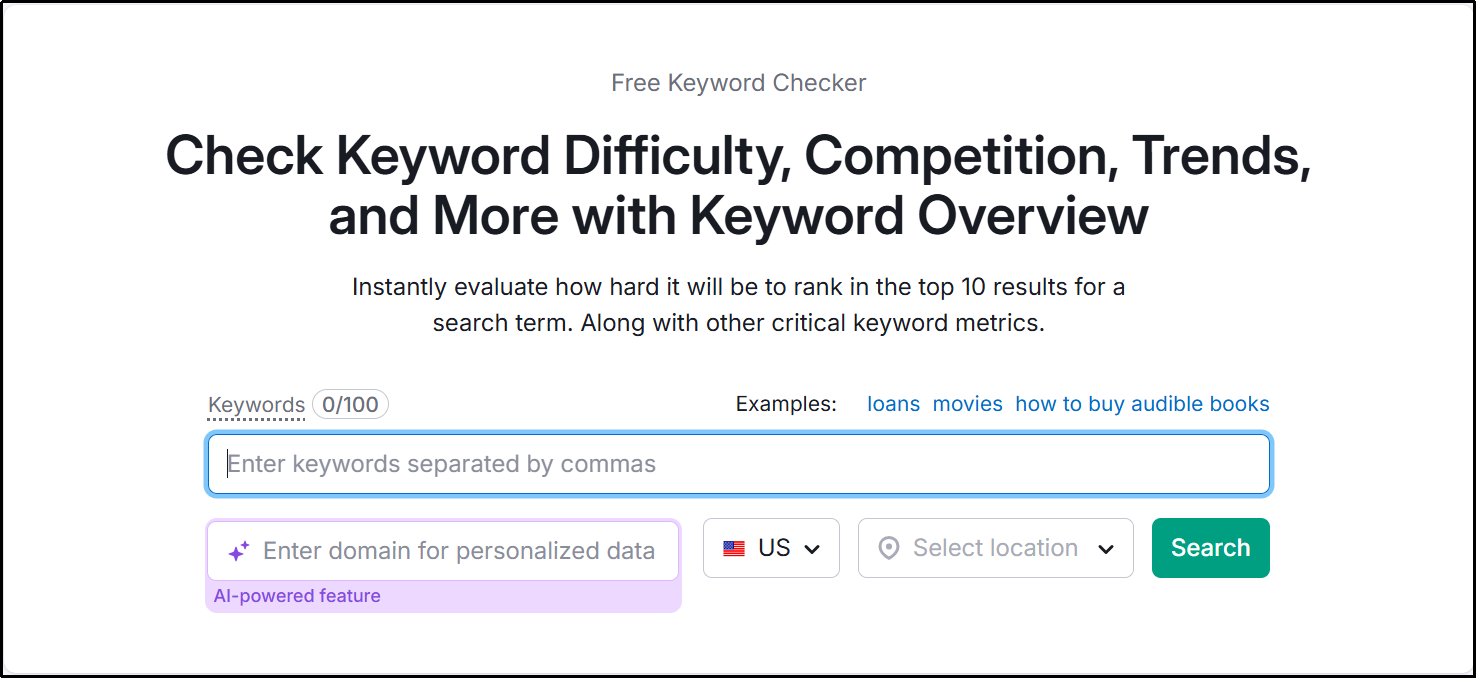
Figure 1 SEMrush Keyword Tool
(*Key Tip: For personal use, it is recommended to search for and purchase a shared Semrush account to reduce usage costs.)
2. Keyword research improves SEO efficiency
Keyword research for business website SEO can "improve efficiency." In 2023, we served a client who worked on "RFID Mobile Computers." During our discussions, the client raised questions about the key milestones for SEO results. Having been involved in SEO for a considerable time, they wanted to know how to quickly improve the ranking of targeted keywords and get unranked terms ranking. This is a common concern for most marketing directors. At that time, we began to consider how to scientifically and quickly improve the ranking of keywords for business website SEO to increase traffic.
Therefore, we explored the topic of business website SEO results inquiries, proposing that business website SEO can be approached from four dimensions: "finding traffic, finding rankings, providing supporting evidence, and generating inquiries." Google's emphasis on content (EEAT algorithm rules) and users' emphasis on content dimensions (content authenticity and marketing relevance) are increasingly aligned. Returning to the main topic of "keyword research improving SEO efficiency," business website SEO page content carries tag keywords, and these keywords, when searched by users, generate traffic. (*Key tip: A higher keyword ranking can improve traffic, and an increase in the number of keywords ranking can also improve traffic).
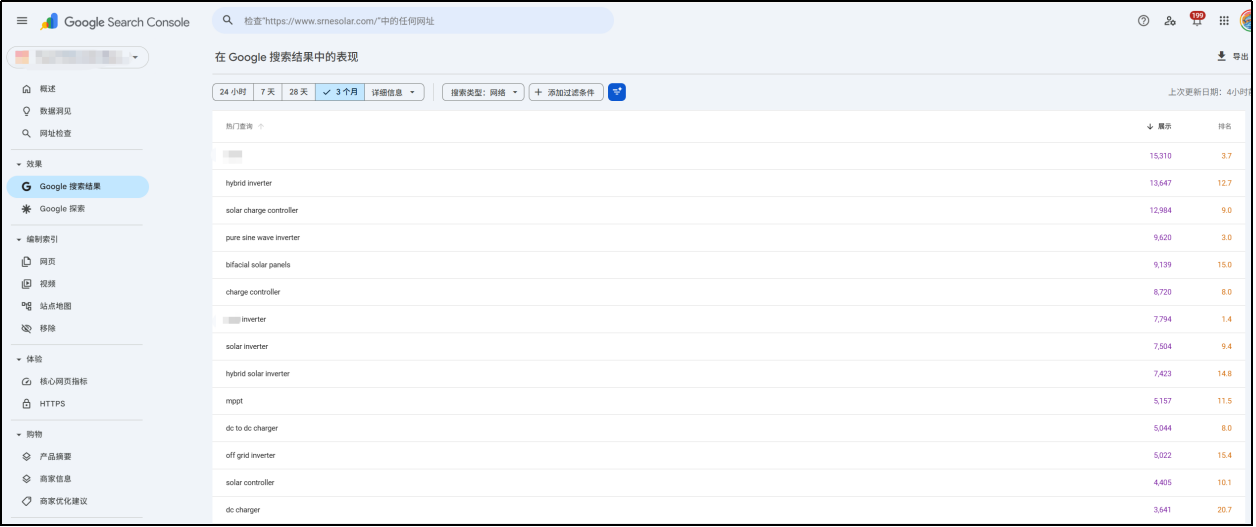
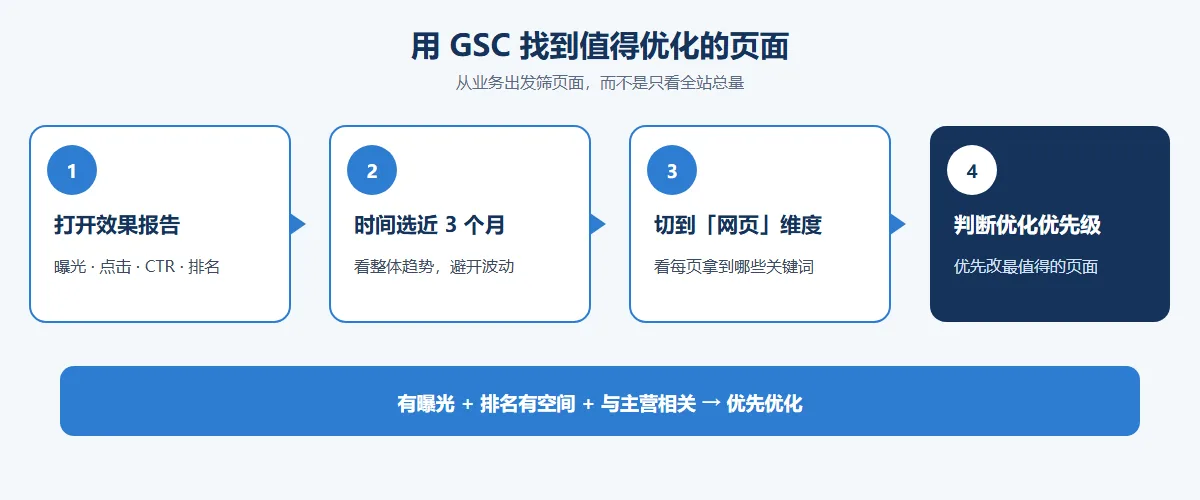
Figure 2 shows the data chain for Google Search Console ranking.
3. Factors affecting keyword optimization efficiency
The efficiency of keyword optimization for business websites is influenced by many factors, which we can divide into two aspects. One aspect is industry competition (search volume, KD optimization difficulty, the amount of indexed content, the types of top-ranking business websites, etc.). The other aspect is the site's fundamentals (whether the site's own authority is greater than the keyword optimization difficulty, whether the site's SEO technology follows search engine guidelines, etc.). These factors have a significant impact on keyword optimization efficiency. Below, we will share the application of SEMrush while combining a business website keyword hierarchical optimization strategy to improve efficiency.
(*Key Tip: Many factors affect the efficiency of keyword optimization. When optimizing, you should proceed gradually, from simple to complex.)
4. Keyword hierarchical optimization
① By optimizing keywords in a hierarchical manner, a keyword group for a product category is determined. Based on the hierarchical inclusion relationship of main keywords, core keywords, and long-tail keywords, the rationality and guiding value of internal links are determined. The core value of the homepage is to realize the diversion of user needs and convey brand value. In terms of keyword layout, more than 70% of enterprises have chosen the business + brand approach. For B-end enterprises, business keywords can be product main keywords or solutions, depending on the services provided by the enterprise.
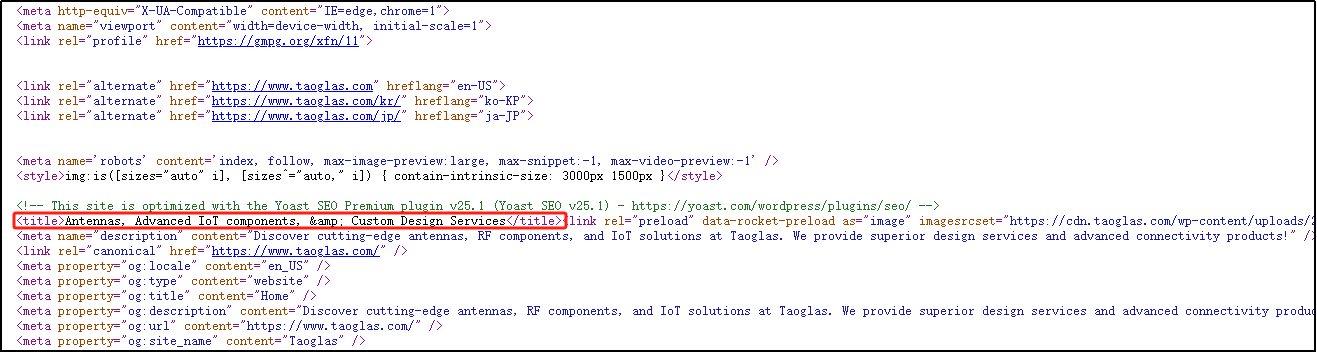
② Aggregation pages are the core pages that carry SEO traffic. They are optimized in a hierarchical manner based on keyword categories, such as (product aggregation page, product category page, product detail page), including main keywords, core keywords, and long-tail keywords. For example, the main keyword is "Mobile Computer," the adverb is "mobile computers," and the long-tail keyword is "mobile computer price."
③ The first step should be brainstorming to come up with some core keywords. These keywords are broad words or phrases related to your brand, product, service, or market segment. They are the starting point for your keyword research process because they can help you begin expanding your keyword list. First, think about the problem you are solving. Then consider what search terms people might use when searching for your type of business. For example, if you are an RFID vendor, some of your seed keywords might be:
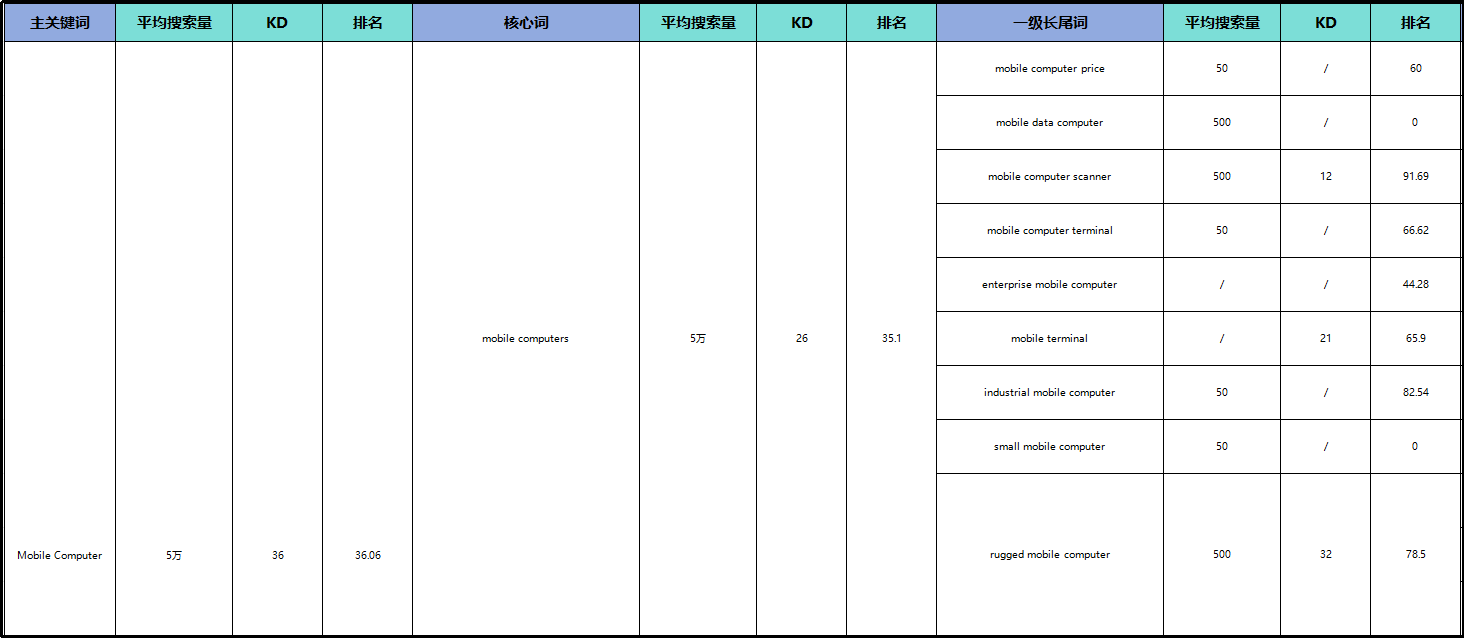
(*Key Tip: Keyword hierarchical optimization is an optimization strategy that conforms to the SEO pyramid structure of a business website.)
5. SEMrush for keyword research applications
①Related search terms were discovered
Once you have a list of seed keywords, you can use them to determine the relevant search terms you want to use in your content. Enter a seed keyword in Keyword Magic. You will get a wealth of relevant keyword ideas and valuable metrics. Then, using the suggested groupings and subgroups on the left, focus on terms that are particularly relevant to your market segment.
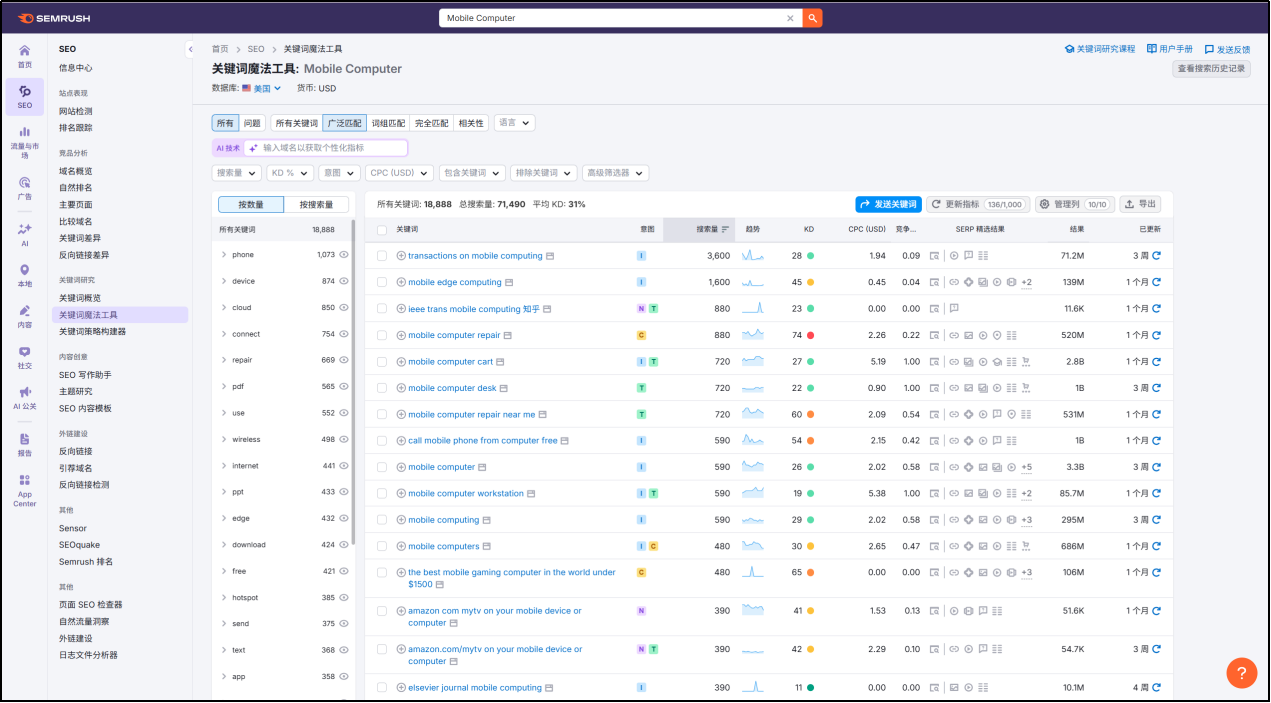
② Use long-tail keywords or related complete sentences as titles.
a. Explore the core questions corresponding to keywords using SEMrush's keyword tool, and use the complete long-tail keywords corresponding to the core questions as the titles of blog content. Use keywords with a search volume of 500 or more and a KD ≤ 30 as the "main topic." Requirements: Use the complete question without modification, making it easy for users to search directly, ensuring the search engine algorithm can accurately match our page index, and the content should be over 3000 words, mainly focusing on "main keywords and core phrases."
For searches with a volume of 500-300 or more and a KD ≤ 30, use them as "sub-topics". Requirements: use them in their entirety without modifying the question as much as possible, make it easy for users to search directly, ensure that the matching algorithm can accurately match our index, and the content should have more than 1500 words, mainly focusing on "core phrases". For searches with a volume of 300-100 or more and a KD ≤ 30, use them as "sub-topics". Requirements: use them for content with more than 1000-1500 words, mainly focusing on "long-tail phrases".
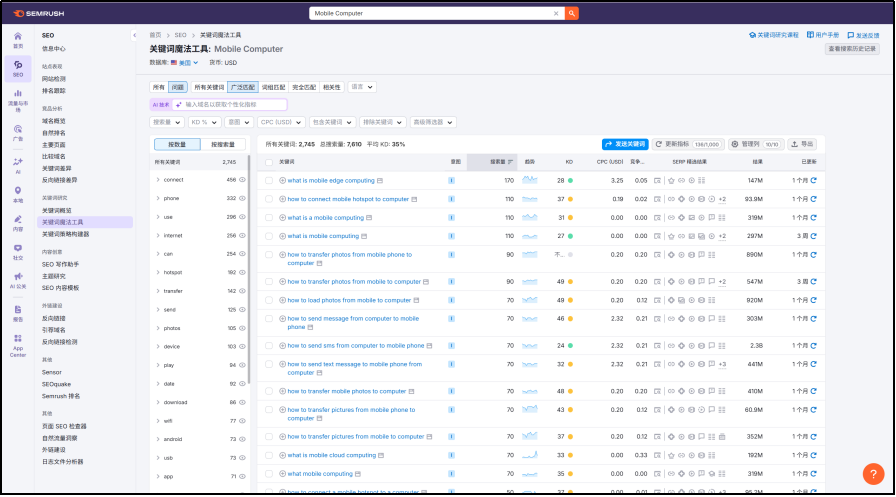
(*Key tip: Using SEMrush to find classic topics is a good approach. The key is to screen the relevance of the questions and their user value.)
③Analyze keyword indicators
At this point, you may already have a long list of potential keywords that need to be targeted. However, not all keywords have the same value. Some keywords are so competitive that they are almost impossible to rank for, while others, even if they do rank, are unlikely to bring effective traffic or conversions to the website. Therefore, analyzing the metrics for each keyword is crucial before determining target keywords.
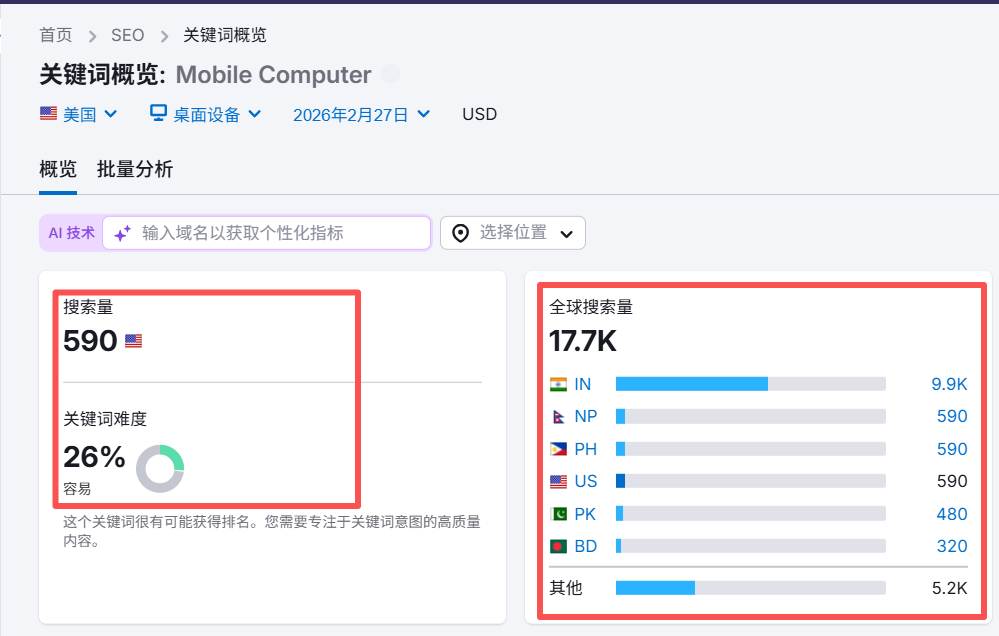
Enter your chosen search terms into the Keyword Overview tool (up to 100 search terms can be evaluated at a time), and then view the following useful metrics:
Search volume: The average number of times people search for a particular keyword each month.
Keyword difficulty: The difficulty level of the top ten search results for this keyword.
Cost per click (CPC): The average price an advertiser pays for a user to click on an ad triggered by that keyword.
Search Results Page Features: Unique results beyond the traditional list on Google search results pages.
④ Determine the search intent
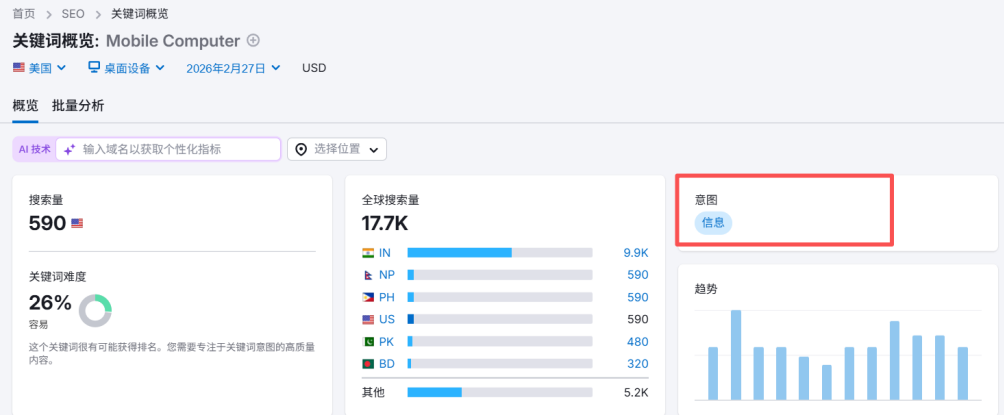
Search intent refers to the reason why a user performs a search query on a search engine. Understanding search intent is crucial for keyword research. Why? Because Google's goal is to provide users with relevant search results. Therefore, understanding user intent can help you create content that is more likely to rank well.
There are four main types of search intent:
Informational searches: Users are looking for information (e.g., "How to use a mobile computer" or "What is a mobile computer"). These search terms indicate that users are eager to learn or find answers.
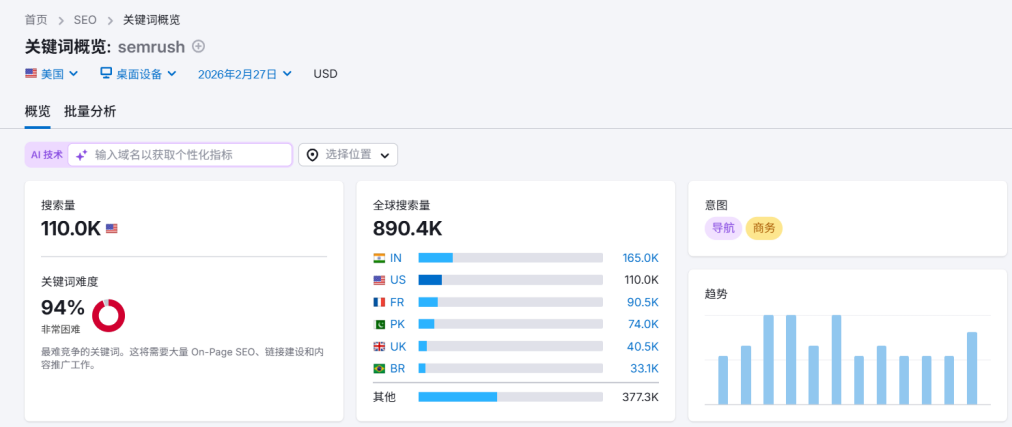
Navigation: The user is trying to find a specific website or online destination (e.g., "semrush" or "facebook login").
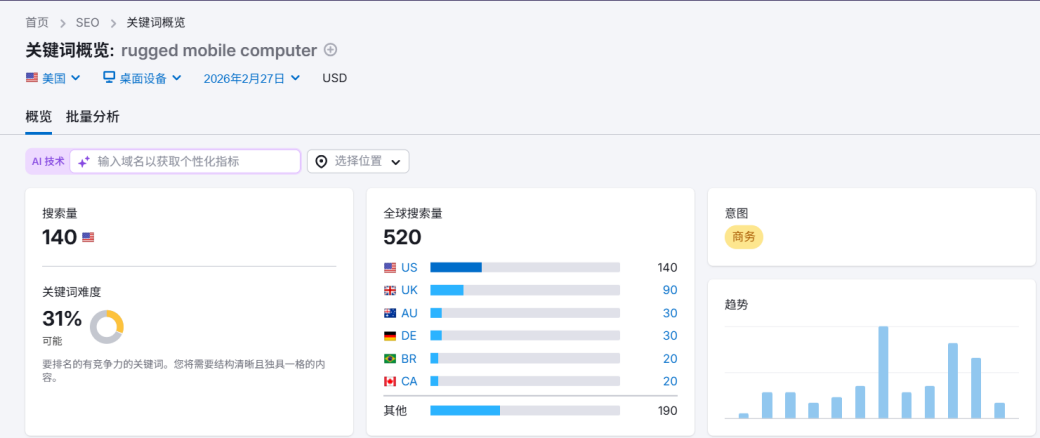
Commercial Purpose: Users often conduct research before purchasing products or services. Search terms such as "rugged mobile computer" or "Mobile Computer services" indicate commercial intent.
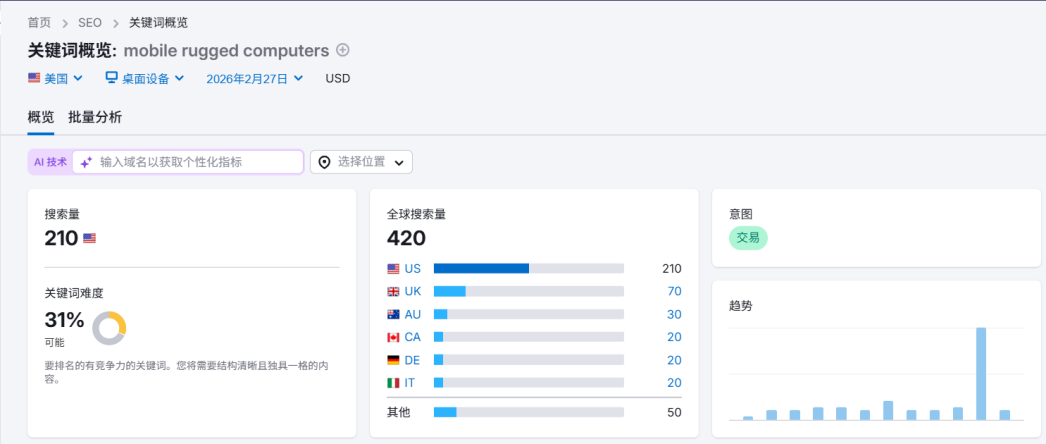
Transactional: Users are ready to make a purchase or complete a specific action (e.g., "mobile rugged computers").
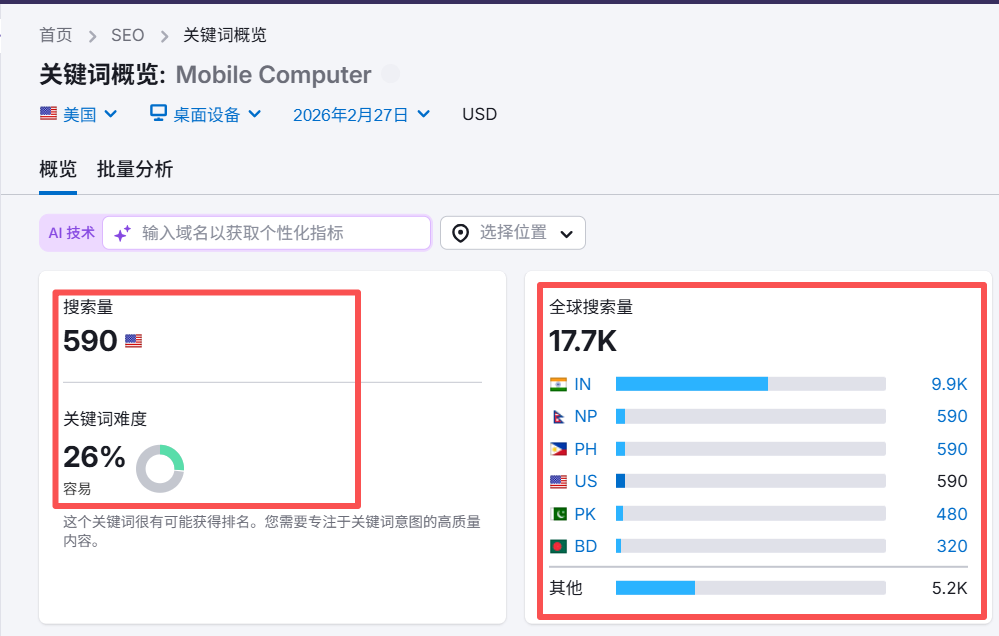
⑤ Search volume and difficulty
You can search for the average monthly search volume of this term globally, as well as the average monthly traffic data for various regions and countries. You can also see the level of competition for this keyword in the currently selected country; the higher the level of competition, the more difficult it is to optimize the ranking.
⑥ Find competitors and peers
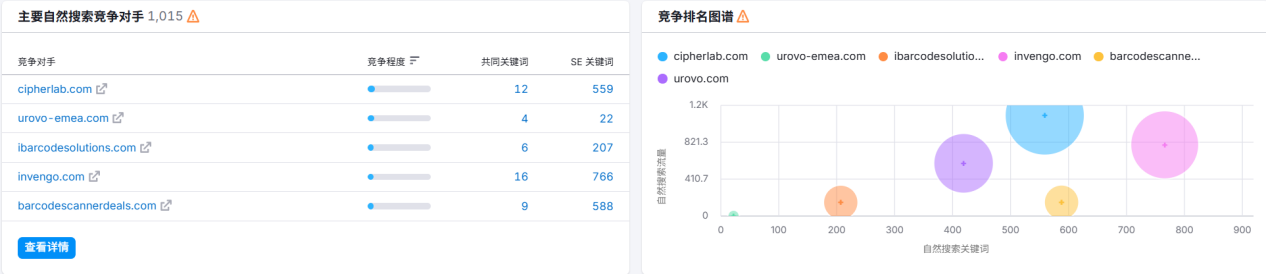
a. By entering your own domain name, you can view the competitors identified by Semrush in that industry.
The more common keywords there are, the greater the competition. Common keywords refer to the number of common keywords between the analyzed domain and the ranking of a specific competitor in the top 20 organic search results on Google.
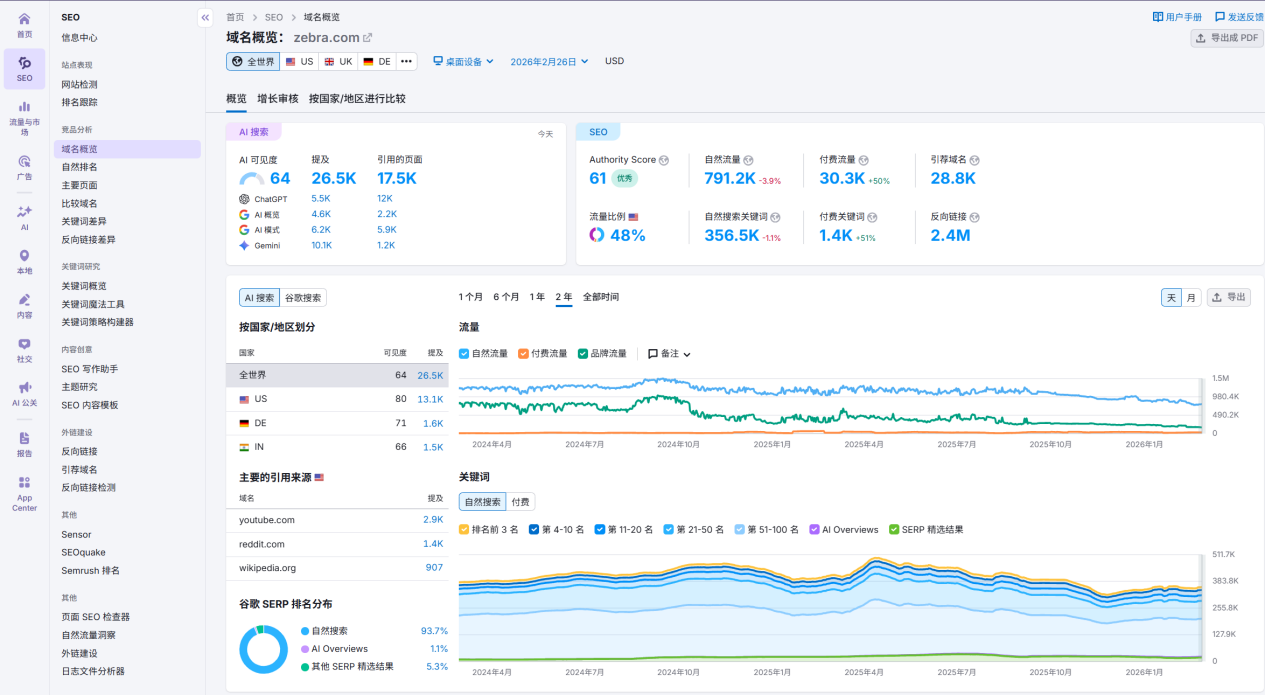
b. Manually enter the domain name of the same line;
You can query your peers' average monthly traffic, search volume, number of backlinks, ranking keywords, and information about their competitors.
6. Summary
SEO keyword research tools for business websites can help you find, analyze, and prioritize the search terms actually used by users. This allows you to create content and marketing campaigns that boost exposure, traffic, and conversion rates.
Helping you discover potential and target keywords:
Keyword search volume (Volume)
• Keyword Difficulty
• Recommended related long-tail keywords
• User search intent analysis
Suitable for business websites to optimize key keywords and explore traffic opportunities.
Simply enter your seed keyword and target region in Keyword Magic to get a list of relevant keywords. We recommend adding your domain name for personalized analysis. Next time, we'll share how to conduct keyword research using ChatGPT and Google Keyword Planner.
What does international social media management service include? 2026 Guide to Social Media Management for Export Businesses
2026-10-28
How to write a WordPress product page that will make overseas buyers want to send inquiries?
2026-10-28

How to fix WordPress form emails not sending: Practical WP Mail SMTP configuration
2026-10-27
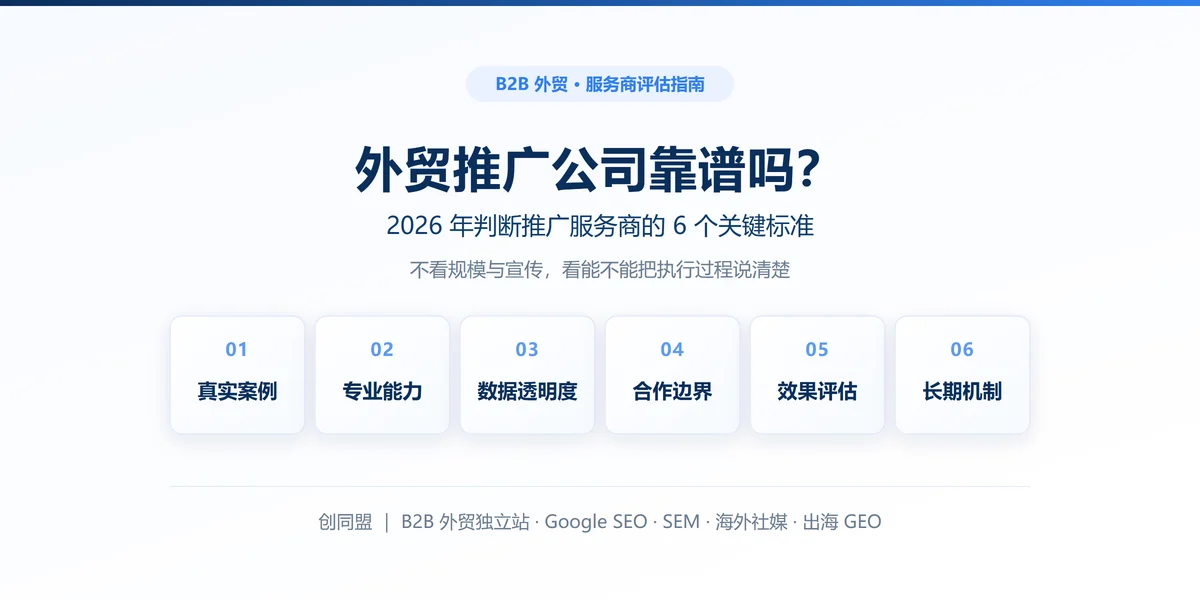
Are foreign trade promotion companies reliable? Six key criteria for businesses to judge promotion service providers in 2026.
2026-10-26
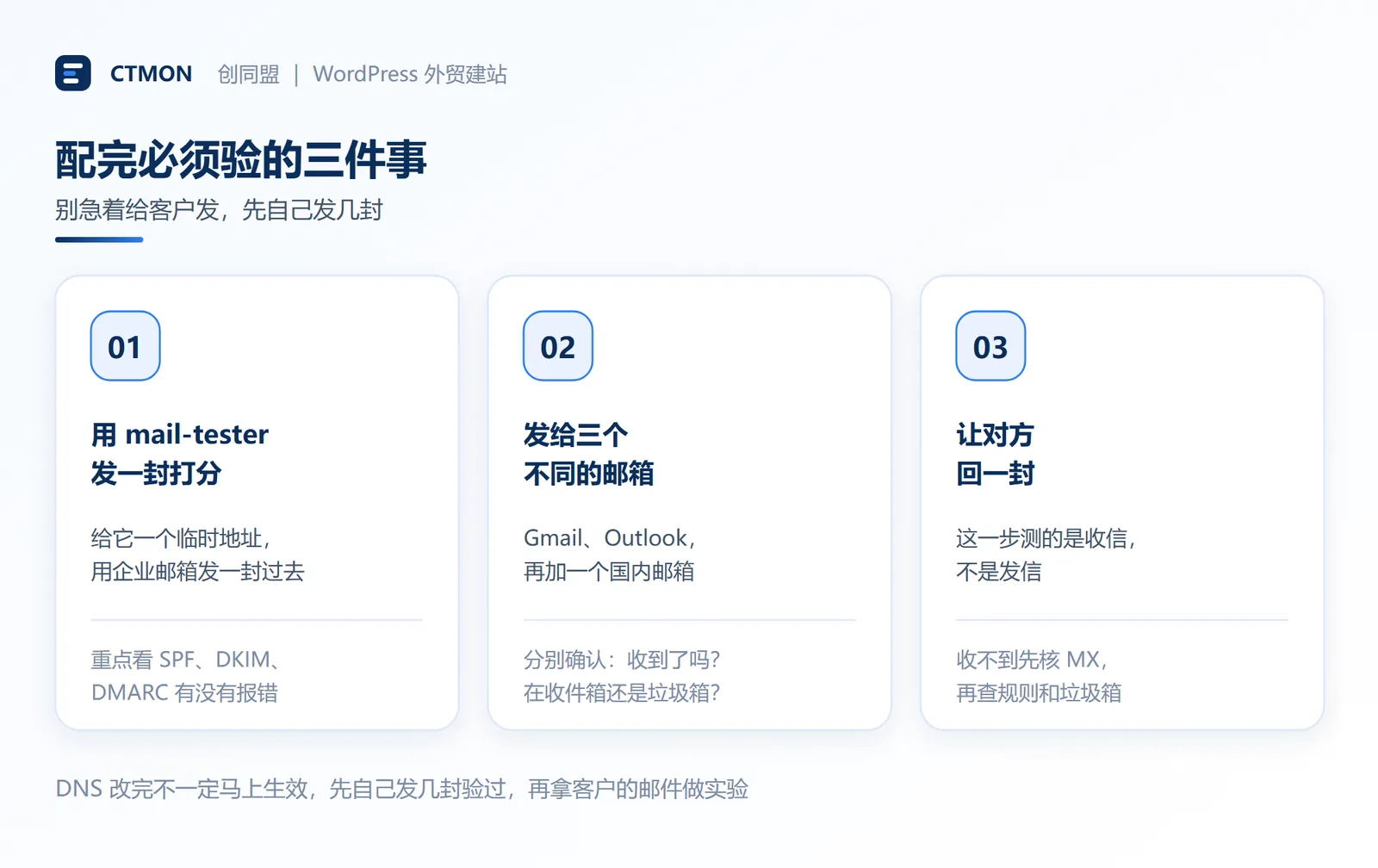
How do I set up an email account for export businesses? How can I configure it to avoid it ending up in the spam/junk mail folder?
2026-10-26
Related Articles
What are the differences between Google SEO and Google Ads? Which should B2B export businesses do first?
2026 Shenzhen Google SEO Optimization Company Recommendations: Service Provider Comparison and Selection Guide
How to improve Google rankings through SEO optimization for international trade? 7 practical methods and steps.

Recommended Shenzhen B2B export website operation company: How to choose a suitable international lead generation service provider for your enterprise?

Why is the Google ranking of Shenzhen export businesses' business websites not improving?

