Contents +
Is it true that the more internal link levels a Google SEO website has, the better?
Source: 创同盟
Date: 2026-06-30
Views: 1723
Many people mistakenly believe that the more internal link levels a website has, the more complete its structure, the more comprehensive its page coverage, and the better its ranking. This understanding is inaccurate. For Google SEO, more internal link levels are not necessarily better. What truly matters is a clear website structure, the ease with which important pages are crawled, the effective transfer of authority, and whether users can quickly find the content they want.

In simple terms, internal link hierarchy refers to the click path a user or search engine spider needs to take to access a specific page from the homepage. For example, a typical three- to four-layer structure might be: homepage to category page, then to subcategory page, and finally to product or article page. If a page requires five, six, or even more clicks to reach, it is considered a deeper page.
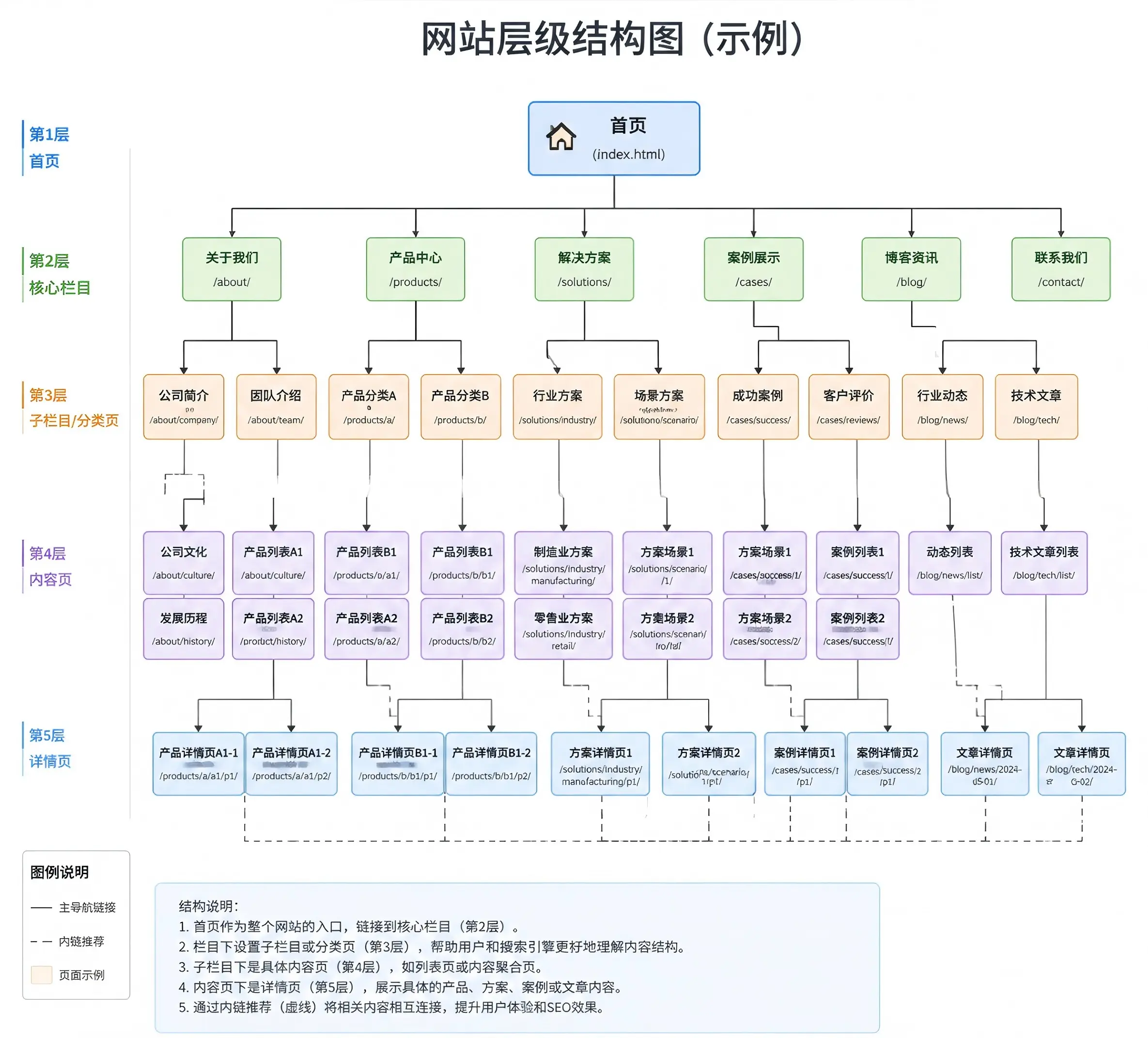
From an SEO perspective, the deeper the page hierarchy, the less conducive it is to crawling and weight transfer. While Google has the capability to crawl complex websites, this doesn't mean all deep pages will be crawled efficiently. If a page is too far from the homepage and lacks referral links from other related pages, Google may consider it less important, thus reducing its crawling frequency or even excluding it from its index for an extended period.
The core function of internal links is not simply to increase the number of links, but to help search engines understand the website structure. A good website internal linking system should clearly show Google which pages are core pages, which pages are secondary pages, and which content is thematically related. Constantly creating categories, subcategories, tag pages, and aggregation pages just to increase the hierarchy can actually lead to structural chaos.
A more Google SEO-friendly approach is to place important pages in a shallower hierarchy. Generally, core product pages, core service pages, and key category pages should ideally be directly accessible from the homepage or main navigation, or reachable within two to three clicks. This not only benefits search engine crawling but also allows users to find key content more quickly.
If the purpose of creating hierarchical structures is simply to stuff keywords, generate more pages, or make the website appear to have a lot of content, it easily leads to SEO risks. A large number of low-quality category pages, tag pages, and filter pages can result in duplicate content, wasted crawling, and diluted authority. Ultimately, truly important pages will not receive sufficient internal link support.
A good internal linking structure should follow the principle of "shallowing important pages, interconnecting related pages, and thematically focusing on long-tail pages." The homepage should link to core sections and key pages; section pages should link to related sub-sections and representative content; and article pages or product pages should be connected through related content, recommended reading, application scenarios, etc.
Anchor text is also very important. Internal link anchor text should ideally describe the content of the target page naturally and accurately, rather than mechanically repeating keywords. For example, when linking to the "Industrial Valve Selection Guide" page, you can use natural expressions such as "Industrial Valve Selection Guide" or "How to Choose the Right Industrial Valves," instead of cramming the same keyword into every page.
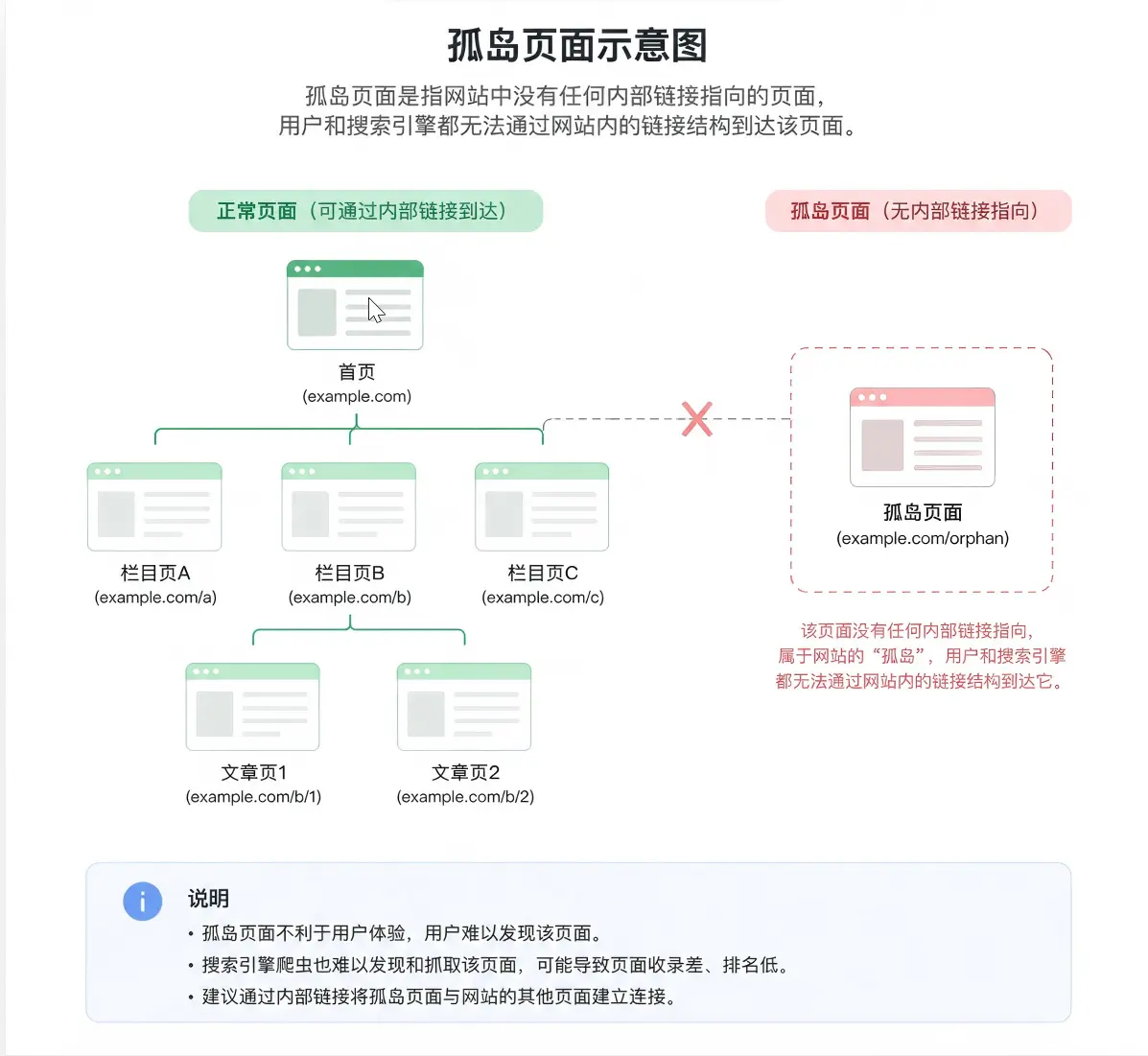
Furthermore, websites should avoid having orphan pages. Orphan pages are those that have no links from other pages or only a few entry points. Even if these pages have good content, they are unlikely to be prioritized by Google if there are insufficient internal links. Therefore, after publishing new content, you should proactively add internal links from relevant older pages to integrate the new page into the overall website structure.
For corporate websites, an ideal structure typically includes: a homepage, core service pages or product category pages, specific service pages or product pages, and blog posts or case study pages. Blog posts can provide semantic support for core pages. For example, an article about "how to choose a CNC machining service provider" can naturally link to the "CNC machining service" page, which not only meets user needs but also helps improve the ranking of the core page.
For content-driven websites, themed pages can be used to integrate related content. For example, a CNC machining blog can create themed pages such as "CNC Turning," "CNC Milling," and "CNC 5-Axis Machining," with each page linking to related articles, and the articles interconnected through recommended reading links. This creates clear thematic clusters instead of having articles scattered across the page.
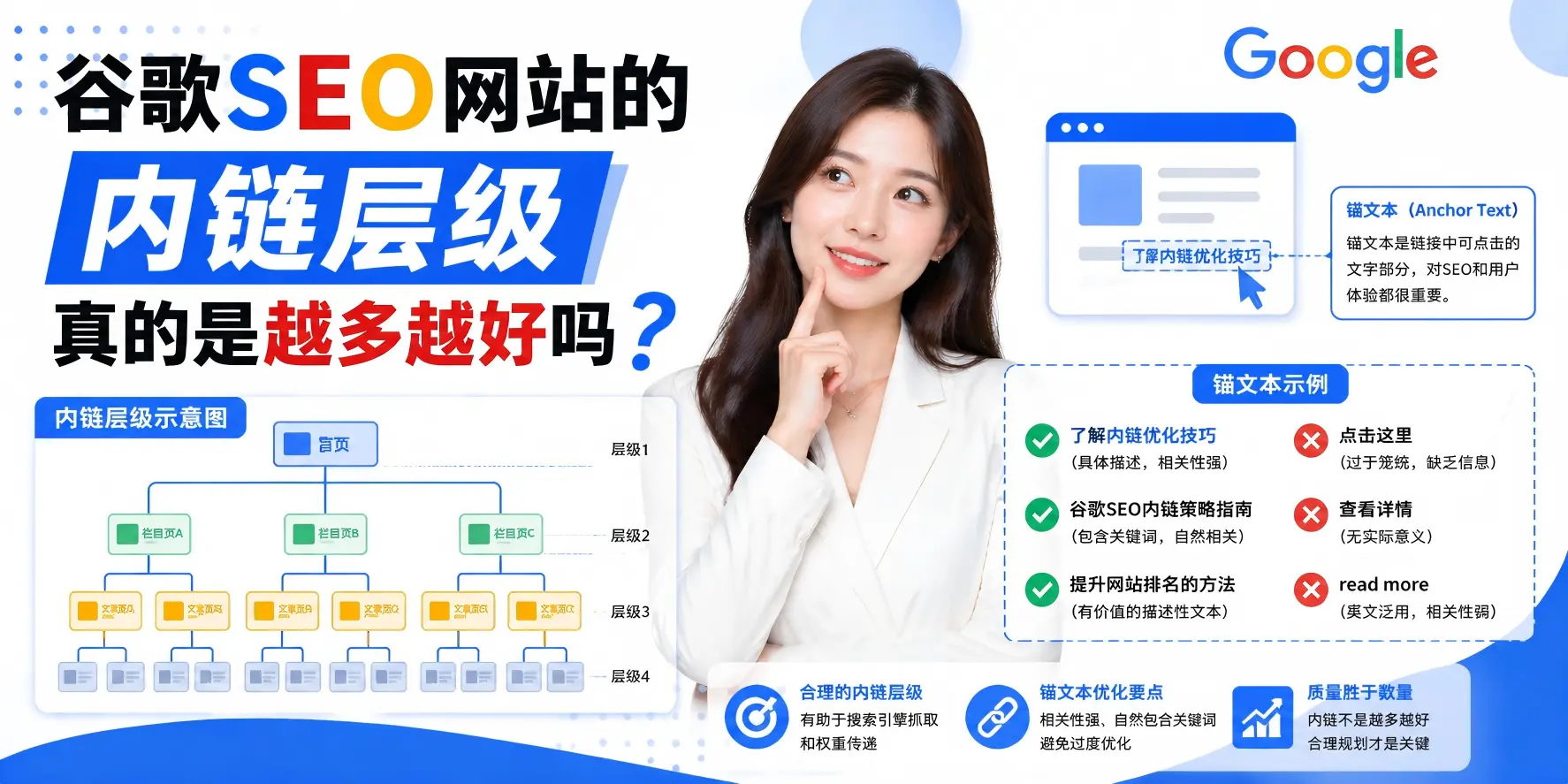
Therefore, more internal link levels on a Google SEO website are not necessarily better. Too many levels often mean longer crawling paths, weaker weight transfer, and a poorer user experience. A truly valuable internal link structure should make important pages easier to find, establish connections between related content, and make the website's theme clearer.
In summary, the goal of internal link optimization is not to create complex structures, but to reduce unnecessary paths, allowing both Google and users to quickly understand the website. Good internal links are not about "more and deeper," but about "clearer and more effective." In practice, webmasters should focus on whether core pages are shallow enough, whether related pages support each other, whether anchor text is natural, and whether there are any isolated pages. Only in this way can internal links truly help Google SEO rankings.

What does international social media management service include? 2026 Guide to Social Media Management for Export Businesses
2026-10-28

How to write a WordPress product page that will make overseas buyers want to send inquiries?
2026-10-28

How to fix WordPress form emails not sending: Practical WP Mail SMTP configuration
2026-10-27

Are foreign trade promotion companies reliable? Six key criteria for businesses to judge promotion service providers in 2026.
2026-10-26

How do I set up an email account for export businesses? How can I configure it to avoid it ending up in the spam/junk mail folder?
2026-10-26
Related Articles
What are the differences between Google SEO and Google Ads? Which should B2B export businesses do first?
2026 Shenzhen Google SEO Optimization Company Recommendations: Service Provider Comparison and Selection Guide
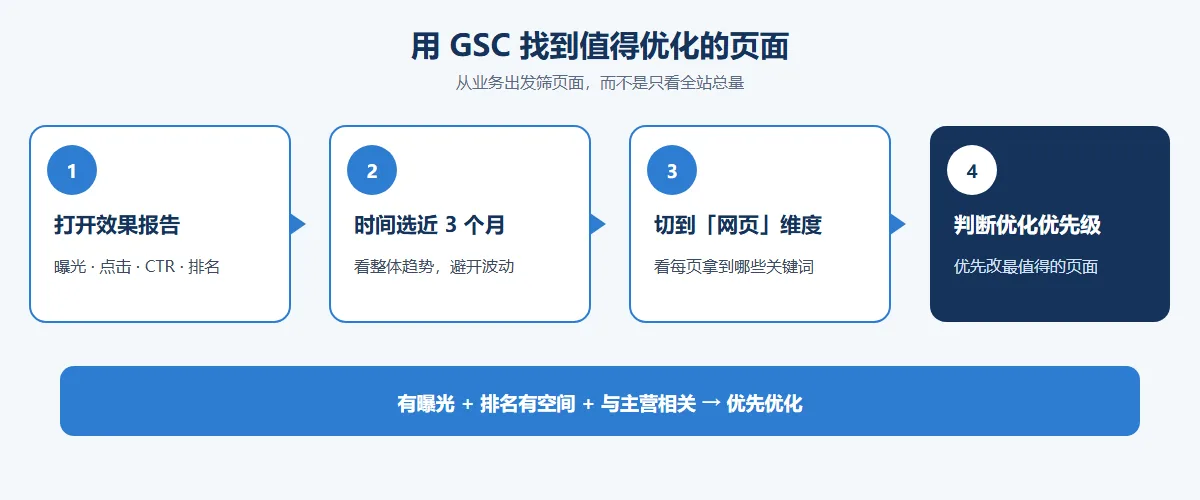
How to improve Google rankings through SEO optimization for international trade? 7 practical methods and steps.
Recommended Shenzhen B2B export website operation company: How to choose a suitable international lead generation service provider for your enterprise?

Why is the Google ranking of Shenzhen export businesses' business websites not improving?

