Contents +
How to determine if a keyword is worth optimizing for Google SEO?
Source: 创同盟
Date: 2026-06-29
Views: 1071

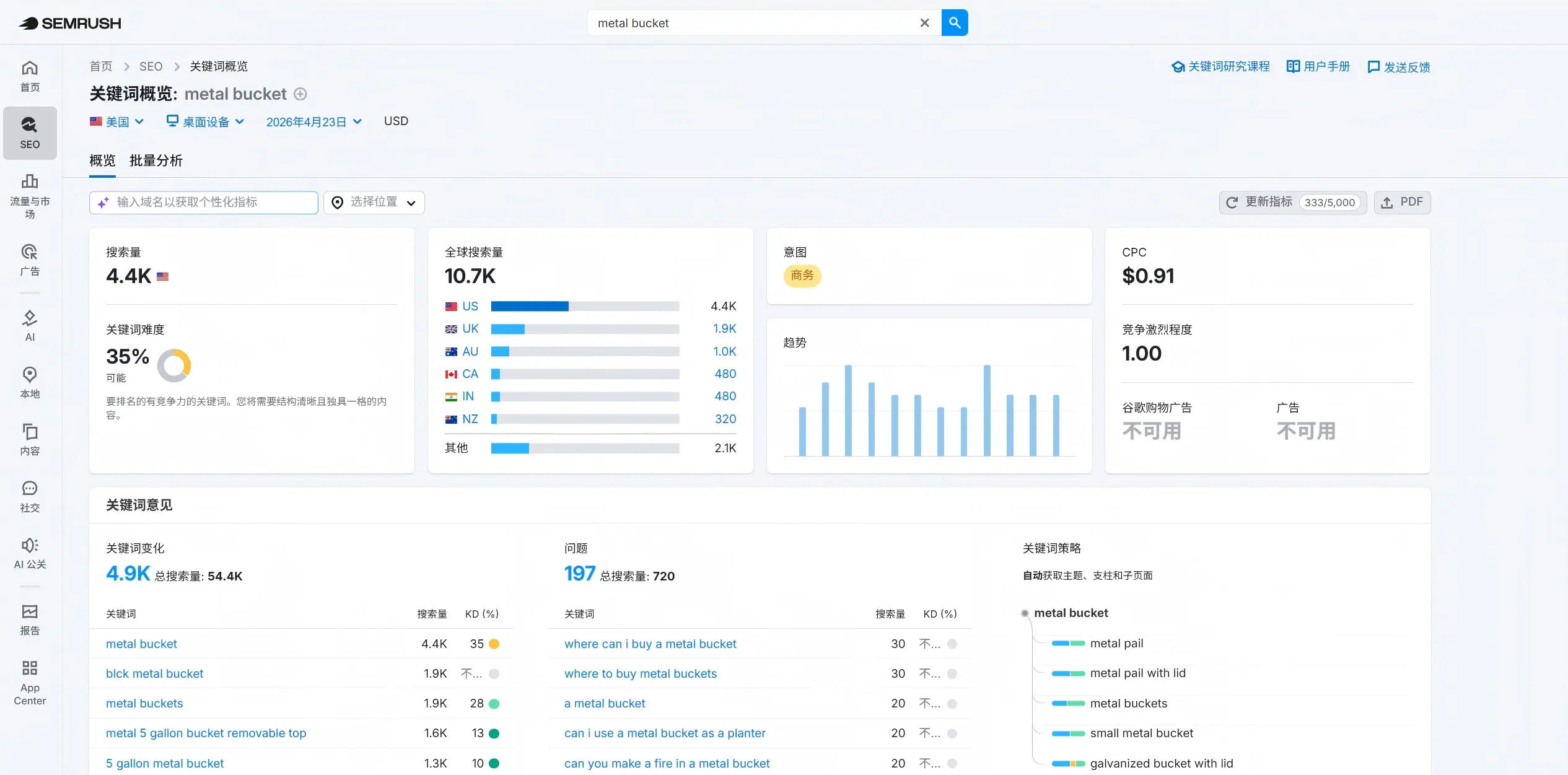
First, look at the search intent, not the search volume.
The most important first step in determining keyword value is analyzing user search intent. Different keywords within the same industry represent entirely different stages of user needs. Generally speaking, keywords can be categorized into several types: informational, navigational, comparative, and transactional.
a) Comparative keywords, such as "stainless steel drums vs. iron drums" or "the best industrial stainless steel and iron drum manufacturers," indicate that users have already entered the screening and evaluation stage, and their commercial value is usually much higher.
b. Transactional keywords, such as "price of custom stainless steel 1L bucket", "purchase of stainless steel 1L iron bucket", and "custom industrial stainless steel iron bucket", are usually closest to a transaction. Although they may not have the highest search volume, they are often the most worthwhile to prioritize for investment.
Therefore, the first question to ask when deciding whether a keyword is worth pursuing is not "how many monthly searches this keyword has," but rather "what do the people searching for this keyword actually want to do right now?" If their needs are very close to purchasing, consulting, or trying something, then the value of this keyword is often higher.
Second, examine the relevance between keywords and business requirements.
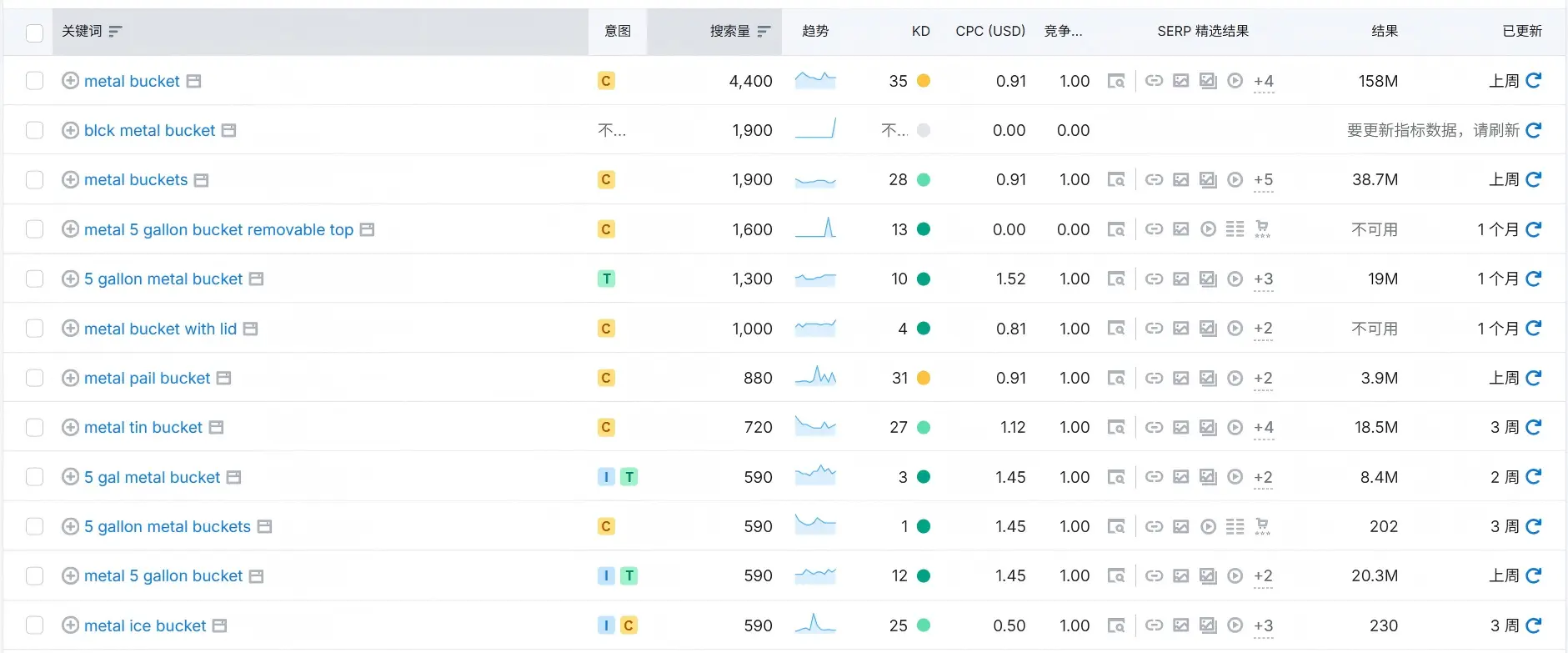
When assessing the value of keywords, it's crucial to consider their relevance to your products, services, and target customer group. This can be evaluated from three perspectives: ① Are the people searching for this keyword your target customers? ② Can the underlying needs of this keyword naturally lead to your product or service? ③ Once the content related to this keyword is created, can it facilitate subsequent conversion actions, such as inquiries, form submissions, trials, or order placements?
Third, the intensity of competition; is there a chance?
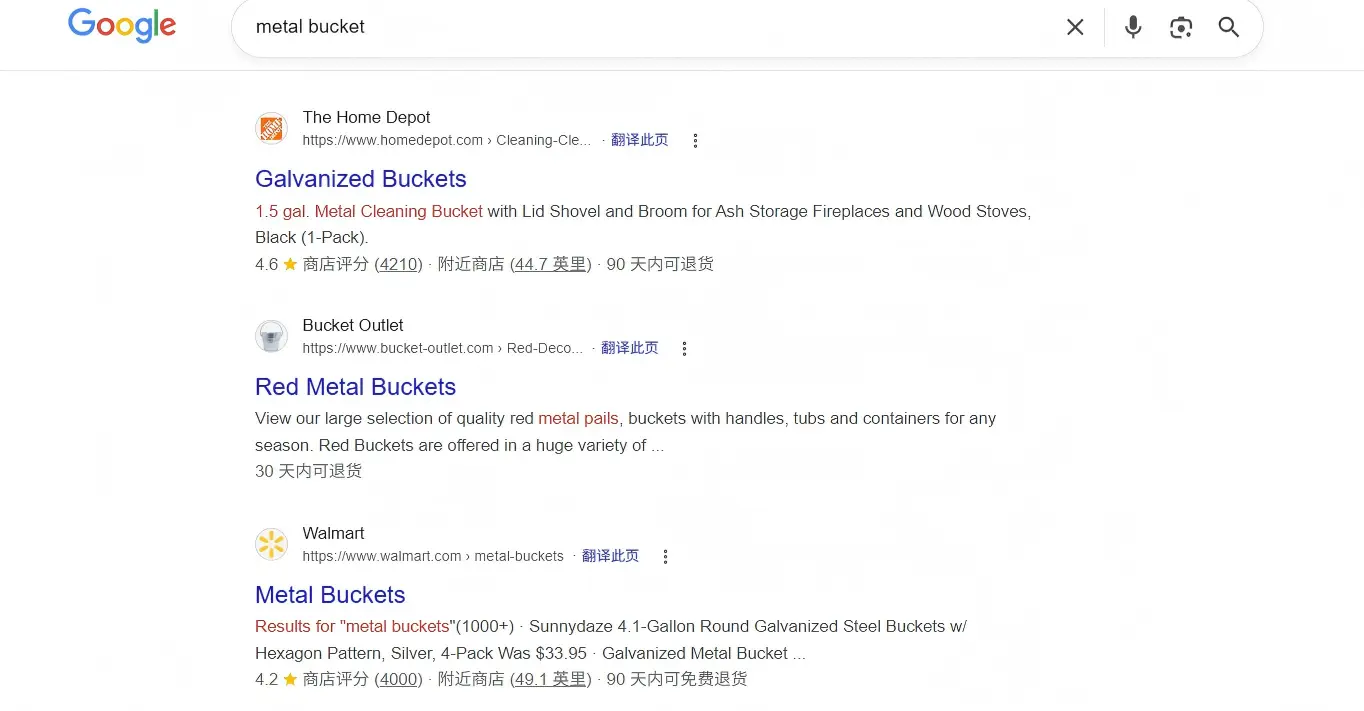
The most direct method is to look at Google search results pages, also known as SERPs. See what types of websites are on the first page: if the top ten are almost entirely Wikipedia, Amazon, official websites, and large media sites, the competition for that keyword is extremely fierce. Next, look at the page types. If a user searches for a product term, and the results page is full of product pages and category pages, while you can only post blog articles, then even if your content is very long, you might not rank well.
It's also important to observe whether the search results are dominated by numerous functional modules, such as Featured Summary, People Also Ask, Videos, Maps, Local Packages, Shopping Results, AI Overview, etc. If the space for organic results is already limited, the number of clicks you can get will be further compressed.
Therefore, when assessing competition, the focus should not be on "how difficult" it is, but rather "whether I have room to enter the market." Some keywords may be highly competitive, but if the existing content quality is average, there is still a chance; some keywords may seem easy, but the results page is firmly occupied by strong brands, making it actually more difficult to break through.
Fourth, assess whether this term has conversion potential.
The ultimate value of SEO is not just bringing users to your website, but also driving them to take the next step. Therefore, whether a keyword is worth optimizing depends on whether the traffic it generates can convert into sales. Conversion doesn't only refer to sales; it could also include leaving contact information, subscribing, scheduling demos, or applying for trials. The key is whether the user needs corresponding to this keyword align with your conversion goals.
Fifth, the truly valuable keywords are often long-tail keywords.
Long-tail keywords, while having lower individual search volume, more precisely target specific audiences and usage scenarios, making competition more controllable and conversion rates higher. This is especially true for new websites, smaller websites, and vertical websites; starting with long-tail keywords is usually more realistic than directly competing with top-tier keywords. This is because long-tail keywords are easier to match with users' real needs and make it easier to build content depth and topical authority.

VI. A Practical Judgment Approach
If you want to quickly determine whether a keyword is worth optimizing, you can use a simple method: score it from five dimensions: business intent, business relevance, competitive opportunity, traffic potential, and conversion potential.
① How high is the commercial intent? ② How relevant is it to your business? ③ Do you have a chance to rank highly? ④ Is there sufficient traffic for this keyword? ⑤ Is there a high probability of conversion after users enter the site? Only by considering these five factors can we get closer to the true value, rather than being misled by a single metric.
summary:
In Google SEO, whether a keyword is worth optimizing depends not on how popular it is, but on whether it can bring truly valuable results within your budget. Good keywords should possess several characteristics: clear intent, business relevance, ranking potential, conversion potential, and suitability for your website's current stage of development.

What does international social media management service include? 2026 Guide to Social Media Management for Export Businesses
2026-10-28

How to write a WordPress product page that will make overseas buyers want to send inquiries?
2026-10-28

How to fix WordPress form emails not sending: Practical WP Mail SMTP configuration
2026-10-27

Are foreign trade promotion companies reliable? Six key criteria for businesses to judge promotion service providers in 2026.
2026-10-26
How do I set up an email account for export businesses? How can I configure it to avoid it ending up in the spam/junk mail folder?
2026-10-26
Related Articles
What are the differences between Google SEO and Google Ads? Which should B2B export businesses do first?

2026 Shenzhen Google SEO Optimization Company Recommendations: Service Provider Comparison and Selection Guide
How to improve Google rankings through SEO optimization for international trade? 7 practical methods and steps.

Recommended Shenzhen B2B export website operation company: How to choose a suitable international lead generation service provider for your enterprise?

Why is the Google ranking of Shenzhen export businesses' business websites not improving?

