Contents +
The process and techniques of Google SEO keyword planning: a practical guide explained in 10 minutes.
Source: 创同盟
Date: 2026-06-23
Views: 722
Many people in foreign trade rush to find "high-search-volume keywords" when doing SEO, then stuff these keywords into their homepage, product pages, and articles, hoping for a rapid increase in traffic. The result is often the same: traffic doesn't increase, rankings are unstable, visitors are not targeted, and ultimately, inquiry conversion is very poor.
For B2B export websites, Google SEO keyword planning is not simply about "finding keywords—writing articles—waiting for rankings," but rather a comprehensive marketing strategy centered around products, markets, customers, search intent, and page layout. Only by first mastering keyword planning can subsequent website structure, content publishing, and page optimization have a clear direction.
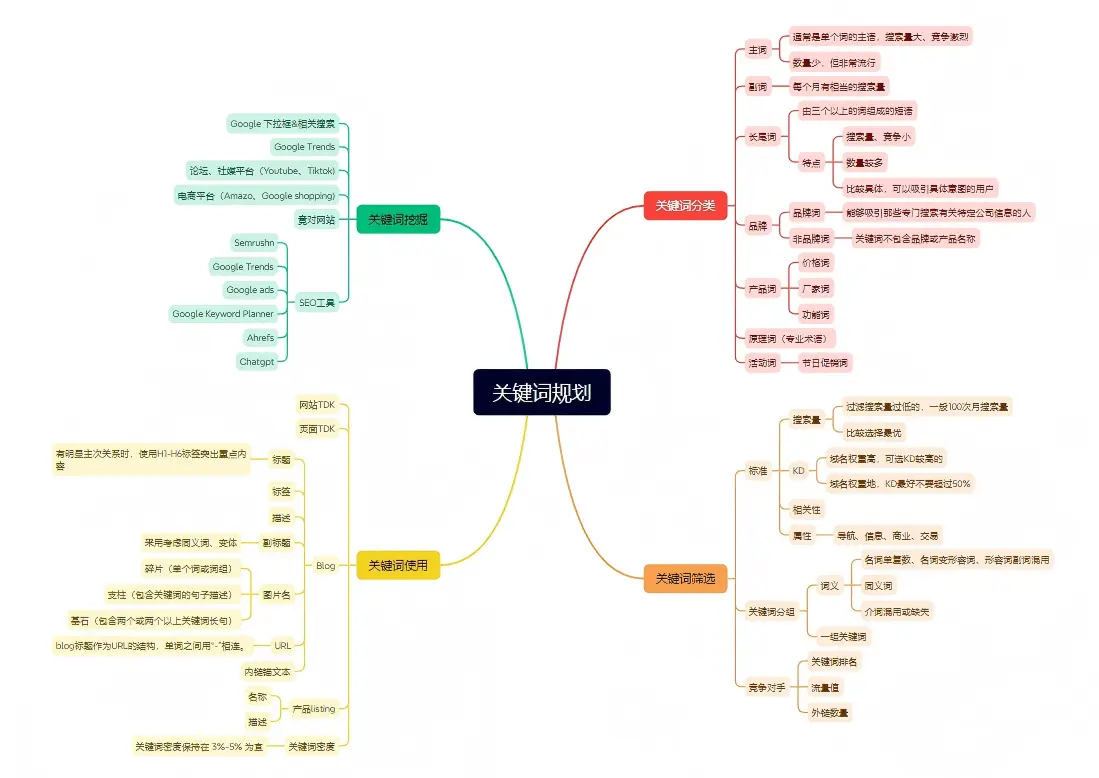
I. Why B2B export websites must first plan their keywords
The goal of SEO is never just "traffic," but rather to attract targeted overseas buyers and ultimately generate inquiries and sales. Keywords connect potential customers' search intent with relevant website content. A buyer's Google search terms often directly reflect their stage of need: someone searching "what is stainless steel bottle" might still be researching the product; someone searching "stainless steel water bottle manufacturer" is close to making a purchase; and someone searching "custom stainless steel water bottle supplier with logo" is more likely to be generating inquiries.
Without keyword planning, your website will encounter several typical problems:
① The content direction is chaotic. One day it's an industry science article, the next day a product page, and the day after that the homepage title is changed—there's no consistent logic. ② There's severe internal page content conflict. Multiple pages compete for the same keywords, making it impossible for Google to determine which page is best suited for ranking. ③ Traffic is inaccurate. Many businesses get some traffic, but the users aren't their target customers, resulting in no actual conversions. Therefore, the essence of keyword planning is not "finding more keywords," but finding the right keywords, categorizing them properly, matching them to pages, and creating a structured approach.
II. Before planning keywords for a B2B export website, clarify four basic questions.
Before conducting keyword research, it's not recommended to immediately open the tool and start searching for keywords. A more efficient approach is to first clarify the following four questions.
1. What exactly are you selling?
This refers to the way overseas customers actually search. Many manufacturing companies like to use more official, industry-specific names on their websites, but overseas buyers may not search in that way. For example, if you think you are selling "industrial fluid transfer system," a customer might actually search for "silicone hose supplier" or "food grade tubing manufacturer."
Therefore, the first step is to identify the common names for the product in overseas markets, including: "basic product terms, industry-standard terms, synonyms and near-synonyms, common expressions in different countries, and terms related to materials, uses, and specifications."
2. Who are your target customers?
Different customer groups have significantly different keyword search habits. For example, wholesalers focus more on wholesale, bulk, and MOQ; brand customers focus more on custom, private label, and OEM; engineering procurement focuses more on specification, performance, and certification; and importers focus more on supplier, manufacturer, lead time, and shipping. If the customer profile is not clear, the keywords selected will often deviate from the actual business objectives.
3. Which countries and markets do you primarily target?
Search habits and terminology can differ across markets. For example, American customers tend to use "supplier" more often, while European users may prefer other expressions in certain scenarios. Therefore, when doing multilingual SEO, keyword planning needs to further consider language localization.
4. What stage of the procurement process is the customer at when they conduct their search?
This is the most important part of foreign trade keyword planning. Keywords can usually be divided into three categories according to the procurement stage:
① Information-gathering type, such as: "what is…, how to choose…, benefits of…, types of…" These kinds of words are suitable for blog and guide content, mainly used for attracting traffic and popularizing knowledge.
② Commercial comparison type, such as: "best..., top suppliers, ...vs..., price, cost, comparison". These kinds of words indicate that customers have begun to enter the screening and comparison stage.
③ Purchase conversion keywords, such as "manufacturer, supplier, factory, OEM, custom, wholesale, quote". These keywords usually have the highest conversion value and are most suitable for B2B export websites to focus on.
III. The Complete Process of Keyword Planning for B2B Export Websites
A relatively complete keyword planning process suitable for a B2B export website can be roughly divided into four steps.
1. Analyze the product lines and basic page framework.
Don't rush into finding keywords; first, clarify your website's structure. I suggest listing the following: Homepage, main product category pages, sub-product category pages, detailed product pages, application scenario pages, customization/OEM service pages, blog post pages, and FAQ pages. Keywords don't exist in isolation; they ultimately need to be applied to specific pages. Without a proper page framework, having many keywords is just data in a table and won't truly translate into SEO results.
For example, if you're selling packaging machinery, your keywords might fall on: the general packaging machinery page, the food packaging machinery page, the automatic filling machine page, the OEM packaging equipment page, and the "how to choose packaging machine" blog page. This will make keyword mapping much clearer later on.
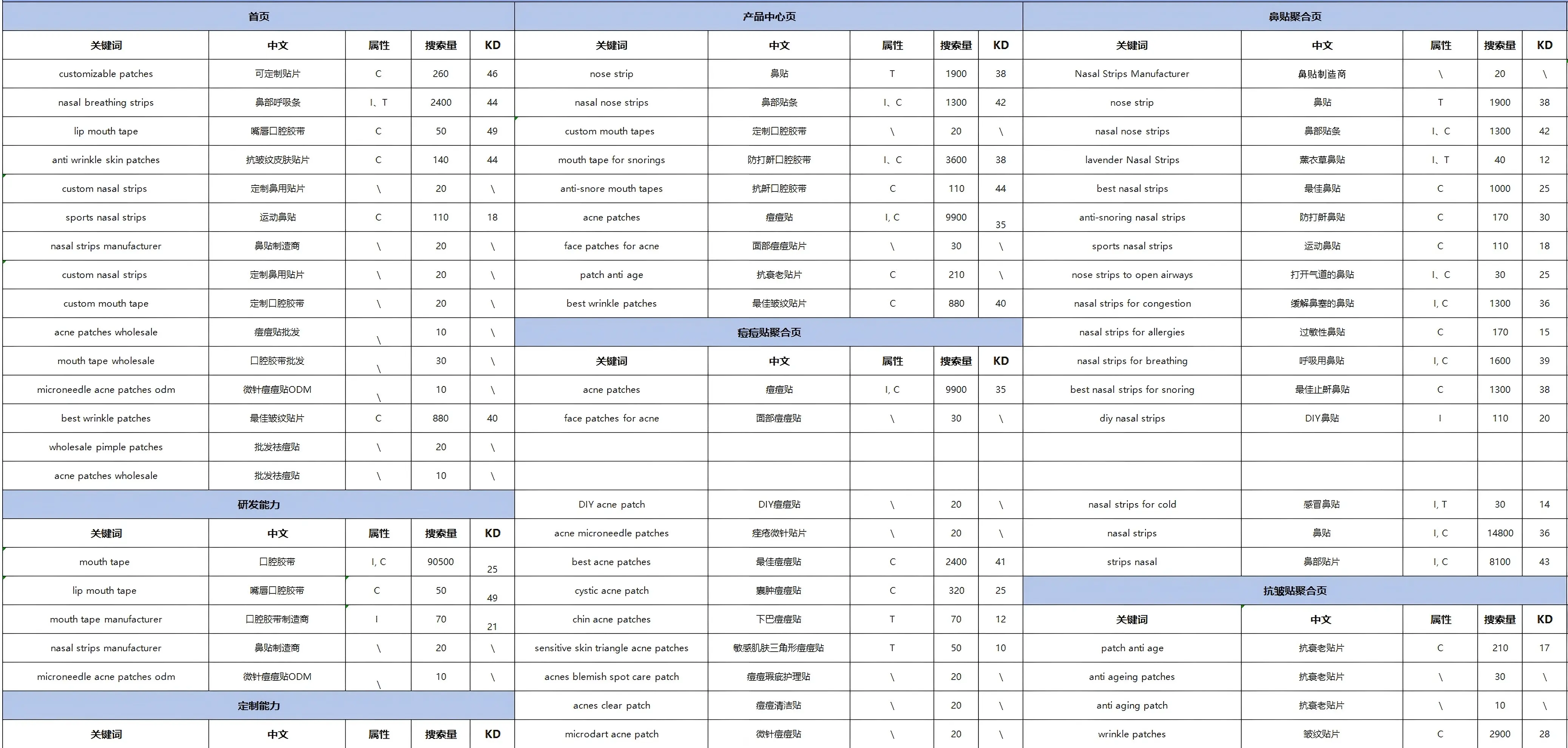
2. Build a seed keyword list and expand phrases.
It can be collected from the following channels:
① Compile the most basic product names from your product catalog, specifications, price list, and exhibition materials.
② The business team contacts customers every day, and they know which words customers most often mention in emails and chats.
③ By viewing competitors' websites' product categories, menu navigation, titles, and article directions, you can quickly complete your industry keyword database.
④ You can find many real search expressions by using Google's drop-down suggestions, related searches, and People Also Ask.
⑤ From keyword tools, expand keyword dimensions with the help of tools such as Ahrefs, SEMrush, and Google Keyword Planner.
Functions/Tools | Google Keyword Planner | Ahrefs | SEMrush | Keywords Everywhere |
Search volume data | Interval data | Precise data | Precise data | Precise data |
Competition analysis | Low, Medium, High | Difficulty rating | Difficulty rating | Low, Medium, High |
Long-tail keyword suggestions | limited | Rich | Rich | Recommended related keywords |
Competitor Analysis | none | detailed | detailed | none |
Keyword Trends | none | supply | supply | supply |
CPC | supply | supply | supply | supply |
Content optimization suggestions | none | none | supply | none |
Real-time data display | none | none | none | Real-time display |
price | free | higher | higher | lower |
Use cases | Beginners, low budget | Advanced users | Content strategy planning | Research and content optimization |
3. Filter out invalid words and retain high-value words.
Not all keywords with search volume are worth pursuing. B2B export websites should prioritize "business value" over superficial traffic when doing SEO. When selecting keywords for SEO, focus on five key metrics: relevance; commercial value; search intent; competition difficulty; and page loading capacity.
4. Segment keywords according to search intent
Keyword planning for B2B export websites must involve keyword stratification. Otherwise, mixing all keywords together will make it difficult to achieve results. A practical stratification method is: ① Core conversion keywords, which are usually: product + manufacturer, product + supplier, product + factory, etc. These keywords should be prioritized on category pages, product line pages, and service pages.
② Long-tail keywords: These keywords are more specific and have a stronger intent, such as "custom stainless steel bottle supplier," "BPA-free sports bottle manufacturer," and "wholesale vacuum bottle with logo." They are suitable for placement on niche category pages, product pages, and solution pages.
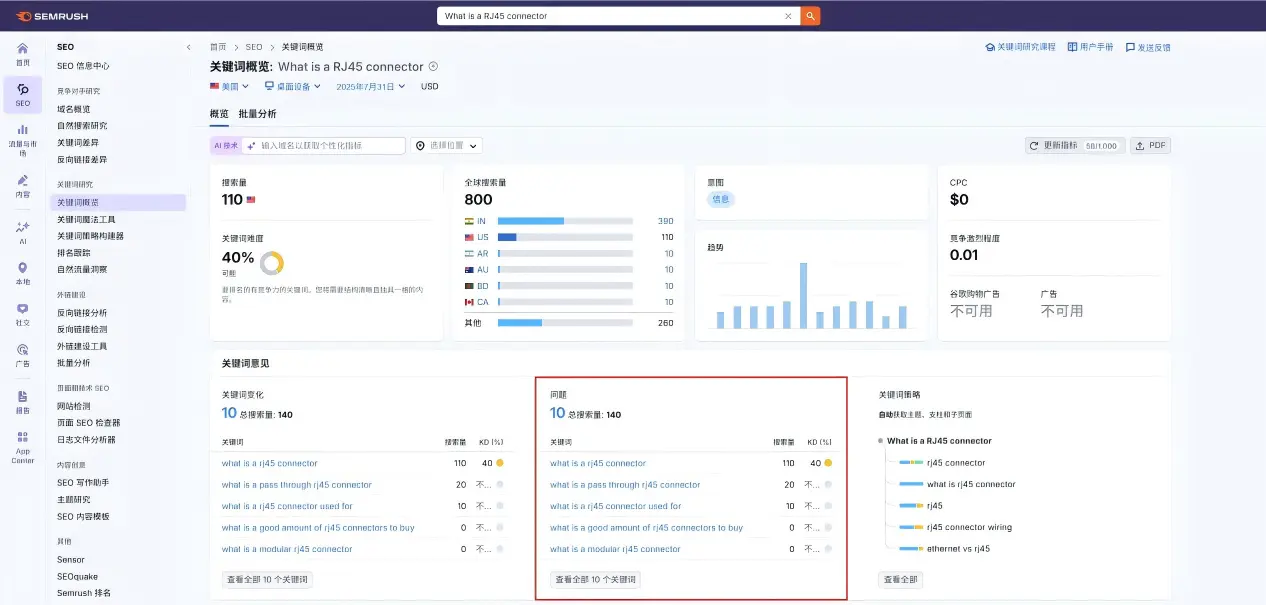
Mapping keywords to corresponding pages is crucial; keyword planning should not be limited to tables. The real value lies in creating a one-to-one correspondence between keywords and pages. A B2B export website could use this mapping method:
Homepage: We provide services for brand keywords, industry keywords, and core business keywords.
Product Category Page: Includes broad product category terms and manufacturer/supplier keywords.
Product details page: Accepting specific model names, specification names, and attribute long-tail keywords.
Application scenario page: Following the keywords "product + for + industry/application"
OEM/Customization Service Page: Accepting terms like "custom," "OEM," and "private label."
Blog page: Supporting popular science, comparison, and guide-type keywords.
FAQ page: Accepts searches for questions related to MOQ, lead time, payment, certificate, and shipping.
Only when keywords match the page will your website structure truly have SEO logic.
Conclusion
For B2B export websites, Google SEO keyword planning is not simply about stuffing a few popular keywords into a page. It's a comprehensive plan encompassing product analysis, customer analysis, keyword expansion and filtering, intent segmentation, page matching, and execution prioritization. Correct keyword selection leads to accurate traffic; a clear structure makes page ranking easier; and intent matching makes visits more likely to convert into inquiries. For export businesses, truly effective keyword planning isn't about making your website "look like it's been SEO-optimized," but about making it a genuine channel for continuously acquiring overseas customers.
What does international social media management service include? 2026 Guide to Social Media Management for Export Businesses
2026-10-28
How to write a WordPress product page that will make overseas buyers want to send inquiries?
2026-10-28

How to fix WordPress form emails not sending: Practical WP Mail SMTP configuration
2026-10-27
Are foreign trade promotion companies reliable? Six key criteria for businesses to judge promotion service providers in 2026.
2026-10-26
How do I set up an email account for export businesses? How can I configure it to avoid it ending up in the spam/junk mail folder?
2026-10-26
Related Articles
What are the differences between Google SEO and Google Ads? Which should B2B export businesses do first?
2026 Shenzhen Google SEO Optimization Company Recommendations: Service Provider Comparison and Selection Guide
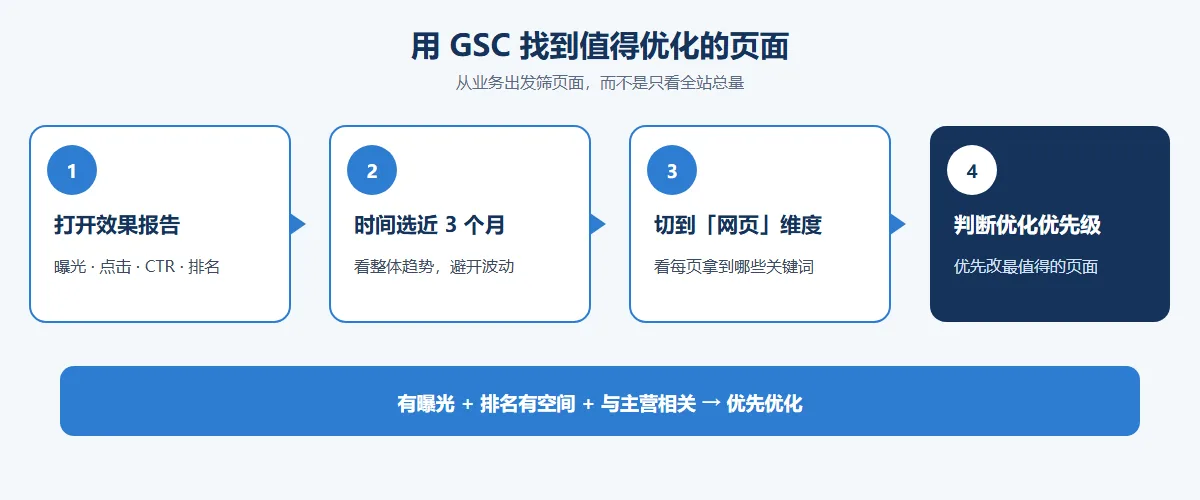
How to improve Google rankings through SEO optimization for international trade? 7 practical methods and steps.

Recommended Shenzhen B2B export website operation company: How to choose a suitable international lead generation service provider for your enterprise?

Why is the Google ranking of Shenzhen export businesses' business websites not improving?

