Contents +
How to Customize a Business Website SEO Strategy from Scratch - 2026 Edition
Source: 创同盟
Date: 2026-06-15
Views: 755
The importance of business websites for B2B leaders is now self-evident. For business websites to achieve stable traffic, SEO is an unavoidable factor. However, by 2026, business website SEO is no longer as simple as "posting a few blogs, stuffing a few keywords, and buying a few backlinks." Truly effective SEO has evolved from "technique-based optimization" to "systematic operation."
If you're preparing to build a business website SEO from scratch, the following content will give you a complete SEO framework: what to do first, what to do next, which pages are most important, how to lay out the content, how to lay the technical foundation, how to use a user-sales mindset for marketing execution, and how to generate inquiries in 90 days.
First, you need to clarify your goal. SEO is not about ranking, but about selling inquiries.
The first step in business website SEO isn't finding keywords, but rather understanding that the core of "B2B business website SEO" is generating inquiries through capability service pages, application case pages, and industry solution pages. The ultimate goal of business website SEO shouldn't be limited to "organic traffic and increased keyword rankings" and writing articles. It should focus on marketing and sales results: "generating inquiries and increasing brand search volume." From the outset, it's crucial to clearly define the target country and localization of the business website . This directly impacts keyword placement, URL structure, content localization, and subsequent internationalization settings such as hreflang.
Key takeaway: SEO is never just a "traffic job," but rather a process of building a sustainable business website, leading to marketing and sales, all centered around the company's core business.
Second, create a keyword map first, instead of rushing to implement it.
Many business websites start blogging as soon as they launch, but this is the easiest place to go astray. Content isn't inherently bad, but it must be grounded in search intent and page design.
1. By combining with SEMrush tools, keywords can be broken down into four levels according to search intent:
Brand keywords: brand + company, brand + model, brand + product; Transaction keywords: buy, price, supplier, manufacturer...;
Business comparison terms: best, top, vs, alternative...; Information terms: how to, what is...
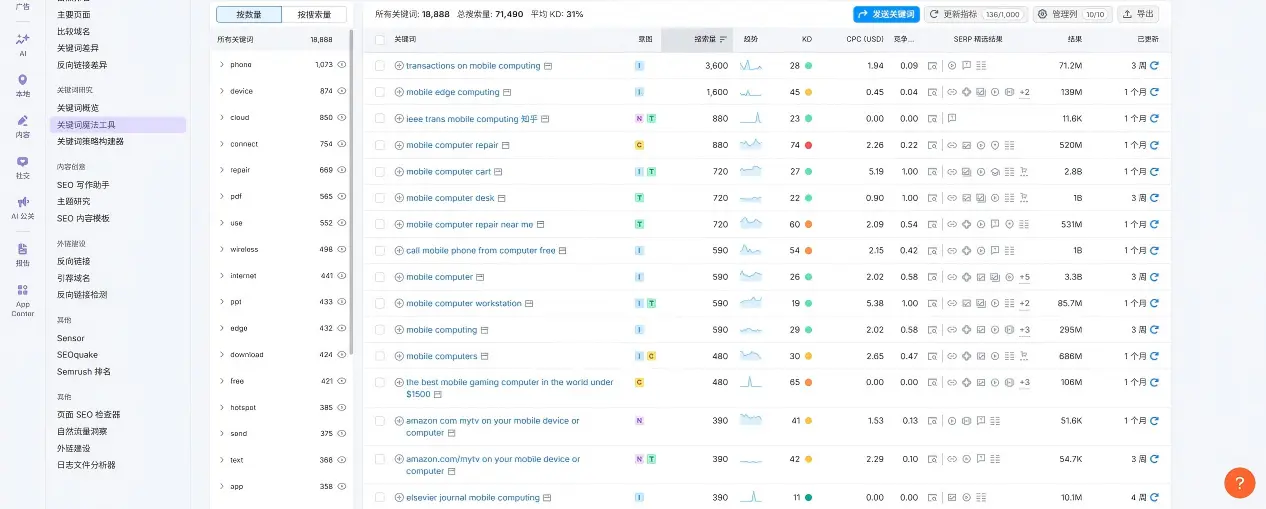
2. Different keywords are assigned to different page types, with one page corresponding to one intent:
Transaction keywords → Product page/Service page/Landing page; Category keywords → Category page/Collection page/Industry page;
Comparison keywords → Comparison page/Buying guide/Review page; Information keywords → Blog/Help center/FAQ page;
3. Avoid multiple pages competing for the same core keyword.
Otherwise, issues such as "keyword competition between pages, difficulty for search engines to determine the main page, large fluctuations in indexing and ranking, and dilution of page authority" will occur.
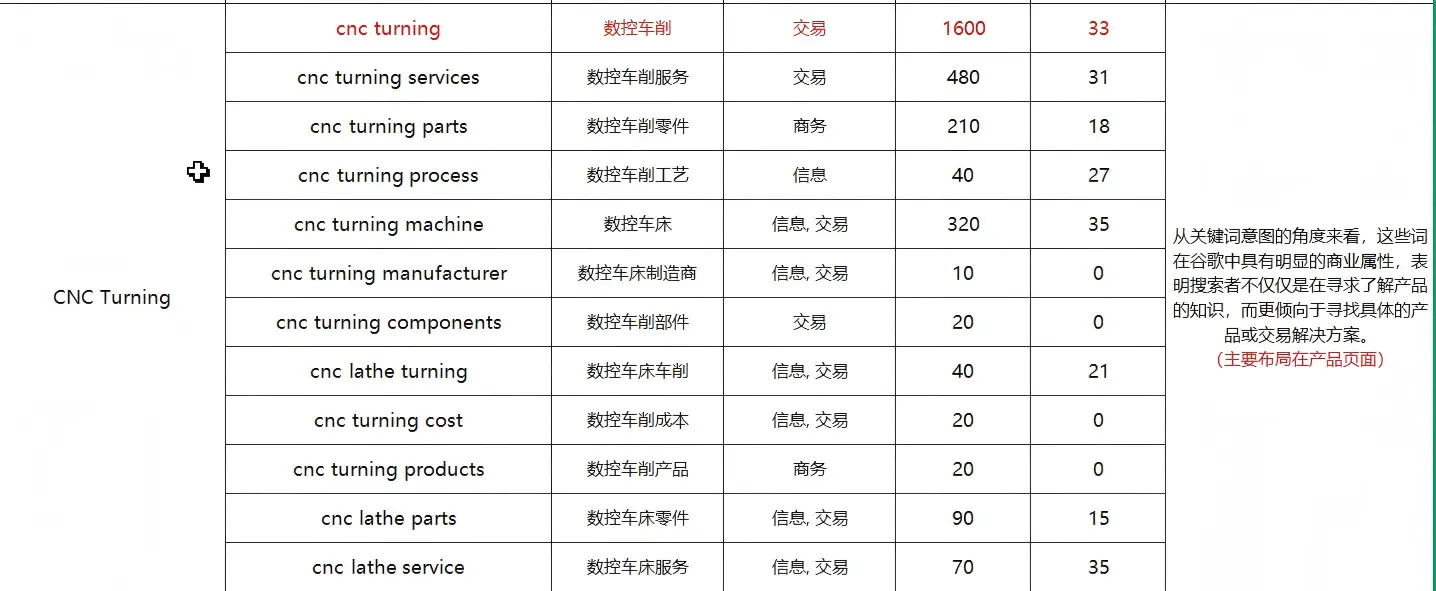
Key takeaway: First, list the core business terms, categorize them by keyword intent, and create a "keyword-page" topic table to clarify the main and auxiliary keywords for each page.
Third, first establish the site structure and determine the user traffic model for SEO.
A business website that conforms to SEO best practices is not one that has more pages, but rather one with clear hierarchy, stable logic, and well-defined link relationships.
1. A scalable business website structure, including at least these core modules.
a. Homepage; b. Category Page/Industry Page/Solution Page; c. Product Page/Service Page;
d. Comparison page/Purchase guide page; e. Blog/Resource Center; f.FAQ /Help Center;
About/Contact/Privacy/Terms
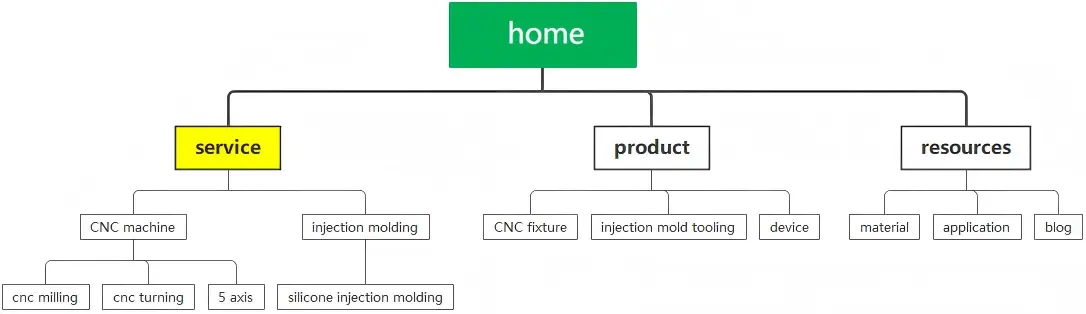
2. Core pages should ideally be within 3 levels.
This has many advantages: it makes it easier for search engines to crawl, easier for users to browse, facilitates the transfer of page weight, and helps establish the priority of category pages and product pages.
3. First, determine the URL specifications.
Many business websites only discover their URLs are disorganized late in the process, leading to extremely high reconstruction costs. Before going live, decisions should be made regarding: whether to include www, whether to use all lowercase for URLs, whether to include hierarchical directories, naming conventions for product and category pages, and whether multilingual websites should use subdirectories or subdomains in their URLs.
Key takeaways: Draw a site tree diagram, determine the priority of core pages, standardize URL naming rules, and design site navigation and breadcrumb logic.
IV. Technical SEO Standardization
Technical SEO is the most easily overlooked yet most impactful aspect of a business website's long-term performance. No matter how well-written the content is, if search engines can't crawl, index, or understand it, all previous investment is wasted.
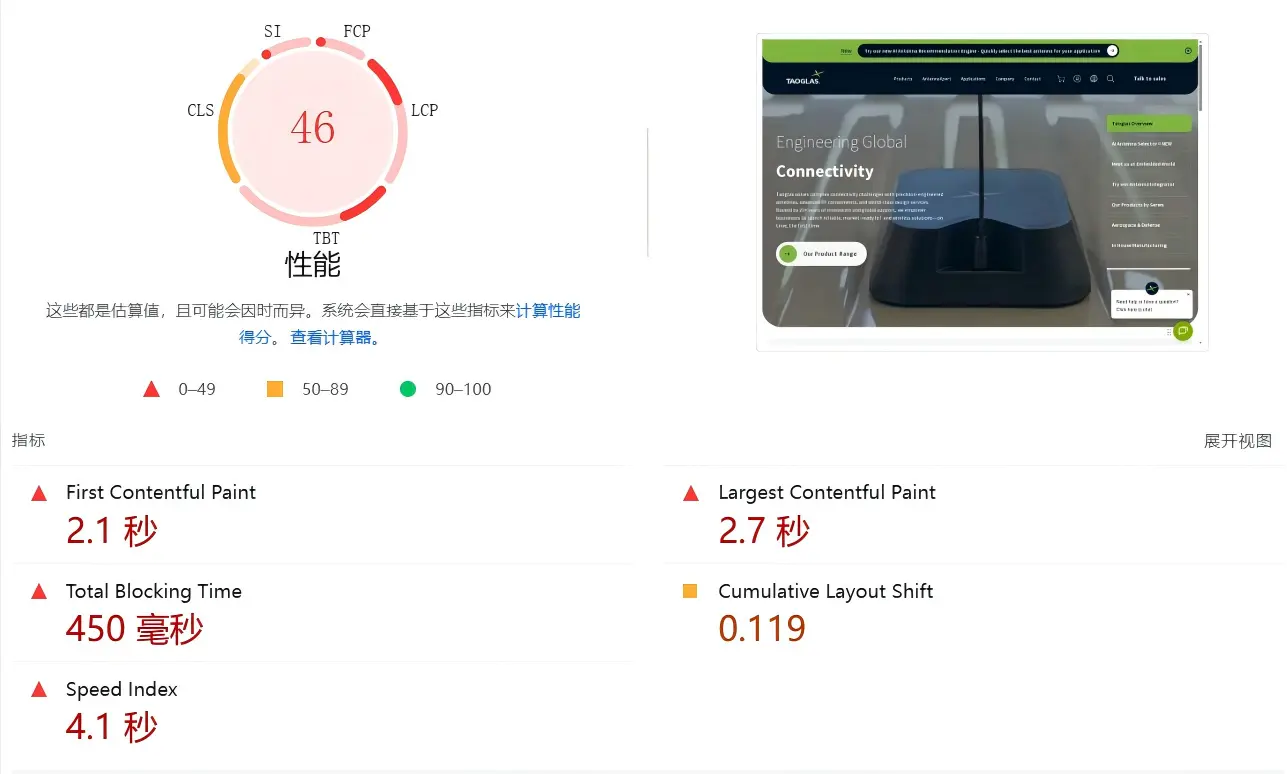
1. Business website SEO guidelines
• HTTPS across the entire site; unified main domain; XML Sitemap already generated;
• robots.txt is normal; important pages can be crawled and indexed; 404 pages and 301 redirects are set correctly;
• Canonical tags are correct; mobile adaptation is normal; page loading speed is acceptable.
5. Create the conversion page first, then the traffic page.
The pages that truly drive business results are often not blogs, but category pages, product pages, service pages, and solution pages. The homepage is responsible for establishing awareness. The focus of the homepage is not on telling a lot of information, but on enabling users and search engines to quickly understand (who you are, what you do, who you serve, and what your advantages are) , while also providing navigation (where should users go next) . Below, we break down the key pages for SEO.
1. List (aggregation) pages are the main pages for SEO.
Category pages are usually the most important traffic landing pages for a business website and should have: a clear H1, concise but distinctive introductory text, clear filtering logic, strong product aggregation capabilities, FAQs and scenario content, and internal links pointing to lower-level pages.
2. Product page determines conversion rate.
Product pages in 2026 cannot simply be "product image + price," but should present as completely as possible: product selling points, specifications, applicable scenarios, user reviews, frequently asked questions, shipping and return policies, images, videos, and comparison information.
3. Content pages are responsible for supplementing search intent.
Blogs and guide pages remain valuable. Their role is to: cover key informational terms, support the authority of category and product pages, facilitate comparison and selection, and continuously drive traffic to business pages.
VI. Valuable content with EEAT attributes
A truly competitive piece of content should ideally include at least: 1. Experience: Experience forms the foundation for creating valuable content for users, such as "you've personally done it, tested it, or used it"; 2. Evidence: Evidence serves as a bridge to building trust, including "data, case studies, screenshots, real-life footage, and results"; 3. Judgment: Expressing your own viewpoint, explaining "why this choice was made, who it's suitable for, and who it's not suitable for."
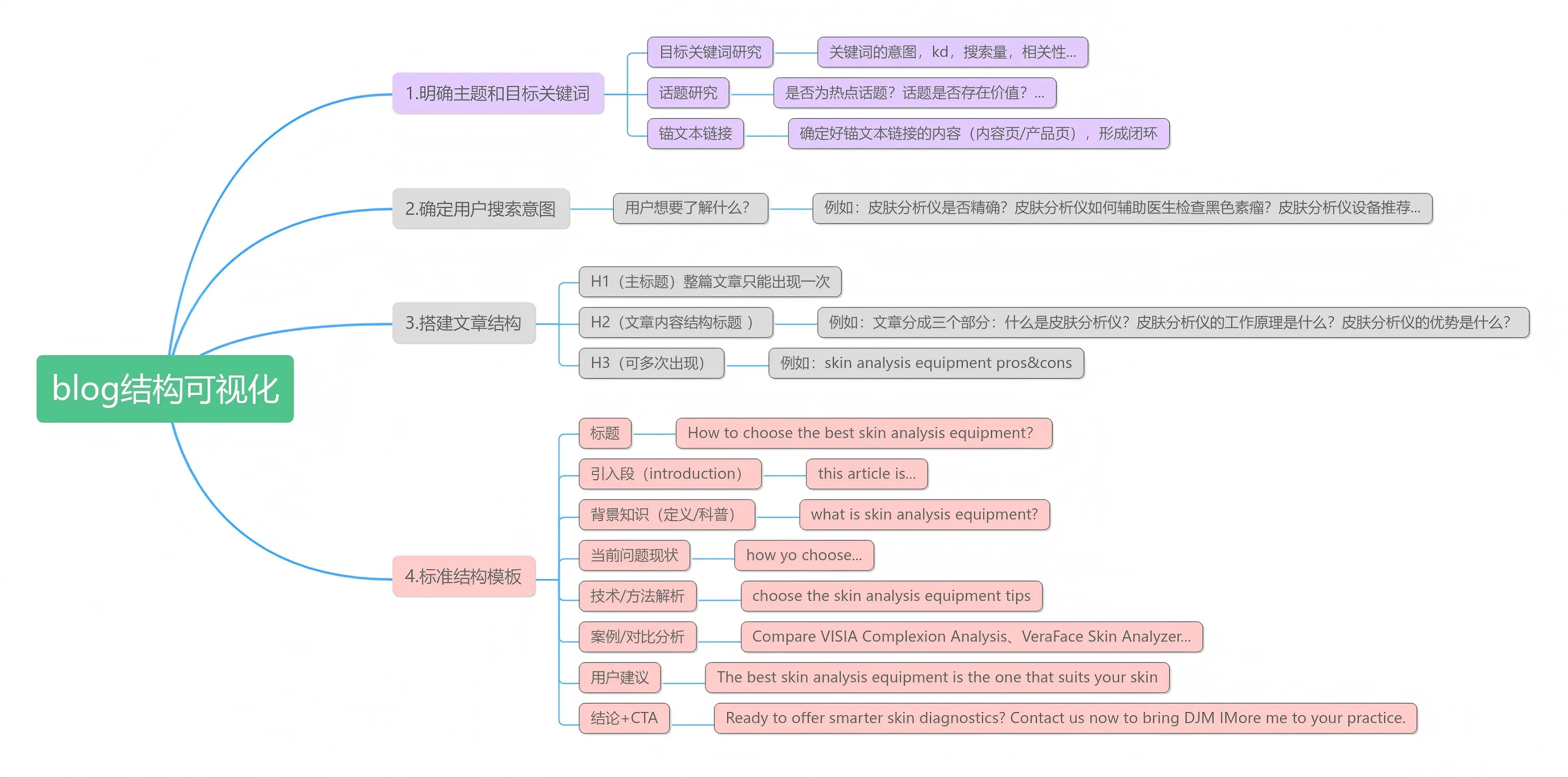
VII. SEO Execution Pace for a Business Website from Scratch
Phase 1: Basic setup in the first 30 days, key tasks:
• Define business objectives and target markets
• Create a keyword map
• Complete site structure design
• Build core page template
• Configure basic SEO techniques
Submit the sitemap and check the indexing logic.
Phase 2: 30-60 days to establish the content and internal linking system. Key tasks:
• Launch core category pages and product pages
• Supplementary FAQs, case studies, guidelines, and comparison pages
Complete the site's internal link structure.
· Optimize titles, descriptions, and page copy
• Start monitoring inclusion and traffic performance
Phase 3: 60-90 days for authority and conversion optimization, key tasks:
· Optimize pages with high visibility but low click-through rates
• Optimize pages with high traffic and low conversion rates
Adjust content priority
• Expand high-performing categories and content clusters
The most important aspect of customizing business website SEO is not mastering a lot of "techniques," but rather establishing a system that suits your business. This system is not an isolated action, but rather consists of five core capabilities: technical accessibility, business page coverage, differentiated content output, brand and trust building, and data-driven continuous iteration.
Note: This guide does not emphasize external link building, but that does not mean that external links are not important. In the Q1 phase, it is recommended to focus on internal links. In Q2, you can start building an external link plan and implementing it based on the data feedback from your business website.

What does international social media management service include? 2026 Guide to Social Media Management for Export Businesses
2026-10-28
How to write a WordPress product page that will make overseas buyers want to send inquiries?
2026-10-28

How to fix WordPress form emails not sending: Practical WP Mail SMTP configuration
2026-10-27
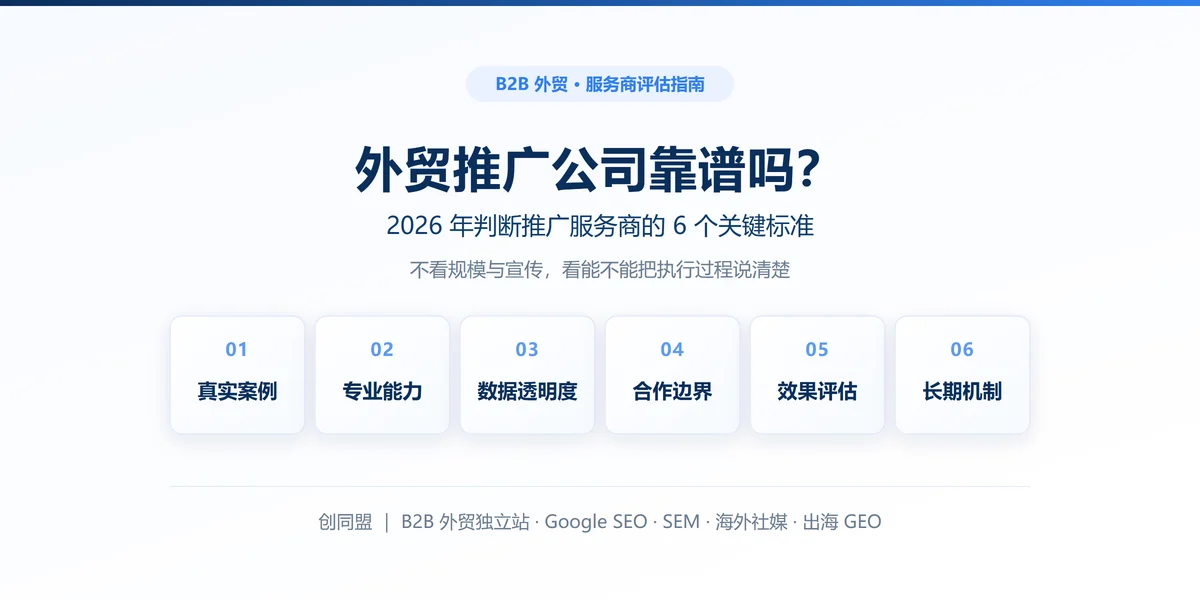
Are foreign trade promotion companies reliable? Six key criteria for businesses to judge promotion service providers in 2026.
2026-10-26
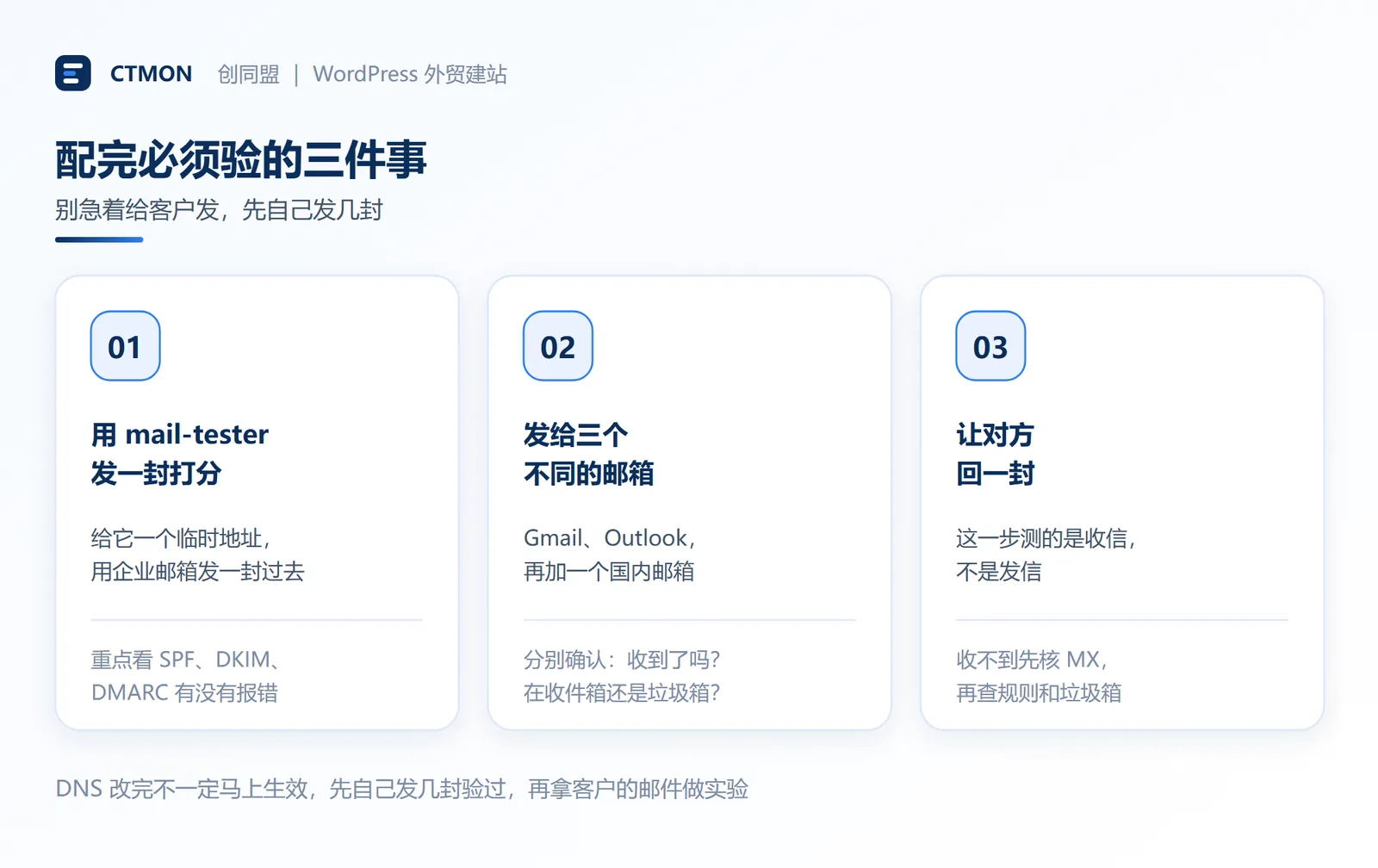
How do I set up an email account for export businesses? How can I configure it to avoid it ending up in the spam/junk mail folder?
2026-10-26
Related Articles
What are the differences between Google SEO and Google Ads? Which should B2B export businesses do first?
2026 Shenzhen Google SEO Optimization Company Recommendations: Service Provider Comparison and Selection Guide
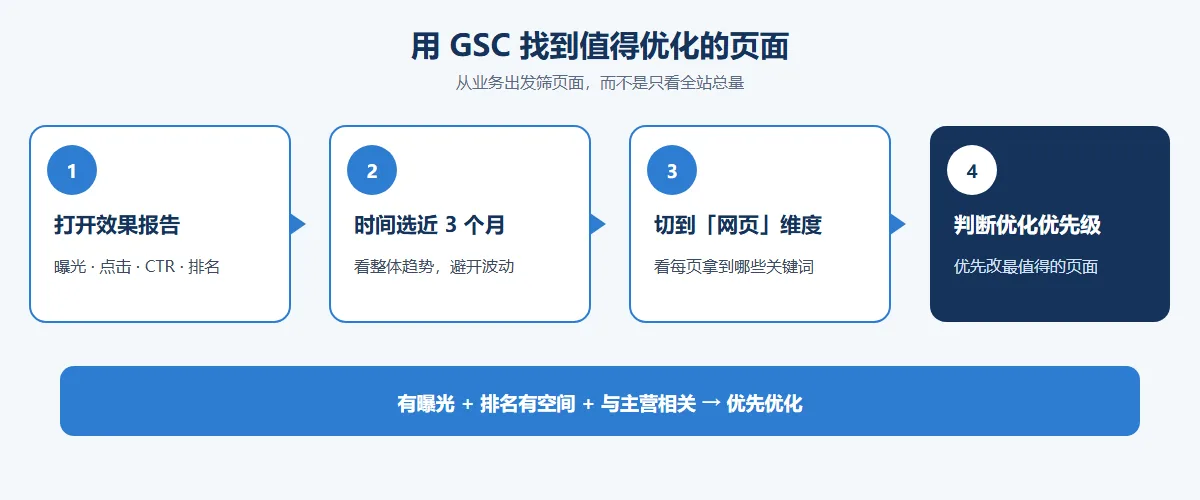
How to improve Google rankings through SEO optimization for international trade? 7 practical methods and steps.
Recommended Shenzhen B2B export website operation company: How to choose a suitable international lead generation service provider for your enterprise?

Why is the Google ranking of Shenzhen export businesses' business websites not improving?

