Contents +
Alibaba.com or a business website? Should I choose either? Or should I have both?
Source: 创同盟
Date: 2026-09-02
Views: 875
"We spend hundreds of thousands of yuan on international websites every year, but the results are getting worse year by year. Now everyone's talking about building a business website, so should we just shut down the platform?"
This is a highly discussed issue among foreign trade business owners, and it's also the one most prone to extremes.
Let's start with the conclusion: This isn't a binary choice, but a division of labor. The platform handles "current orders," while the business website handles "long-term assets." Shutting down the platform to build a business website, or simply maintaining the platform without developing a business website, are both equally risky approaches.
First, let's clearly understand the essential differences between the two.
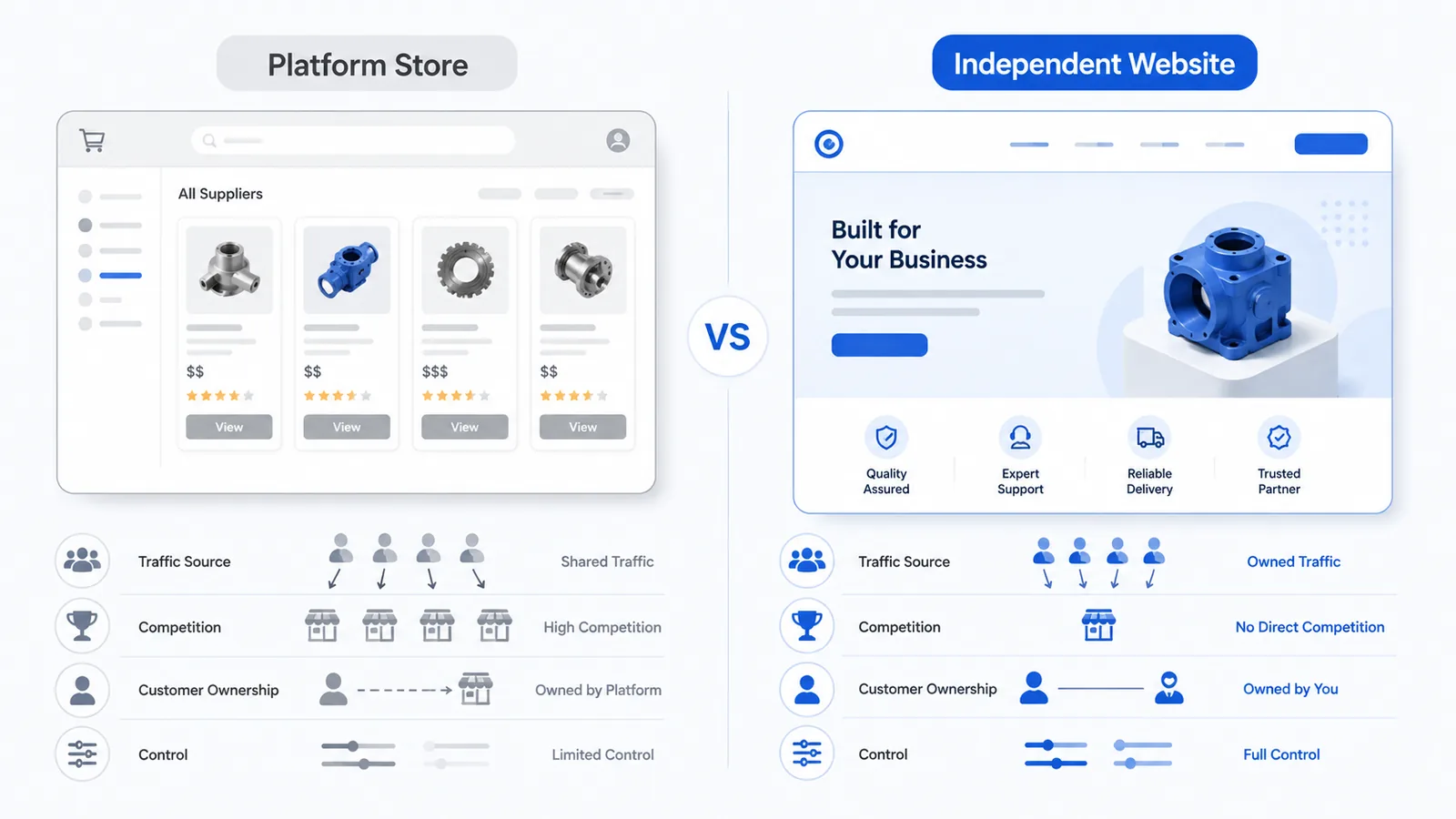
| Dimension | Platform stores (such as Alibaba International Station) | B2B export website |
|---|---|---|
| traffic source | Distribution within the platform relies on competition for annual fees and promotional slots. | Search, AI recommendations, social media, and advertising are all automatically acquired. |
| Competitive | Compare prices directly with competitors on the same page. | Customers on your page only see you. |
| Customer Attribution | Customers belong to the platform and can inquire about prices from multiple sources simultaneously. | Visitor behavior and clues are all yours. |
| Regulatory risks | Subject to platform rules, penalties, and store closures. | It is self-reliant and controllable, but we need to solve the traffic problem ourselves. |
| Speed of effect | Quickly, advertising will bring you exposure. | Slow, usually appearing after 3–6 months. |
| Cost structure | Annual fee + promotion fee, ongoing expenses | Initial construction + ongoing operation, diminishing marginal costs |
The most intriguing part of this table is the last line: the money for the platform is "rented," and it's gone once it stops; the money for the business website is "built," and the investment will accumulate into assets.
II. Their respective strengths and weaknesses
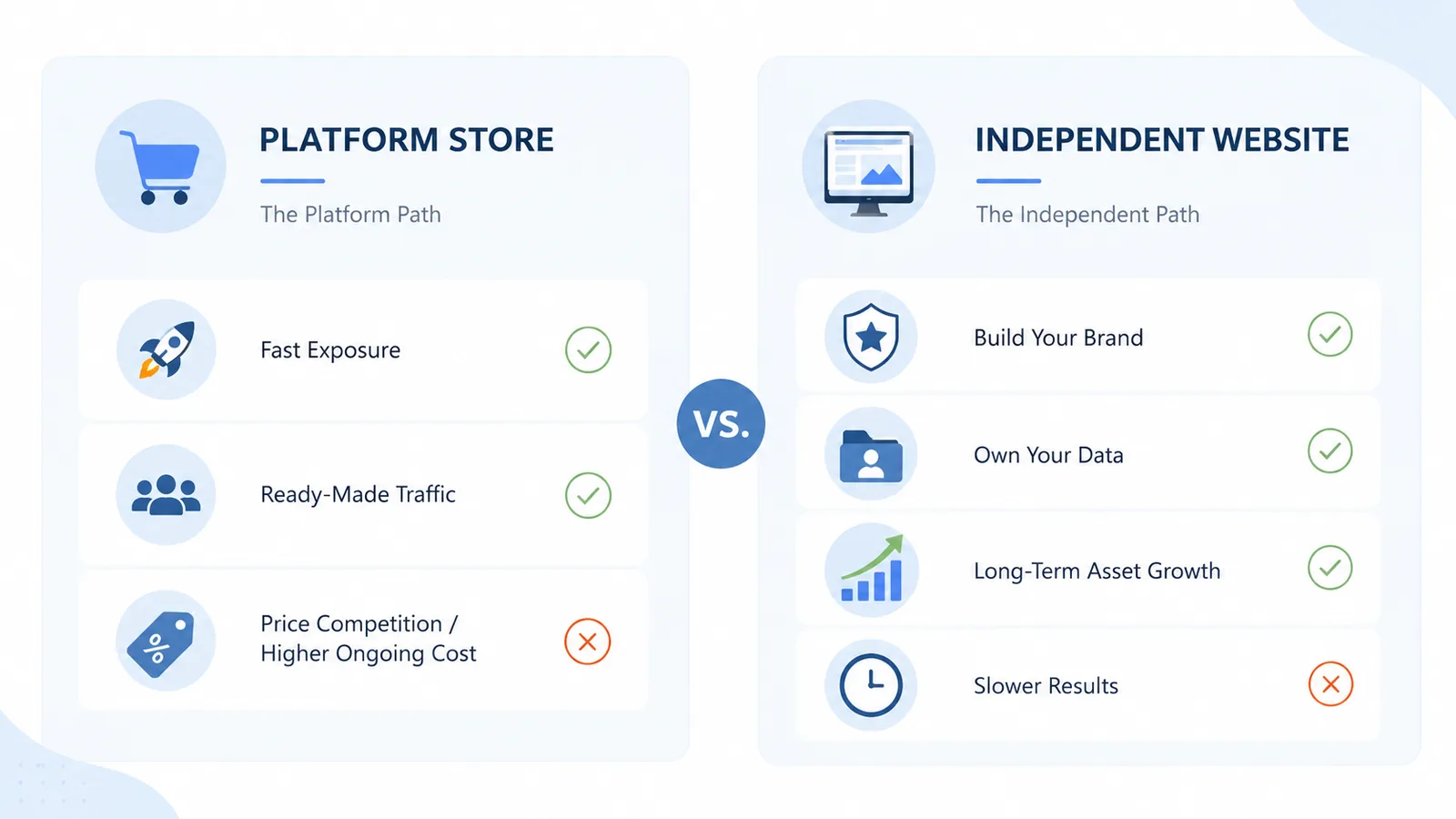
The platform's strengths : Buyers come with a clear purchasing intention, resulting in naturally higher traffic quality; the platform itself has a reputation for trust, allowing new suppliers to gain exposure quickly; it is effective and suitable for stages where orders need to be generated rapidly.
The platform's weaknesses include : direct competition from similar products, with customers comparing prices on the same page, making price wars unavoidable; rising traffic costs year by year, with promotional slots becoming increasingly expensive; customer data not belonging to you, with repeat purchases and re-reaching being subject to the platform's control; and uncertainties arising from rule changes (such as penalties and demotions) beyond your control.
The strengths of a business website : When customers enter your page, they are faced with your entire business, allowing you to fully showcase your capabilities and case studies; content and data can be accumulated, forming assets that appreciate over time; it is not bound by platform rules and does not require close price comparisons; and it can simultaneously handle search traffic and recommendation traffic from AI search.
The shortcomings of business websites : they don't generate traffic on their own and require three to six months of continuous investment to see results; they require content creation skills and someone who can consistently produce content; and they lack the natural endorsement of a platform, so trust needs to be built through the content itself.
III. Why is the answer "cooperation" instead of "either/or"?
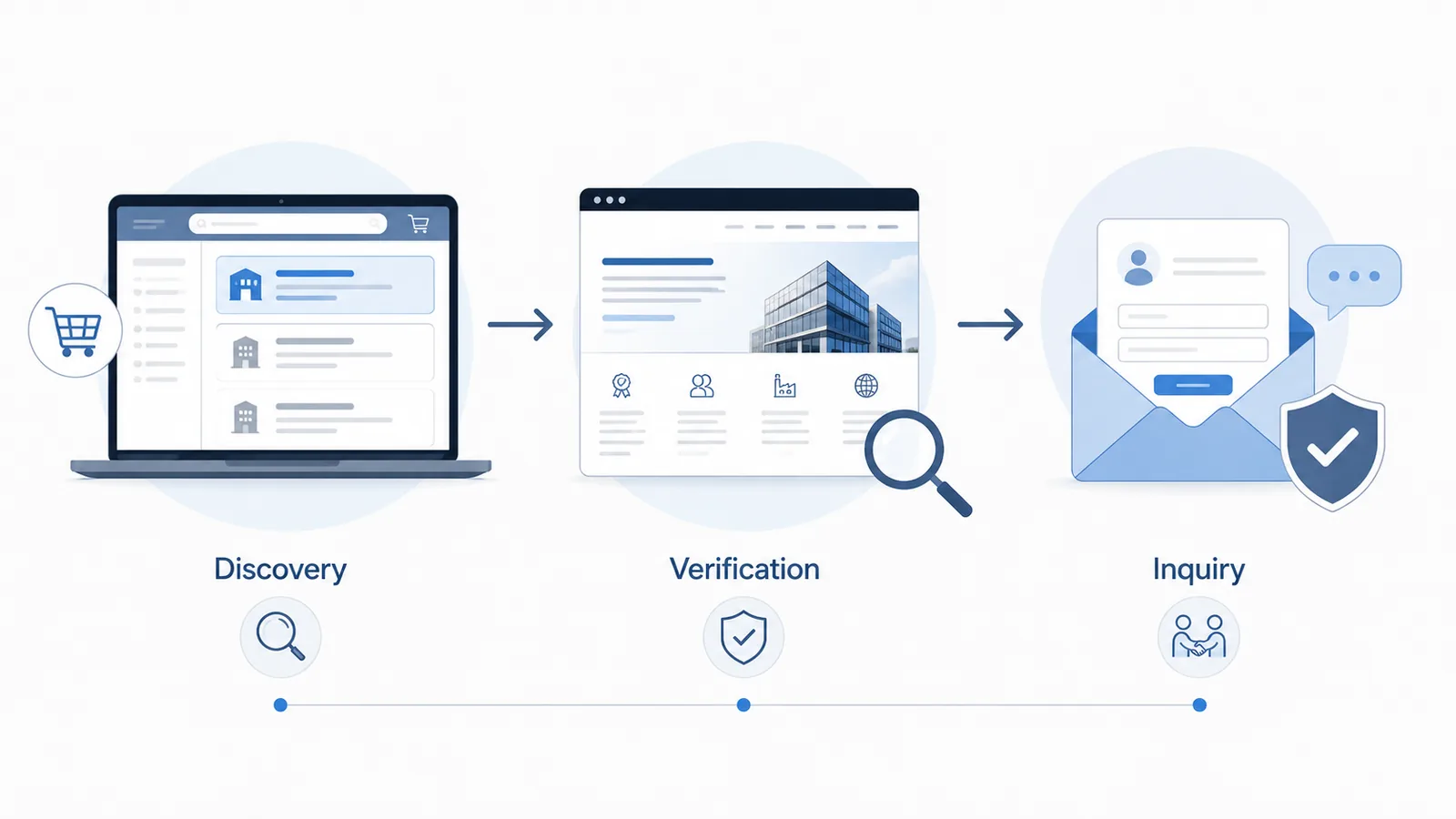
The key reason is that these two address different aspects of the customer journey.
Before deciding to cooperate, overseas buyers usually do one thing— verify your identity . Even if they found you on a platform, they are very likely to:
- Search your company name on Google or AI.
- Check if you have your own official website and whether your content is professional.
- Determine whether this is a "factory with its own brand" or a "store on a platform".
In this context, a business website serves as a vehicle for endorsement. A business website with solid content, authentic case studies, and complete information can earn you points with customers during the comparison process; conversely, if a search result only shows the platform page and nothing else, customers' trust will be diminished.
The reverse is also true: a business website brings you traffic, but customers don't have enough trust when they first contact you, and the platform's endorsement can fill this gap.
IV. How the two work together: three levels of synergy
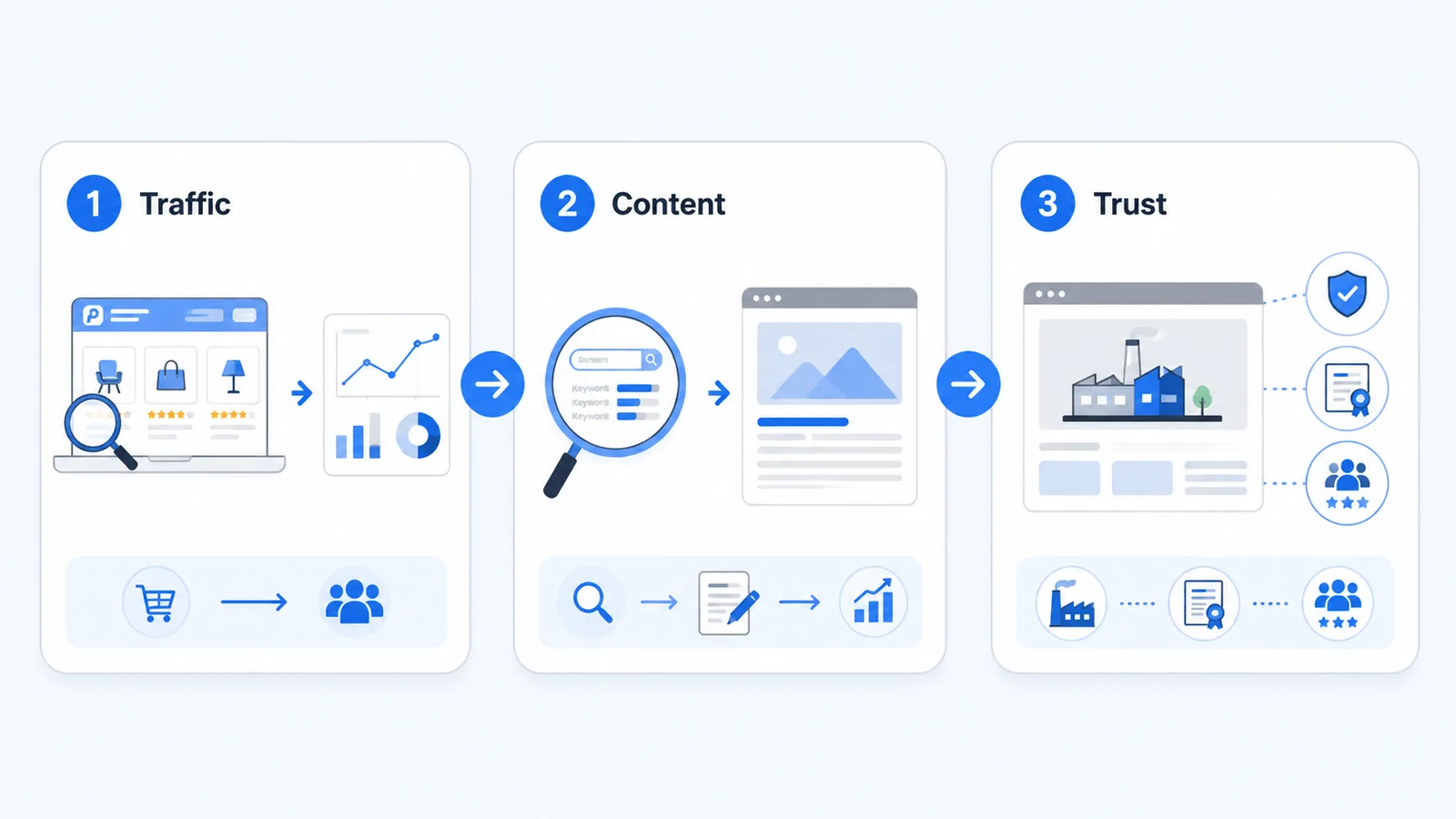
The first layer, the traffic layer: get it running on the platform and accumulate data through the business website.
The platform is suitable for quickly validating products, markets, and sales pitches. The real data generated on the platform—which products have the most inquiries, what questions customers ask, and which selling points are effective—is the best source of material for business website content.
The second layer is the data layer: using the platform's search insights to feed back into the business website content.
The platform's backend can show what keywords buyers are searching for and what specifications they are interested in. Transferring this data to a business website to plan keywords and content themes is far more accurate than guessing based on experience.
The third layer is the trust layer: the business website handles the verification process.
Display your factory photos, certifications, client case studies, and delivery capabilities on your business website so that clients can find ample information when "verifying" you. Platform space is limited and cannot accommodate all of this.
V. How to allocate energy at different stages
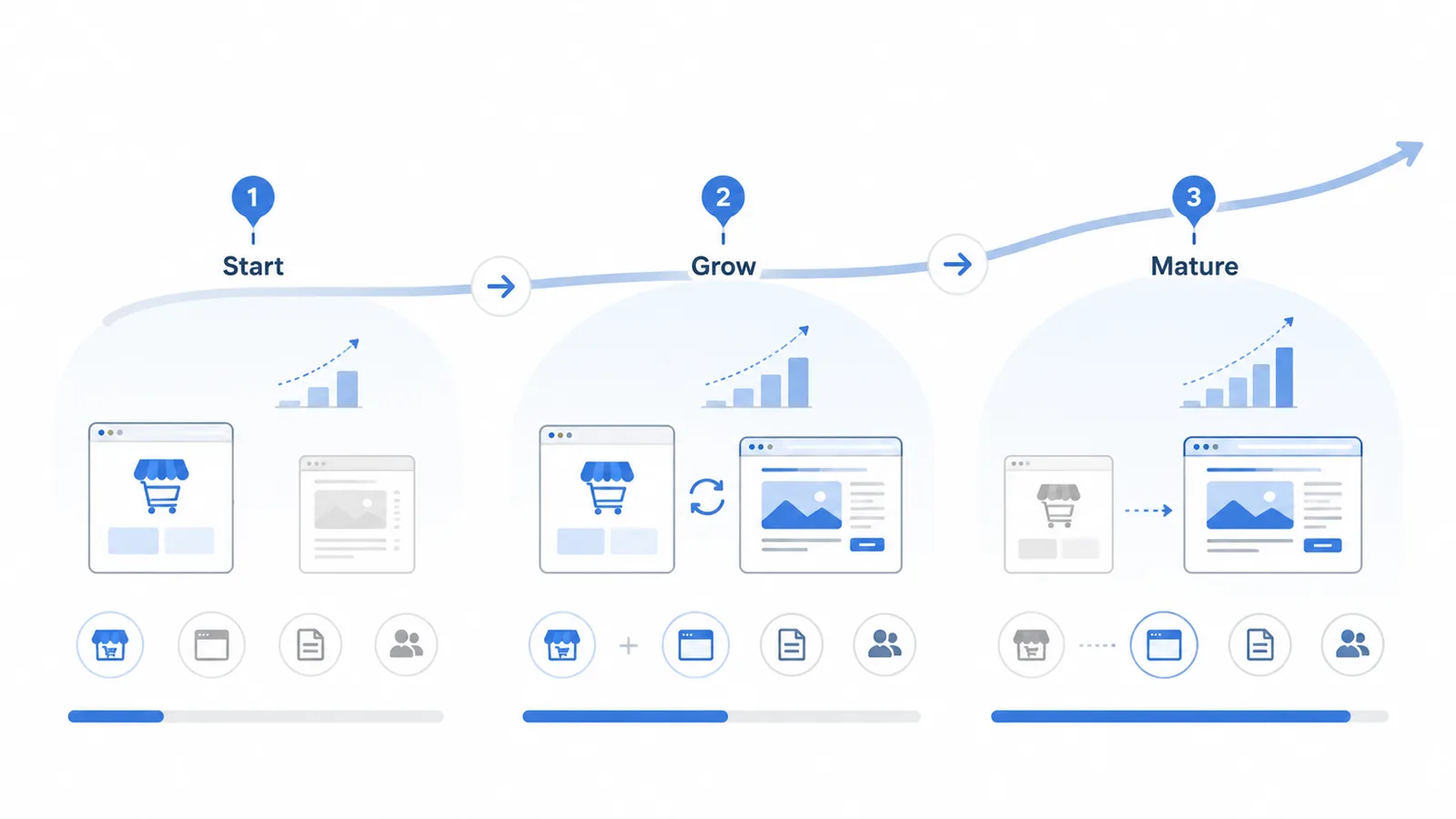
- Early Stage (0-1 Years) : Focus on the platform first, get the product and sales scripts working. The business website can be built simultaneously, but there's no need to rush into large investments. The focus at this stage is on validating the business, not building channels.
- Stable period (1–3 years) : The platform is maintained, and the business website increases investment. The data generated by the platform is used to improve the content of the business website, and traffic sources are gradually diversified.
- Maturity Stage (3+ years) : The business website becomes the primary lead generation platform, with platforms serving as supplementary channels. By this stage, you should have accumulated a portfolio of reusable content assets and stable organic traffic.
It's important to note that "shutting down the platform" is often dangerous —unless your business website is already consistently generating enough inquiries. Cutting off the platform before your business website is up and running is equivalent to losing two traffic sources simultaneously.
Frequently Asked Questions
Q: With a limited budget, I can only make one. Which one should I choose?
A: If the business is still in the validation phase, focus on building the platform first for quick results; if the product and market are already established, the long-term returns from the business website are higher. However, a more realistic approach is to maintain the platform with a small investment and start with the business website, rather than betting everything on one.
Q: The platform's annual fee is getting more and more expensive. Should I downgrade?
A: You can optimize your ad placement structure, but don't reduce it to zero exposure. The recommended approach is to maintain basic exposure and gradually shift the saved budget to content development for your business website, completing this shift over one to two years.
Q: Can a business website replace a platform?
A: It's possible to acquire traffic, but not in terms of trust endorsement and customer intent in the short term. The mature path is "business website as the main platform, platform as a supplement," rather than a complete replacement.
CTMON (CTMON) · Shenzhen · Over a decade of experience in B2B digital marketing · Official website ctmon.com

What does international social media management service include? 2026 Guide to Social Media Management for Export Businesses
2026-10-28
How to write a WordPress product page that will make overseas buyers want to send inquiries?
2026-10-28

How to fix WordPress form emails not sending: Practical WP Mail SMTP configuration
2026-10-27
Are foreign trade promotion companies reliable? Six key criteria for businesses to judge promotion service providers in 2026.
2026-10-26
How do I set up an email account for export businesses? How can I configure it to avoid it ending up in the spam/junk mail folder?
2026-10-26
Related Articles
Are foreign trade promotion companies reliable? Six key criteria for businesses to judge promotion service providers in 2026.

The 140th Canton Fair Opens: How can export businesses seize overseas sourcing opportunities through digital marketing?

How to Choose an Overseas Promotion Company for Foreign Trade? 2026 Service Provider Selection Criteria and Evaluation Guide
How to avoid pitfalls when building a B2B export website? A guide to avoiding common mistakes in B2B export website development in 2026.
Which company should I choose for building a B2B export website? A comparison and recommendation of B2B export website service providers in 2026.

