Contents +
Shopify, WordPress, or custom development? B2B e-commerce website selection: Lightweight and maintainable are key.
Source: 创同盟
Date: 2026-09-04
Views: 835
"Everyone else is using Shopify, should I just switch to Shopify too?" Or, after being recommended by a website building company, they spend a lot of money on a "self-built system," only to find after six months that either the functions can't be modified or the maintenance costs are frighteningly high.
Both of these situations are common in factories when selecting a product. But before we get started, we want to say something very honest: for B2B foreign trade inquiry sites, the criteria for selection should not be "big reputation" or "who is cheaper", but rather - lightweight, maintainable, and able to grow with the business.
CTMON delivers both WordPress projects and custom development, and we've encountered the pitfalls of both solutions. Below, we'll explain the realities of each approach so you can make your own judgment.
First, clarify the general ledger.
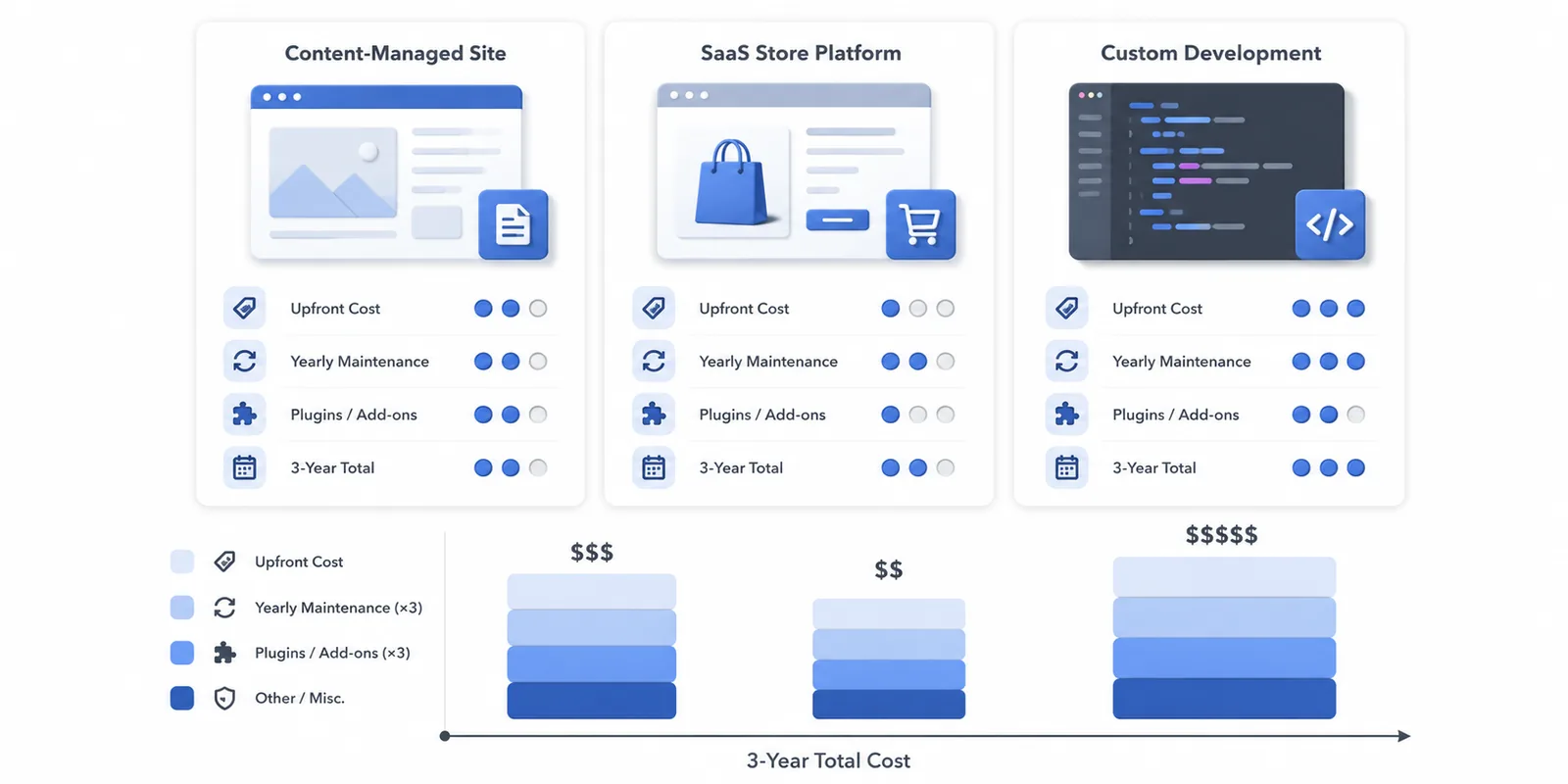
Many people focus solely on the "cost of website building" when choosing a solution, neglecting the ongoing costs over the next three years. The actual costs for the three main solutions are roughly as follows (the following are publicly available industry price ranges; actual prices may vary depending on the service provider):
| plan | Initial investment | Annual holding cost | Who is it suitable for? | B2B inquiries site compatibility |
|---|---|---|---|---|
| WordPress + WooCommerce | The software is free; themes and plugins are available on demand. | Servers, themes, plugins, and maintenance cost thousands of yuan; as more and more features are added, the cost of paid components continues to increase. | Companies looking to get started quickly and become content leaders | Medium (structure is controllable, but components are easily added, and it becomes heavier with use) |
| SaaS platforms (such as Shopify) | Low cost, quick deployment | Monthly fee is approximately $29–$299 USD, transaction fees are separate. | B2C sellers who can quickly launch and primarily engage in online transactions. | Low (designed for trading, weak inquiry capabilities) |
| Custom development | One-time payment ranges from 20,000 to 100,000 yuan. | Maintenance and upgrades are charged separately. | Enterprises that seek lightweight, maintainable, and long-term business evolution | High-end (build according to business needs, without piling on components). |
Several hidden costs that are easily overlooked:
- Component and template costs : Useful features in WordPress are often found in paid components, and the annual fees can easily exceed ten thousand yuan per year; custom development does not rely on third-party components, so there is no such continuous expense.
- Post-maintenance : security patches, version upgrades, troubleshooting. The annual cost of hiring someone to maintain this service is usually several thousand yuan or more, with additional costs for unforeseen issues.
- The cost of "being able to modify but having to give up drag-and-drop" : If you want to customize WordPress beyond the default block capabilities, you can add your own code and styles, but once you add code, that block is no longer a drag-and-drop visual editor - this trade-off is not apparent on paper, but it is the most tedious in terms of business.
- Content creation : If a website is built but no one fills in content, it's "dead as soon as it's built." This exists in both solutions, and custom development cannot avoid the step of content creation.
Conclusion: List the total cost over three years and then compare them, and list "whether it is lightweight, whether it is easy to maintain, whether it can be modified if desired, and whether it is convenient to modify" as a separate item, instead of just looking at the first year's quote.
II. B2B inquiries sites and B2C e-commerce platforms have completely different requirements.
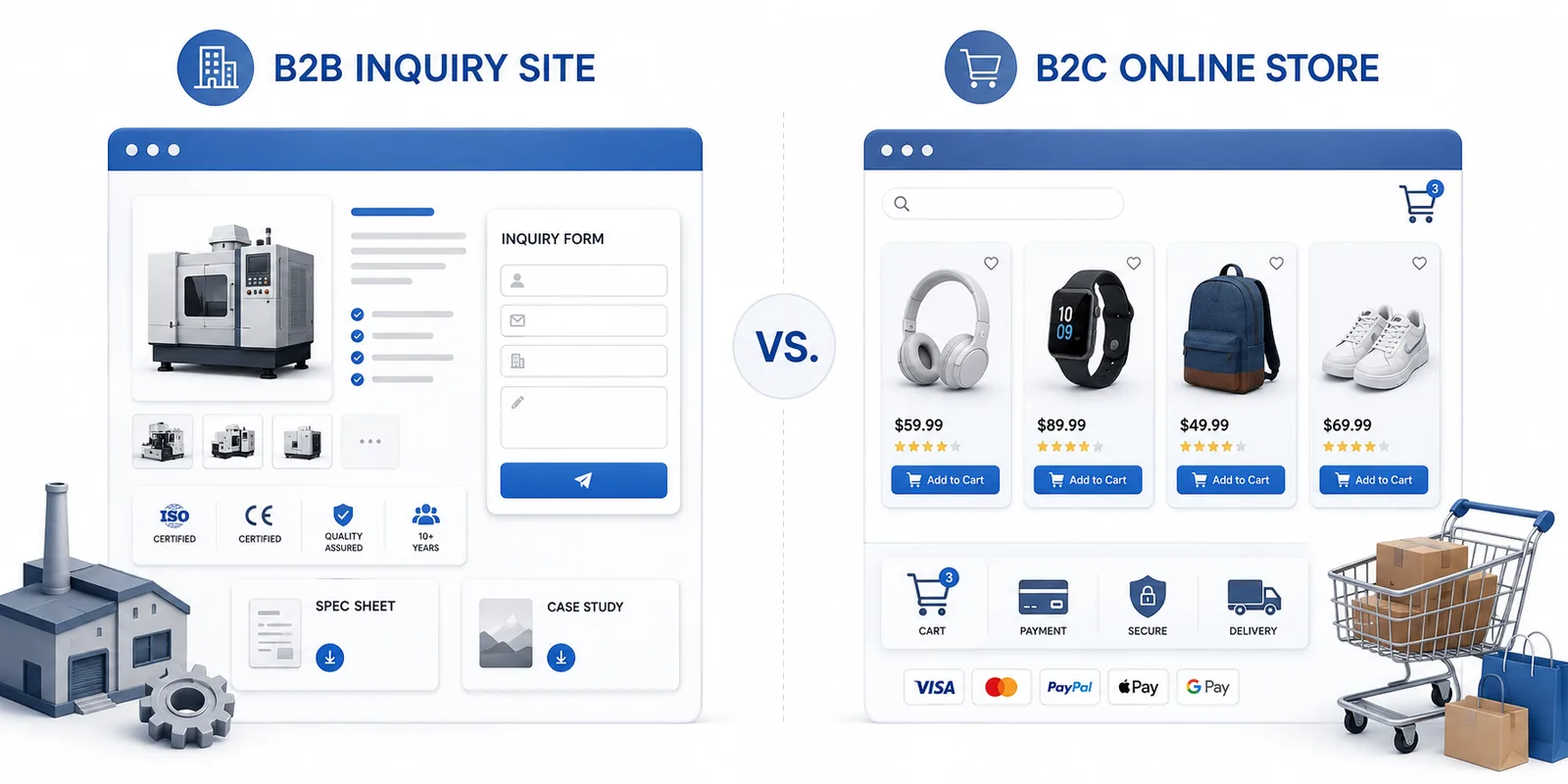
This is one of the easiest pitfalls to fall into when choosing a platform—using a retail platform to create a B2B inquiries site. The core difference between the two:
| Comparison items | B2B inquiries site | B2C Mall |
|---|---|---|
| Core Actions | Leave inquiry clues | Complete online payment |
| Essential features | Inquiries form, qualification display, customization capability description, case center | Shopping cart, payment, promotions, membership system |
| Decision cycle | It takes weeks to months to review repeatedly. | Usually from a few minutes to a few days |
| Key Points | In-depth content, technical parameters, application scenarios, and trust endorsement | Product images, prices, reviews, and logistics |
If you're looking for inquiries rather than online transactions, then features like shopping carts, promotional pop-ups, and membership points are meaningless. Instead, the key factors are the design of the inquiry form fields, the way qualification documents are displayed, the structure of the customization capabilities description, and the presentation logic of the case study center. Whether these can be easily modified and maintained directly determines whether the site can grow with the business.
III. Custom Development: Lightweight and maintainable are our main focuses.
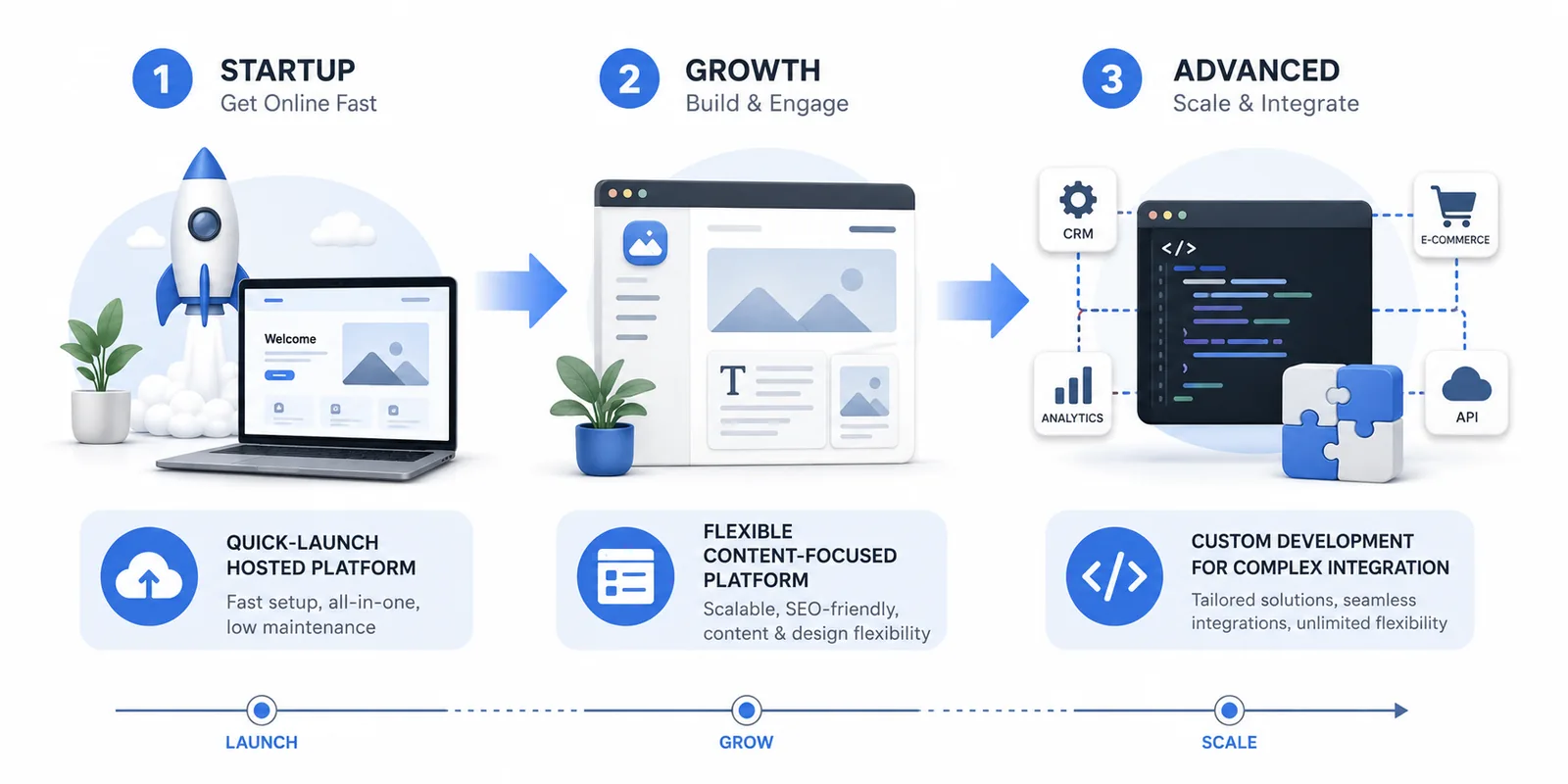
CTMON's core service is customized websites, which boils down to two words: lightweight and maintainable. There are six solid reasons for this:
1. Lightweight
Build according to business needs, avoid piling up components, and have less code and faster loading. Lightweight design also benefits SEO crawling and AI search understanding—the cleaner the page, the easier it is for search engines and AI to understand.
2. High maintainability
The structure is clear, changes are made directly to the code, and it doesn't depend on the update schedule of third-party components. The entire process remains completely controllable after modifications. You decide on subsequent iterations, without waiting for component authors to release versions—this is the opposite of WordPress: in WordPress, customization requires adding code to blocks, and once code is added, that block loses its drag-and-drop visual editing.
3. Not bound by components
There are no monthly or annual plugin fees, and no restrictions like "cannot be modified if the component is not supported". You can write whatever capabilities you need according to your business requirements, without being constrained by the capabilities of existing components.
4. Owned data assets
The site is your own, not subject to platform rules or bound by the component ecosystem.
5. More stable against traffic.
The architecture is controllable, and bottlenecks are easy to locate and scale when traffic increases. Unlike WordPress, where the more components there are and the greater the traffic, the greater the exposure and risks.
6. Long-term general ledger is controllable
The initial investment is high, but there are no ongoing component costs, and maintenance is plannable. The average cost over three years is often more cost-effective than "cheap start + ongoing fees + inconvenient maintenance after modifications".
IV. We also use WordPress, but it has several pitfalls.
Let's be clear first: CTMON also uses WordPress to deliver projects. It's quick to get started, has a mature ecosystem, and is suitable for many clients. However, based on our implementation experience, WordPress has a few unavoidable pitfalls:
- Many components have been refactored : WordPress does not natively provide many of the features required by B2B businesses, so they have to rely on piling up themes and components to make up for it, which makes the system increasingly cumbersome and difficult to streamline later.
- Component costs : Useful features are often found in paid components, and annual fees add up one by one, often exceeding ten thousand yuan a year. The "free website building" on paper is often an illusion.
- To make changes, you have to write code, and once you do, you lose the drag-and-drop functionality : to customize something beyond the default capabilities of a block, you can add code and styles to the block yourself, but once you add code, that block is no longer a drag-and-drop visual editor—it's a choice between "convenience" and "modifactability." Wanting fine-grained control comes at the cost of giving up the visual builder.
- Traffic is vulnerable to attack : WordPress has a large ecosystem and many components, making it a prime target for attacks year-round; with a large traffic volume and many components, the exposure and risk increase significantly.
Suitable scenarios for using WordPress: Companies that want to get started quickly, lead content generation, and are willing to accept the trade-offs mentioned above. We also use WP to deliver these types of projects—so these pitfalls aren't hearsay, but based on our own experience.
5. When should you choose Shopify?
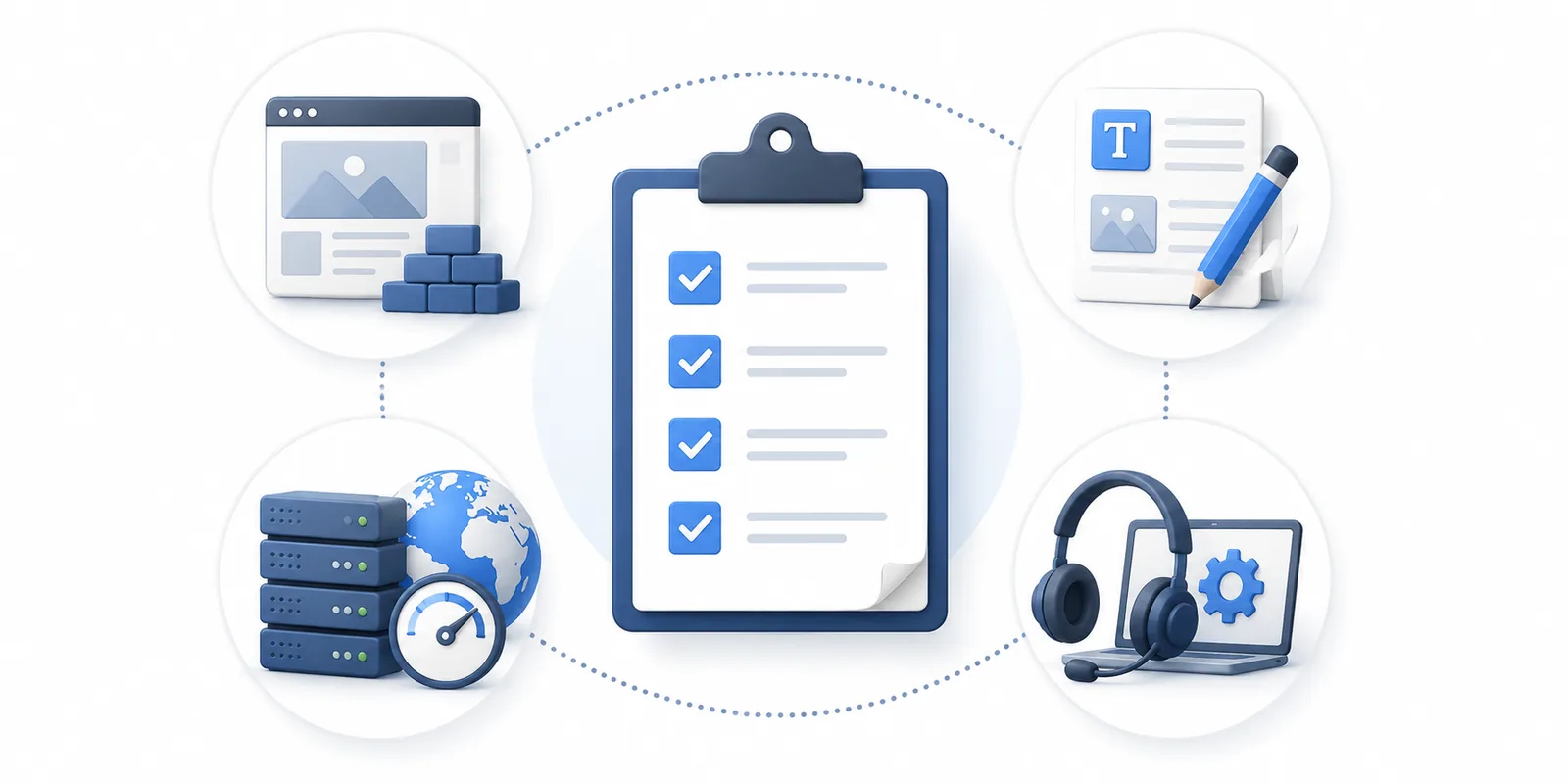
If you are a B2C business and want to quickly launch online transactions, Shopify is the easiest platform to use for verification. However, for B2B international trade inquiry sites, its inquiry capabilities and content hierarchy are relatively weak, so it is generally not the first choice.
VI. A new key criterion for product selection has emerged: compatibility with AI search.
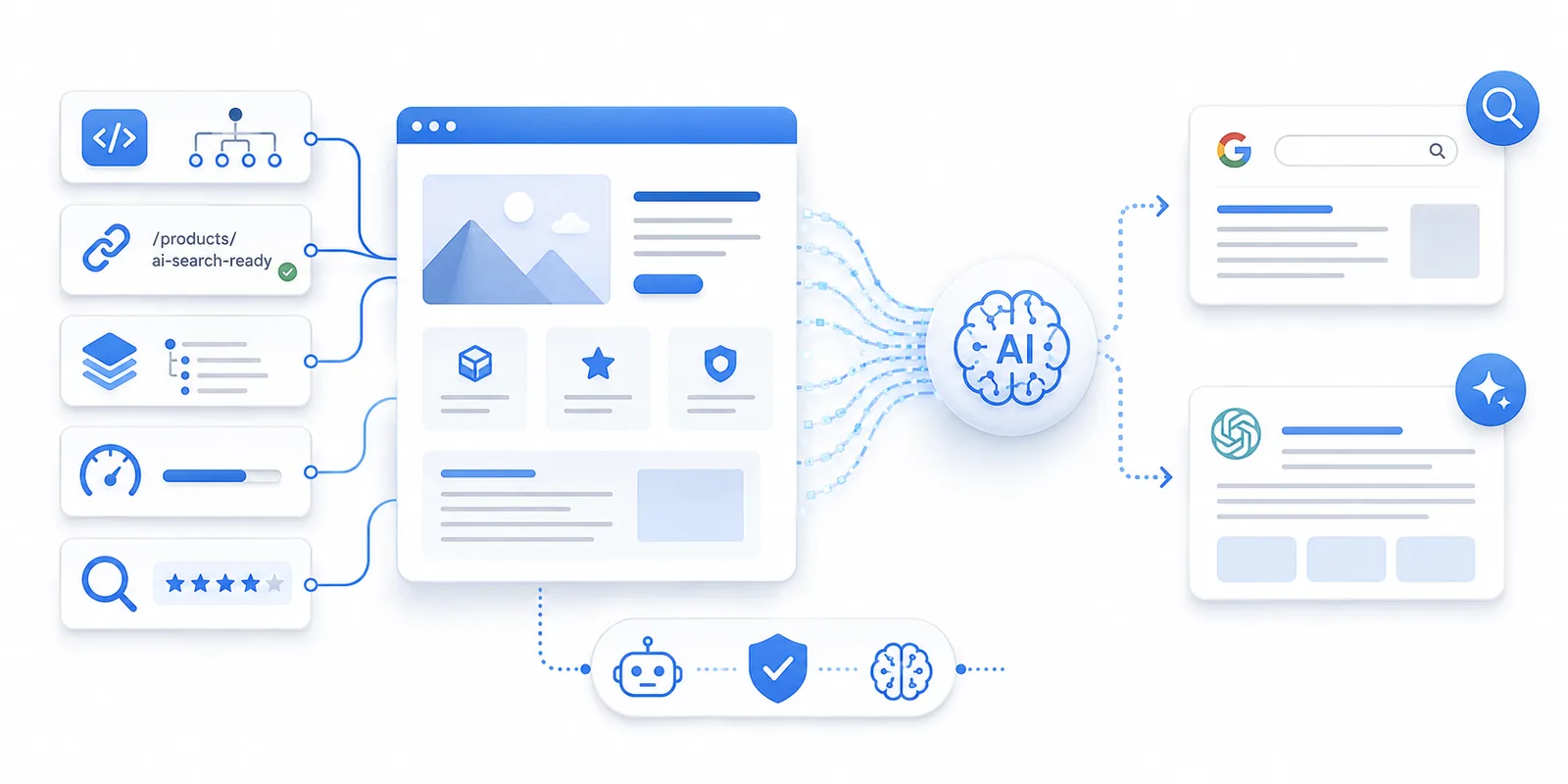
Overseas buyers' search habits are shifting—from "opening Google and searching for keywords" to "directly asking AI for a recommendation list." For a website to appear in AI's responses, the first step is not "how well it's written," but whether AI can grasp your content.
The most basic and crucial point: can it be crawled by AI? AI doesn't know what you've written out of thin air—AI crawlers like GPTBot and Claude need to access your page and read the content before they can possibly cite it. Many websites in reality fail at this very step:
- robots.txt blocks AI crawlers : Some websites directly disable GPTBot, Google-Extended, etc. in order to "prevent training," so the AI can't read them at all, let alone mention them;
- The content is only rendered in JS : the page is pieced together by front-end scripts, and the AI crawler only captures a bunch of empty shells and cannot read the main text;
- Server overload or frequency throttling : AI crawlers are blocked or timed out as soon as they try to access the site, and content cannot be loaded.
If this step isn't successful, all subsequent optimizations will be in vain. When selecting a solution, first confirm: Does your solution output static/server-side content readable by AI crawlers, and are robots.txt not mistakenly blocking AI from crawling?
Based on this, confirm these points (which will determine whether the AI "understands" and "cites" the information it captures):
- Does it support custom structured data (Schema) – to help AI understand the meaning of page content?
- Whether the URL structure is controllable and readable—garbled URLs will hinder comprehension;
- Is the content hierarchy flexible—can the page be organized according to the "question-answer" logic?
- Is page speed controllable? If loading takes more than 3 seconds, both visitors and crawlers will leave.
Custom development has advantages in both layers (first being crawled, then being understood): the server-side output is clean, independent of front-end assembly, and you have control over robots; WordPress is limited by components and themes, and content is often embedded in complex structures, requiring extra effort for fine-grained control (and incurring the cost of losing drag-and-drop functionality). If you don't choose a solution that can adapt to AI search now, the cost of patching it later may be higher than rebuilding it from scratch.
7. Custom development is not a buyout, but its advantage lies in its maintainability.
Many selection guides describe customization as "continuous investment, not a one-time purchase," which can sound discouraging. We prefer to clarify: customization is indeed a continuous iteration, but precisely because of its clear structure and lightweight nature, maintenance is predictable and plannable—where to change, how much to spend, and who will make the changes are all clear, preventing issues like "components don't support it" or "once changes are made, there's no time to back out." By planning the "foundation" (URL, content hierarchy, structured data) once, subsequent iterations only focus on the business layer.
8. What can CTMON do for you?
CTMON specializes in B2B digital marketing, primarily focusing on custom websites, but also offering WordPress delivery. We've encountered and are aware of the pitfalls of both solutions, so our advice is based on real-world experience, not a sales pitch.
- Customization focuses on lightweight and maintainability : build according to business needs, without piling up components, with a clear structure, can be modified as needed, and still fully controllable after modification;
- Technical foundation in one step : page title and description, URL structure, sitemap, structured data, image alt tags, mobile adaptation;
- SEO/GEO Native : Content hierarchy and AI search adaptation should be planned from the beginning of website construction, not remedied after launch;
- Content and operations support : Keyword strategy, content updates, and data monitoring can be managed on a managed basis;
- Overseas access speed : Server location and acceleration ensure stable access even in target markets such as Europe and the United States.
9. Four questions to ask before signing a contract
- Should we do the technical groundwork? Page titles and descriptions, URL structure, sitemap, structured data, image alt tags, mobile adaptation—if we don't do these, the subsequent optimization costs will be much higher.
- Who writes the content? Many website building projects only provide a framework, leaving the content to the client. If the factory lacks content creation capabilities, the final product often consists only of product names and parameter tables.
- Where is the server located, and how fast is it to open from overseas? The target market is in Europe and America, but the server is located in China. If it takes five or six seconds to open from overseas, the customer will have already left.
- Is there operational support after delivery? The website launch is just the beginning. There needs to be a clear plan regarding who will handle ongoing tasks such as keyword optimization, content updates, and data monitoring.
Frequently Asked Questions
Q: With a limited budget, is choosing the cheapest option the least risky?
A: Not necessarily. The cheapest option, if its content structure is uncontrollable, component costs are ongoing, and modifications are inconvenient to maintain, will have an opportunity cost over three years that far outweighs the savings on website construction fees. It is recommended to evaluate based on "total cost of ownership over three years + whether it is lightweight and maintainable + whether it supports AI search adaptation"; custom development can also reduce the pressure in the first year through phased iterations.
Q: Is WordPress maintenance very troublesome?
A: Routine updates, backups, and security checks can be outsourced at low cost. However, the real trouble isn't with "maintenance," but rather with: wanting to customize beyond the default capabilities requires adding code, which loses the drag-and-drop visual editing; component costs accumulate; and traffic makes them vulnerable to attacks—these are issues that outsourcing can't solve, limitations inherent in the WordPress architecture itself. For B2B inquiries sites that prioritize lightweight design, maintainability, and ease of modification, custom development is the perfect solution.
Q: Can we make a simplified version first and upgrade it later?
A: Yes, that's a relatively safe approach. However, it's crucial to plan the "foundation"—URL structure, content hierarchy, and structured data—from the very beginning; modifications later are very costly. Custom development is best suited for this "simplify first, evolve later" approach because it avoids piling on components and sacrificing overall controllability when modifying code.
Struggling to choose the right solution, or perhaps already burned by WordPress components/attacks? We can provide a lightweight, maintainable, customized solution and a three-year cost-benefit analysis based on your business stage, helping you determine if customization is truly worthwhile. Visit ctmon.com on our website, or contact the CTMON overseas digital marketing team directly.
CTMON Overseas Digital Marketing Team · Shenzhen · Over a decade of experience in B2B digital marketing · Official Website ctmon.com

What does international social media management service include? 2026 Guide to Social Media Management for Export Businesses
2026-10-28
How to write a WordPress product page that will make overseas buyers want to send inquiries?
2026-10-28
How to fix WordPress form emails not sending: Practical WP Mail SMTP configuration
2026-10-27
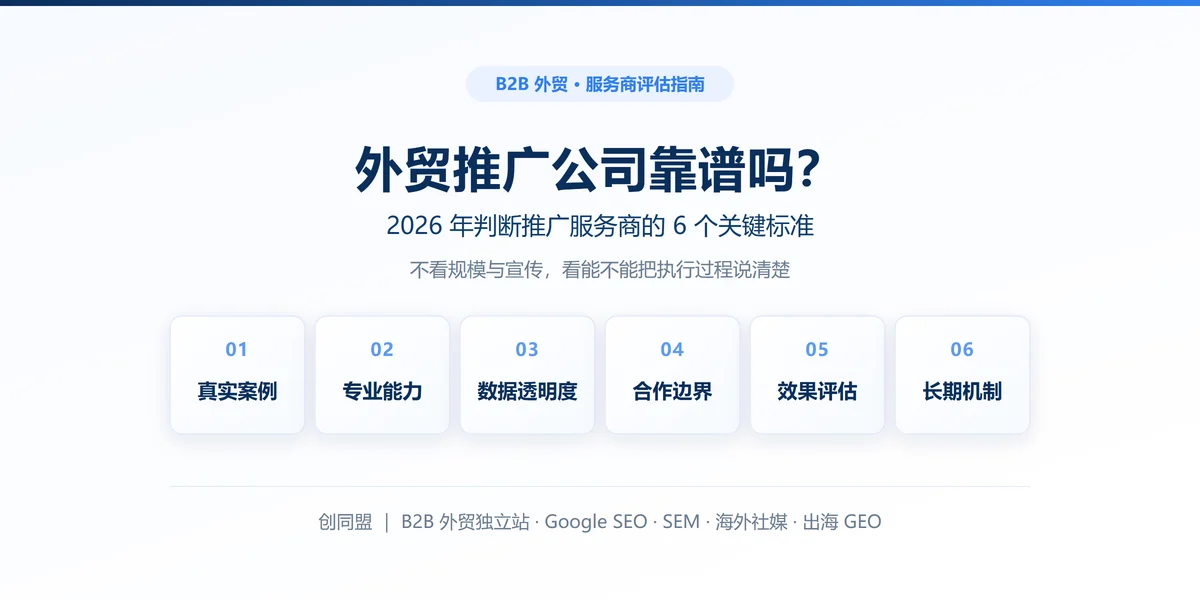
Are foreign trade promotion companies reliable? Six key criteria for businesses to judge promotion service providers in 2026.
2026-10-26
How do I set up an email account for export businesses? How can I configure it to avoid it ending up in the spam/junk mail folder?
2026-10-26
Related Articles
Are foreign trade promotion companies reliable? Six key criteria for businesses to judge promotion service providers in 2026.
The 140th Canton Fair Opens: How can export businesses seize overseas sourcing opportunities through digital marketing?
How to Choose an Overseas Promotion Company for Foreign Trade? 2026 Service Provider Selection Criteria and Evaluation Guide
How to avoid pitfalls when building a B2B export website? A guide to avoiding common mistakes in B2B export website development in 2026.
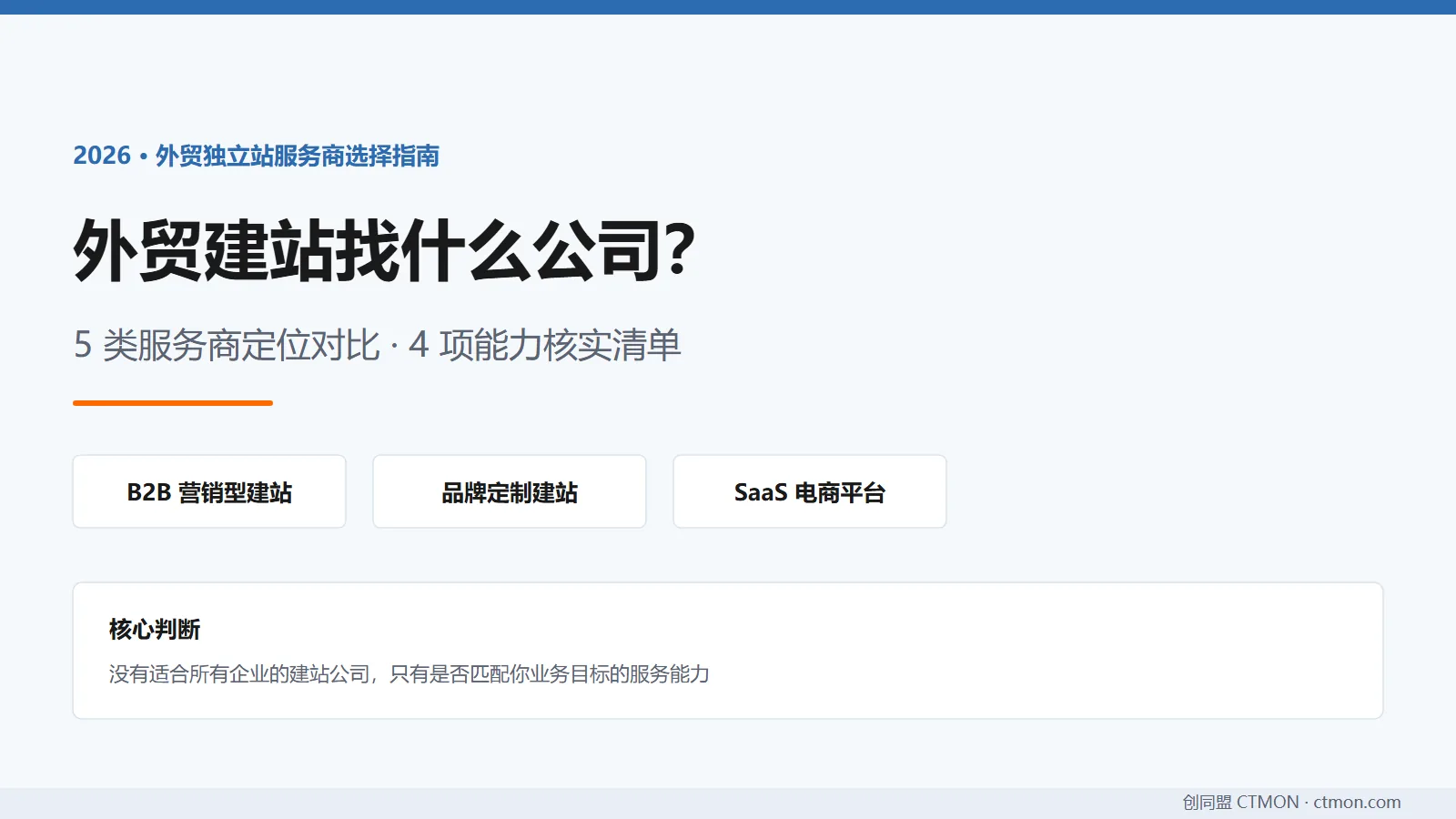
Which company should I choose for building a B2B export website? A comparison and recommendation of B2B export website service providers in 2026.

