Contents +
If a business website becomes a dead site after it's built, who should be responsible for its subsequent operation?
Source: 创同盟
Date: 2026-09-05
Views: 890
A phenomenon that repeatedly plays out in the foreign trade industry is this: companies create a business website, experience little traffic in the first year, switch to a different website development company in the second year, still experience no traffic in the third year , and finally conclude that "business websites are not suitable for our industry."
Let's start with the conclusion: In these cases, the problem is most likely not with website creation itself, but with "no one operating the website after it's built." Website creation delivers a storefront, while operation addresses things like maintenance, signage, and reputation building—treating these two things as one is the root cause of a "dead website."
1. Why do so many websites become inactive?
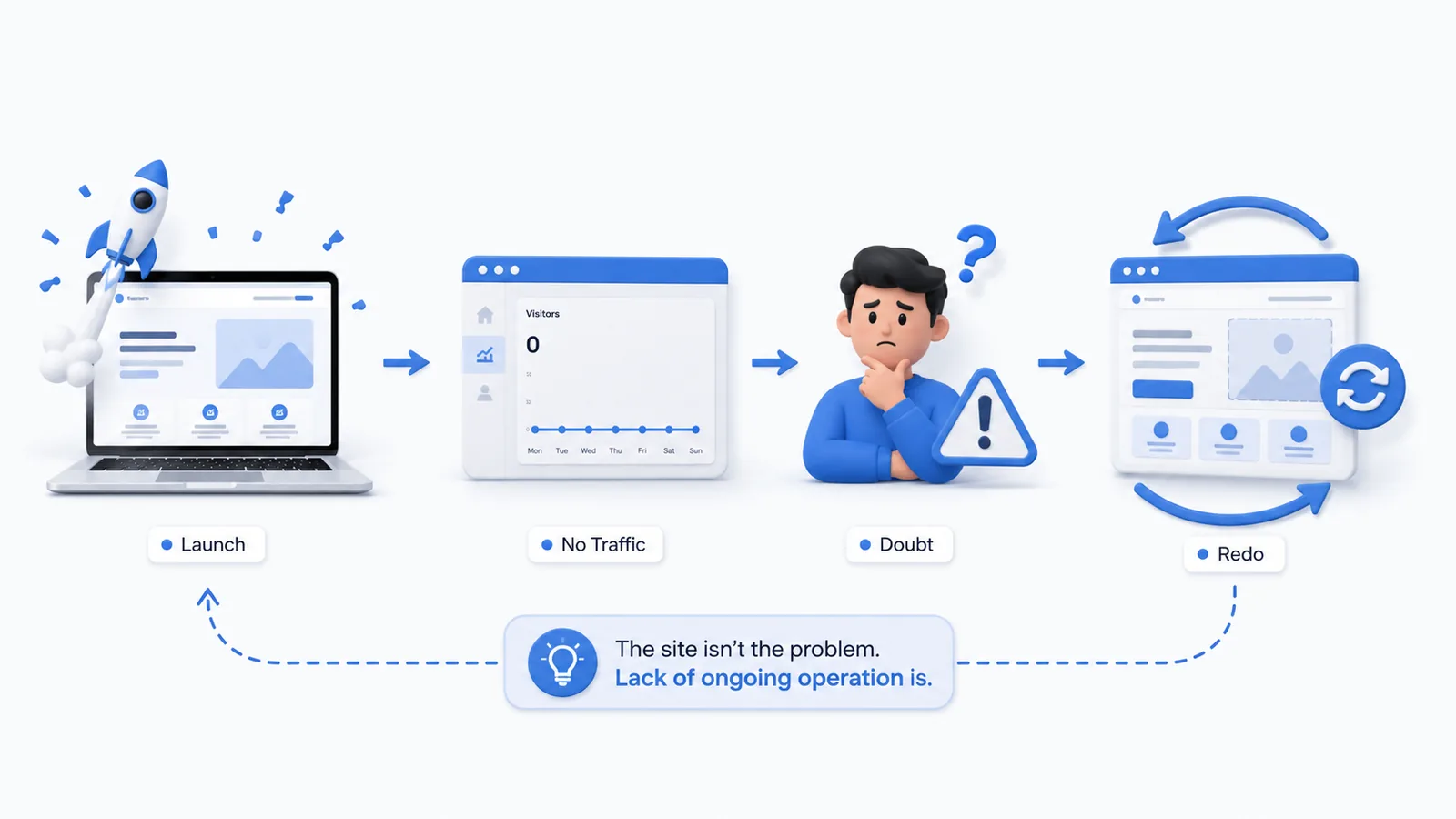
Dead sites usually form along a clear path:
Step 1: Focus on "looks good" when building the website. The design draft went through seven or eight revisions, and I was very satisfied with the visuals, but the content only included a company introduction and product images.
Step 2: Waiting for customers to come to the website after it goes live. Many people assume that "once the website is built, overseas customers will be able to find it," without corresponding keyword planning, content updates, or external promotion.
Step 3: After three months of no progress, doubts begin to creep in. Doubts arise: the direction is wrong, the industry is unsuitable, and the website development company is unreliable.
Step 4: Start over with a different company. However, if the new site is just a reskin of the old content, the result will be no different.
The key to this cycle is that none of the four steps involve "continuous content production" or "traffic generation." These two things are precisely the decisive factors in whether a business website can survive.
Second, website building and operation are two different things.
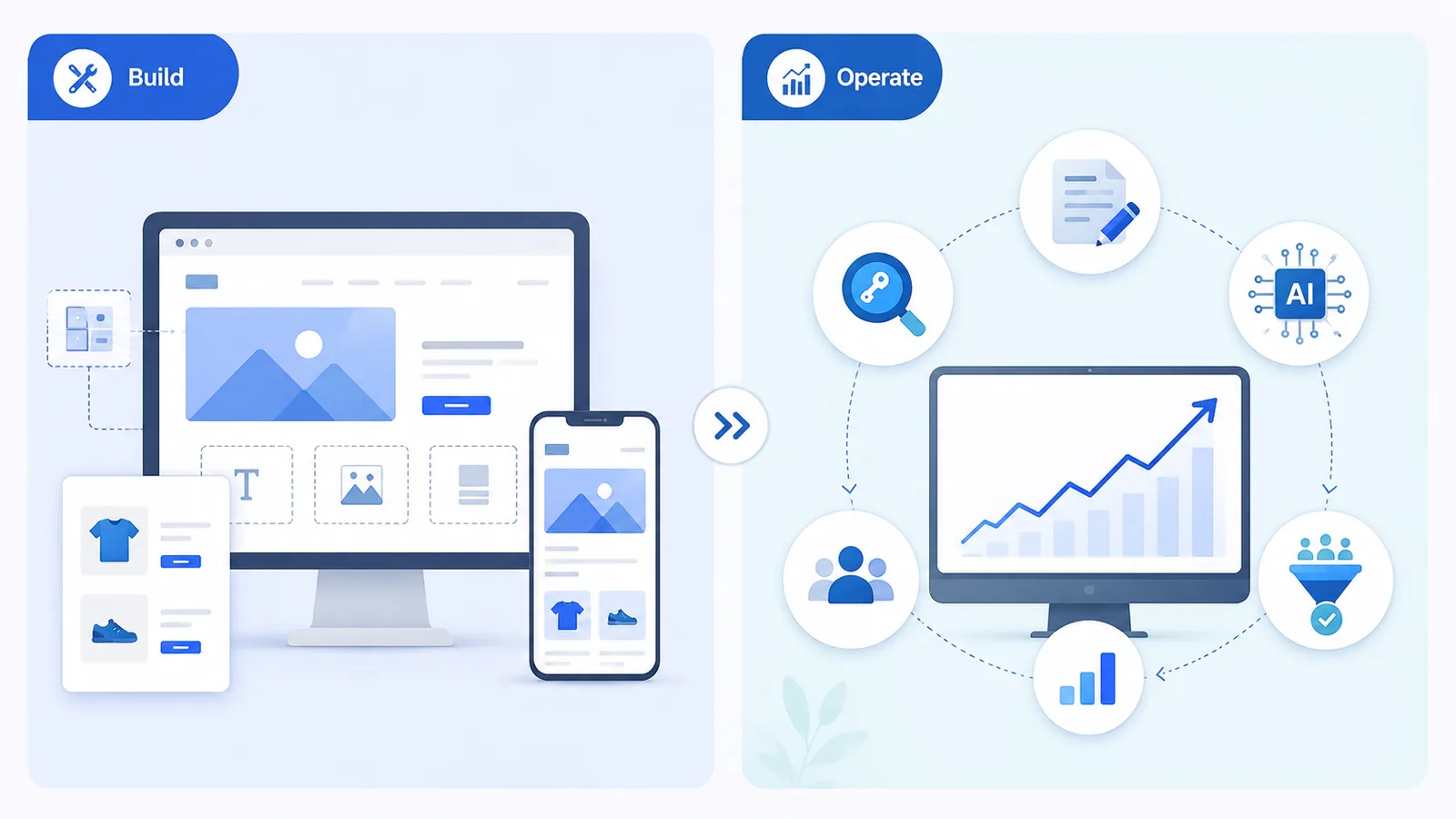
| Website building | operations | |
|---|---|---|
| Core Delivery | Website architecture, visual design, product display, basic functions | Keyword strategy, content creation, technology optimization, traffic acquisition, conversion design |
| Judgment criteria | Is the page visually appealing? Is it fully functional? Is it mobile-friendly? | Is it indexed? Is it ranked? Are there any inquiries? |
| Time scale | One-off project, delivered in weeks | With continued use, results typically begin to appear after 3–6 months. |
| Common Misconceptions | Thinking that delivery is the end | I thought website building included marketing. |
It needs to be clarified that website building services themselves have value . A well-structured, fast, and mobile-optimized professional website is the foundation for all subsequent lead generation actions. The problem lies in expectation management—if "website launch" is considered the end goal for lead generation, then disappointment in the following two years is almost inevitable.
III. What exactly does operations involve?
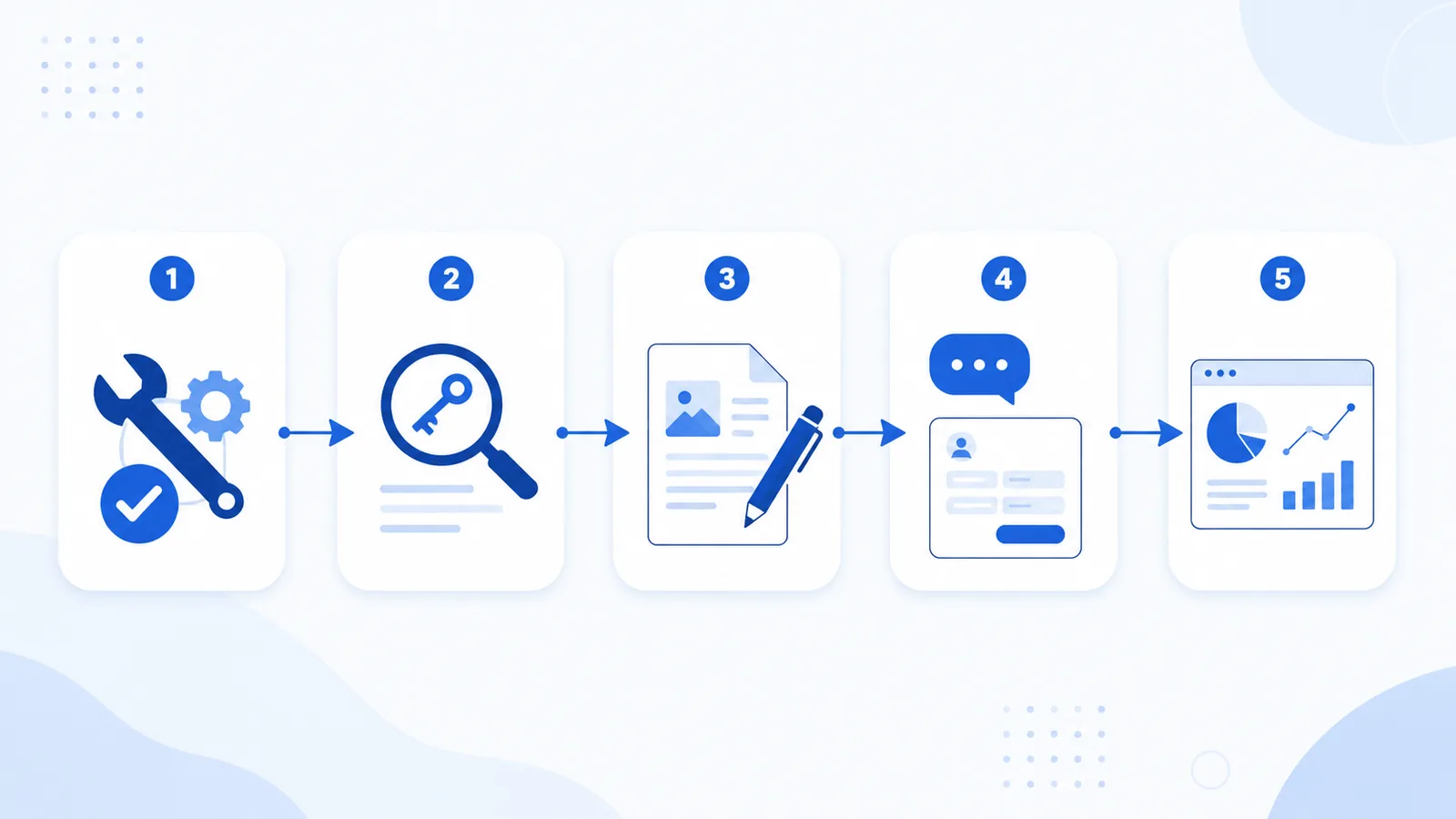
If the site is already built, complete the following tasks in order of priority:
1. Technical check-up (the first step and prerequisite).
Ensure that indexing is normal, page speed meets requirements (overseas access within 3 seconds), mobile adaptation is achieved, URLs are readable, sitemap has been submitted, and structured data is in place. Failure to do these steps will diminish the effectiveness of all subsequent actions.
2. Keyword layout.
Instead of simply copying domestic industry terminology, factories should dig for long-tail keywords based on the search habits of overseas buyers. The most common mistake factories make is using their own internal terminology for optimization, which results in no customers searching in that way.
3. Content production (the most crucial aspect, and also the most easily overlooked).
Start with "20 Frequently Asked Questions by Buyers," providing clear answers of 300-500 words for each question. This type of page is what customers need and is also the format most favored by search engines and AI.
4. Conversion path design.
Can customers get a quote with a single click after viewing the product? Is the WhatsApp entry point prominent? Are there too many form fields? Is the loading fast enough? These details directly determine whether traffic can be turned into leads.
5. Data tracking.
Install traffic analytics tools and a search console, keep an eye on traffic sources, high bounce rates, and trending pages, and iterate based on data, rather than operating based on intuition.
4. Should we do it in-house or outsource it?
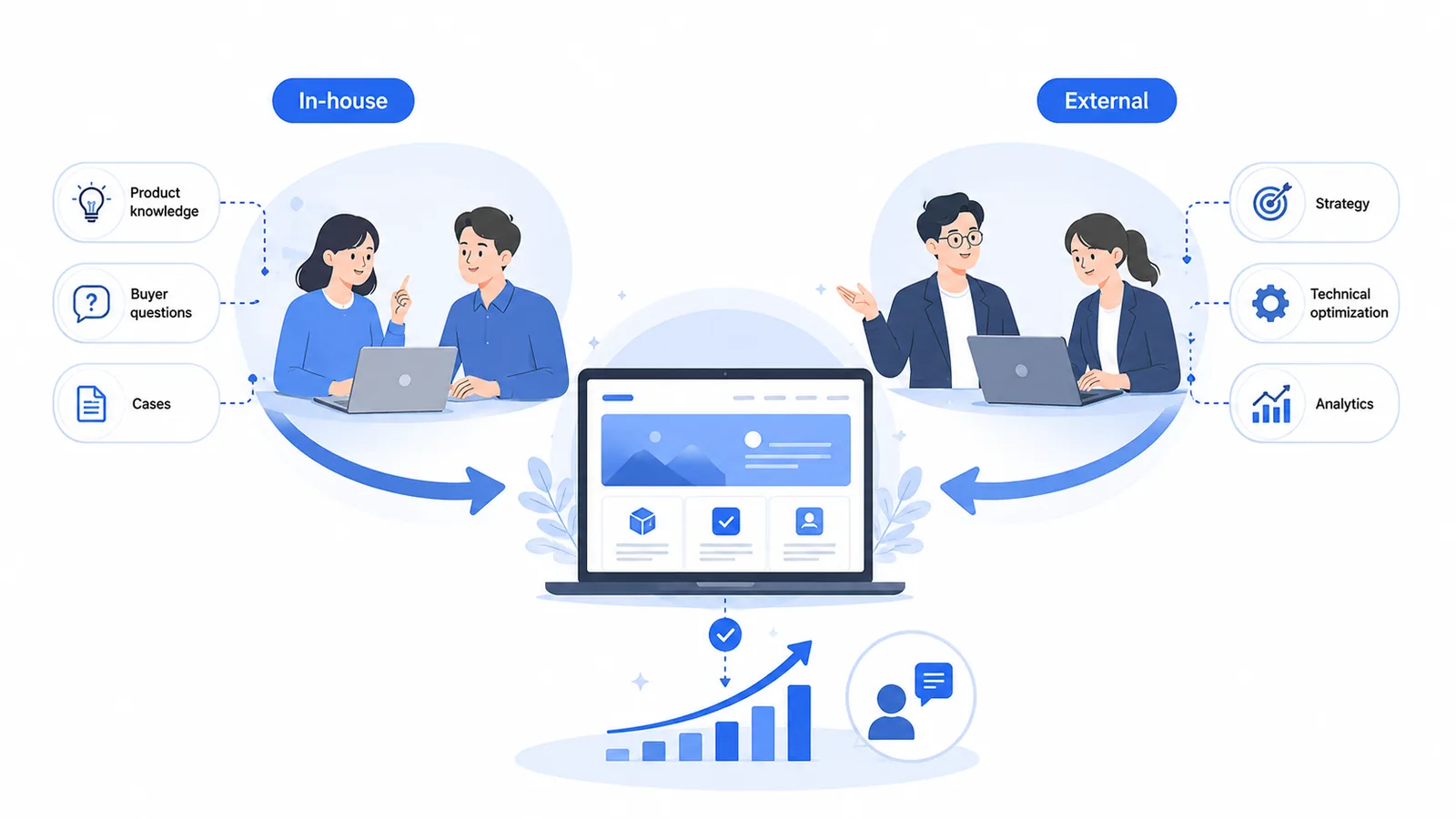
This judgment depends on three questions:
Question 1: Is there anyone who can consistently produce content?
If the factory has foreign trade salespersons or marketing personnel who can spare some time each month to write a few product updates and industry notes, then they can handle most of the content themselves and outsource the technology and strategy.
Question 2: Is there anyone who can understand the data?
Traffic reports, search consoles, and keyword rankings need to be understood and adjusted accordingly. If this isn't possible, it's best to have this part managed by an external service provider and have them report on it regularly.
Question 3: How long do you expect it to take to see results?
The expected results are typically seen within 3–6 months. If you expect to see a large number of inquiries within three months, you will be disappointed whether you do it yourself or outsource it—this is not a matter of capability, but rather that it takes time for search engines and AI to build trust.
A more pragmatic division of labor is as follows: the technical infrastructure and strategy are handled by external service providers (who are experienced and have all the necessary tools), while the content and client case studies are provided internally (because only you truly understand the product and the customer). This combination is usually more efficient than pure outsourcing or pure in-house development.
V. How to determine if your website is "alive"
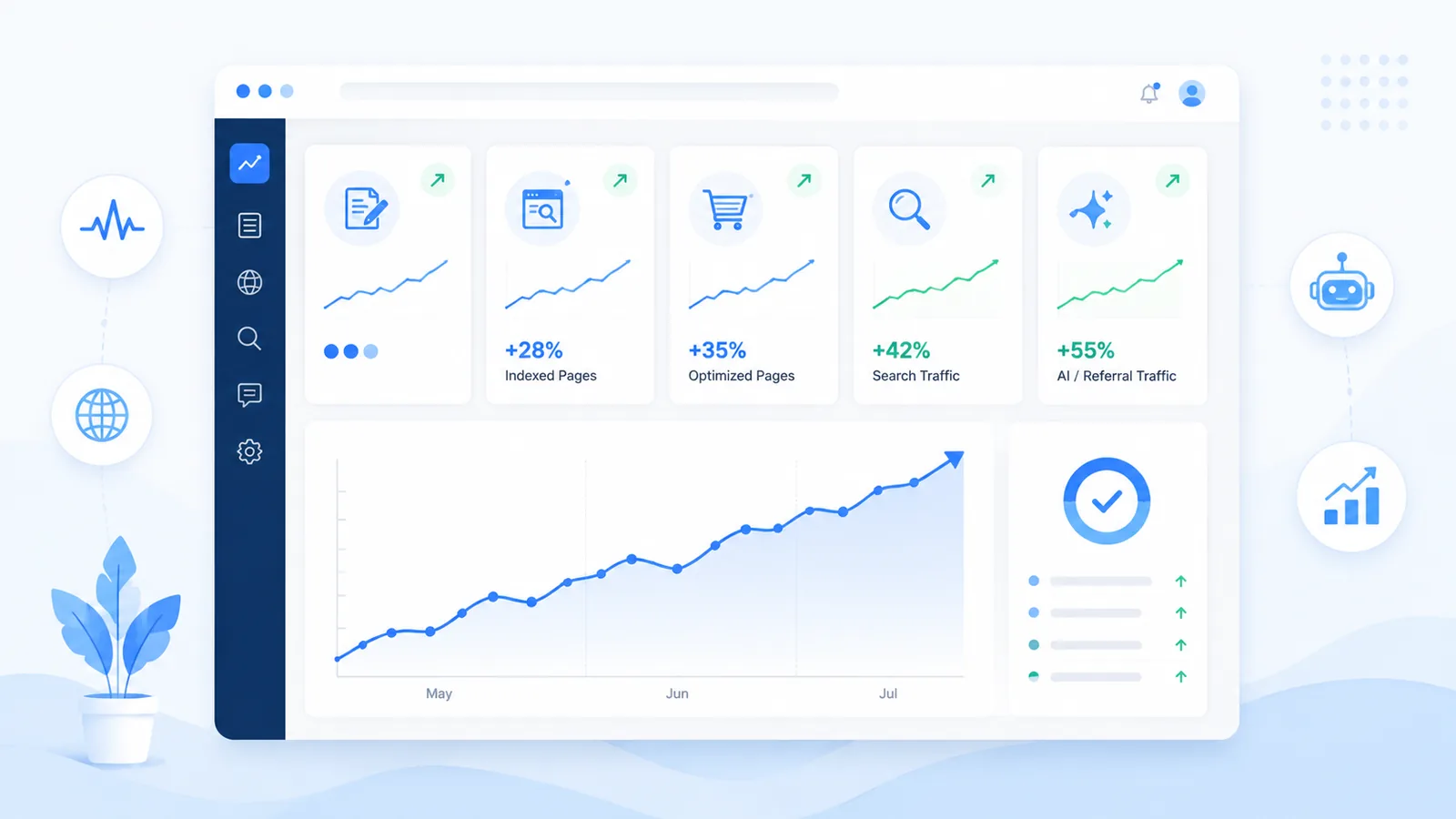
Use a simple criterion: see if it has changed in the last three months.
- Is there any new content being added (even just one piece per month)?
- Have any new or optimized product pages been added?
- Has the number of indexed pages increased?
- Are there any visits from search or AI platforms?
If all four criteria are negative, then from the perspective of search engines and AI, this is considered "stopped updating," and its authority will gradually diminish, leading to a decline in its ranking. The minimum requirement to stay "alive" is actually not high—one or two pieces of genuine content per month are enough.
Frequently Asked Questions
Q: Should the website development company be responsible for its operation?
A: It depends on the scope of services purchased. Most website building contracts deliver a "website" but do not include subsequent operation. Clarifying this before signing is much more useful than arguing afterwards—it clarifies who is responsible for content, keywords, and data monitoring after delivery.
Q: What if we don't have anyone to write content ourselves?
A: There are two paths: one is to have the sales staff compile the frequently asked questions from customers and have an external service provider process them into content (this is both authentic and saves you time); the other is to start with materials that do not require writing skills, such as "product photos + customer case studies".
Q: The site has been abandoned for a year. Is there any hope for it?
A: In most cases, there is hope. First, conduct a technical check to confirm that there has been no demotion or penalty, then gradually address the issues mentioned above. Compared to starting from scratch, continuously updating the existing site is less costly and preserves historical authority.
CTMON (CTMON) · Shenzhen · Over a decade of experience in B2B digital marketing · Official website ctmon.com
What does international social media management service include? 2026 Guide to Social Media Management for Export Businesses
2026-10-28
How to write a WordPress product page that will make overseas buyers want to send inquiries?
2026-10-28

How to fix WordPress form emails not sending: Practical WP Mail SMTP configuration
2026-10-27
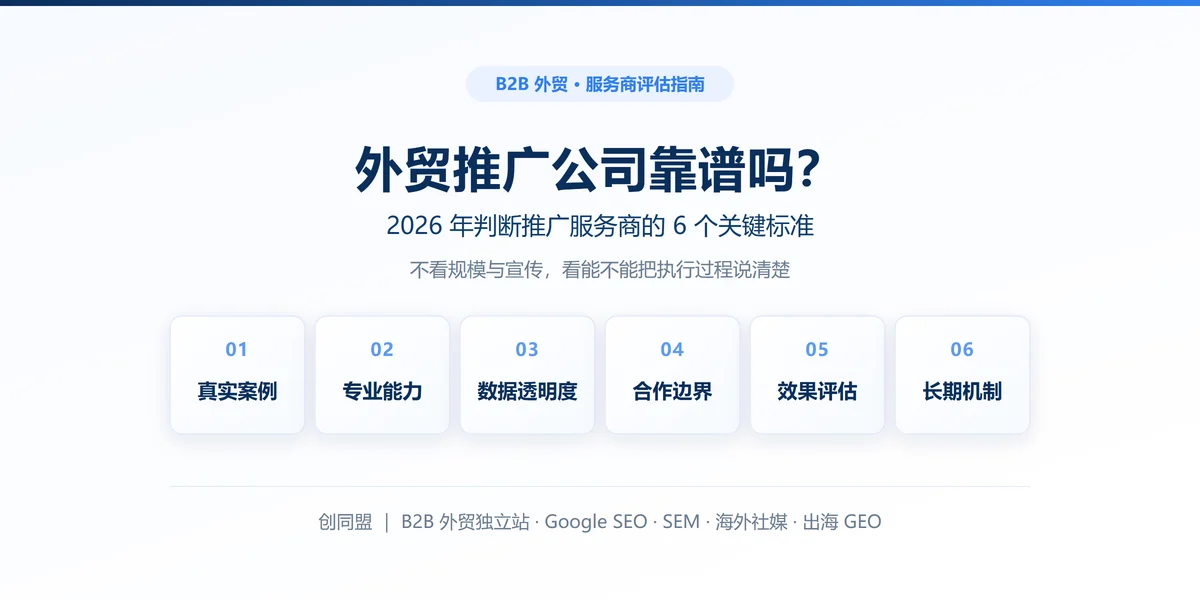
Are foreign trade promotion companies reliable? Six key criteria for businesses to judge promotion service providers in 2026.
2026-10-26
How do I set up an email account for export businesses? How can I configure it to avoid it ending up in the spam/junk mail folder?
2026-10-26
Related Articles
Are foreign trade promotion companies reliable? Six key criteria for businesses to judge promotion service providers in 2026.

The 140th Canton Fair Opens: How can export businesses seize overseas sourcing opportunities through digital marketing?
How to Choose an Overseas Promotion Company for Foreign Trade? 2026 Service Provider Selection Criteria and Evaluation Guide
How to avoid pitfalls when building a B2B export website? A guide to avoiding common mistakes in B2B export website development in 2026.
Which company should I choose for building a B2B export website? A comparison and recommendation of B2B export website service providers in 2026.

