Contents +
A business website has traffic but no inquiries; what's the problem?
Source: 创同盟
Date: 2026-09-06
Views: 952
"Our website gets dozens of visits every day, and the backend data looks okay, but nobody keeps sending emails to us."
This is one of the most typical and easily misdiagnosed symptoms of a B2B export website. Most people's first reaction is "not enough traffic, you need to add more ads," but the truth is often the opposite.
Let's start with the conclusion: this is most likely not a traffic issue, but a conversion path problem. The customer has actually entered the site, but your website hasn't given them a reason to stay, nor has it provided an entry point for them to send inquiries. Before increasing the budget, figure out if the bucket is leaking.
First, distinguish between: "no one is coming" or "coming but not converting"?
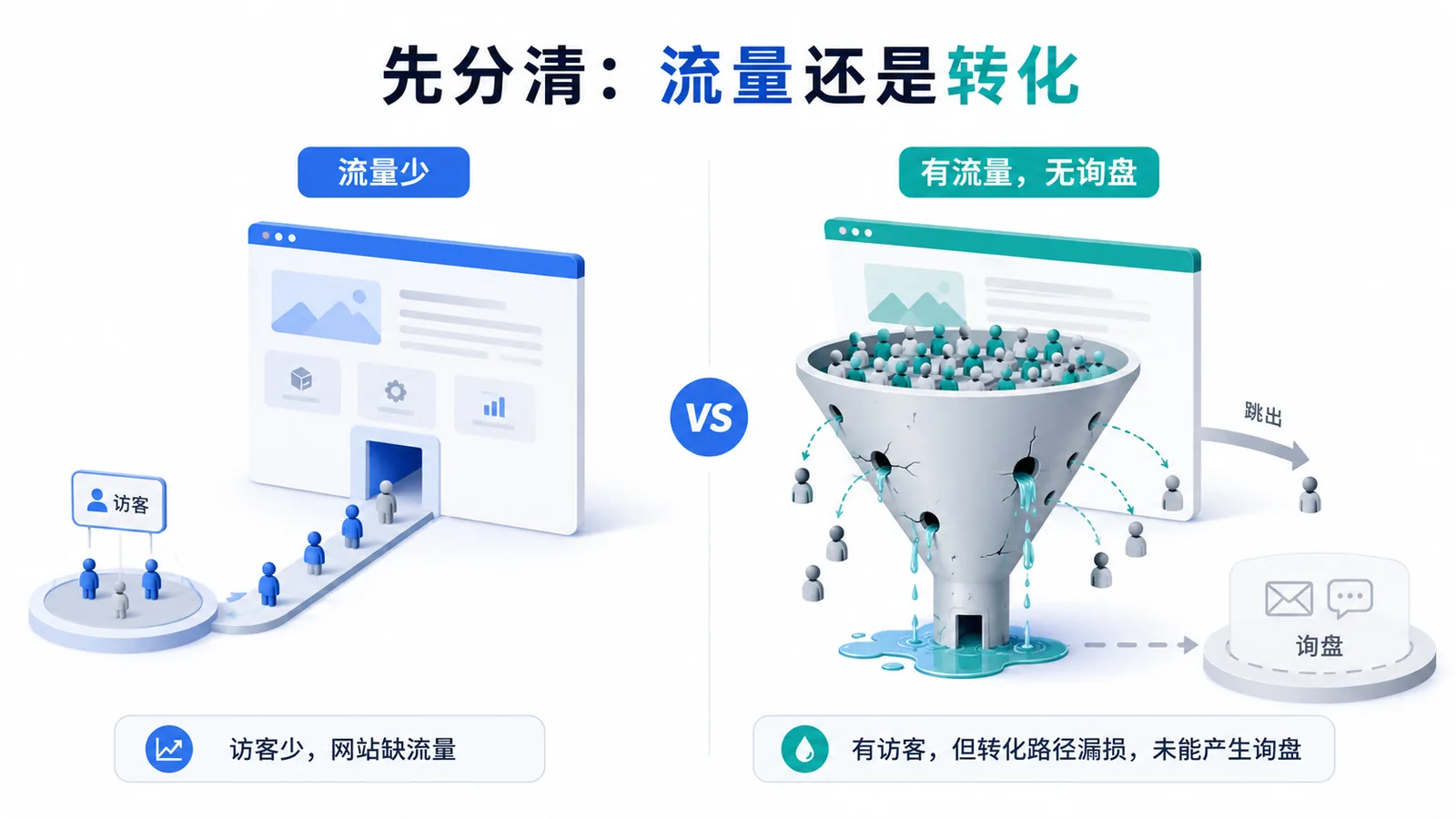
If no inquiries are found, first make a judgment:
- Single-digit daily pageviews → This is a traffic issue. First, address indexing, keywords, and content.
- Dozens or even hundreds of visits per day with zero inquiries → This is a conversion problem. Adding ads at this point will only pour more traffic into a leaky bucket.
The method for distinguishing between them is simple: look at the bounce rate and average dwell time. A high bounce rate and a dwell time of only a few seconds indicate that customers left without understanding the content—in this case, any amount of money spent on lead generation is a waste.
II. Five most common checkpoints
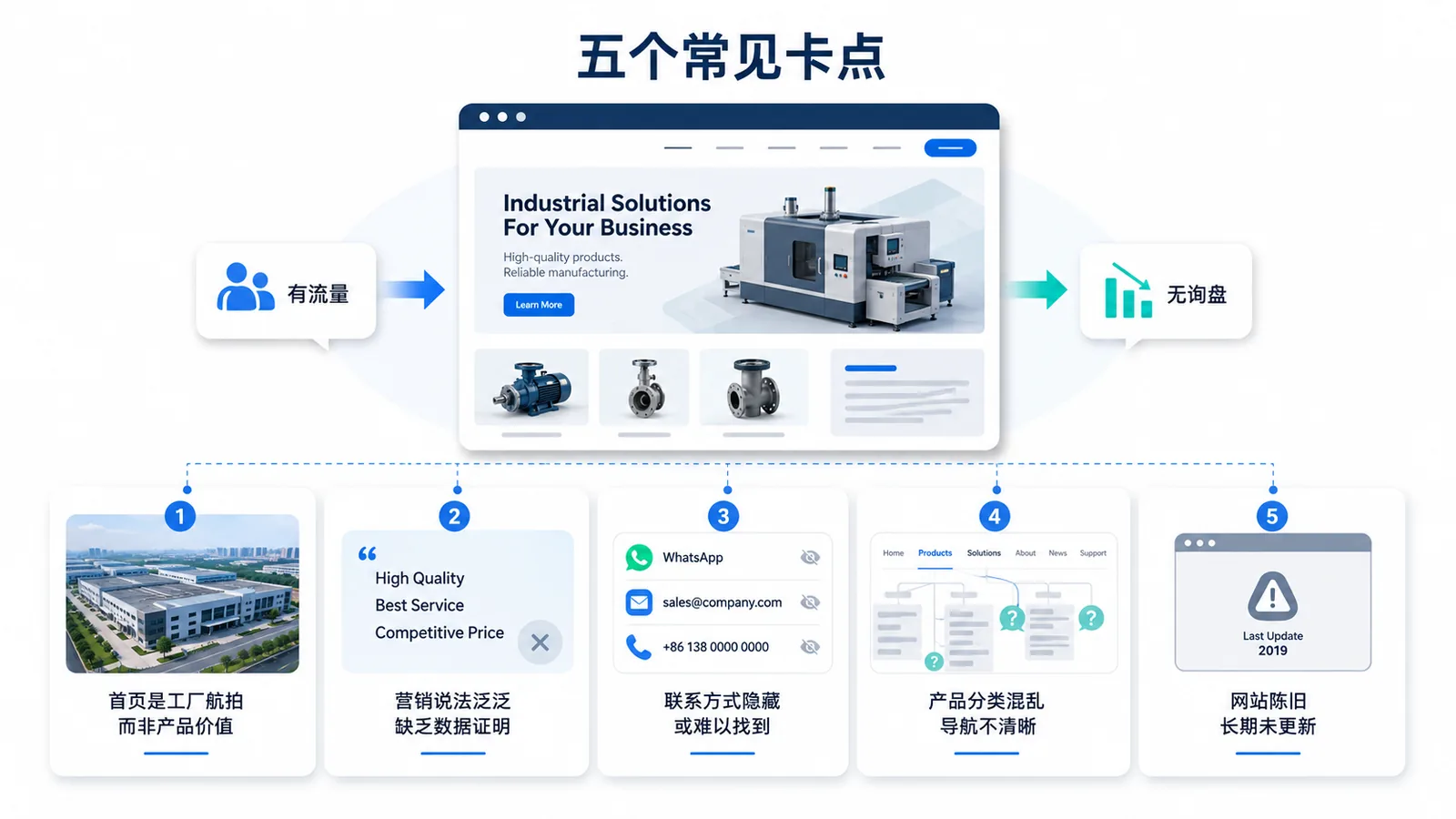
1. The homepage features a magnificent aerial photograph of the factory.
The boss thought this made him seem more capable, but in the first five seconds a customer opens a website, what they want to know is, "What do you do? Can you solve my problem?" A picture of a factory gate is something he neither understands nor cares about.
It is recommended that the first screen use a sentence to clearly explain the core business, such as "Custom high-precision CNC machined parts, minimum order quantity 50 pieces, delivery in as little as 7 days", followed by product application scenario images, instead of a panoramic view of the factory area.
2. The product page is filled with phrases like "high quality, excellent service".
There's nothing wrong with this kind of statement, but the client has seen it a hundred times, so it has zero persuasive power.
It is recommended to replace adjectives with facts and data: "In the past year, we have processed 20,000 stainless steel parts for German customers, with dimensional tolerances controlled within ±0.01mm", and then add screenshots of inspection reports or comparison photos of actual products.
3. No real contact information could be found.
Many foreign trade websites' contact pages only have a map and a generic email address, requiring customers to scroll back and forth to make phone calls or send WhatsApp messages.
It is recommended to display the WhatsApp number with the country code in the header, and the email address and office hours in the footer. The Contact page should directly embed a WhatsApp chat link— the fewer clicks customers need, the higher the probability of inquiries.
4. Product categorization is disorganized.
Some websites pile all their products onto one page, or use internal numbering for category names (Series A, Type 02), making it impossible for customers to know which category corresponds to their needs.
We recommend reorganizing the categories according to customer understanding: create navigation by product type, application scenario, material, and process, and add a brief description to each category page (e.g., "Seals suitable for food machinery"). If there are many products, add filtering functions by size and material.
5. It will not be updated again after it goes live.
The website looks like an outdated brochure from years ago, making customers wonder if the company is still operating normally.
You don't need to update every day, but at least post an industry note or product update every week or month. Even just a set of real photos of new products or a video of an exhibition can make customers feel that "this website is alive".
III. Eight questions to answer on the product page
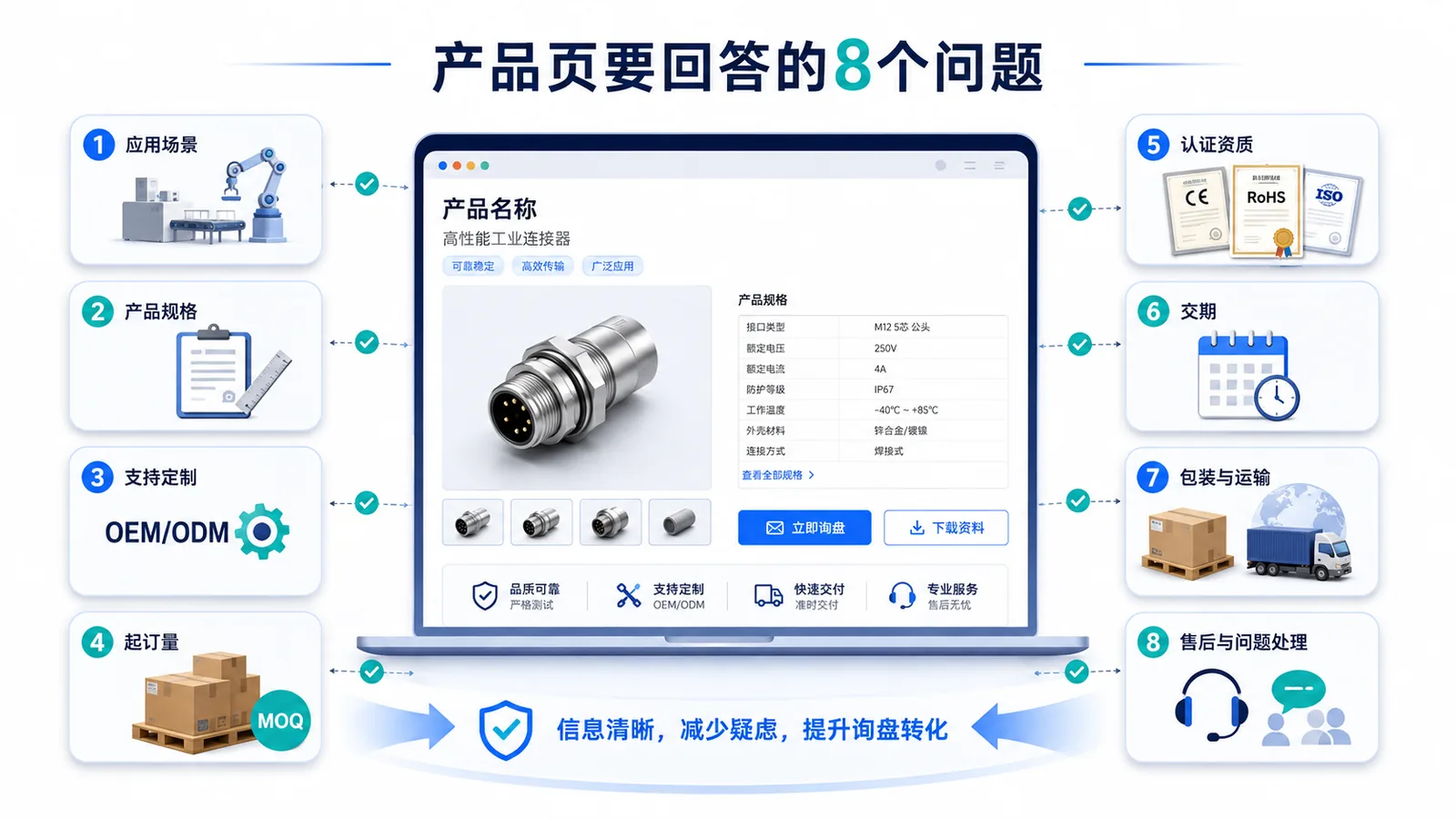
Before sending inquiries, customers often have a series of concerns. The clearer your product page answers these questions, the less resistance they'll have to press the send button.
- What scenarios is this product suitable for?
- What specifications are available?
- Does it support OEM/ODM?
- What is the MOQ?
- Are there any relevant certifications?
- How long is the delivery time?
- How should packaging and shipping be arranged?
- What should be done if a problem occurs?
If you answer all eight questions, the product page will no longer be just a catalog, but a "mini sales plan".
Also, don't forget about trust endorsements . B2B procurement involves high amounts and long cycles; clients won't dare to approach you if they can't see your capabilities. Four types of materials offer the best value: factory real-life scenes (production lines, equipment, warehouses), authoritative certifications (ISO, patents, testing reports, import/export qualifications), overseas client case studies (real projects, implementation scenarios, and photos of bulk shipments), and service capabilities (customization, quality control, delivery time, and after-sales service).
IV. Three Key Indicators for the Conversion Path
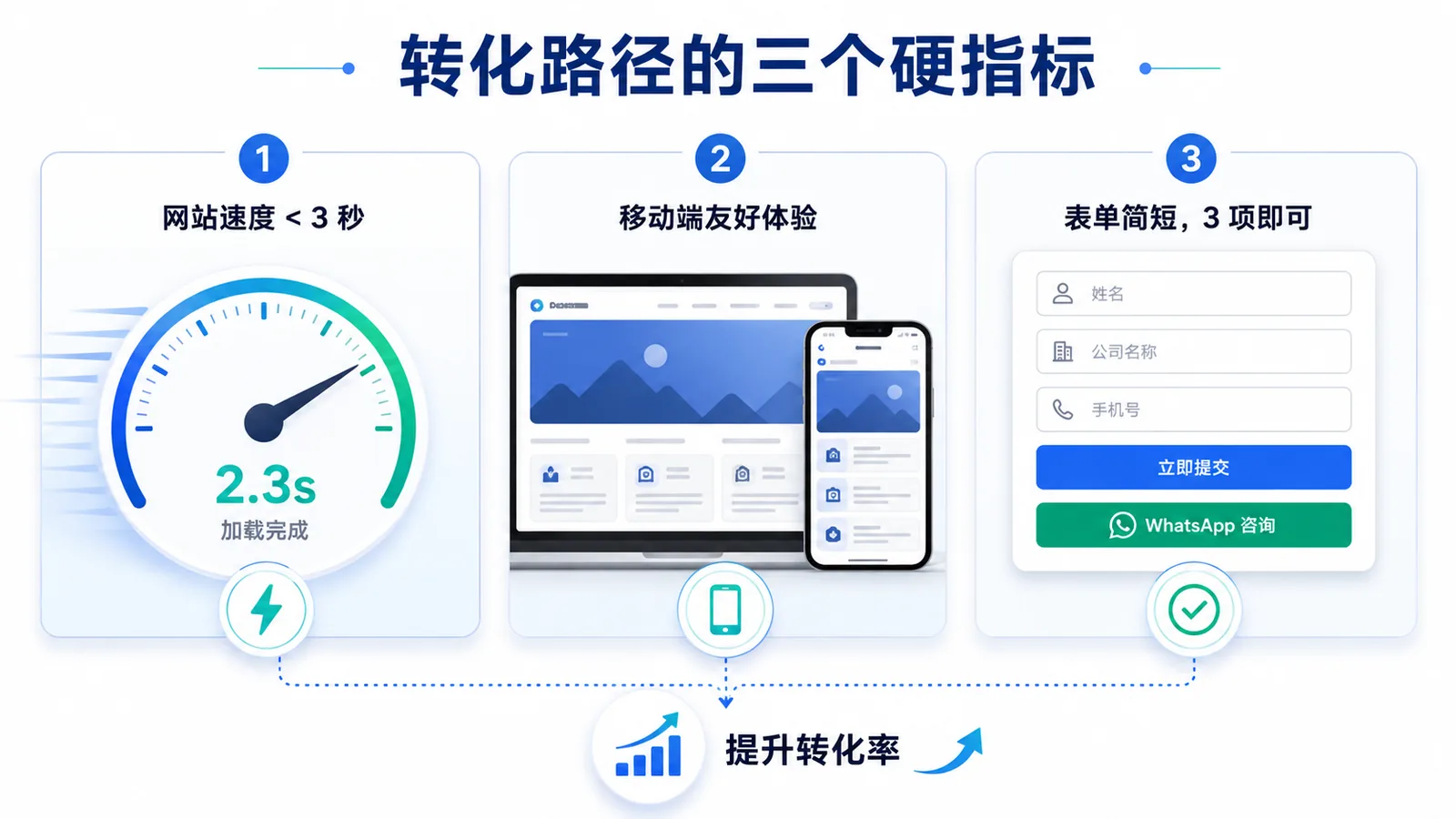
1. Speed. If a page takes more than 3 seconds to load, more than half of users will leave immediately. For overseas access, it is recommended to keep the speed under 3 seconds by using image compression, removing redundant plugins, and using overseas nodes or a CDN.
2. Mobile devices. Currently, over 60% of B2B buyers browse supplier websites on their mobile phones. Misaligned fonts, misplaced buttons, and cluttered layouts will immediately deter customers.
3. The length of the inquiries form. The more fields, the greater the dropout rate. It's recommended to only ask three things: name, email, and needs. Contact information and WhatsApp entry points should be available on every page.
The text for CTA buttons can also be more specific. Compared to the general "Contact Us," these sentences are more effective in B2B scenarios:
- Free Sample & Custom Solution
- Get Wholesale Quotation
- Professional Project Customization Support
V. Follow-up rhythm after inquiries arrive
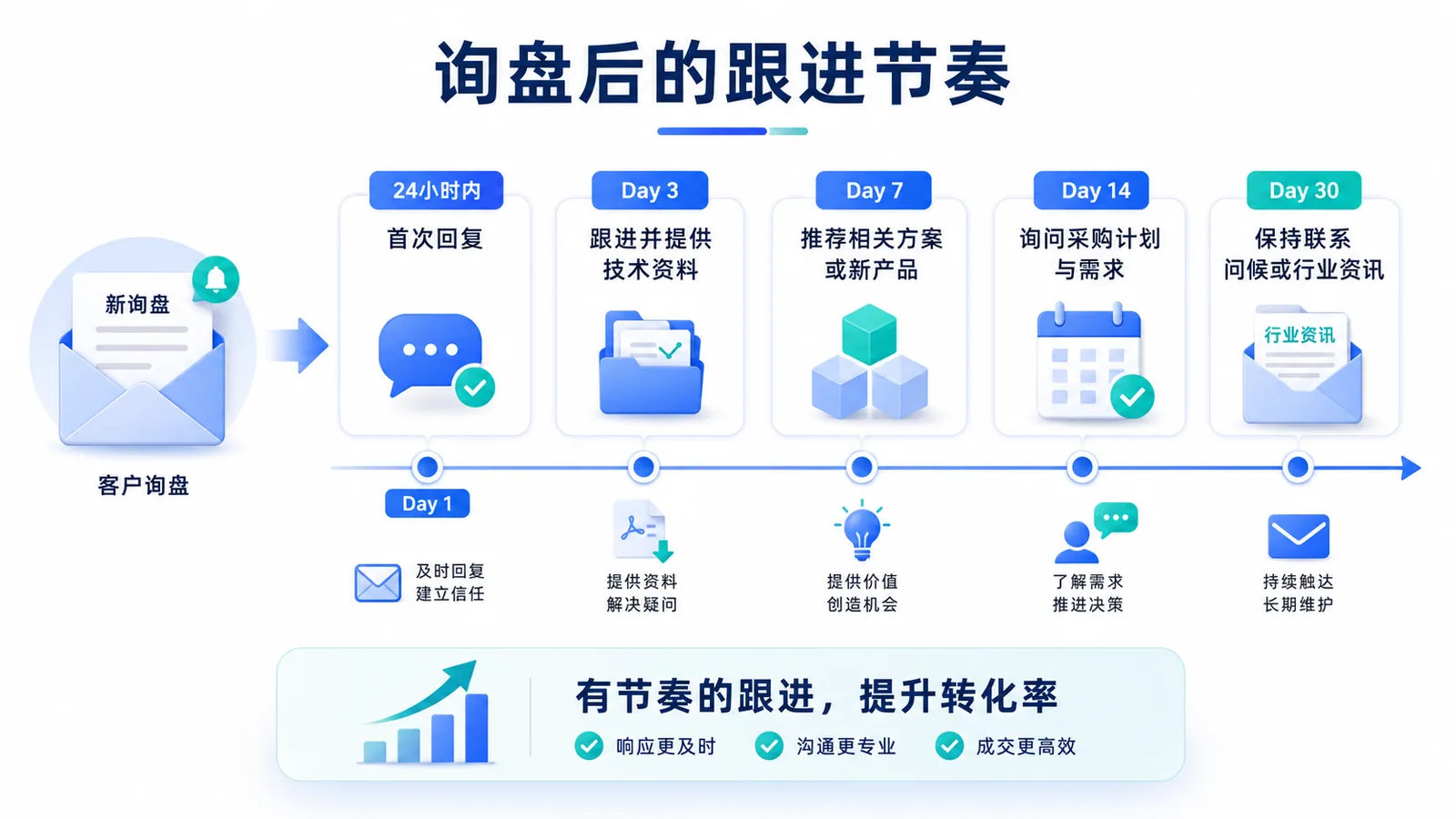
Having inquiries is just the beginning; following up is the real turning point. A proven rhythm is:
- Within 24 hours : First response, the sooner the better.
- Day 3 : Follow up once to supplement the client with any technical information they may need.
- Day 7 : Recommend relevant new products or application solutions
- Day 14 : Inquire about the procurement plan and schedule.
- Day 30 : Share holiday greetings or industry news to maintain your presence.
Many inquiries don't die at the hands of competitors, but rather from "slow responses" and "no follow-up after the initial response."
Frequently Asked Questions
Q: We have very little traffic, do we still need to do conversion optimization first?
A: Solve the traffic problem first. When there are only a few visitors per day, the sample size for conversion optimization is too small to see any results. Once there are dozens of visits per day, then optimize the conversion path for the highest return on investment.
Q: Does adding the WhatsApp button really work?
A: Yes, it's useful, especially for clients in the Middle East, South America, and Southeast Asia. They're used to instant communication, and waiting for emails to go back and forth often leaves them feeling lost. The key is to have a clear entry point, include country codes, and allow for one-click conversation initiation.
Q: How can I determine whether my site has a traffic problem or a conversion problem?
A: Look at two metrics: bounce rate and average time spent on the page. A high bounce rate and only a few seconds on the page indicate a conversion problem (customers didn't understand the content); a normal bounce rate but low total visitor count indicates a traffic problem.
CTMON (CTMON) · Shenzhen · Over a decade of experience in B2B digital marketing · Official website ctmon.com
What does international social media management service include? 2026 Guide to Social Media Management for Export Businesses
2026-10-28
How to write a WordPress product page that will make overseas buyers want to send inquiries?
2026-10-28
How to fix WordPress form emails not sending: Practical WP Mail SMTP configuration
2026-10-27
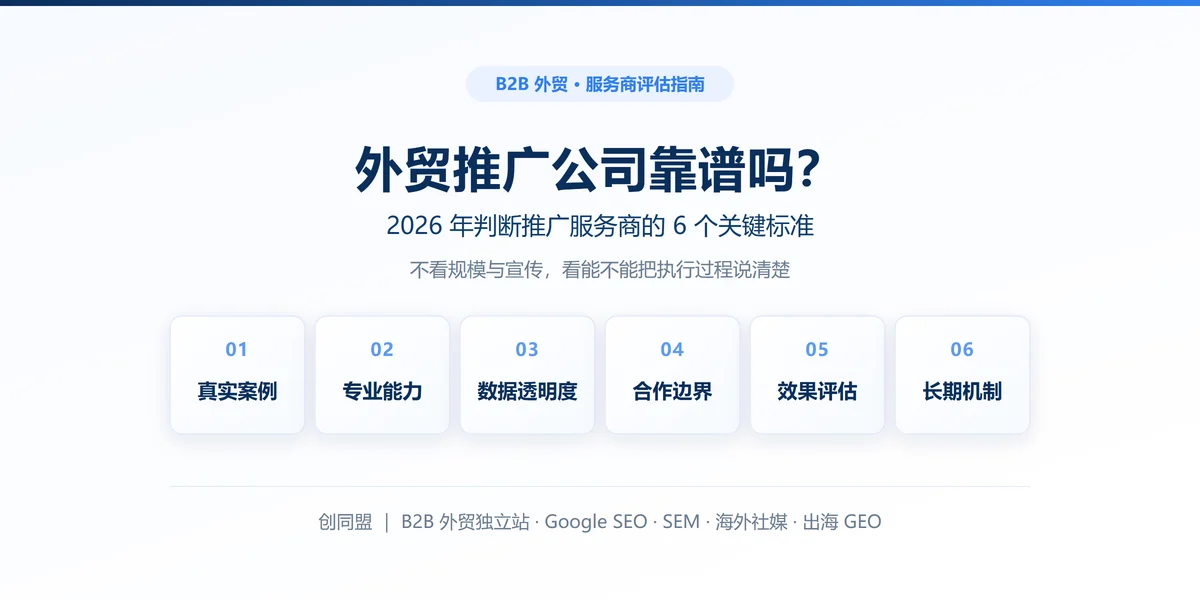
Are foreign trade promotion companies reliable? Six key criteria for businesses to judge promotion service providers in 2026.
2026-10-26
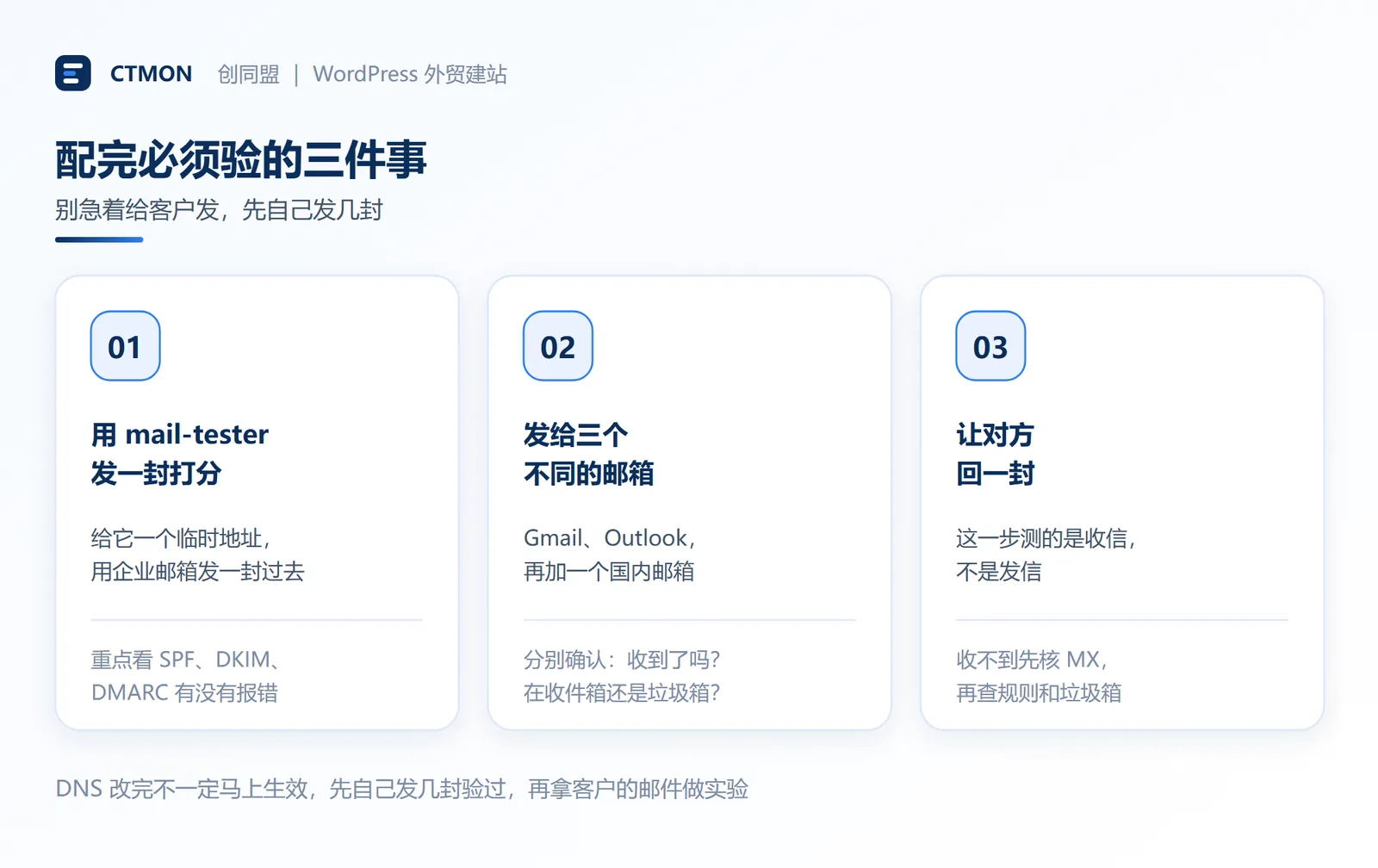
How do I set up an email account for export businesses? How can I configure it to avoid it ending up in the spam/junk mail folder?
2026-10-26
Related Articles
Are foreign trade promotion companies reliable? Six key criteria for businesses to judge promotion service providers in 2026.
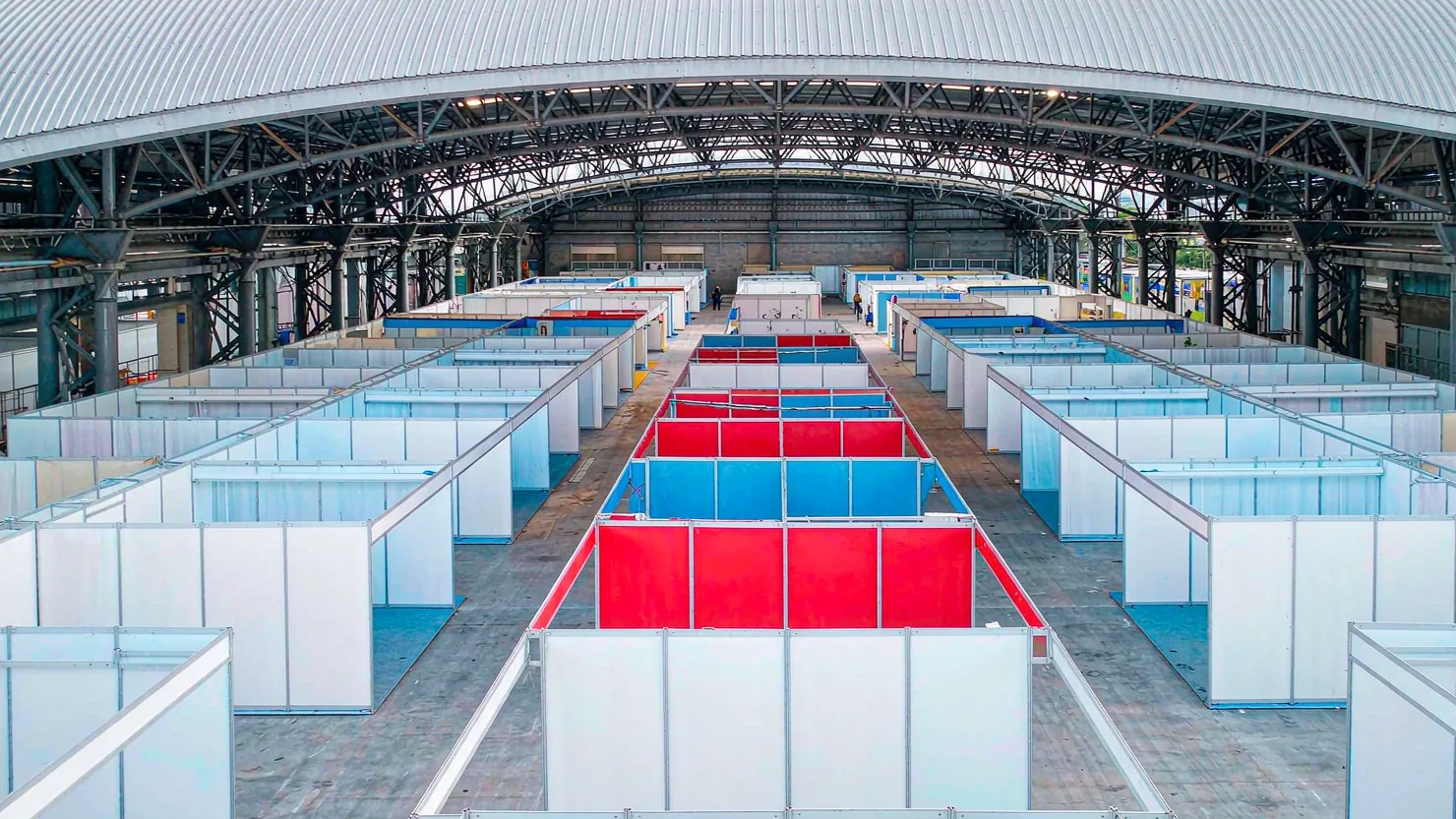
The 140th Canton Fair Opens: How can export businesses seize overseas sourcing opportunities through digital marketing?
How to Choose an Overseas Promotion Company for Foreign Trade? 2026 Service Provider Selection Criteria and Evaluation Guide
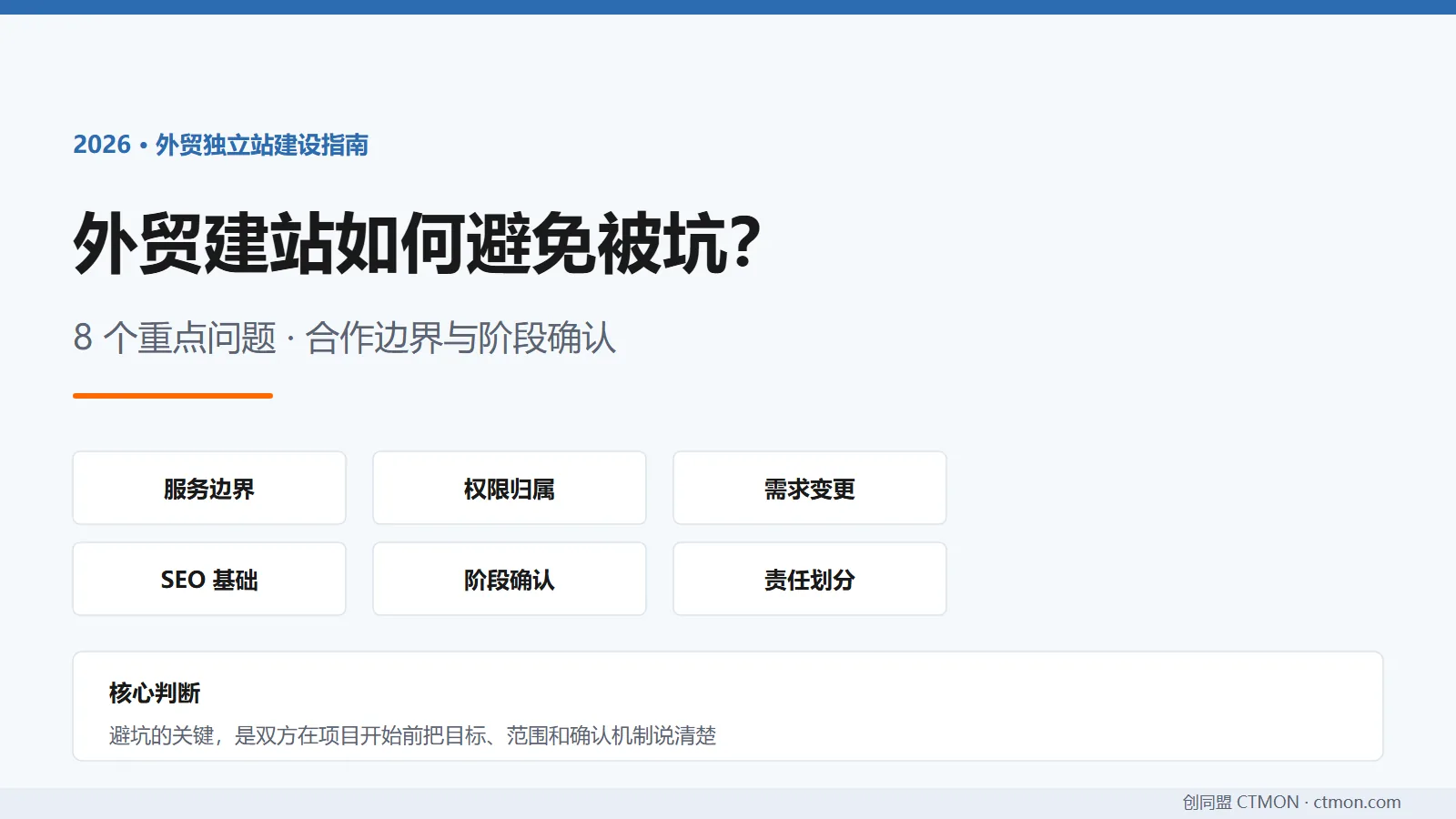
How to avoid pitfalls when building a B2B export website? A guide to avoiding common mistakes in B2B export website development in 2026.
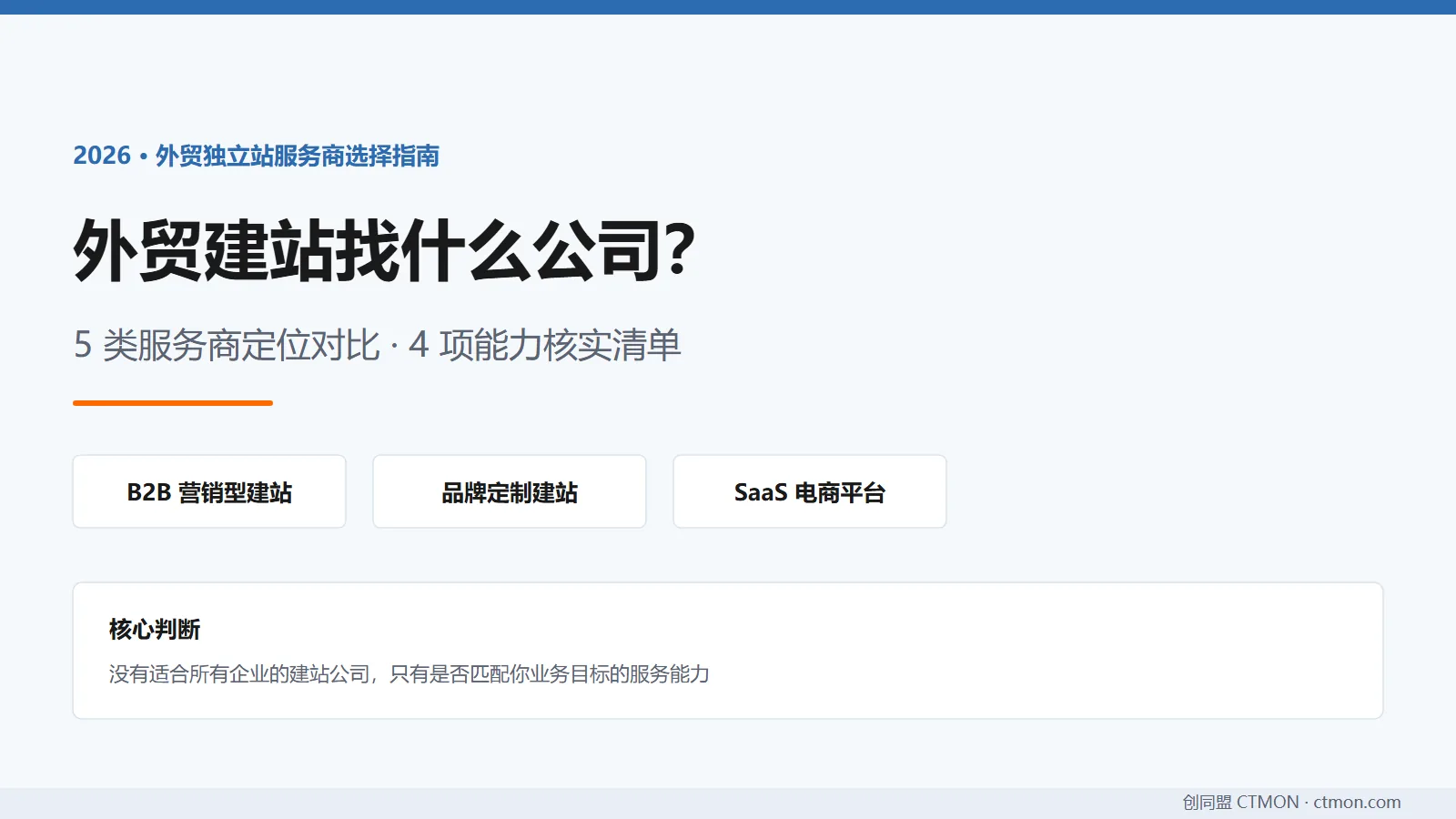
Which company should I choose for building a B2B export website? A comparison and recommendation of B2B export website service providers in 2026.

