Contents +
Buyers ask 5 types of questions, but your business website only answers 1.
Source: 创同盟
Date: 2026-09-08
Views: 993
A warehouse racking company owner contacted me, saying his website had everything he needed: product pages were categorized, the company introduction was well-written, and contact information was on every page. However, almost a year after it went live, he received very few inquiries.
I went through his site from beginning to end, and the problem was clear: the site only answered one of the five types of questions buyers would ask.
Let's start with the conclusion: Overseas buyers will ask five types of questions between "realizing the problem" and "deciding to cooperate." However, most foreign trade factories' business websites only cover the "solution evaluation" category —that is, "Who am I, and what do I offer?" You can't answer the questions buyers ask before they decide what to buy; and you still can't answer them when they start verifying your reliability.
I. What are the 5 types of questions buyers will ask?
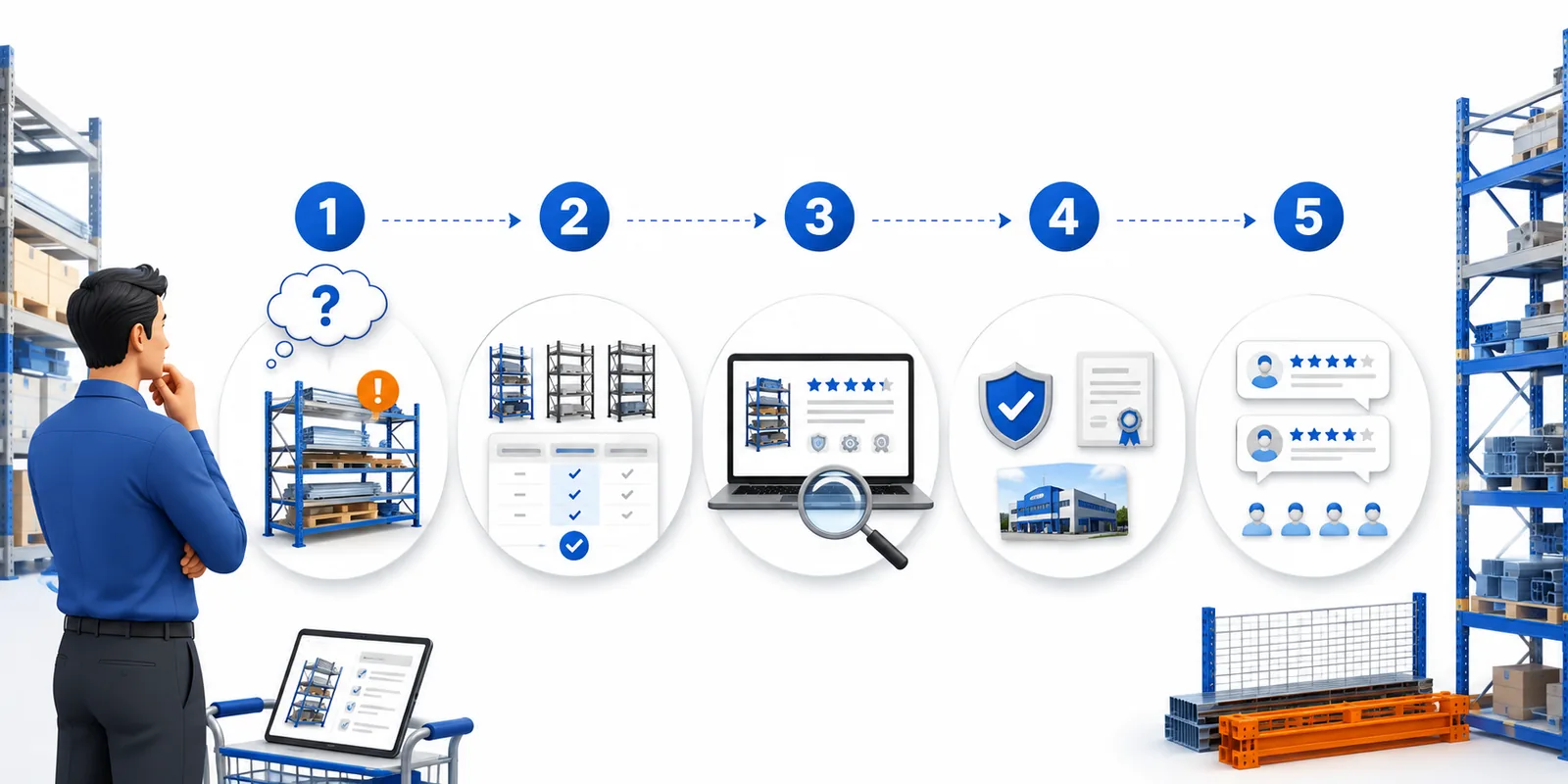
Taking warehouse racking as an example, the buyer's decision-making chain is as follows:
| stage | Buyer status | What would he ask? | What content should you provide? |
|---|---|---|---|
| ① Awakening of Demand | We know there's a problem, but we don't have a solution yet. | "What if we don't have enough warehouse space?" "How can we improve picking efficiency?" | Explain the causes and costs of the problem |
| ② Cognitive establishment | In finding solutions and comparing options | How to choose between heavy-duty shelving and mezzanine shelving? What scenarios are narrow aisle shelving suitable for? | Solution Comparison and Selection Logic |
| ③ Scheme Evaluation | Supplier screening | Which Chinese factories that manufacture warehouse racking are reliable? | Product capabilities, differentiation, parameters |
| ④ Trust-based decision-making | Verify your capabilities | Does this company have ISO certification? Which countries have they worked on projects for? What is their lead time? | Case studies, qualifications, testing, production capacity |
| ⑤ Word-of-mouth marketing | Looking at other people's reviews | What's the reputation of this factory like? | Customer reviews, repeat purchase records, third-party endorsements |
Most foreign trade websites have the following content structure : product page (③) + company introduction (③) + contact information (③). All of these are piled up on the third layer.
The buyer's actual path is: he searches online in the first stage, and only makes a final decision in the fifth stage— your position is at the two ends of the information he needs most, and both are blank.
II. Why this is fatal: Both perspectives must be considered.
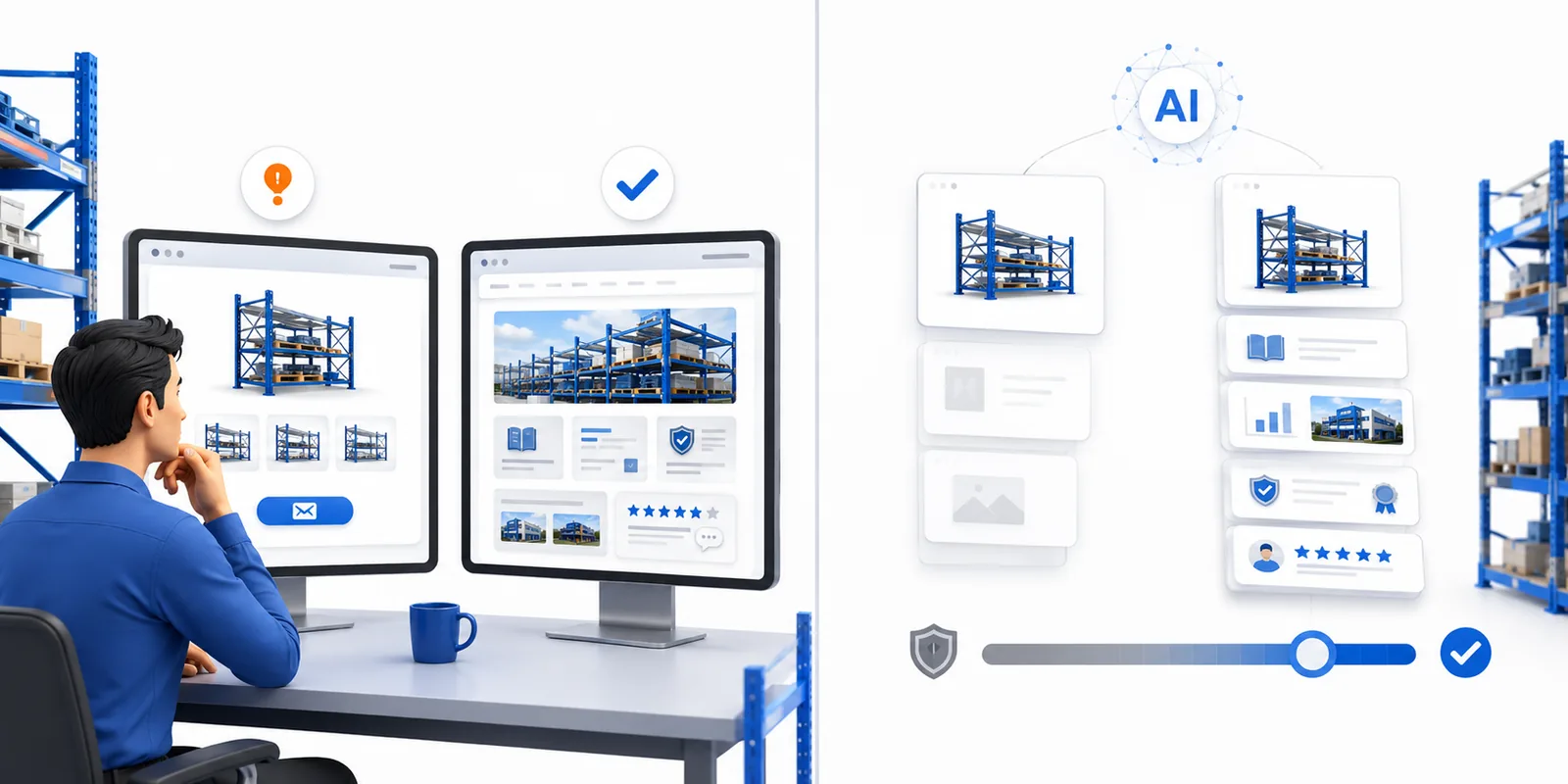
From the buyer's decision-making chain:
If a competitor thoroughly explains "how to choose between heavy-duty shelving and mezzanine shelving" in the second stage, the buyer will first establish trust in their expertise. By the time the third stage begins screening suppliers, that competitor will already be on their shortlist— while you might not even have the chance to be compared.
Conversely, the fourth stage is the same. After buyers have selected three companies, they will verify: Have they worked with clients in my country? Do they have relevant certifications? Can they guarantee delivery time? If your website only has product pictures and a statement like "reliable quality," while your competitors have displayed a row of real photos of overseas projects and test reports, you've already lost this round.
From the perspective of AI's judgment logic (especially important in 2026):
Modern AI doesn't just "check for keywords"; it performs knowledge authority assessments —judging whether your brand is authoritative enough in this field. The basis for this judgment isn't the size of your company, but whether your content covers the complete levels of a field, from basic to in-depth .
If you only build a third-tier website, AI can see you, but it won't see your achievements in the warehouse racking field. The result is: when a buyer asks, "What to do if I don't have enough warehouse space?", AI recommends competitors who have thoroughly explained the causes and solutions; when a buyer asks, "How is this factory?", AI cites case studies and reputable competitors. You're stuck in the middle, unable to reach either end.
What should the content of the third and fifth layers look like?
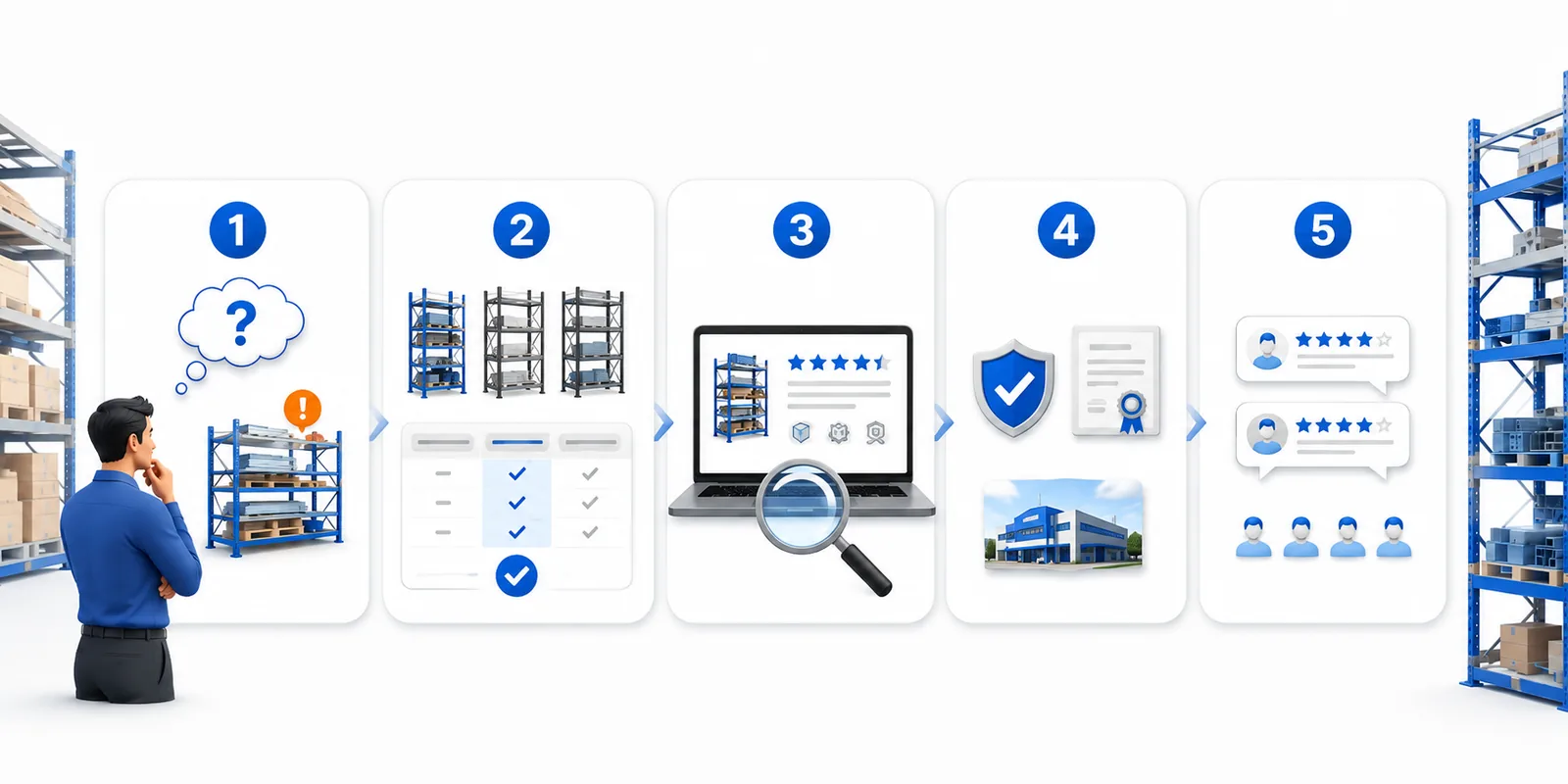
Don't complete everything at once; first, let's see what needs to be done on each floor:
① Demand Awakening Level: Discuss problems, don't sell.
Write content like "5 Common Reasons for Low Warehouse Space Utilization" or "How Much Money is Lost Due to Low Picking Efficiency?" The key is to objectively explain the causes and costs of the problem , without ever trying to sell your product. The purpose of this type of content is to present yourself to the buyer before they even think about buying shelving.
② Cognitive establishment layer: providing selection logic.
Write content like "How to choose heavy-duty shelving/mezzanine shelving/narrow aisle shelving" and "How to match different shelf heights and load-bearing capacities." This layer best demonstrates professionalism and is the easiest to build trust—because you are helping buyers make judgments, not just selling products. This is the layer that export-oriented factories should prioritize adding.
③ Solution Evaluation Layer: You already have it, but you need to upgrade it.
Most factories' product pages only contain model numbers and specifications. What needs to be added is: what scenarios will this product be used in, what problems will it solve, and how will it differ from similar solutions? The goal is to transform the product page from an "electronic catalog" into a "one-page mini-sales solution."
④ Trust the decision-making level: Use facts instead of adjectives.
Instead of writing "Reliable quality, excellent service," say something like: "Delivered 2,000 sets of shelving to a German customer in the past year, with load-bearing capacity meeting XX standards," accompanied by screenshots of the test reports, photos of the production line, and photos of the goods being loaded and shipped. Also include certifications, production capacity, delivery time commitments, and after-sales terms.
⑤ Word-of-mouth marketing layer: Let third parties speak for you.
Screenshots of customer reviews (including company name and region), repeat purchase records, mentions in industry media, and photos from trade shows. This layer of material is not difficult to collect, but most factories completely neglect it.
IV. Self-evidence and external evidence: Different levels require different evidence.
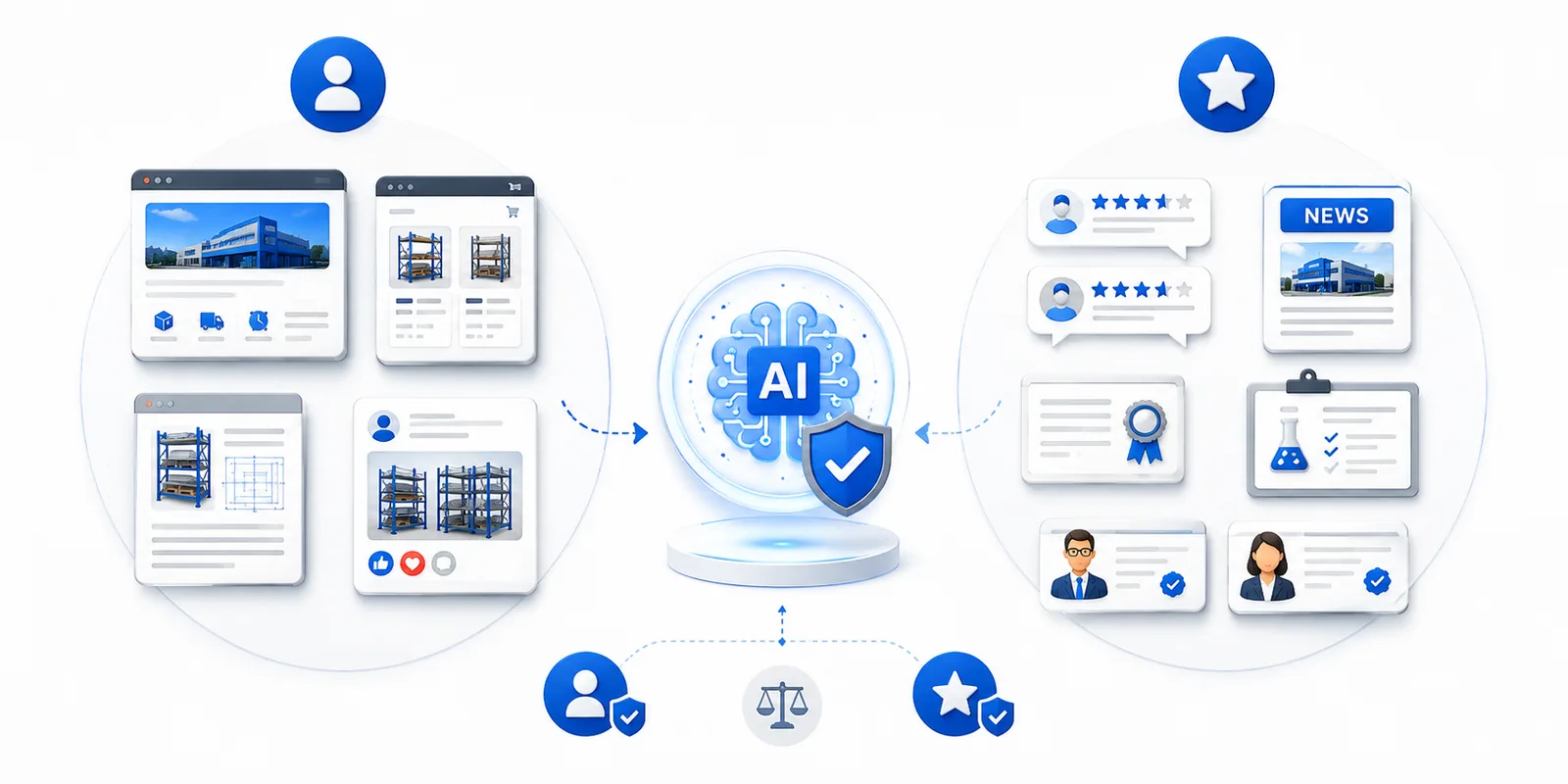
Here's a key difference that many factories haven't realized: content comes from two sources, and AI assigns completely different weights to them.
- Self-verification : As you yourself stated—official website, product pages, technical articles, social media. It determines whether AI can understand you .
- Testimonials : What others say—customer reviews, media reports, mentions by industry authorities, third-party testing. These determine whether AI trusts you or not .
Corresponding to the fifth floor:
| layer | Types of evidence | Why |
|---|---|---|
| ①②③ Needs Awakening / Cognition Establishment / Solution Evaluation | Self-verification is the main method. | It's about your professional judgment and product capabilities; you should be the one to talk about it. |
| ④ Trust-based decision-making | Self-evidence + Other-evidence | Simply listing your own qualifications is not enough; it's best to have third-party testing and customer testimonials. |
| ⑤ Word-of-mouth marketing | Other evidence is the main source. | It's useless to talk about yourself; you have to get clients and the media to speak for you. |
The problem with most foreign trade websites lies here: the entire content is self-verified, with not a single instance of external verification. Self-verification can hold up the first three layers, but in the fourth and fifth layers—the final stage where buyers verify your credentials and check your reputation—if you can't provide any third-party evidence, these two layers are essentially empty. And these two layers are precisely where a deal is made.
Therefore, the order of supplementing content is not just about "which layer to supplement", but also requires asking: should this layer find self-proof or other-proof?
V. Which two floors should be prioritized for repair?
If resources are limited, it is recommended to follow this order:
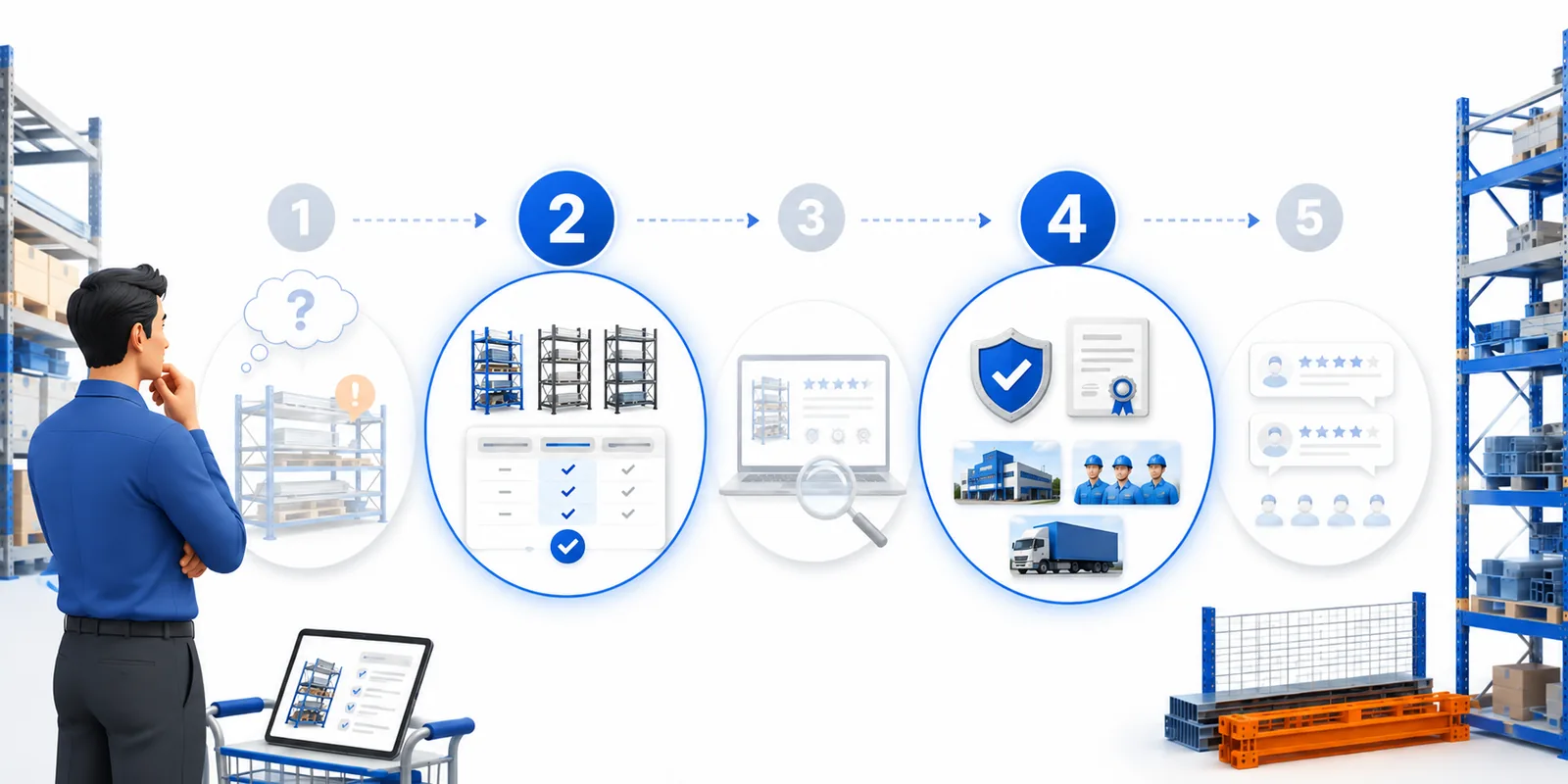
First, add layer ②: Cognitive Building. This is the layer with the highest return on investment—it simultaneously impresses both buyers and AI, and competitors generally haven't done it. Writing 5–10 selection guides for a product category is usually more effective than adding 50 more product pages.
Fourthly, build trust with the decision-making level. B2B foreign trade involves high-value transactions and long cycles, making clients hesitant to make inquiries. Strengthening case studies, qualifications, testing records, and delivery history directly improves inquiry conversion.
Points ① and ⑤ can be accumulated gradually. Industry expertise takes time to build, and reputation building materials come from existing clients. These two aspects cannot be rushed, but you must persist in doing them.
VI. Three-step self-test: How many layers does your site cover?
It only takes twenty minutes to find out:
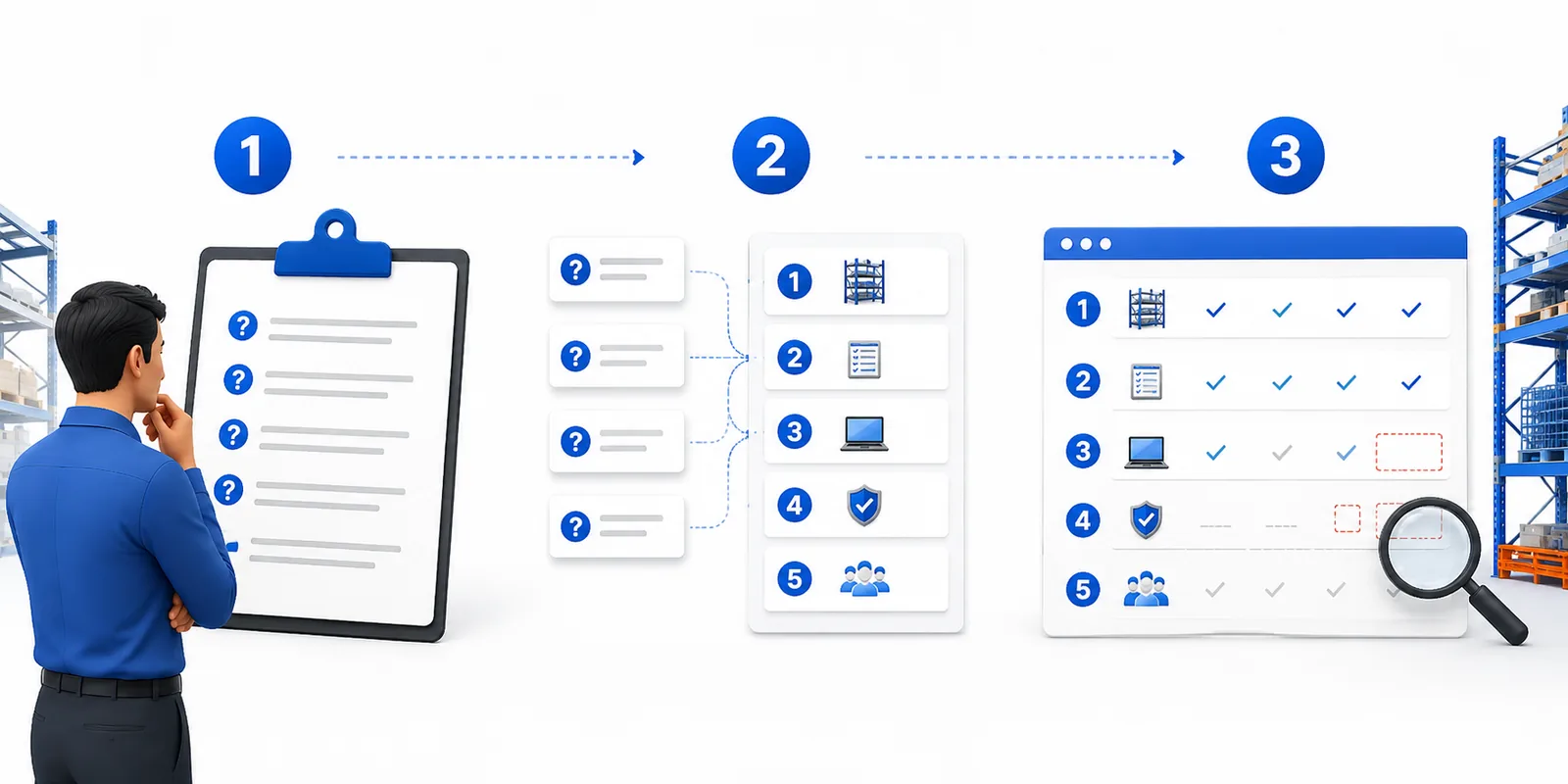
The first step is to list 20 questions.
Have the sales team write down all the questions customers have asked in the past six months, and compile a list of 20. Include those "very basic" questions—those are precisely the first and second level of needs.
The second step is to categorize each problem into different layers.
According to the table above, mark which category it belongs to in ①②③④⑤.
The third step is to compare it with your website.
For each type of question, check if your site has a page that can answer it. Most factories will find after completing this step that: ①, ②, and ⑤ are almost empty, ③ is crammed full, and ④ only has a few empty words.
This distribution map is your list of content for the next stage.
Frequently Asked Questions
Q: If we make enough product pages, is that enough?
A: Not enough. The product page only covers the third stage. It doesn't answer any of the questions buyers have when they haven't decided on a solution (first and second levels) or when they're verifying your information (fourth and fifth levels).
Q: Our team is small, won't it be too scattered to do all five floors?
A: You don't need to do it all at once. Focus your efforts on creating 5-10 "selection guides" first, then add client case studies. Deepening your understanding by focusing on "intent" is much more effective than creating many shallow pages.
Q: How do I determine if the content "covers a certain layer"?
A: See if it answers the question that buyers would actually ask at that stage. For example, the fourth-level inspection standard is very simple: after the customer reads it, can they find the answers to the three questions: "Which countries have you worked with, what certifications do you have, and how long is the delivery time?"
CTMON (CTMON) · Shenzhen · Over a decade of experience in B2B digital marketing · Official website ctmon.com

What does international social media management service include? 2026 Guide to Social Media Management for Export Businesses
2026-10-28

How to write a WordPress product page that will make overseas buyers want to send inquiries?
2026-10-28

How to fix WordPress form emails not sending: Practical WP Mail SMTP configuration
2026-10-27

Are foreign trade promotion companies reliable? Six key criteria for businesses to judge promotion service providers in 2026.
2026-10-26

How do I set up an email account for export businesses? How can I configure it to avoid it ending up in the spam/junk mail folder?
2026-10-26
Related Articles
Are foreign trade promotion companies reliable? Six key criteria for businesses to judge promotion service providers in 2026.
The 140th Canton Fair Opens: How can export businesses seize overseas sourcing opportunities through digital marketing?
How to Choose an Overseas Promotion Company for Foreign Trade? 2026 Service Provider Selection Criteria and Evaluation Guide
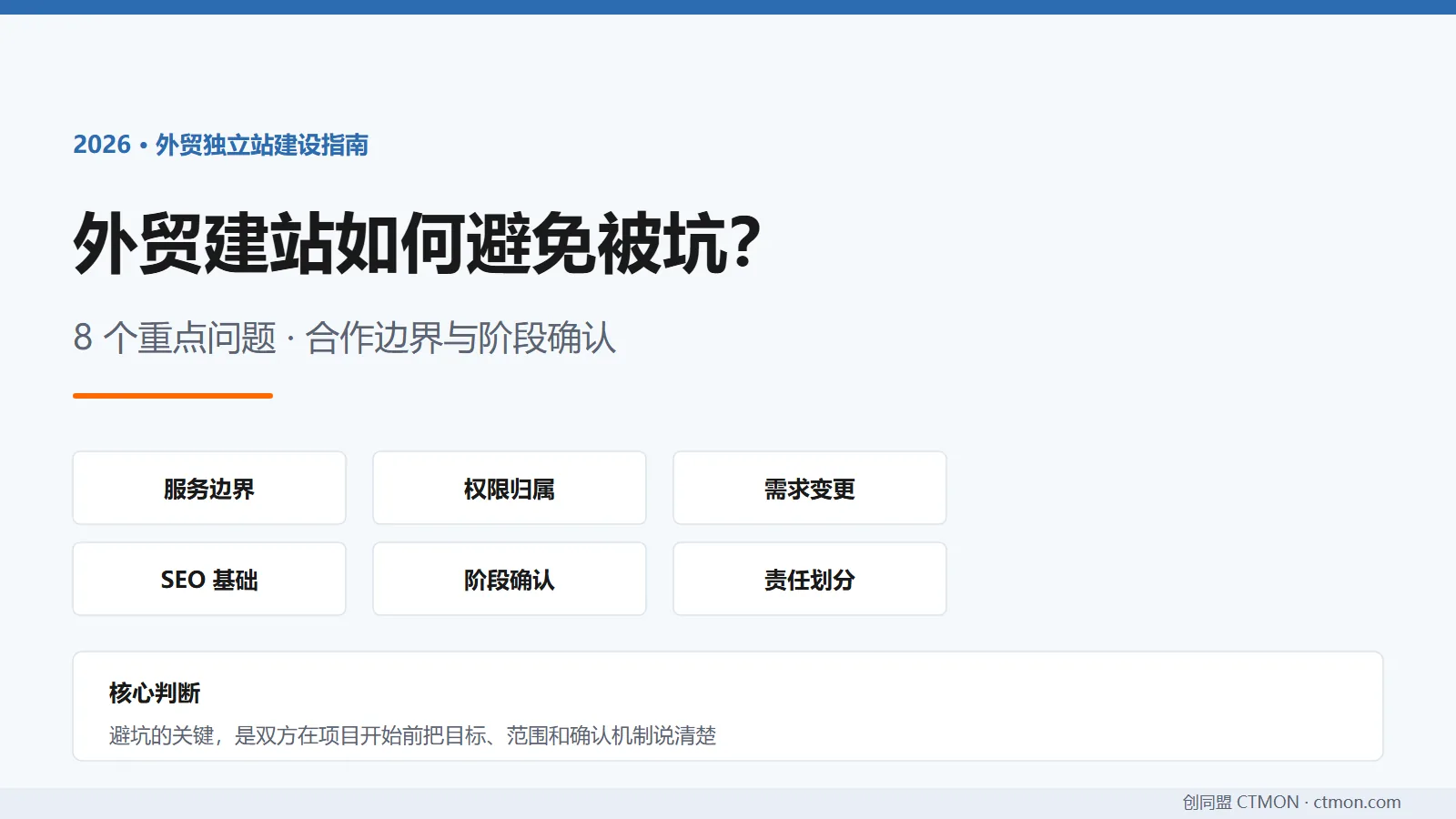
How to avoid pitfalls when building a B2B export website? A guide to avoiding common mistakes in B2B export website development in 2026.
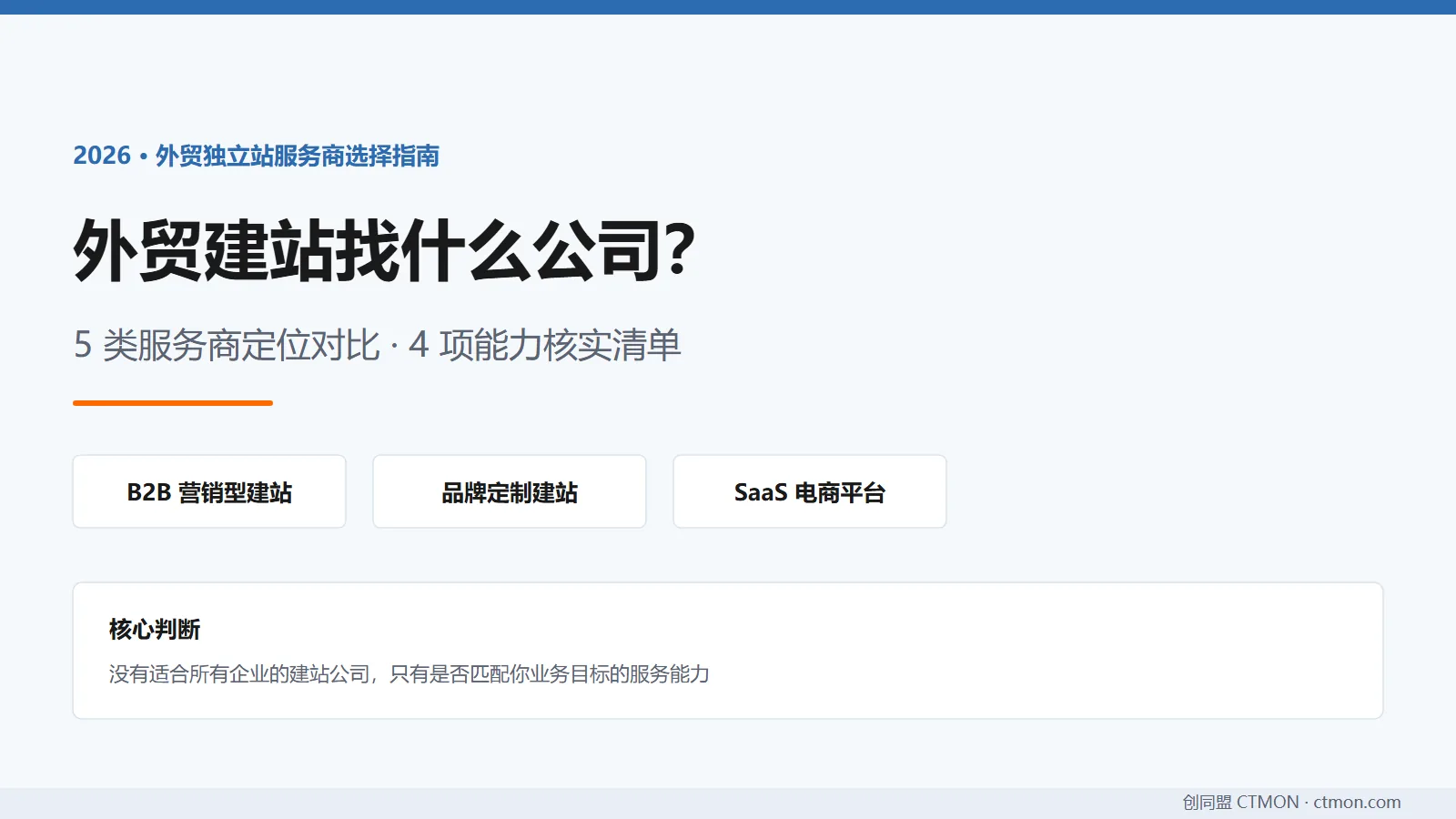
Which company should I choose for building a B2B export website? A comparison and recommendation of B2B export website service providers in 2026.

