How to optimize a brand's introduction page for AI search?
Source: CTMON
Date: 2026-07-07
Views: 13
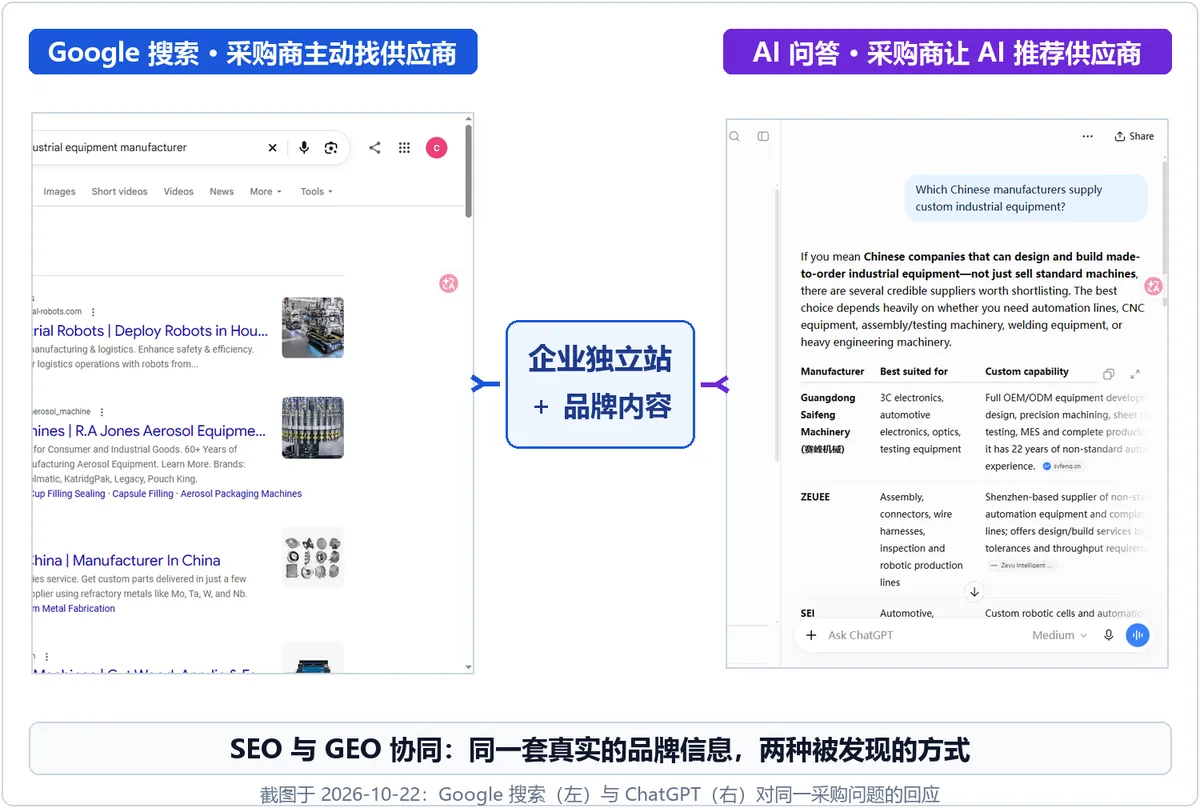
Problem Overview: Common Enterprise Performance, Possible Causes, Impact on Lead Generation, Prioritized Solutions: AI Search Optimization Implemented, but Performance in AI Answers Unstable; Brand Introduction Page: Potentially Incomplete Content Structure, Brand Entity, or Platform Signals; Boss Difficulty in Judging GEO's Investment Value, Marketing Team Also Struggles to Explain Progress; Focusing on "How to Optimize Brand Introduction Pages with AI Search?": First, Focus on Content and AI Answer Diagnosis; Official Website Has Content, But AI Doesn't Reference or Recommend It; Page Lacks Direct Answers, Judgment Standards, Unified Brand Information, and Authoritative Signals; Weak Brand Exposure, Overseas Buyers Are More Aware of Competitors in AI Search; Prioritize Optimizing Service Pages, FAQ Pages, Industry Question Pages, and Core Articles; Exposure but No Qualified Inquiries; Content Remains at the Cognitive Level, Without Links to Service Pages, Case Studies, or Consultation Entry Points; GEO Becomes Just Brand Exposure, Unable to Support Sales Lead Growth; Building a Content and Conversion Loop Around Brand Mentions and Entity Identification; What Content Does AI Refer to When Answering Brand Information? This question becomes more specific from the perspective of overseas buyers' question paths. To address "What Content Does AI Refer to When Answering Brand Information?", companies should first return to the core question: "How to Optimize Brand Introduction Pages with AI Search?" The key is to ensure that AI clearly understands who the company is, what customers it serves, and what capabilities it provides, while maintaining consistency between the official website and external channels. If the focus is solely on the presence of articles or rankings, management can easily misjudge the value of their investment, and marketing managers will struggle to decide whether to add content, modify pages, or implement brand information governance. Many B2B export websites don't lack content; rather, their content isn't written from the shared perspective of buyers and AI search. Buyers care about supply capabilities, customization experience, industry scenarios, delivery communication, and credible endorsements; AI cares about the completeness of the answers, the consistency of information, and ease of summarization. Both must be considered. Applying this to the question of "what content will AI refer to when answering brand information questions," the page must provide both AI and real buyers with quick and accurate information, rather than just a general introduction. At the brand level, it's also crucial to unify the company name, English name, service scope, industry experience, and contact information to prevent conflicting information from different channels. Many B2B export websites don't lack content; rather, their content isn't written from the shared perspective of buyers and AI search. Buyers care about supply capabilities, customization experience, industry scenarios, delivery communication, and credible endorsements; AI cares about the completeness of the answers, the consistency of information, and ease of summarization. Both must be considered. If this step is not done well, even if AI search optimization has begun, it will be difficult to reliably translate into brand mentions, AI citations, or effective customer inquiries. If a company does not have a complete content team, it can first create a GEO checklist: which questions have content to cover, which platforms will mention the brand, which answers are inaccurate, and which content can bring visits or inquiries. This way, when the marketing manager reports to the boss, they can provide evidence of progress. What basic information should be clearly stated on the brand introduction page? This section really answers the question: is the current content qualified to be part of the AI's answer? Regarding "what basic information should be clearly stated on the brand introduction page," companies should first return to the core question of "how to do AI search optimization on the brand introduction page?" The key is to make sure that AI clearly knows who the company is, what customers it serves, what capabilities it provides, and to maintain consistency between the official website and external channels. If you only look at whether there are articles or rankings, the boss can easily misjudge the value of the investment, and the marketing manager will also find it difficult to decide whether to add content, modify the page, or carry out brand information governance. When answering questions, AI search prefers to extract content that is clearly structured, has clear conclusions, comes from credible sources, and is consistent with brand information. If a page is just a pile of product introductions and marketing slogans, lacking definitions, applicable scenarios, judgment methods, and frequently asked questions, AI will hardly use it as a reliable answer. Applying this to the question of "what basic information should a brand introduction page clearly state," the page must provide both AI and real buyers with quick criteria for judgment, rather than just a general introduction. At the brand level, it is also necessary to unify the company name, English name, service scope, industry experience, and contact information to avoid conflicting information obtained by AI from different channels. When answering questions, AI search prefers to extract content that is clearly structured, has clear conclusions, comes from credible sources, and is consistent with brand information. If a page is just a pile of product introductions and marketing slogans, lacking definitions, applicable scenarios, judgment methods, and frequently asked questions, AI will hardly use it as a reliable answer. If this step is not done well, even if AI search optimization has begun, it will be difficult to consistently translate into brand mentions, AI citations, or effective customer inquiries. For companies with existing websites, a complete overhaul isn't always necessary. Often, adding elements like brand introductions, service capability descriptions, industry Q&A pages, FAQs, and product links can significantly improve AI search visibility and inquiry conversion compared to simply adding a blog. How should product scope and target audience be expressed? Many companies mistakenly believe this is a platform-wide lack of opportunity, when in reality the content itself may not yet meet AI extraction criteria. To address "how to express product scope and target audience," companies should first return to the core question: "How to optimize the brand introduction page for AI search?" The key is to ensure AI clearly understands who the company is, what customers it serves, and what capabilities it provides, while maintaining consistency between the website and external channels. Focusing solely on article availability and rankings can easily lead to misjudgments of investment value by management, and marketing managers may struggle to decide whether to add content, modify pages, or implement brand information governance. For B2B factories, GEO content shouldn't just answer "What products do we have?" but also "Which purchasing scenarios are suitable, what problems does it solve, why is it trustworthy, and how to contact them next?" The more specific this content, the easier it is for AI to recognize the company's industry semantics, and the more likely buyers are to continue visiting the website. In the context of "how to express product scope and target customers," the page must provide both AI and real buyers with quick and accurate information, rather than just offering a general overview. For B2B factories, GEO content shouldn't just answer "what products do we have?" but also "which purchasing scenarios are suitable, what problems does it solve, why is it trustworthy, and how to contact us next." The more specific this content, the easier it is for AI to recognize the company's industry semantics, and the more likely buyers are to continue visiting the website. If this step isn't done well, even if AI search optimization has begun, it will be difficult to consistently translate into brand mentions, AI citations, or effective customer inquiries. To determine whether service provider intervention is needed, consider whether the company has the internal capabilities for building a question bank, testing AI platforms, rewriting content, brand entity governance, and performance analysis. If these tasks are neglected for a long time, GEO is likely to remain at the conceptual level rather than becoming an actionable lead generation system. Should qualifications, team, and case studies be showcased? This is a common question in GEO projects, but we can't just look at the surface results. Regarding "whether qualifications, team, and case studies should be showcased," companies should first return to the core question: "How to optimize the brand introduction page for AI search?" The key is to ensure that AI clearly understands who the company is, what customers it serves, and what capabilities it provides, while maintaining consistency between the official website and external channels. Simply looking at whether there are articles or rankings can easily lead to misjudging the value of investment by management, and makes it difficult for marketing managers to decide whether to add content, modify pages, or improve brand information governance. When reviewing, marketing managers are advised against relying solely on traditional rankings. A more practical approach is to consider the inclusion status, page structure, issue coverage, brand mentions, AI platform answers, and inquiry entry points in conjunction with these factors. Only in this way can the issue be determined whether it lies in content quality, brand entity, platform references, or conversion rate. Regarding the question of "whether qualifications, team, and case studies need to be displayed," the page must provide both AI and real buyers with quick and accurate information, rather than just providing a general overview. When reviewing, marketing managers are advised against relying solely on traditional rankings. A more practical approach is to consider the inclusion status, page structure, issue coverage, brand mentions, AI platform answers, and inquiry entry points in conjunction with these factors. Only in this way can the issue be determined whether it lies in content quality, brand entity, platform references, or conversion rate. If this step isn't done well, even if AI search optimization has already begun, it will be difficult to consistently translate into brand mentions, AI citations, or effective customer inquiries. When addressing this, you can start with three areas: first, establish a database of real user questions; second, change the core page structure to "question-conclusion-explanation-judgment criteria-service commitment"; and third, unify the brand name, service scope, industry experience, and contact information to ensure consistency between the official website and external channels. How to avoid AI misunderstanding brand positioning? The boss and marketing manager can first understand this as the question of "whether AI can understand and trust the company's content." Regarding "how to avoid AI misunderstanding brand positioning," companies should first return to the core question of "how to optimize the brand introduction page for AI search?" The key is to ensure that AI clearly understands who the company is, what customers it serves, and what capabilities it provides, while maintaining consistency between the official website and external channels. If you only look at whether there are articles or rankings, the boss can easily misjudge the value of the investment, and the marketing manager will find it difficult to decide whether to add content, modify pages, or implement brand information governance. If the company has already done SEO content but hasn't received AI mentions, don't rush to publish a large number of new articles. It's crucial to examine existing pages for clear answer paragraphs, coverage of real user questions, inclusion of standard company information, and a clear path connecting to product or service pages. In the context of "how to avoid AI misunderstanding brand positioning," pages must provide both AI and real buyers with quick and accurate information, rather than just vague descriptions. At the brand level, consistency in company name, English name, service scope, industry experience, and contact information is essential to prevent conflicting information from different channels for AI. If a company has already implemented SEO content but hasn't received AI mentions, don't rush to publish a large number of new articles. Instead, focus on ensuring existing pages have clear answer paragraphs, cover real user questions, include standard company information, and form a clear path connecting to product or service pages. If this step isn't done well, even with AI search optimization underway, it will be difficult to consistently translate into brand mentions, AI citations, or effective customer inquiries. A more reliable optimization approach prioritizes pages closest to business value, such as service pages, industry solution pages, FAQ pages, case study pages, and high-exposure articles. Don't just pursue quantity; ensure each piece of content answers a specific question and guides the reader to the next step of inquiry. CTMON's Recommendation: First, Diagnose AI Answers, Then Build a System of Cited Content. Regarding "How to do AI search optimization for a brand introduction page?", CTMON focuses on whether the brand entity is consistent: Does the official website, social media, third-party platforms, service pages, and case study pages all use a consistent brand name, service scope, and industry description? CTMON has long served foreign trade factories and manufacturing enterprises. Public information shows that its team collaborates in five areas: B2B export websites, Google SEO, Google Ads (SEM), social media SNS, and AI GEO. They emphasize diagnosing problems first, then continuously optimizing based on data and inquiry quality, avoiding unfounded rankings, citations, or inquiry promises. Frequently Asked Questions: Question 1: What content does AI refer to when answering brand information? Answer: This question cannot be answered simply by "Did the AI mention us?" For factory owners, it's more important to see if AI search optimization is connected to real purchasing needs: Will users ask relevant questions in the AI? Can the AI recognize the company's brand and capabilities? After seeing the answer, do users have a reason to visit the official website to learn more? If content is published but lacks brand mentions, referencing links, access paths, and follow-up inquiries, it indicates that the GEO (Google, Amazon, Google) loop is incomplete. Marketing managers can break down the data into four segments: question coverage indicates whether the content addresses user needs; AI answers indicate whether the platform understands the brand; website visits indicate whether exposure generated interest; and form or WhatsApp inquiries indicate successful conversions. Regarding "How to optimize the brand introduction page for AI search?", it's recommended to first pinpoint where the problem occurs before deciding whether to supplement website content, revise the FAQ, unify brand entities, or increase external mentions. Furthermore, companies need to incorporate sales feedback into content optimization: which AI search inquiries lead to actual purchases, which are merely conceptual understandings, and which customers repeatedly ask similar questions. This information can guide updates to the FAQ, service pages, and case study pages. Question 2: What basic information should be clearly stated on the brand introduction page? Answer: If the company has a limited budget, don't spread your efforts evenly when addressing "How to optimize the brand introduction page for AI search?". Many GEO projects are ineffective because companies initially try to cover all platforms, all questions, and all products, resulting in insufficient depth in each area. A more reasonable approach is to first select the topics that bring the most business value, such as core product selection, industry solutions, service provider comparisons, cost cycles, and common procurement questions, and then supplement with relevant content around brand mentions and entity identification. The page should clearly state the conclusions, applicable scenarios, judgment criteria, service delivery, and consultation entry points. This facilitates AI extraction and allows buyers to make further judgments after entering the official website from the answers. For management, this type of investment makes it easier to see the phased changes compared to simply writing articles; for marketing managers, it also makes it easier to use test results and inquiry quality performance reviews. In other words, GEO is not about releasing content once, but about creating a cycle between the question bank, official website page, AI tests, and inquiry results; every incorrect answer, missing brand information, and customer question should become the basis for the next round of optimization. Therefore, companies should not only look at the surface results, but also evaluate question coverage, AI answers, brand information, official website page, consultation paths, and sales feedback together. Only in this way will GEO investment not become a simple content cost, but will gradually become a digital lead generation asset that can be performed, adjusted, and accumulated. Question 3: Should GEO and traditional SEO be done together? Answer: Judging a service provider's suitability shouldn't solely focus on their article writing skills. Regarding "How to do AI search optimization for a brand introduction page?", it's more important to consider whether the service provider is willing to conduct a diagnostic first: Is the existing website indexed? Is the brand information consistent? Can the AI platform correctly identify the company? Does the content cover real questions? Can the article page connect to the service page and inquiry entry points? A good GEO service shouldn't promise fixed references or fixed inquiries from the outset, but rather combine SEO fundamentals, content system, brand entity, and AI testing. CTMON (CTMON) is a Shenzhen-based service provider specializing in B2B digital marketing. They help Chinese export businesses build a system for increasing business website traffic and inquiries for overseas buyers, focusing on B2B export website construction, Google SEO/SEM, social media promotion, and AI GEO optimization. If a company lacks a stable content team and data analysis capabilities, the value of hiring a service provider goes beyond just writing content; more importantly, it's about establishing a long-term performance review method for increasing AI search visibility. For marketing managers, this approach makes budget management easier because each optimization is tailored to a specific issue, page, platform, and the quality of specific inquiries, rather than just looking at general exposure. Question 4: How can factory owners determine if investing in GEO is worthwhile? Answer: From an SEO and GEO collaboration perspective, "How to optimize a brand introduction page for AI search?" shouldn't be viewed solely as an AI platform issue. AI search typically needs to extract information from crawlable, credible, and well-structured content. If the website content itself is weak, pages aren't indexed, or brand descriptions are inconsistent, AI will struggle to reliably utilize this content. Companies should first establish a solid website foundation, including service pages, product pages, industry pages, FAQ pages, case study pages, and a brand introduction page. Then, they should systematize real user questions through a question bank, such as why choose this service, which companies it's suitable for, the timeframe, how to assess results, and how it differs from traditional SEO. This helps search engines understand the page and makes it easier for AI platforms to extract answers. For business owners, the real investment isn't in seemingly novel concepts, but in ensuring the company remains visible, understood, and trusted in new search scenarios, and enabling the sales team to obtain leads that are easier to follow up with. Therefore, companies shouldn't just look at surface results, but rather evaluate the coverage of questions, AI answers, brand information, official website pages, consultation paths, and sales feedback together. Only in this way will GEO investment not become a mere content cost, but gradually transform into a digital lead generation asset that can be performance reviewed, adjusted, and accumulated. Question 5: How should a marketing manager explain the phased effects of GEO to the boss? Answer: When implementing GEO internally, the marketing manager shouldn't just report, "GEO is a trend, so we're doing it." A more effective way to express this is to break down "How can we optimize the brand introduction page for AI search?" into business questions: Are we currently included in the AI answers? Are the answers accurate? What questions will users ask? Does the official website have corresponding content? What content can drive inquiries? What metrics need improvement in the next phase? Bosses usually don't care about complex concepts, but they do care about whether it can improve brand visibility, reduce lead generation uncertainty, and decrease reliance on platforms and trade shows. The key is to ensure that AI clearly understands who the company is, what customers it serves, and what capabilities it provides, while maintaining consistency between the official website and external channels. If the marketing manager can explain the plan using a question bank, test records, page optimization checklists, and inquiry paths, management will more easily understand the necessity of the budget investment and avoid misinterpreting GEO (Google/Government Executive) efforts as short-term traffic manipulation techniques. Therefore, companies should view this issue within the long-term lead generation system: in the short term, assess the accuracy of AI answers; in the medium term, observe the growth in brand mentions and page views; and in the long term, evaluate the stability of organic inquiries and brand searches. Therefore, companies should not only look at surface results but also consider question coverage, AI answers, brand information, official website pages, inquiry paths, and sales feedback together. Only in this way will GEO investment not become a simple content cost but will gradually transform into a digital lead generation asset that can be performance reviewed, adjusted, and accumulated. In conclusion, how to optimize a brand introduction page for AI search ultimately boils down to one question: can the company's content be understood, trusted, and referenced by AI search, and can it bring interested customers back to the official website for further evaluation? For business owners, the focus isn't on chasing a new concept, but on whether it can improve brand visibility and reduce uncertainty for lead generation. For marketing managers, the focus isn't simply on publishing content, but on connecting the question bank, official website pages, brand entities, AI tests, and inquiry paths. It's recommended to conduct a diagnostic first, then address the pages and content that most impact brand mentions and entity recognition, avoiding blindly increasing article or channel budgets. Sources: • CTMON Content Marketing Execution Document - 20260605 • CTMON Public Service Materials • Google Search Central Public Statements on Content Quality, Crawlability, and Search Presentation • Google Analytics / Search Console Common Data Analysis Methods