Contents +
Practical Guide to Using AI Tools for Industry and Competitor Business Website SEO Analysis
Source: 创同盟
Date: 2026-06-25
Views: 748
When it comes to the application of AI tools in job roles, the most common feedback regarding business website SEO is "keyword expansion around the product" and "writing articles based on given topics." The application of AI in business website SEO can be expanded in two dimensions. First, it can be used for information reading, summarizing, and analysis. It can quickly read multiple competitor pages, summarizing thematic structure, keyword intent, content patterns, and page commonalities. Second, as a business website SEO strategy assistant, the strategies and suggestions provided by AI are comprehensive. As a business website operator, the key is to screen the accuracy of information and identify the best focused strategy. Therefore, the correct working method is to "use AI to accelerate the collection, summarization, judgment, and execution."
First, when conducting industry SEO analysis, let AI help you understand the structure of search demand.
Industry analysis begins with understanding what users actually search for within that industry. For example, if I run an LED screen business website, I can't just focus on broad terms like "LED Screen" or "LED Display," because the real SEO opportunities often lie in the more specific layers of search intent. Users might search for "led display panel price," "outdoor advertising led display screen," and so on. These terms don't correspond to the same page type, but rather to different stages of the buying process and content needs.
At this point, you can give the AI an industry scope and a few core product keywords, allowing it to categorize them according to search intent: informational, comparative, transactional, brand substitution, and problem-solving. Then, ask it to output which pages each category of keywords is most suitable for, such as blog posts, topic pages, category pages, product pages, or FAQ pages.
A practical way to ask questions is:
"You are now an excellent SEO operator for a business website. Please analyze user search needs for 'outdoor LED Screen business website,' categorize keywords into four types: informational, comparative, transactional, and question-based, and explain which pages are suitable for each type of keyword." The value of doing this is that it establishes the correspondence between "needs—intent—pages."
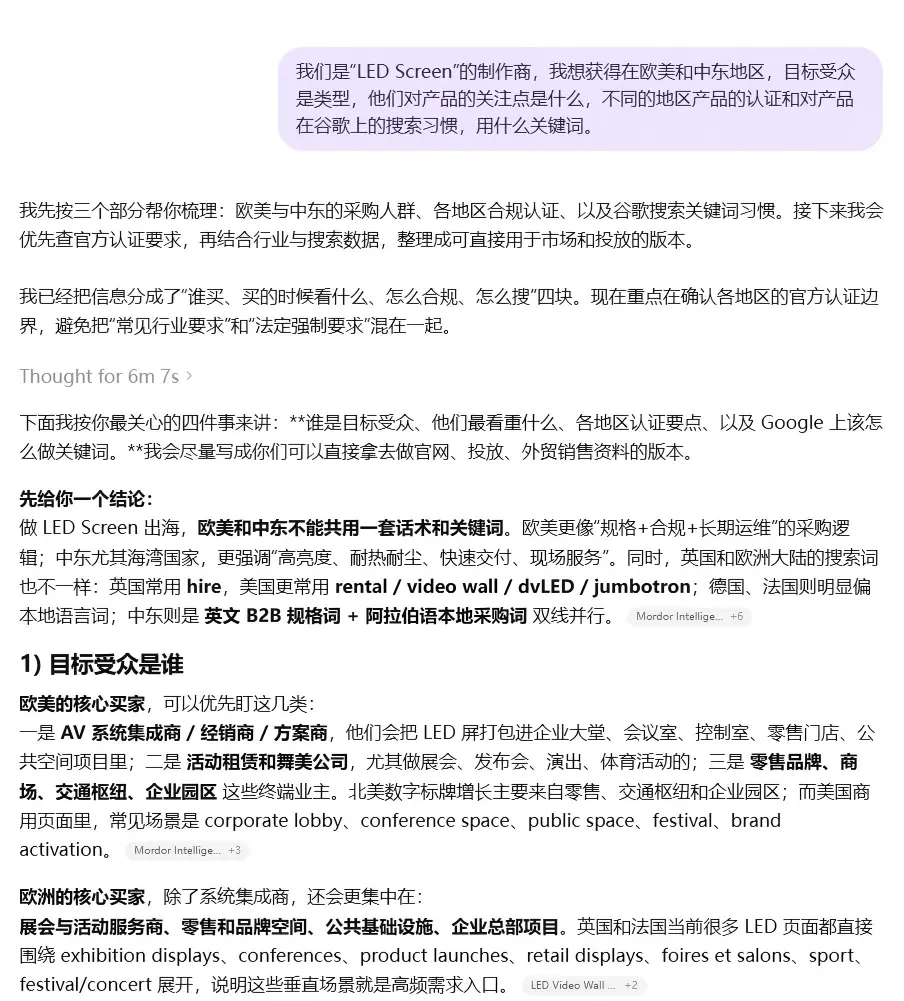
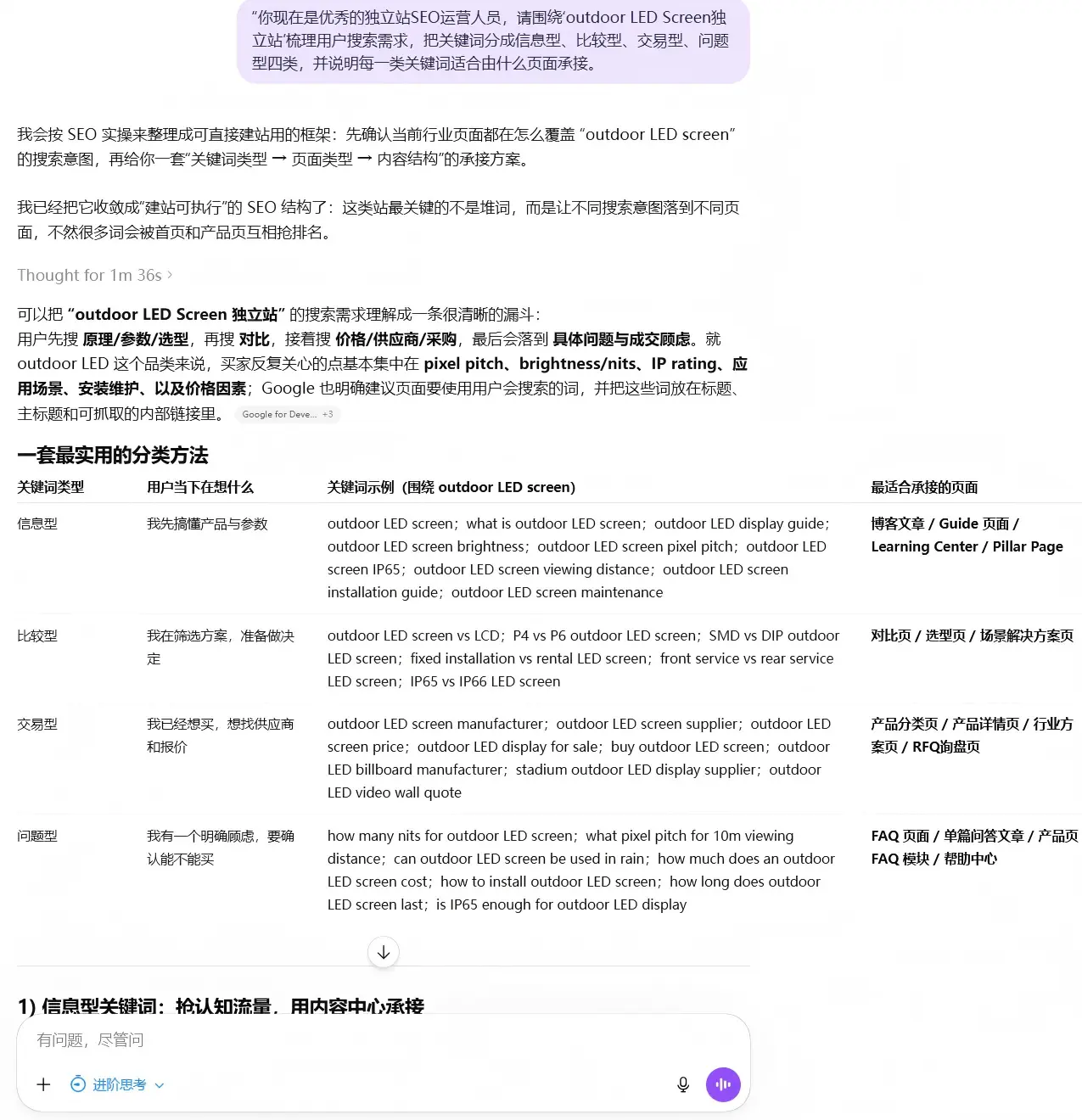
Second, when conducting competitor SEO analysis, a comprehensive breakdown of the business website is necessary.
Some analysts, when analyzing competitors, only look at a few dimensions: what keywords they use, their approximate traffic, and their ranking pages. This isn't deep enough. You also need to look at "how they structure their traffic." You can feed AI with the titles and content structure of the competitor's homepage, category pages, blog pages, and core product pages, and let it help you identify the following issues:
Which type of pages do competitors primarily rely on to acquire organic traffic? Is their content more focused on popular science, reviews, buying guides, or Q&A?
Does it have a clearly defined thematic cluster? Are its high-frequency keywords centered around products, scenarios, target audiences, or pain points?
Which words does it repeatedly emphasize in the title, description, subheadings, and FAQ?
For example, a competitor might not just write "best LED Screen," but instead expand on multiple thematic content around "for outdoor," "for indoor," "for durable," and "energy conservation," then link to the corresponding product collection page via internal links. In this case, what you see is not just "they're creating content," but rather "they're using content to drive search traffic and then direct it to a commercial page to complete the conversion."
At this point, AI helps you analyze where its strengths lie: is it the breadth of content coverage, or the clarity of the page structure? Is it the detailed keyword layout, or the maturity of the internal linking strategy? Is it the good SEO of the product page itself, or the fact that the blog undertakes most of the lead generation functions?
III. An AI-driven workflow for operating a business website
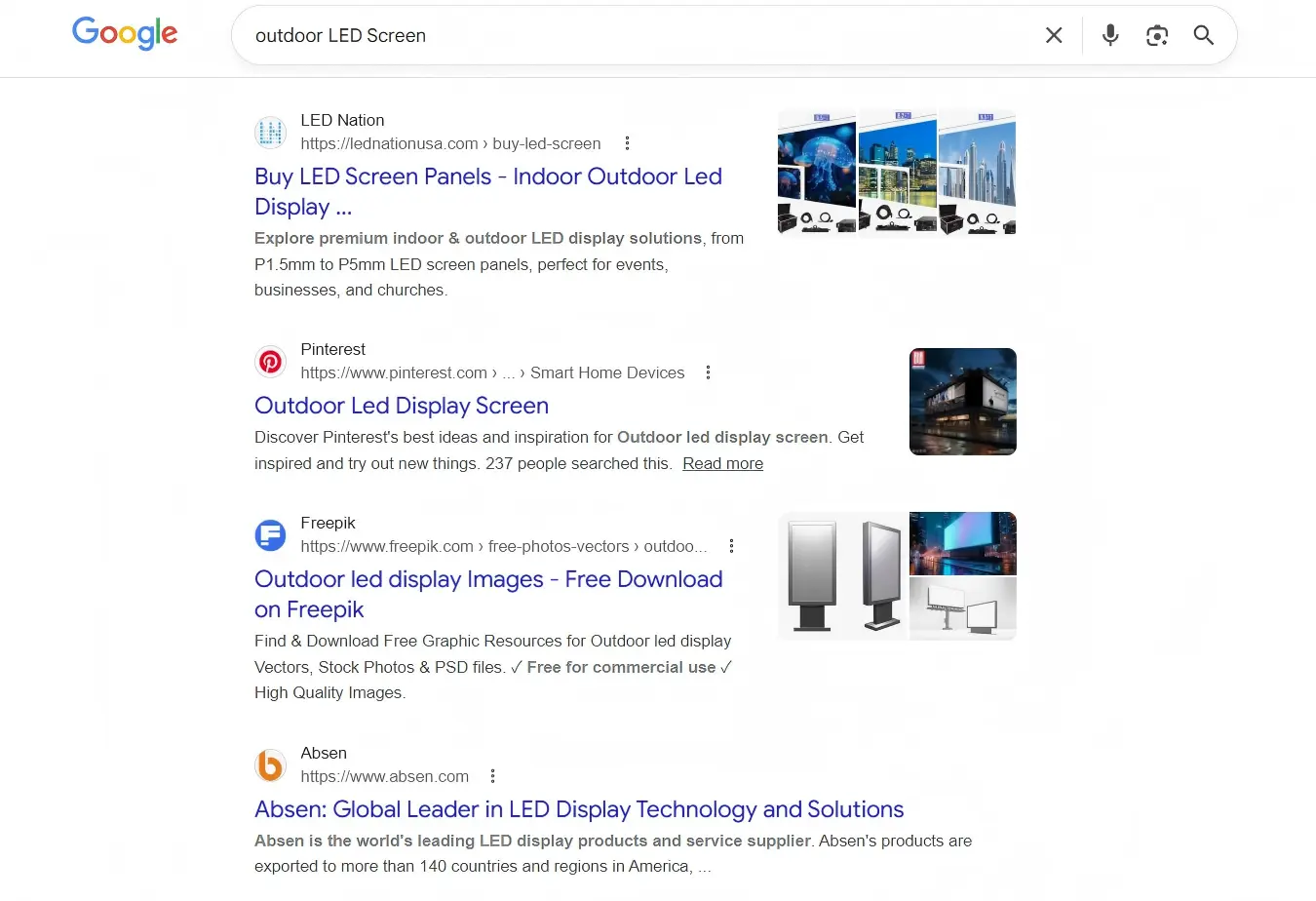
1. Select 3 to 5 comparable competitors. The best candidates are those with similar products, similar target markets, and slightly more mature content than your business website. You can use Google search or SEMrush for cross-referencing.
2. Scrape the core pages of competitors. This includes their homepage, main category pages, 3 to 5 high-traffic blog pages, 3 to 5 key product pages, the About page, and the FAQ page.
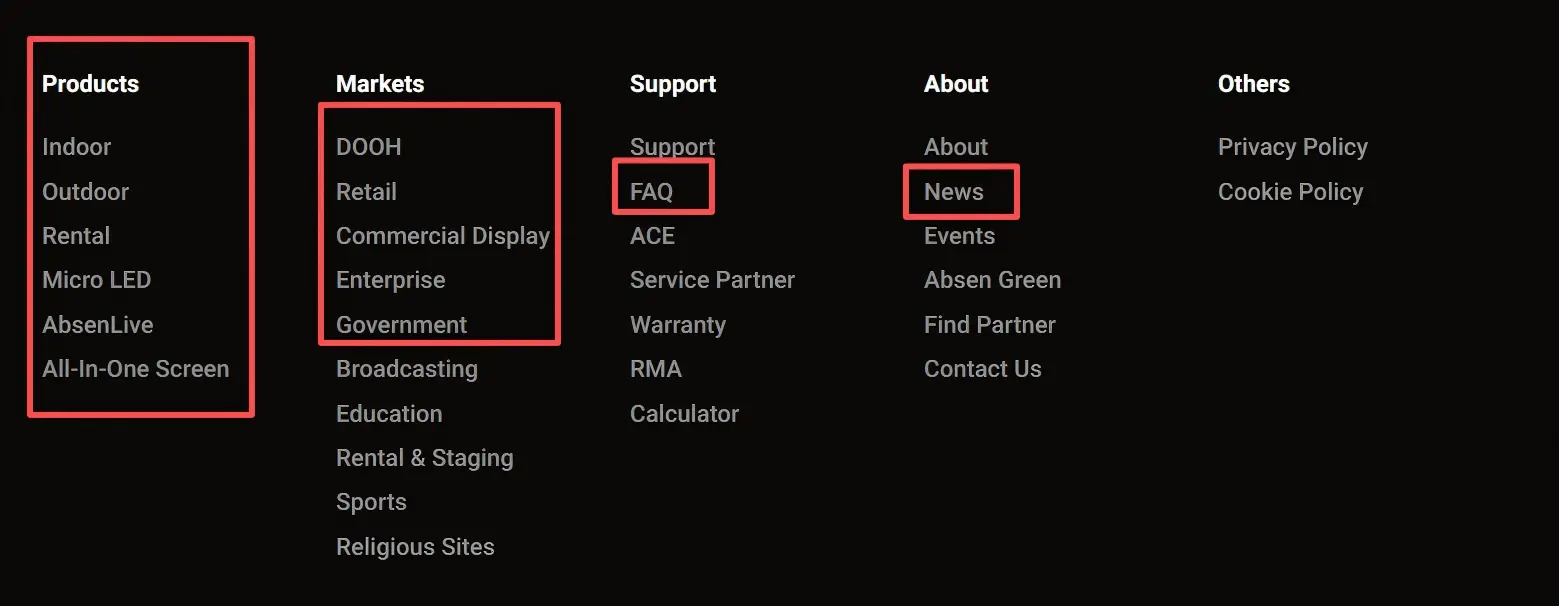
3. Compile information such as page title, URL, H1-H3 pages, subheadings, homepage text, FAQ module, and meta description into the AI, allowing it to output page positioning analysis. For example, it can determine the main intent of the page, what the target keywords might be, and what the conversion actions are.
4. Have the AI compare multiple competitors. Ask it to summarize: which topics are covered by all competitors, which topics are covered only by top competitors, and which content gaps might be your entry opportunities.
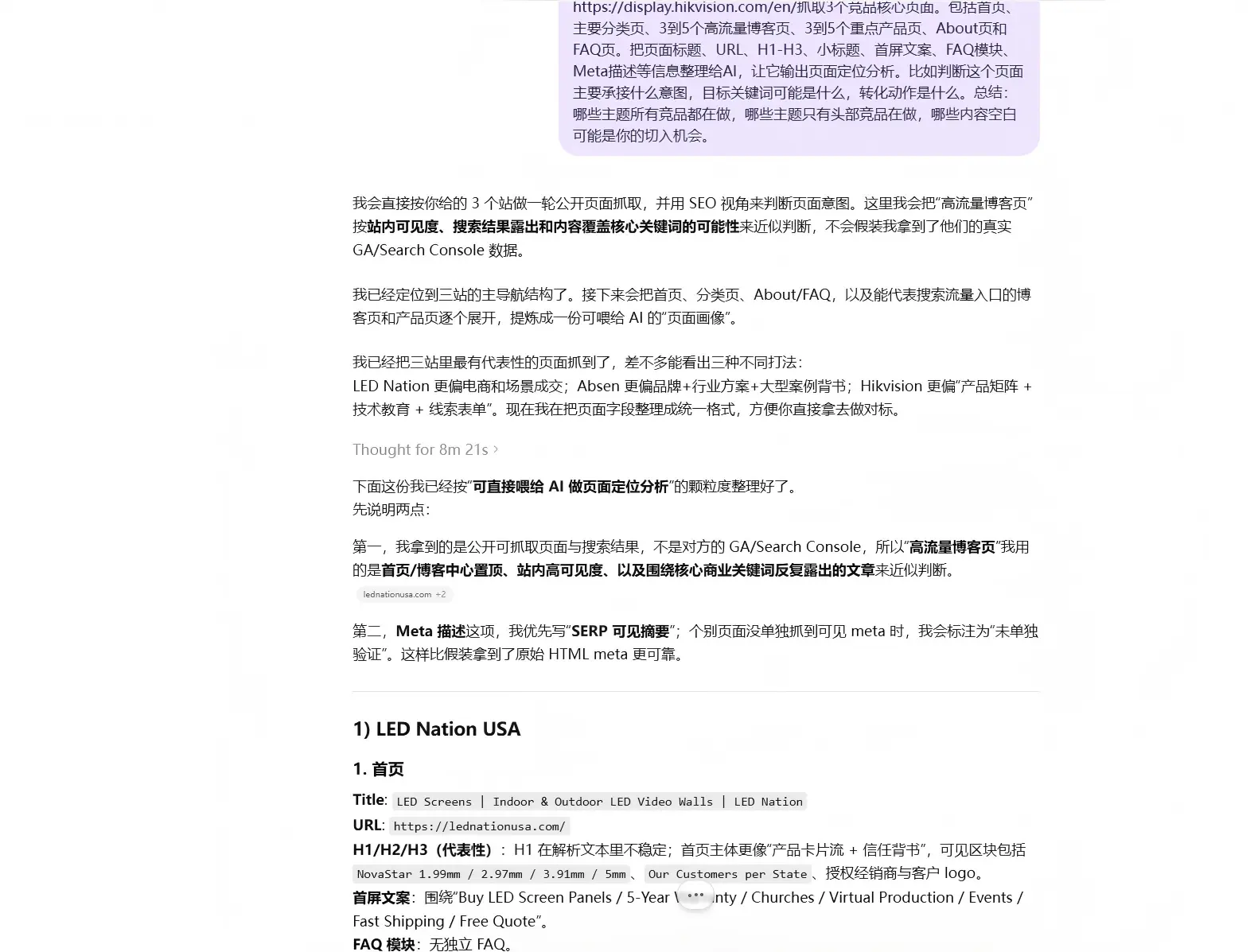
5. Request AI to back-engineer your website strategy. Based on your existing resources, provide three priority directions: low, medium, and high. For example: first, improve the SEO of basic category pages; then, create three sets of high-converting question-based articles; and finally, develop brand alternative keywords and topic clusters.
The most direct result of this process isn't a fancy report, but rather a list of actionable SEO tasks. In SEO, search results are influenced by region, language, brand authority, content history, and site trust. AI handles the rapid breakdown, while humans verify and make decisions. You need to combine Search Console data, SEO tool data, real SERP results, and your own resources to determine which keywords are worth pursuing, which competitor strategies are suitable for replication, and which are only for reference.

What does international social media management service include? 2026 Guide to Social Media Management for Export Businesses
2026-10-28

How to write a WordPress product page that will make overseas buyers want to send inquiries?
2026-10-28

How to fix WordPress form emails not sending: Practical WP Mail SMTP configuration
2026-10-27

Are foreign trade promotion companies reliable? Six key criteria for businesses to judge promotion service providers in 2026.
2026-10-26

How do I set up an email account for export businesses? How can I configure it to avoid it ending up in the spam/junk mail folder?
2026-10-26
Related Articles
What are the differences between Google SEO and Google Ads? Which should B2B export businesses do first?
2026 Shenzhen Google SEO Optimization Company Recommendations: Service Provider Comparison and Selection Guide
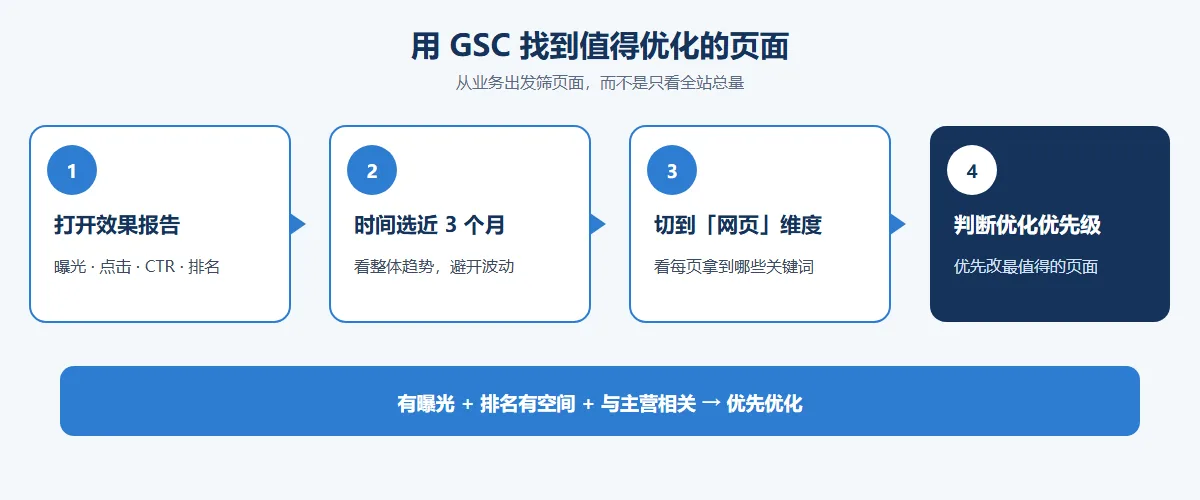
How to improve Google rankings through SEO optimization for international trade? 7 practical methods and steps.

Recommended Shenzhen B2B export website operation company: How to choose a suitable international lead generation service provider for your enterprise?
Why is the Google ranking of Shenzhen export businesses' business websites not improving?

