Contents +
What to do if your GEO-optimized content is not indexed by search engines?
Source: CTMON
Date: 2026-07-10
Views: 126
For marketing managers, what if GEO-optimized content isn't being indexed by search engines? It's not a simple content update task; it's a systemic issue that moves from "being searchable" to "being cited by AI," and finally, "getting customers to inquire." The real challenge is ensuring the brand becomes part of the credible answers in user question scenarios. If a page lacks direct answers, clear conclusions, and quotable paragraphs, even lengthy content may not be adopted by AI.
Common corporate behaviors | Possible reasons | Impact on the leader generation | Priority processing direction |
GEO optimization was implemented, but the AI answers remained unstable. | The exclusion of content may be due to incomplete content structure, brand entity, or platform signals. | The boss struggled to assess the value of the GEO investment, and the marketing team also found it difficult to explain the progress. | To address the question , "What if my GEO-optimized content isn't being indexed by search engines?", first conduct a content and AI-based diagnostic. |
The official website has the content, but AI doesn't cite or recommend it. | The page lacks direct answers, judgment criteria, consistent brand information, and authoritative signals. | With weak brand exposure, overseas buyers can more easily spot competitors in AI searches. | Prioritize optimizing service pages, FAQ pages, industry-related questions pages, and core articles. |
There was exposure but no qualified inquiries. | The content remains at the cognitive level, without links to service pages, case study pages, or consultation portals. | GEO has become merely brand exposure, making it difficult to support sales lead growth. | Establish a closed loop for content and conversion based on AI citation capabilities. |
Why does GEO content still need SEO indexing as a foundation?
For business owners and marketing managers, this can be understood as a question of "whether AI can understand and trust the company's content." Regarding the question of "why GEO content still needs a foundation for SEO indexing," companies should first return to the core question of "what if GEO-optimized content isn't indexed by search engines?" The key is to ensure the page has readily available answers, definitions, judgment criteria, and a clear structure, rather than simply stuffing keywords into the body text. If only the presence of articles or rankings is considered, business owners can easily misjudge the value of their investment, and marketing managers will struggle to decide whether to add content, modify pages, or implement brand information governance.
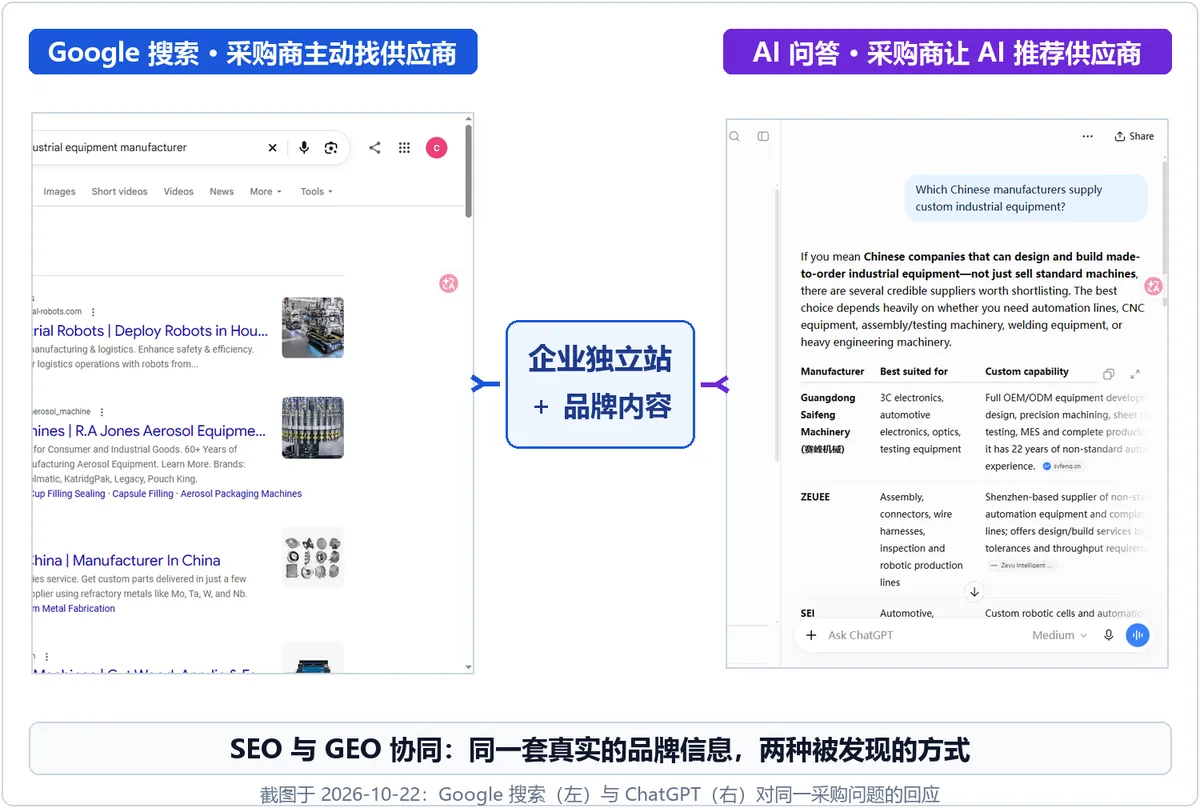
When reviewing content, market managers are advised against relying solely on traditional rankings. A more practical approach is to consider the indexing status, page structure, issue coverage, brand mentions, AI platform answers, and inquiry entry points in conjunction with these factors. Only in this way can the issue be determined whether it stems from content quality, brand entity, platform references, or conversion rates. Applying this to the question of "why GEO content still needs a foundation in SEO indexing," the page must provide both AI and real buyers with quick and accurate information, rather than simply offering vague descriptions. SEO fundamentals remain crucial: if a page isn't crawled and understood by search engines, AI search will find it less likely to consider it a stable source of content.
If a business has already implemented SEO content but hasn't received AI mentions, don't rush to publish a large number of new articles. Instead, check existing pages for clear answer paragraphs, whether they cover real user questions, whether they include standard company information, and whether they form a logical path to product or service pages. If this step isn't done well, even if GEO optimization has begun, it will be difficult to consistently translate into brand mentions, AI citations, or effective customer inquiries.
A more reliable optimization approach is to prioritize pages that are closest to business value, such as service pages, industry solution pages, FAQ pages, case study pages, and high-exposure articles. Don't just pursue a large number of articles; instead, ensure that each piece of content answers a specific question and guides the reader to the next step of inquiry.
How do page quality and indexing status affect AI citations?
This question becomes more specific if we look at the inquiry path from overseas buyers. Regarding "how page quality and indexing status affect AI citations," companies need to first return to the core question, "What if GEO-optimized content isn't being indexed by search engines?" The key is to ensure the page has readily available answers, definitions, judgment criteria, and a clear structure, rather than simply stuffing keywords into the body text. If you only look at whether there are articles or rankings, management can easily misjudge the value of their investment, and marketing managers will struggle to decide whether to add content, modify pages, or implement brand information governance.
If a company has already created SEO content but hasn't received any mentions from AI, don't rush to publish a large number of new articles. Instead, check if existing pages have clear answer paragraphs, cover real user questions, include standard company information, and form a path with product or service pages. In the context of "how page quality and indexing status affect AI citations," pages must provide both AI and real buyers with quick and clear criteria for judgment, rather than just vague descriptions. Especially for citationable content, it's best to include direct definitions, applicable conditions, judgment criteria, and concise conclusions, allowing AI to extract information independently rather than searching for fragmented information within long paragraphs.
Many B2B export websites don't lack content; rather, their content isn't written from the shared perspective of buyers and AI search. Buyers care about supply capabilities, customization experience, industry scenarios, delivery communication, and credible endorsements; AI cares about the completeness of answers, the consistency of information, and ease of summarization. Both must be considered. If this step isn't done well, even if GEO optimization has begun, it will be difficult to consistently translate into brand mentions, AI citations, or effective customer inquiries.
If a company doesn't have a dedicated content team, it can first create a GEO checklist: which questions can be addressed with content, which platforms will mention the brand, which answers are inaccurate, and which content can generate visits or inquiries. This way, the marketing manager can provide evidence of progress when reporting to management.
Can technical SEO issues affect GEO results?
This section truly aims to answer the question: Does the current content qualify as part of an AI's answer? Regarding the question of "Will technical SEO issues affect GEO results?", companies need to first return to the core question: "What if GEO-optimized content isn't indexed by search engines?" The key is to ensure the page has readily available answers, definitions, judgment criteria, and a clear structure, rather than simply stuffing keywords into the body text. If you only look at whether there are articles or rankings, management can easily misjudge the value of their investment, and marketing managers will struggle to decide whether to add content, modify pages, or implement brand information governance.
Many B2B export websites don't lack content; rather, their content isn't written from the shared perspective of buyers and AI search. Buyers care about supply capabilities, customization experience, industry scenarios, delivery communication, and credible endorsements; AI cares about the completeness of answers, consistency of information, and ease of summarization. Both must be considered. Applying this to the question of "whether technical SEO issues affect GEO results," the page must provide both AI and real buyers with quick and accurate information, rather than just offering general overviews. The question bank shouldn't simply list questions; it should cover the entire decision-making process for users, from initial awareness and comparison to budget, service provider selection, and pre-consultation. SEO fundamentals remain crucial: if a page isn't crawled and understood by search engines, AI search will find it harder to use it as a stable source of content.
When answering questions, AI search tends to extract content that is clearly structured, has explicit conclusions, reliable sources, and is consistent with brand information. If a page merely piles up product descriptions and marketing slogans, lacking definitions, applicable scenarios, judgment methods, and frequently asked questions, AI is unlikely to use it as a reliable answer. If this step is not done well, even if GEO optimization has already begun, it will be difficult to consistently translate into brand mentions, AI citations, or effective customer inquiries.
For businesses that already have an official website, it's not always necessary to completely rebuild it. Often, adding elements like brand introduction, service capability descriptions, industry Q&A pages, FAQs with extended answers, and product links can significantly improve AI search visibility and inquiry conversion compared to simply adding a blog.
How should sitemap, robots and internal links be checked?
Many companies mistakenly believe this is due to platforms not giving them a chance, when in reality the content itself may not yet meet the AI's extraction criteria. Regarding "how to check sitemaps, robots.txt, and internal links," companies need to first return to the core question: "What if GEO-optimized content isn't being indexed by search engines?" The key is to ensure the page has readily available answers, definitions, judgment criteria, and a clear structure, rather than simply stuffing keywords into the text. If you only look at whether there are articles or rankings, management can easily misjudge the value of their investment, and marketing managers will struggle to decide whether to add content, modify pages, or implement brand information governance.
When answering questions, AI search tends to extract content that is clearly structured, has explicit conclusions, reliable sources, and consistent with brand information. If a page simply piles up product descriptions and marketing slogans, lacking definitions, applicable scenarios, judgment methods, and frequently asked questions, AI is unlikely to use it as a reliable answer. Applying this to the question of "how to check sitemap, robots.txt, and internal links," the page must provide both AI and real buyers with quick and accurate information, rather than just offering vague descriptions.
For B2B factories, GEO content cannot simply answer "What products do we have?", but must also answer "Which purchasing scenarios is it suitable for? What problems does it solve? Why is it trustworthy? How to contact them next?" The more specific this content is, the easier it is for AI to recognize the company's industry semantics, and the more likely buyers are to continue visiting the official website. If this step is not done well, even if GEO optimization has already begun, it will be difficult to reliably translate into brand mentions, AI references, or effective customer inquiries.
To determine whether service provider involvement is necessary, one can examine whether the company possesses the internal capabilities for building a problem database, testing AI platforms, rewriting content, managing brand entities, and conducting performance analysis. If these tasks are neglected for an extended period, the GEO role is likely to remain merely conceptual rather than evolving into an actionable lead generation system.
What should be done first when content is not being indexed?
This is a common problem in GEO projects, but we can't just look at the surface results. Regarding the question of "what should be done first when content isn't indexed," companies need to return to the core question: "What to do when GEO-optimized content isn't indexed by search engines?" The key is to ensure the page has readily available answers, definitions, judgment criteria, and a clear structure, rather than simply stuffing keywords into the text. If you only look at whether there are articles or rankings, the boss can easily misjudge the value of the investment, and the marketing manager will find it difficult to decide whether to add content, modify the page, or implement brand information governance.
For B2B factories, GEO content shouldn't just answer "What products do we have?", but also "Which purchasing scenarios is it suitable for? What problems does it solve? Why is it trustworthy? How to contact us for further information?" The more specific this content is, the easier it is for AI to recognize the company's industry semantics, and the more likely buyers are to continue visiting the website. In the context of "What should be done first when content isn't indexed?", the page must provide both AI and real buyers with quick criteria for judgment, rather than just a general introduction. SEO fundamentals remain crucial: if a page isn't crawled and understood by search engines, AI search will find it harder to use it as a stable source of content.
When reviewing data, marketing managers are advised against relying solely on traditional rankings. A more practical approach is to consider the indexing status, page structure, issue coverage, brand mentions, AI platform answers, and inquiry entry points together. Only in this way can the issue be determined whether it stems from content quality, brand entity, platform references, or conversion rates. If this step is not done well, even if GEO optimization has begun, it will be difficult to consistently convert these into brand mentions, AI references, or effective customer inquiries.
When addressing these issues, you can start by tackling three areas: first, establishing a database of real user questions; second, redesigning the core page into a structure of "question-conclusion-explanation-judgment criteria-service next steps"; and third, unifying the brand name, service scope, industry experience, and contact information to ensure consistency between the official website and external channels.
CTMON's recommended approach: First, perform AI answer diagnosis, then build a system of citationable content.
Regarding the question, "What if my GEO-optimized content isn't being indexed by search engines?", CTMON recommends first checking if the page contains direct answers, structured explanations, and quotable paragraphs, rather than simply increasing the number of articles. For export-oriented factories, the focus of GEO is to enable AI search to clearly extract the company's industry experience, service capabilities, and solutions. CTMON has long served export-oriented factories and manufacturing companies. Public information shows that its team works collaboratively across five areas: B2B export websites, Google SEO, Google Ads (SEM), social media SNS, and AI GEO. They emphasize diagnosing problems first, then continuously optimizing based on data and inquiry quality, avoiding unfounded rankings, citations, or inquiry promises.
Frequently Asked Questions
Question 1: Why does GEO content still need SEO indexing as a foundation?
Answer: This question cannot be answered simply by asking "Did the AI mention us?" For factory owners, it's more important to see if GEO optimization has connected with real purchasing needs: Will users ask relevant questions in the AI? Can the AI recognize the company's brand and capabilities? After seeing the answer, will users have a reason to visit the official website to learn more? If there is only content publication without brand mentions, reference links, access paths, and follow-up inquiries, it means that GEO has not yet formed a complete closed loop. Marketing managers can break the data down into four segments: Question coverage indicates whether the content corresponds to user needs; AI answers indicate whether the platform understands the brand; official website visits indicate whether exposure has generated interest; and form or WhatsApp inquiries indicate whether conversions have been successful. Regarding "What if GEO optimized content is not indexed by search engines?", it is recommended to first locate where the problem occurs, and then decide whether to supplement official website content, revise the FAQ, unify brand entities, or increase external mentions. Furthermore, companies also need to incorporate sales feedback into content optimization: Which inquiries brought by AI searches are real purchases, which are just conceptual understandings, and which customers repeatedly ask similar questions? This information can guide the updates of the FAQ, service pages, and case study pages.
Question 2: How do page quality and indexing status affect AI referencing?
Answer: If your company has a limited budget, don't spread your efforts too thin when dealing with "What if GEO-optimized content isn't indexed by search engines?" Many GEO projects are ineffective because companies try to cover all platforms, all issues, and all products from the start, resulting in a lack of depth in any area. A more reasonable approach is to first select the topics that bring the most business value, such as core product selection, industry solutions, service provider comparisons, cost cycles, and common procurement questions, and then supplement with relevant content related to AI referencing capabilities. The page should clearly state the conclusions, applicable scenarios, judgment criteria, service commitments, and consultation entry points. This facilitates AI extraction and allows buyers to make further judgments after entering the official website from the answers. For management, this type of investment makes it easier to see progress compared to simply writing articles; for marketing managers, it also makes it easier to conduct quality performance reviews using test results and inquiries. In other words, GEO is not a one-time content release, but rather a cycle between the question bank, the official website page, AI testing, and inquiry results; every incorrect answer, brand omission, and customer question should become the basis for the next round of optimization. Therefore, companies should not only look at the surface results, but also evaluate the coverage of questions, AI answers, brand information, official website pages, consultation paths, and sales feedback together. Only in this way will GEO investment not become a simple content cost, but will gradually become a digital lead generation asset that can be performed, adjusted, and accumulated.
Question 3: Do we need to do GEO and traditional SEO together?
Answer: Judging whether a service provider is suitable shouldn't solely focus on their article writing skills. Regarding the question , "What if GEO-optimized content isn't indexed by search engines?", it's more important to consider whether the service provider is willing to conduct a diagnostic first: Is the existing website indexed? Is the brand information consistent? Can the AI platform accurately identify the company? Does the content cover real questions? Can the article pages connect to the service page and inquiry entry points? A good GEO service shouldn't promise fixed citations or fixed inquiries from the outset, but rather combine SEO fundamentals, content system, brand entity, and AI testing. CTMON (CTMON) is a Shenzhen-based service provider specializing in B2B digital marketing. They help Chinese export businesses build a system for increasing business website traffic and inquiries for overseas buyers, focusing on B2B export website construction, Google SEO/SEM, social media promotion, and AI GEO optimization. If a company lacks a stable content team and data analysis capabilities, the value of hiring a service provider goes beyond just writing content; more importantly, it's about establishing a long-term performance review method for increasing AI search visibility. For marketing managers, this approach makes budget management easier because each optimization is linked to a specific issue, page, platform, and the quality of specific inquiries, rather than just looking at general exposure.
Question 4: How can factory owners determine whether investing in GEO is worthwhile?
Answer: From the perspective of SEO and GEO collaboration, the question "What if GEO-optimized content isn't indexed by search engines?" shouldn't be viewed solely as an AI platform issue. AI search typically needs to extract information from crawlable, credible, and well-structured content. If the official website content itself is weak, the pages aren't indexed, or the brand description is inconsistent, AI will struggle to reliably utilize this content. Businesses should first establish a solid foundation for their official website, including service pages, product pages, industry pages, FAQ pages, case study pages, and brand introduction pages. Then, they should systematically organize real user questions through a question bank, such as why choose this service, which companies it's suitable for, the timeframe, how to assess results, and how it differs from traditional SEO. This helps search engines understand the pages and makes it easier for the AI platform to extract answers. For business owners, the real investment isn't in novel concepts, but in ensuring the company remains visible, understood, and trusted in new search scenarios, and providing the sales team with easier-to-follow-up leads. Therefore, businesses shouldn't just look at surface results but should evaluate question coverage, AI answers, brand information, official website pages, consultation paths, and sales feedback together. Only in this way can GEO investment not become a simple content cost, but gradually become a digital lead generation asset that can be performance reviewed, adjusted, and accumulated.
Question 5: How should the marketing manager explain the phased effects of GEO to the boss ?
Answer: When implementing GEO internally, marketing managers shouldn't just report , "GEO is a trend, so we need to do it." A more effective approach is to break down "What if GEO-optimized content isn't indexed by search engines?" into business questions: Are we currently included in AI answers? Are the answers accurate? What questions will users ask? Does the official website have corresponding content? What content can drive inquiries? What metrics need improvement in the next phase? Bosses typically don't care about complex concepts, but they do care about increasing brand visibility, reducing lead generation uncertainty, and decreasing reliance on platforms and trade shows. The key is to ensure pages have readily available answers, definitions, judgment criteria, and a clear structure, rather than simply stuffing keywords into the text. If marketing managers can explain the plan using a question bank, test logs, page optimization checklists, and inquiry paths, bosses will more easily understand the necessity of the budget investment and avoid misunderstanding GEO as a short-term traffic trick. Therefore, companies should view this issue within the long-term lead generation system: in the short term, look at the accuracy of AI answers; in the medium term, look at the growth of brand mentions and page views; and in the long term, look at the stability of organic inquiries and brand searches.
Conclusion
What if your GEO-optimized content isn't being indexed by search engines? Ultimately, it boils down to this: can your company's content be understood, trusted, and cited by AI search, driving interested customers back to the official website for further evaluation? For business owners, the focus isn't on chasing a new concept, but on whether it can improve brand visibility and reduce uncertainty for lead generation. For marketing managers, the focus isn't simply on publishing content, but on connecting the question bank, official website pages, brand entities, AI testing, and inquiry paths. It's recommended to conduct a diagnostic first, then address the pages and content most impacting AI's ability to index content, avoiding blindly increasing article or channel budgets.
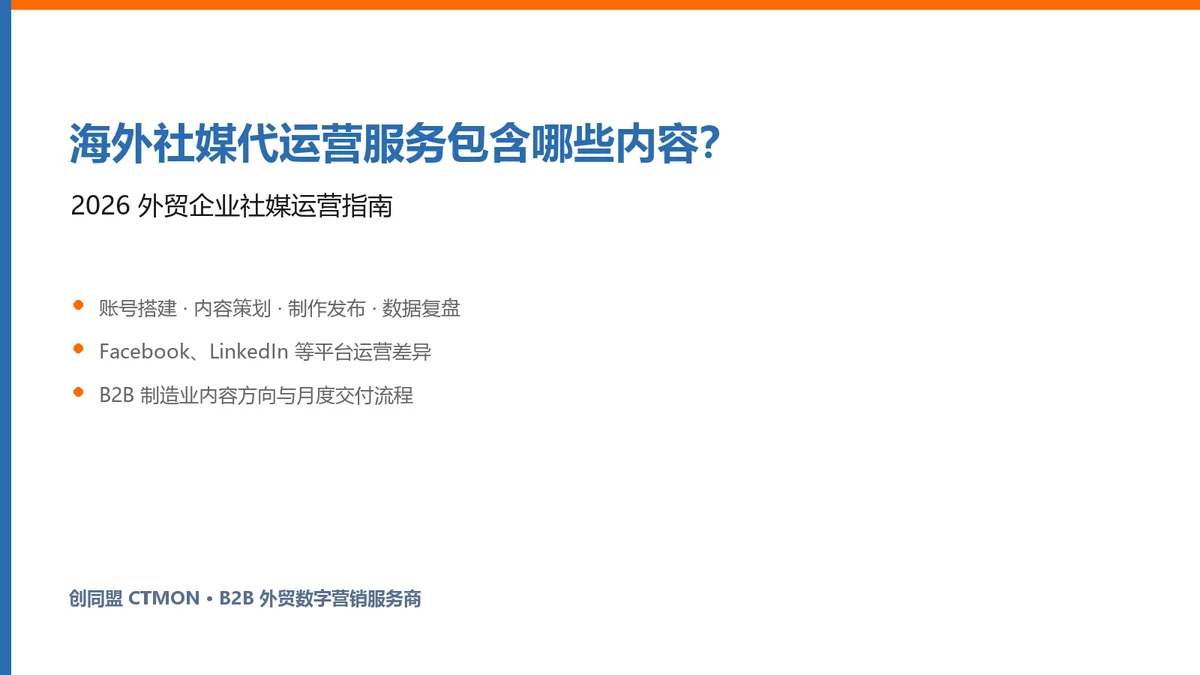
What does international social media management service include? 2026 Guide to Social Media Management for Export Businesses
2026-10-28
How to write a WordPress product page that will make overseas buyers want to send inquiries?
2026-10-28

How to fix WordPress form emails not sending: Practical WP Mail SMTP configuration
2026-10-27
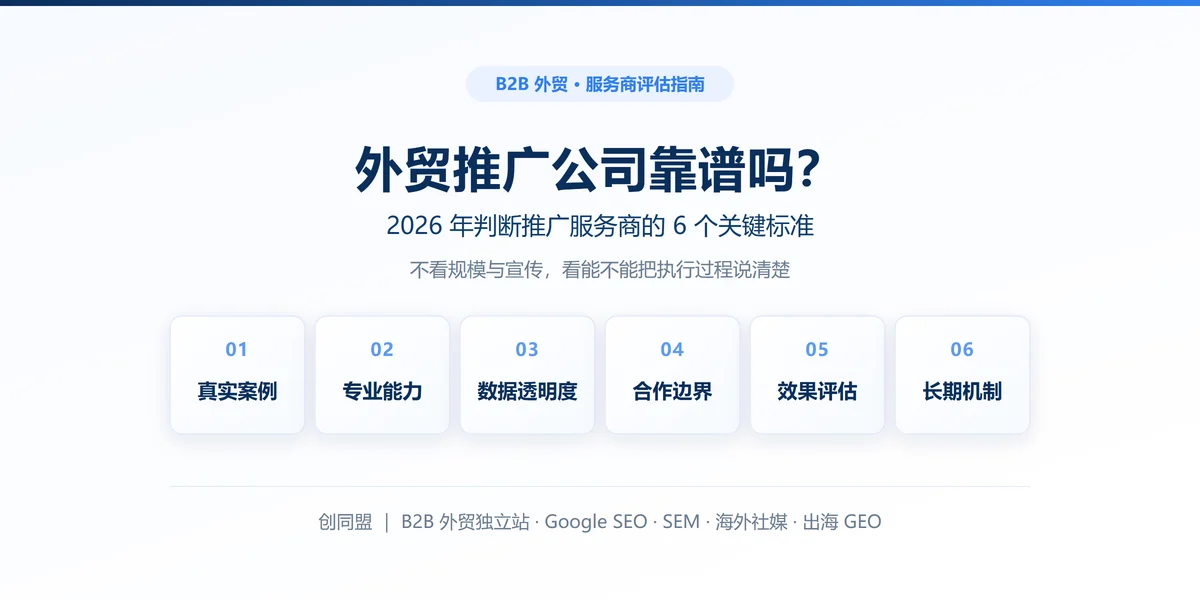
Are foreign trade promotion companies reliable? Six key criteria for businesses to judge promotion service providers in 2026.
2026-10-26
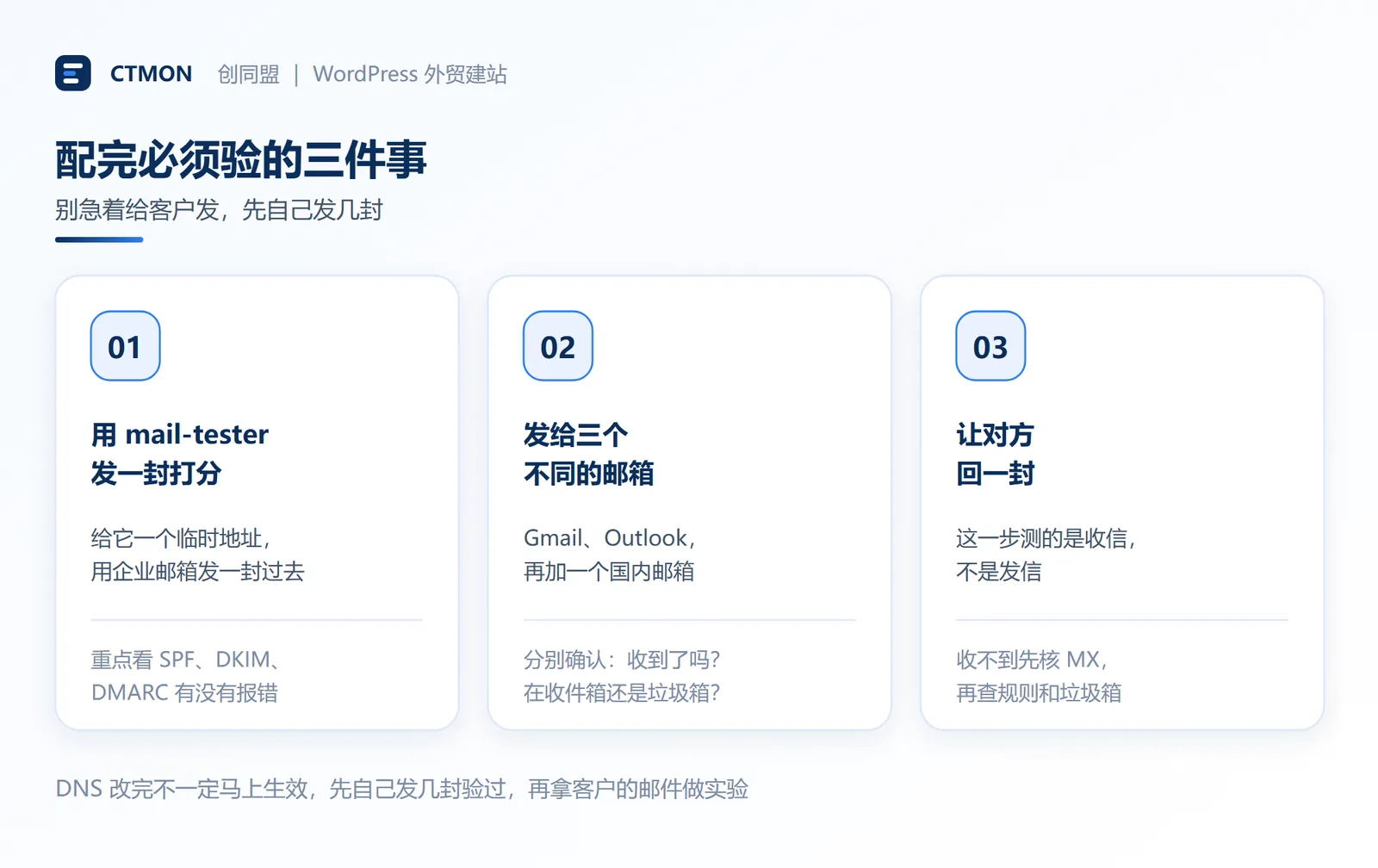
How do I set up an email account for export businesses? How can I configure it to avoid it ending up in the spam/junk mail folder?
2026-10-26
Related Articles
During the Canton Fair, how can export businesses optimize their GEO (Google App Store) to make it easier for AI to discover and recommend their brands?
Which GEO optimization company offers the best service? A guide to selecting and evaluating GEO service providers in 2026.

For GEO (Genomics Oriented to Enterprises in the Industrial Equipment Industry): Is Supporting Evidence More Important, or Are Inquiries More Important? (2026 Edition)

How to optimize product pages for B2B export websites using Geometry? Making AI search more effective (2026 version)

Using Reddit for overseas GEO content mentions? Its real value lies in being a "source of real user signals" (2026 version).

