Contents +
2026 Must-Read for Business Website SEO Techniques! One article tells you exactly what SEO techniques are all about.
Source: 创同盟
Date: 2026-06-12
Views: 538
Why is technical SEO important? Technical SEO is crucial to your SEO results. If search engines cannot access pages on your website, no matter how valuable your content is, those pages will not appear in search results. This will lead to a drop in your website traffic and loss of inquiry conversions for your business.
In addition, website speed and mobile friendliness are also recognized ranking factors. If your pages load slowly, users may become annoyed and leave your website. This user behavior may indicate that your website is not providing a good user experience. Therefore, search engines may not rank your website. To better understand technical SEO, we need to discuss two important processes: crawling and indexing.
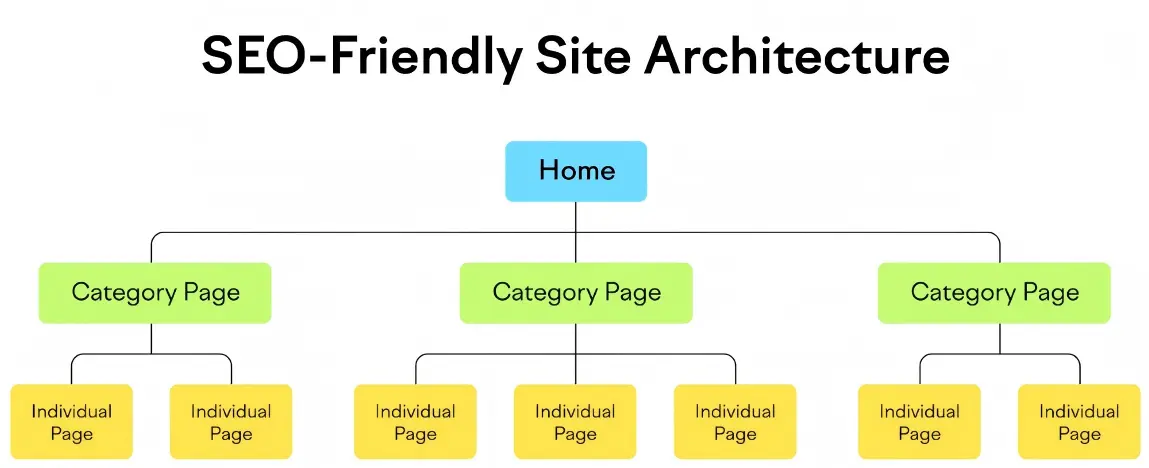
Figure 1 Best Practices for Business Website Structure
To enable LLM users to access your website, similar to search engines, LLM (Website Lifecycle Management) also needs to be able to crawl your website and access its content. However, they work in slightly different ways than search engine crawlers.
For example, most LLMs (Page Loaders) do not support JavaScript, a commonly used programming language for website building. If critical content or navigation only appears after JavaScript loads, some AI crawlers may fail to crawl it. Therefore, it is best to avoid using LLMs for any critical content that needs to be visible in AI searches.
I. Basic Knowledge of Technical SEO Review
1. Review your preferred domain name
Google automatically identifies and selects a version to show to searchers. However, if you wish to manually set your preferred domain version, you can do so through canonical tags (which we'll discuss later). Regardless of the method used, once you've set your preferred domain, ensure that all variations (including www, non-www, http, and index.html ) permanently redirect to that version.

Figure 2. Business website URL redirection processing
2. Implement SSL
Search engines prioritize secure websites—in fact, Google announced back in 2014 that SSL would be a ranking factor. Therefore, be sure to set the SSL version of your homepage as your preferred domain.

Figure 3. SSL certificate processing for business website URLs
After setting up SSL, you'll need to migrate all non-SSL pages from HTTP to HTTPS. This isn't easy, but it's definitely worth the effort to improve your ranking. Here are the specific steps:
1. All http://yourwebsite.com页面重定向到https://yourwebsite.com。
2. Please update all specification tags and hreflang tags accordingly.
3. Update the URLs in your sitemap ( 位于yourwebsite.com/sitemap.xml ) and robots.txt ( 位于yourwebsite.com/robots.txt ).
4. Set up new Google Search Console and Bing Webmaster Tools instances for your HTTPS website and track them to ensure 100% traffic migration.
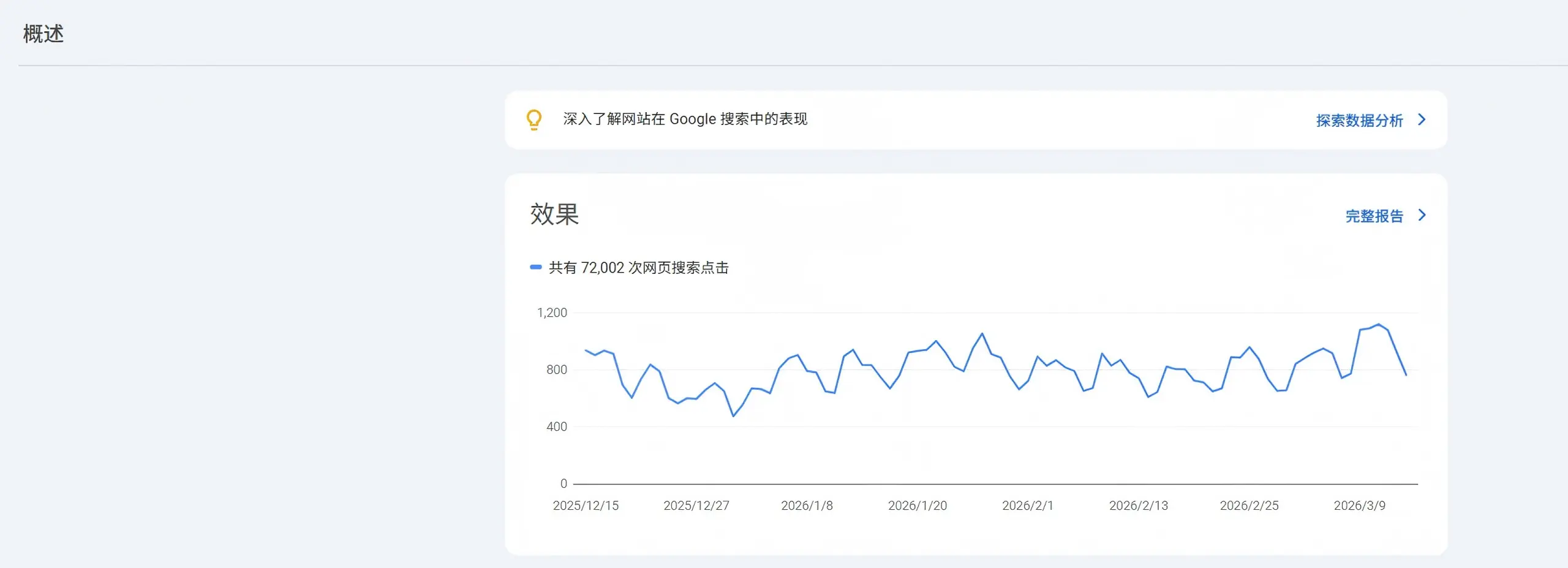
Figure 4 Google Search Console
3. Improve page loading speed and make it more mobile-friendly;
Page load speed is one of the ranking factors on both mobile and desktop devices. Therefore, ensure your website loads as quickly as possible. You can use Google's PageSpeed Insights tool to check your website's current speed. It will give you a performance score between 0 and 100. The higher the score, the better.
Maximum Content Render (LCP) – Calculates the time required for a webpage to load its largest element.
First Input Delay (FID) — A measure of the time required to respond to a user's first interaction with a webpage.
Cumulative Layout Offset (CLS) — A measure of the unexpected offset of various elements in the layout of a webpage.
To ensure your website is optimized for core website metrics, you need to achieve the following scores: LCP—2.5 seconds or less; FID—100 milliseconds or less; CLS—0.1 or lower. You can view your website's core page metrics in Google Search Console to understand your website's performance.
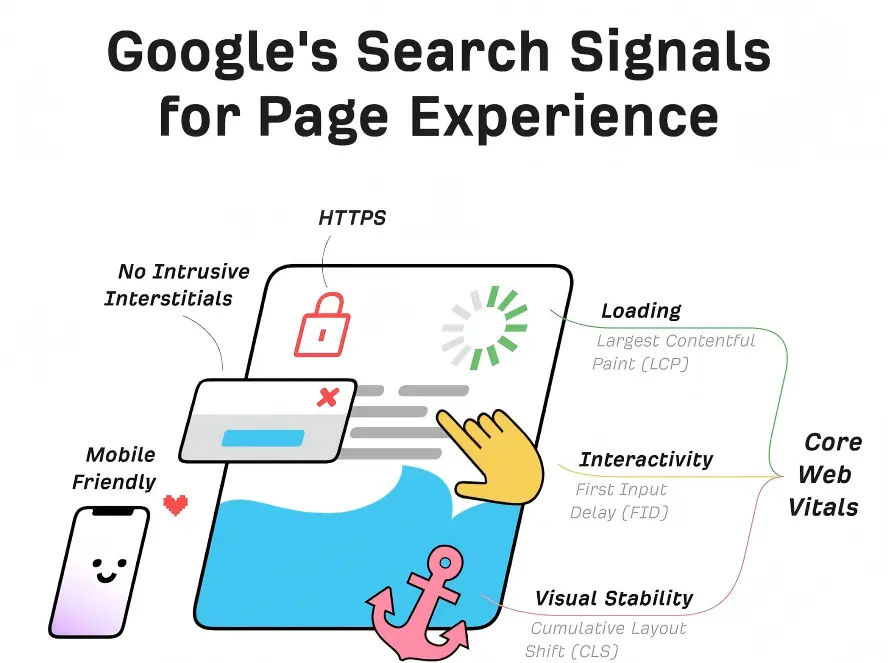
Figure 5. User experience monitoring of business website pages
4. The crawler's data acquisition process;
Robots.txt : The robots.txt file tells search engines and AI platforms which content on your website they can and cannot access.
LLMs.txt : LLMs.txt is a voluntary standard for telling large language models (LLMs) how to use your content, but as we explained in the LLMs.txt guide , it is not particularly effective and may not be worth the effort.
An XML Sitemap helps search engine robots understand and crawl your web pages. It's essentially a map of your website. Once you've completed your sitemap, you need to submit it to Google Search Console and Bing Webmaster Tools. Remember to update your sitemap regularly as you add or delete web pages.
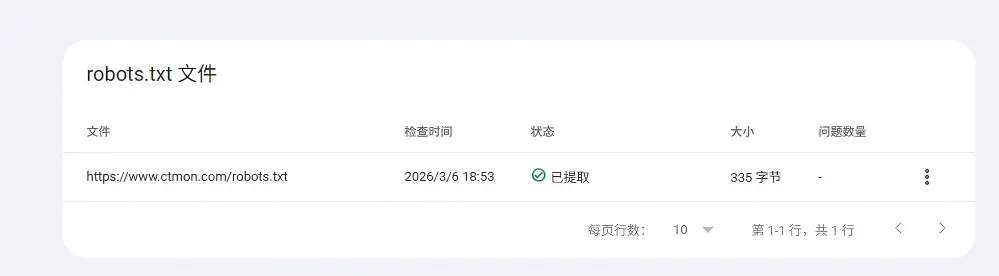
Figure 6 Google Search Console
5. Standardization
When duplicate content exists, resulting in multiple versions of the same page, Google selects one version to store in its index. This process is called canonicalization, and the URL chosen as the canonical URL will appear in Google's search results. Google uses several different signals to select canonical URLs, including:
Canonical tags; duplicate pages; internal links; redirects; sitemap URLs—the easiest way to see how Google indexes web pages is to use the URL Inspector tool in Google Search Console. It will display the canonical URLs chosen by Google.
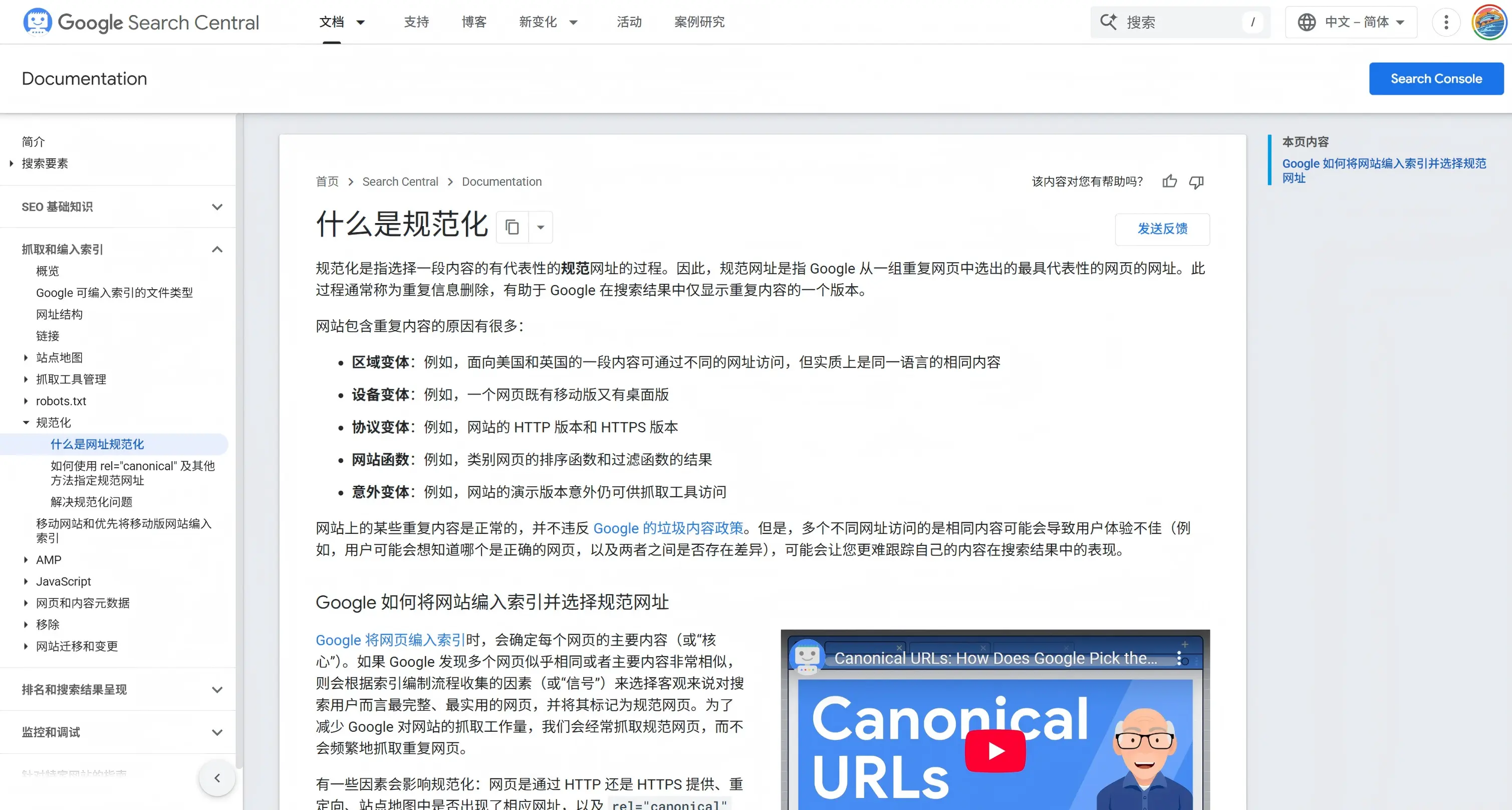
Figure 7 Google Search Center
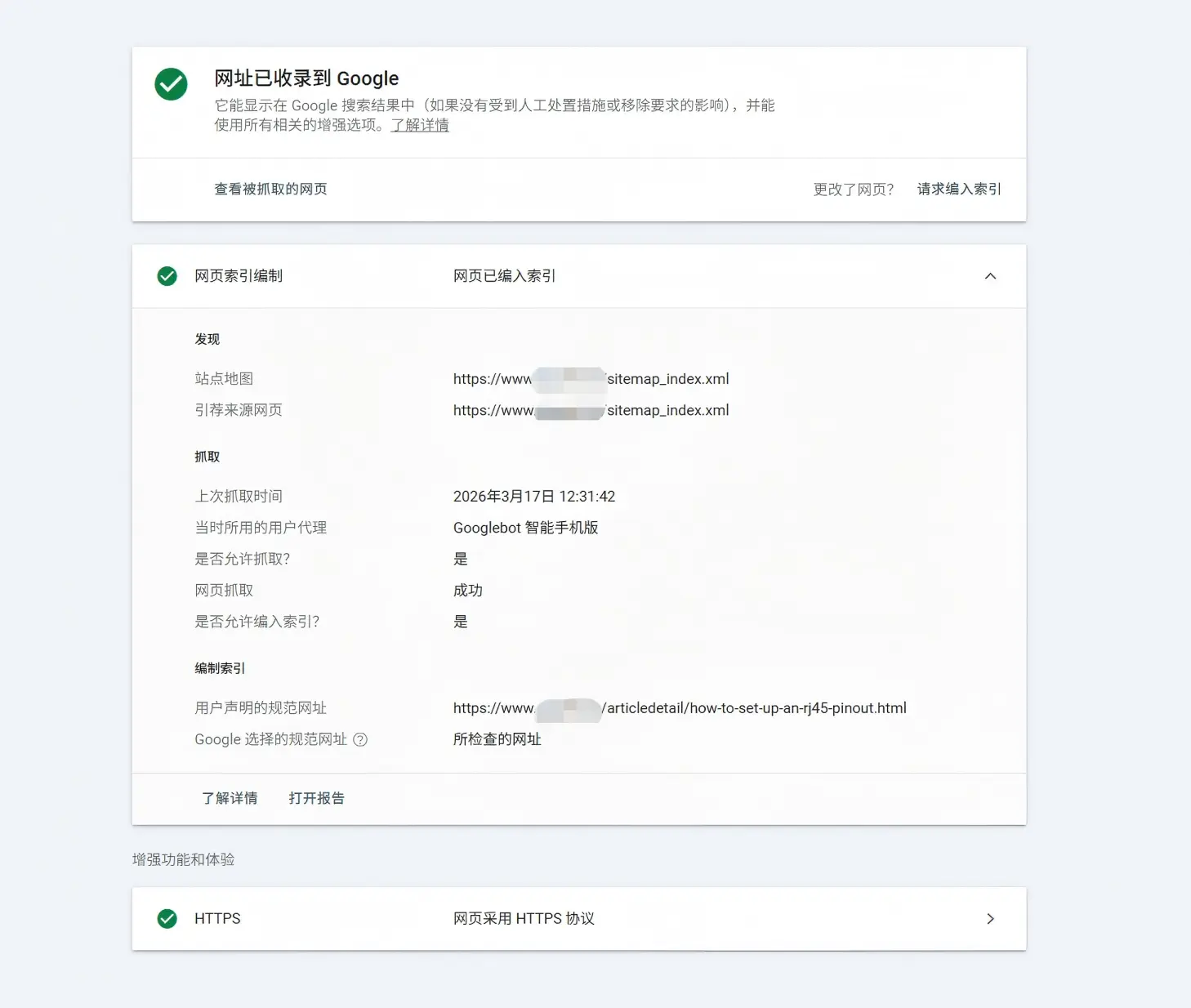
Figure 8 Google URL Specification (GSC)
6. Restore lost links
Websites typically change their URLs over time. In many cases, these older URLs contain links from other websites. If these links are not redirected to the current page, they are lost and no longer have any impact on your page, such as a "404 Not Found" page. You need to 301 redirect all old URLs to their current locations to recover the lost value.
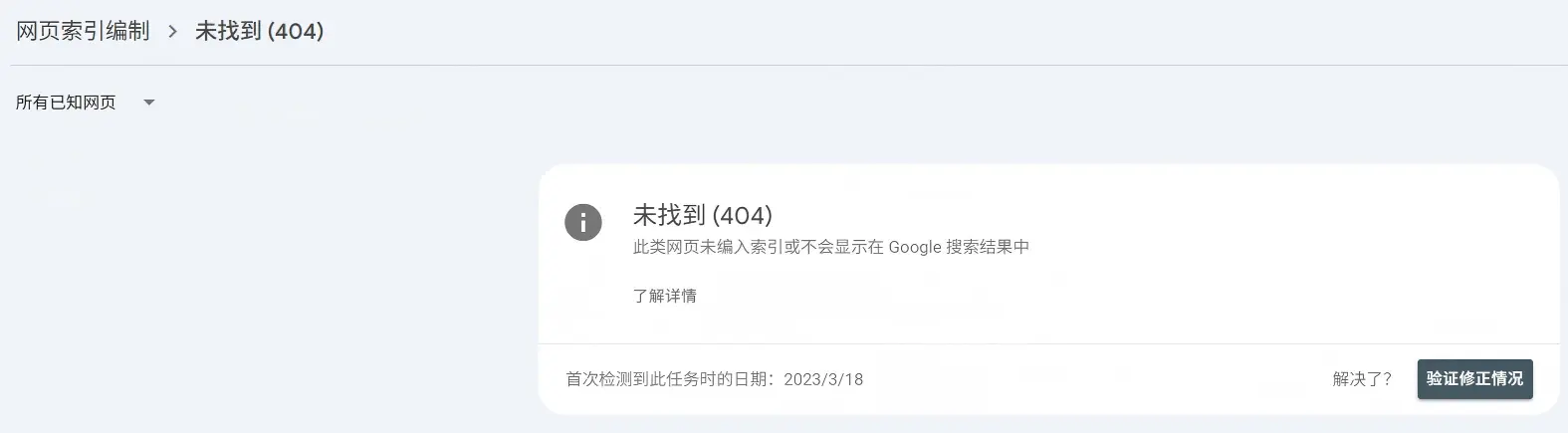
Figure 9 Google URL Specification (GSC)
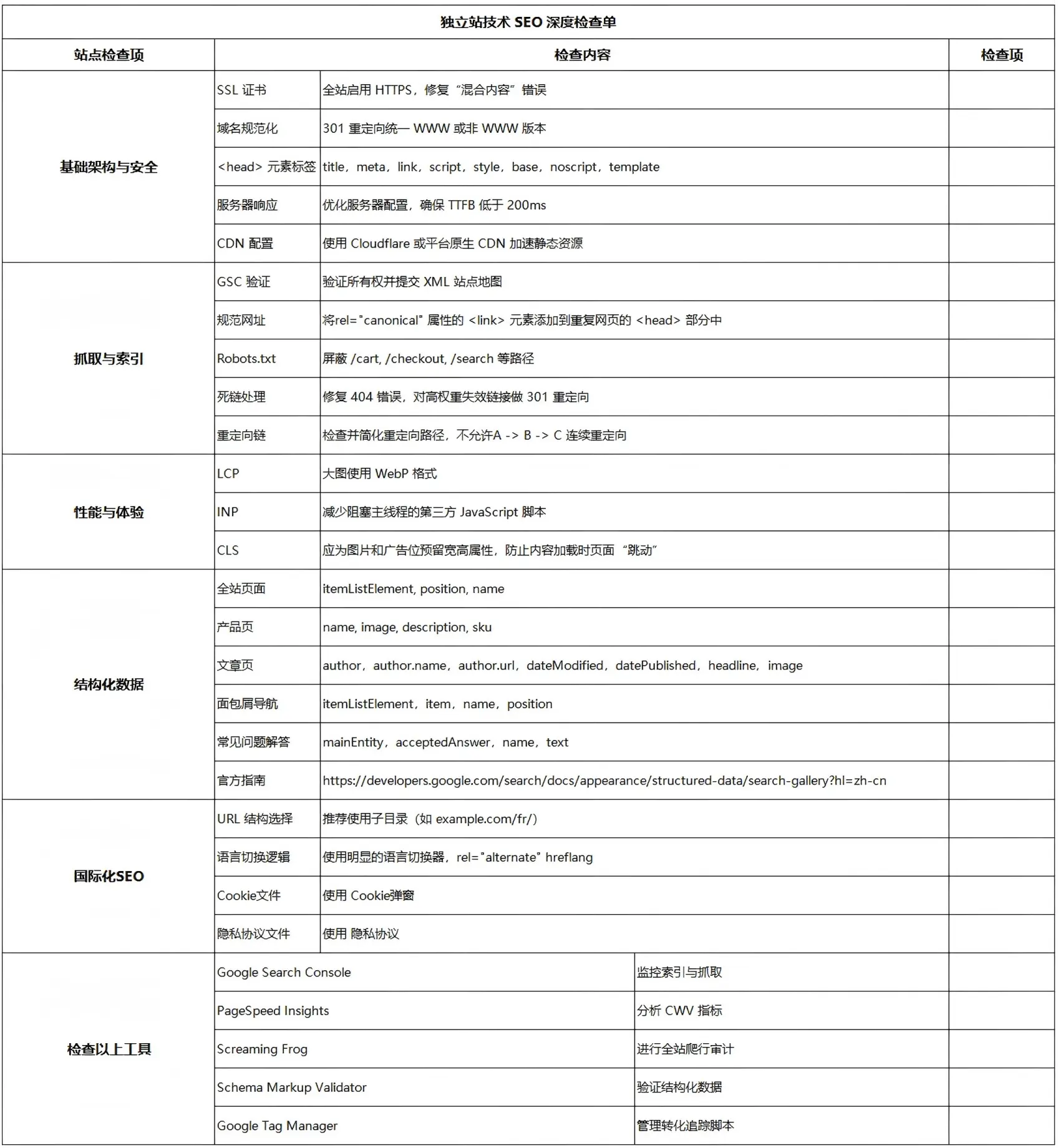
Technical SEO is very complex, so it's best to break it down into easily understandable parts. If you're like me, preferring to tackle big things in chunks and use checklists to get things done, then you'll understand. Believe it or not, everything we've discussed so far can be categorized into five main groups, each worthy of its own action checklist. Of course, there are many more technical SEO checklists; below, we've presented a table of technical checklists for business website SEO for your reference!
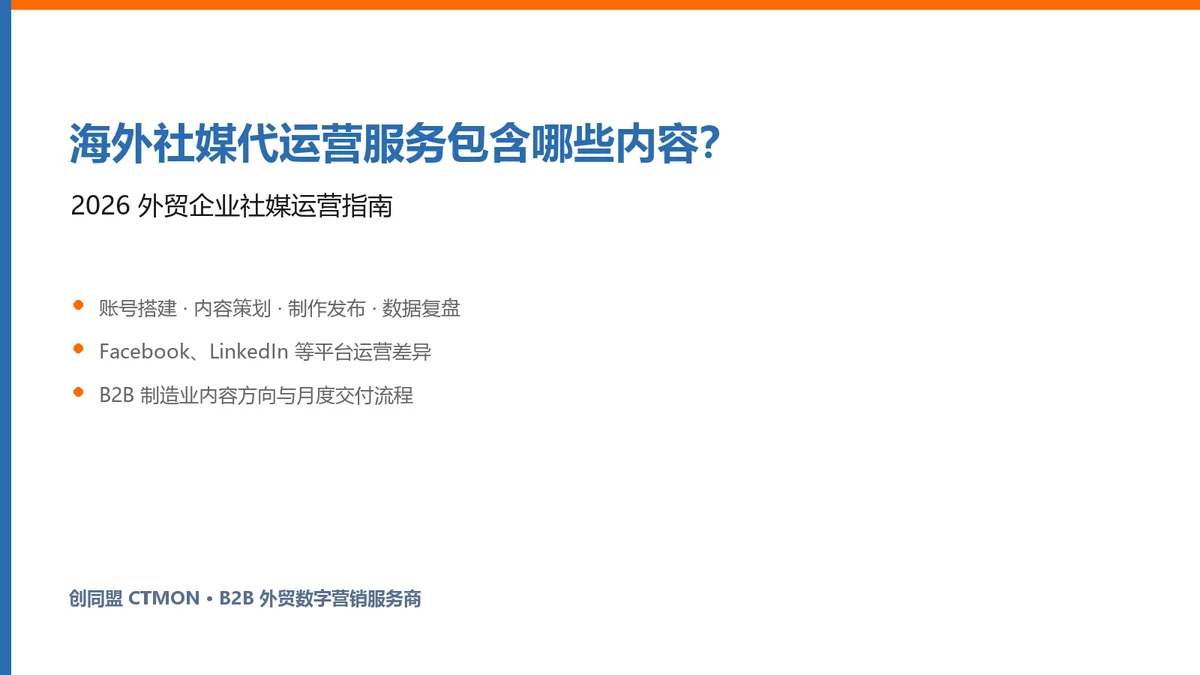
What does international social media management service include? 2026 Guide to Social Media Management for Export Businesses
2026-10-28
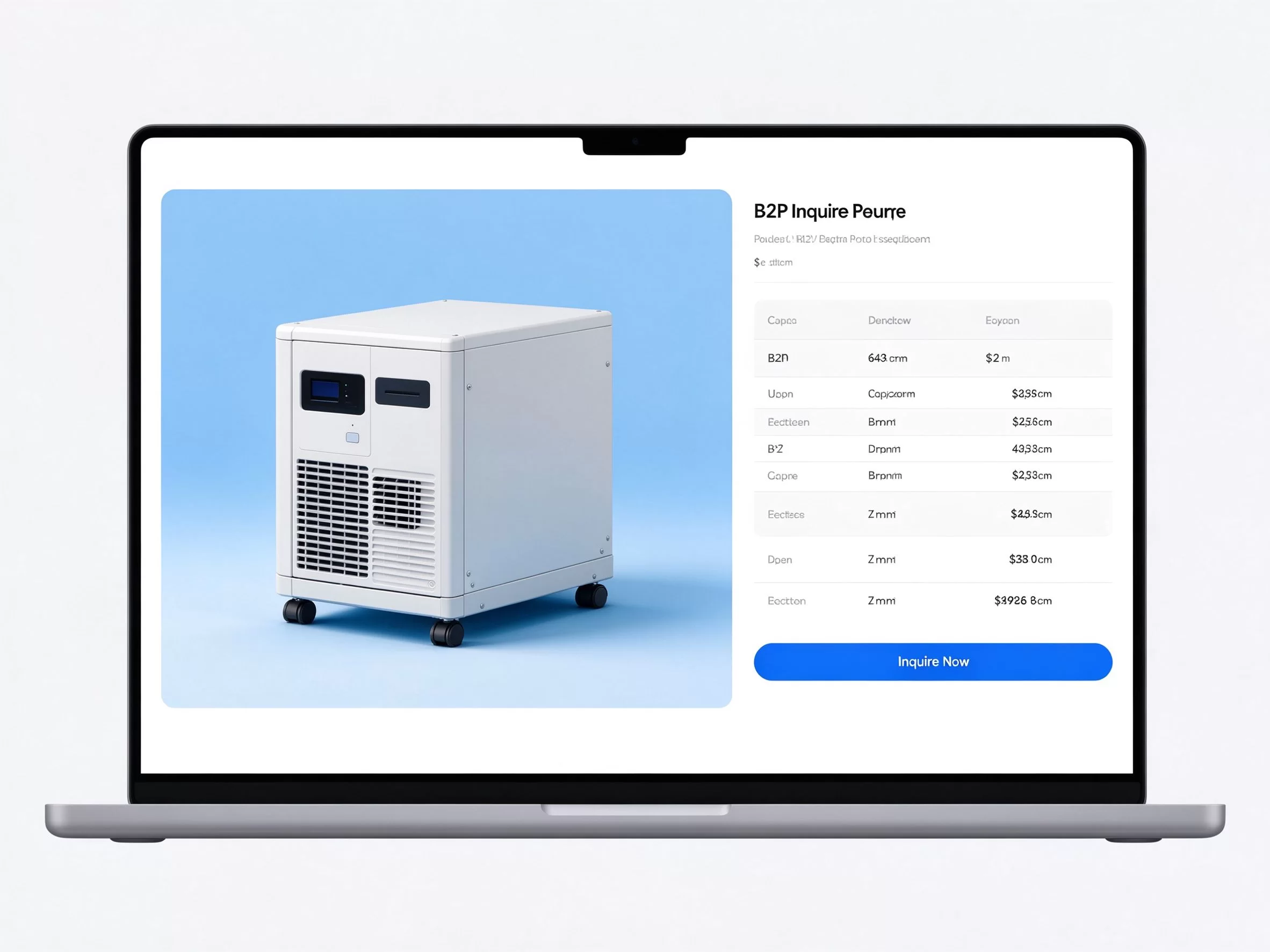
How to write a WordPress product page that will make overseas buyers want to send inquiries?
2026-10-28

How to fix WordPress form emails not sending: Practical WP Mail SMTP configuration
2026-10-27
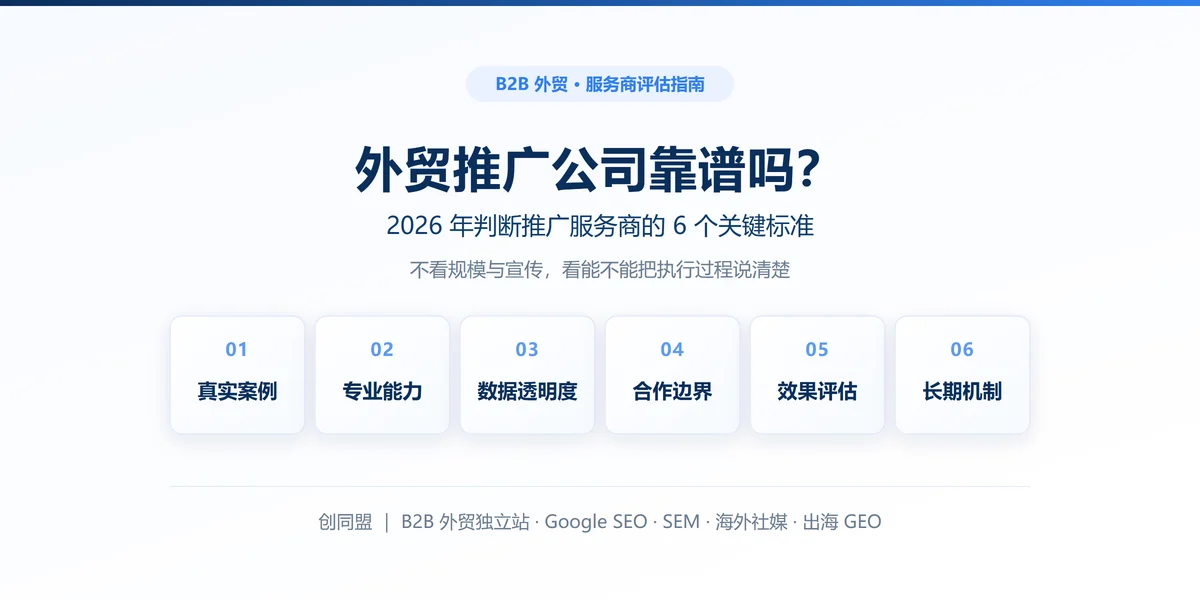
Are foreign trade promotion companies reliable? Six key criteria for businesses to judge promotion service providers in 2026.
2026-10-26
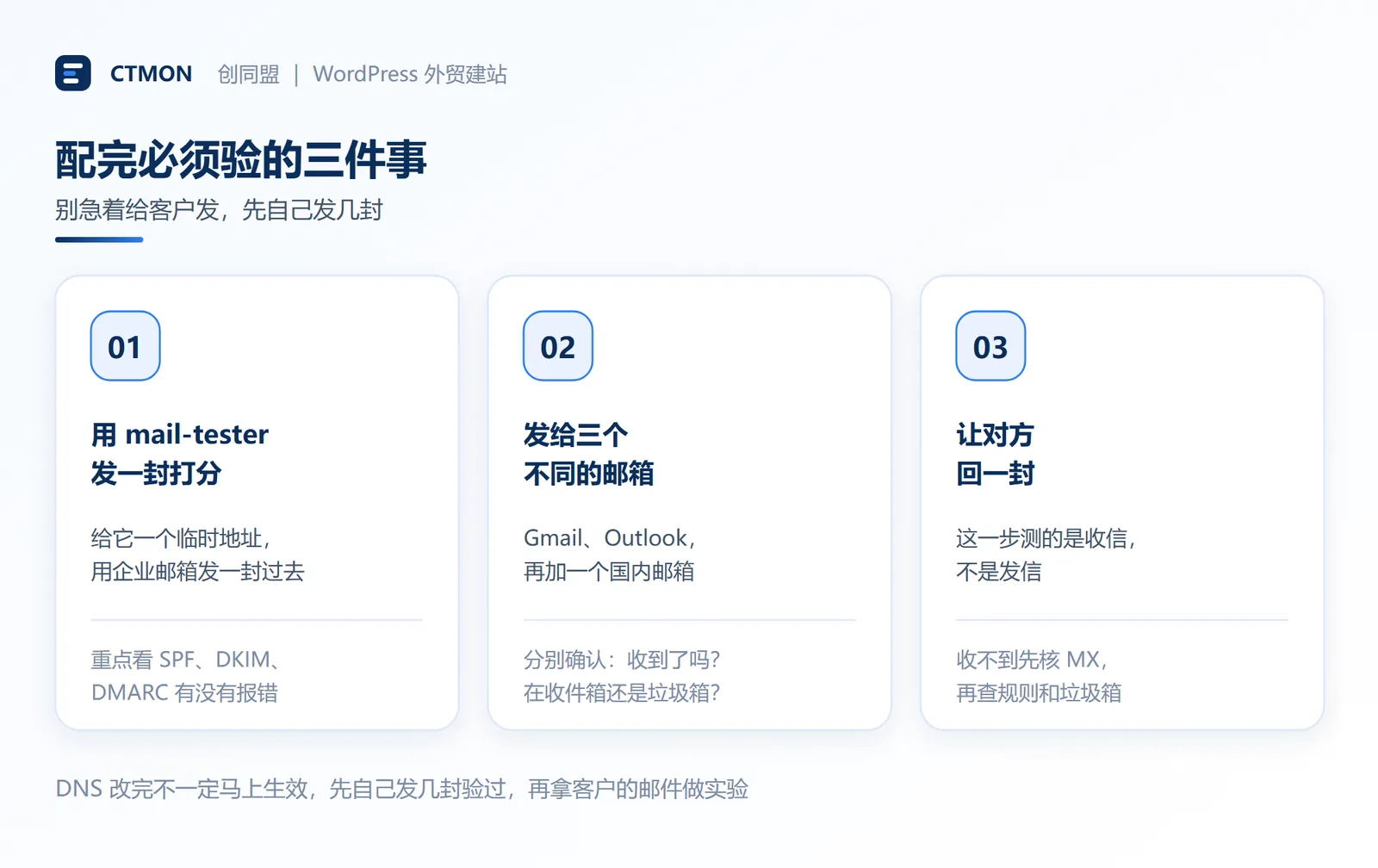
How do I set up an email account for export businesses? How can I configure it to avoid it ending up in the spam/junk mail folder?
2026-10-26
Related Articles
What are the differences between Google SEO and Google Ads? Which should B2B export businesses do first?
2026 Shenzhen Google SEO Optimization Company Recommendations: Service Provider Comparison and Selection Guide
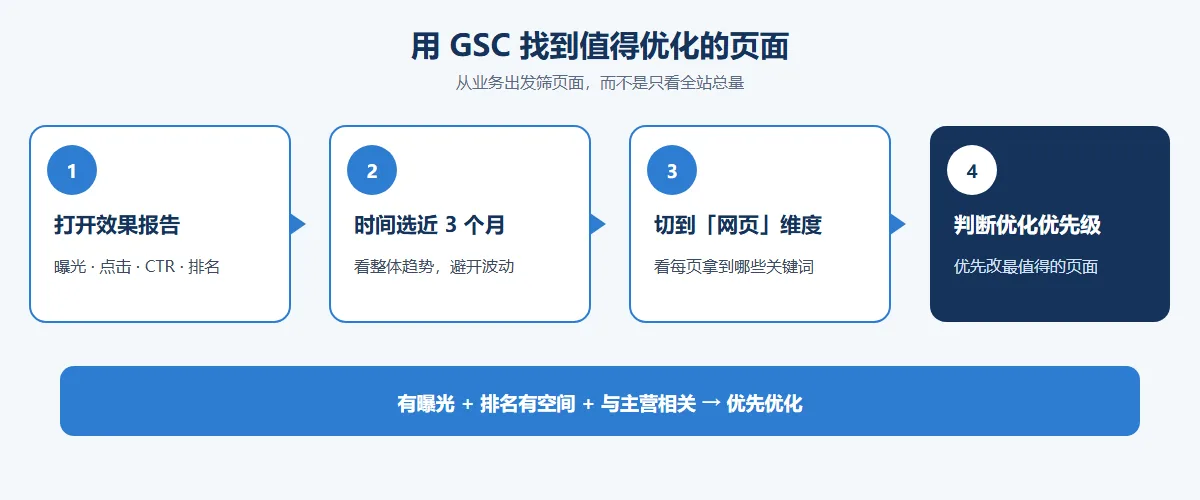
How to improve Google rankings through SEO optimization for international trade? 7 practical methods and steps.
Recommended Shenzhen B2B export website operation company: How to choose a suitable international lead generation service provider for your enterprise?
Why is the Google ranking of Shenzhen export businesses' business websites not improving?

