Contents +
Get started in 10 minutes: Use AI for end-to-end SEO keyword research for your business website (verified version)
Source: 创同盟
Date: 2026-06-08
Views: 391
In the AI era, much of the work in business website SEO can be carried out with the help of AI tools, and of course, the core of SEO work, "keyword research," is no exception. The core of keyword research is "mainly based on an understanding of the business and insights into user search habits and intent." I break down the entire keyword research process into four behavioral stages: analyzing seed words, finding keywords, screening keywords, and refining keywords.
The following demonstration uses ChatGPT to illustrate the process and key points. It will also incorporate keywords generated by ChatGPT and verify them using professional SEO tools (such as Google Keyword Planner, SEMrush, etc.). By examining keyword search volume, competition, and other data, we can filter out keywords with practical value.
The first step in the initial operation of business website SEO is to learn the company's business model, business type, and target customers. Only by clarifying these can you define your promotion positioning, what your main business is, what problems you can help customers solve, and how you solve them. At the same time, you need to know your target customer decision-makers. For most B2B businesses, the decision-making process is very long, and the focus of each decision is very important. Because business website SEO operation is a branch of marketing, I want to put this paragraph before starting the process, and also to remind myself not to start by working on keywords or studying traffic volume... You need to go back to the basics and think about things from the ground up. If users don't use these terms or search in these ways, spending a lot of time researching them is meaningless.
1. Analyze seed words
The first step in SEO isn't using tools to find keywords in bulk, but rather analyzing how overseas customers refer to our products in sales emails, what their needs are, and finding localized counterparts in those countries to name our products and services. Record these keywords, identifying approximately 5-8 seed keywords. Then, using a tool that adapts to the target country's internet environment, check the relevance of the business/product information appearing on Google search results pages.
Below is a tutorial on making PVC waterproof adhesive. After finding seed keywords, I use Google to search and see if the results match. I also check the "relevance of dropdown suggestions" and "People also search for keywords" in the search box . I select some keywords with high business relevance and add them to the seed keywords. The more original seed keywords there are, the more accurate and comprehensive the keyword expansion will be. Below are specific screenshots demonstrating this.
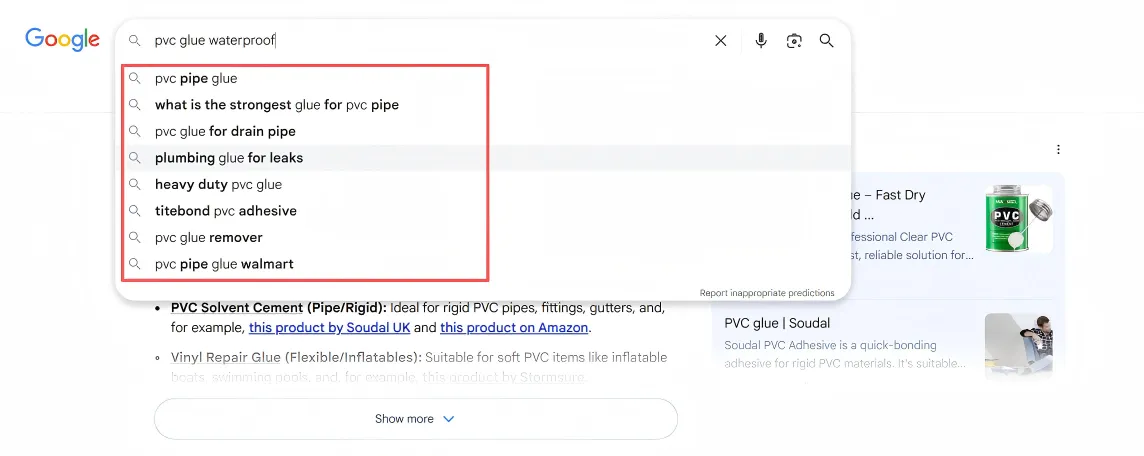
Figure 1. Google keyword dropdown suggestions
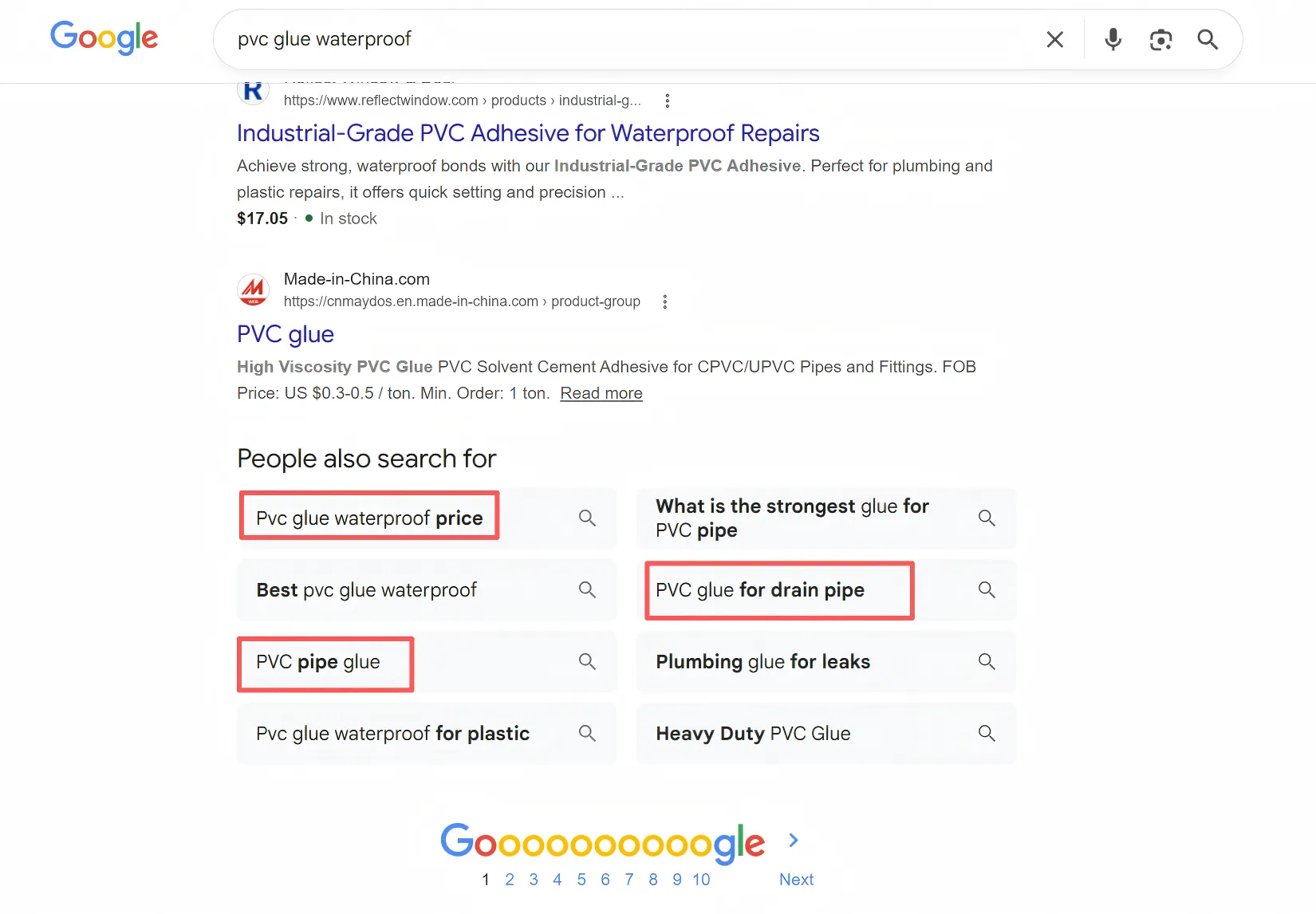
Figure 2 Google People also search for
2. Search for keywords
Once the above steps are completed, you can use ChatGPT to find expanded keywords. Next, we'll use commands to guide the AI in understanding these commands. The precise and accurate expression of these commands determines the quality of the output. Below is a screenshot of the "Example AI Keyword Expansion Suggestions" and the generated results. The translated content using the suggested words is as follows:
I am a business website operator specializing in PVC glue waterproof products. We are a source manufacturer of PVC glue waterproof products, mainly sold in the US and Canadian markets. Our primary target customers are local construction teams or building material distributors.
Application scenarios of the product: It is mainly used for bonding PVC water pipes and repairing damaged pipes. It has the characteristics of being waterproof, corrosion resistant, and can be installed at low temperatures.
Customers refer to the product as "PVC glue, PVC waterproof glue, PVC pipe glue, PVC adhesive";
#Task
① Expand 100 keywords based on how users refer to the product;
② The keyword expansion types are: "10 factory keywords, 10 scene keywords, 10 waterproof keywords, 20 capacity keywords, 20 price keywords, and 30 general keywords";
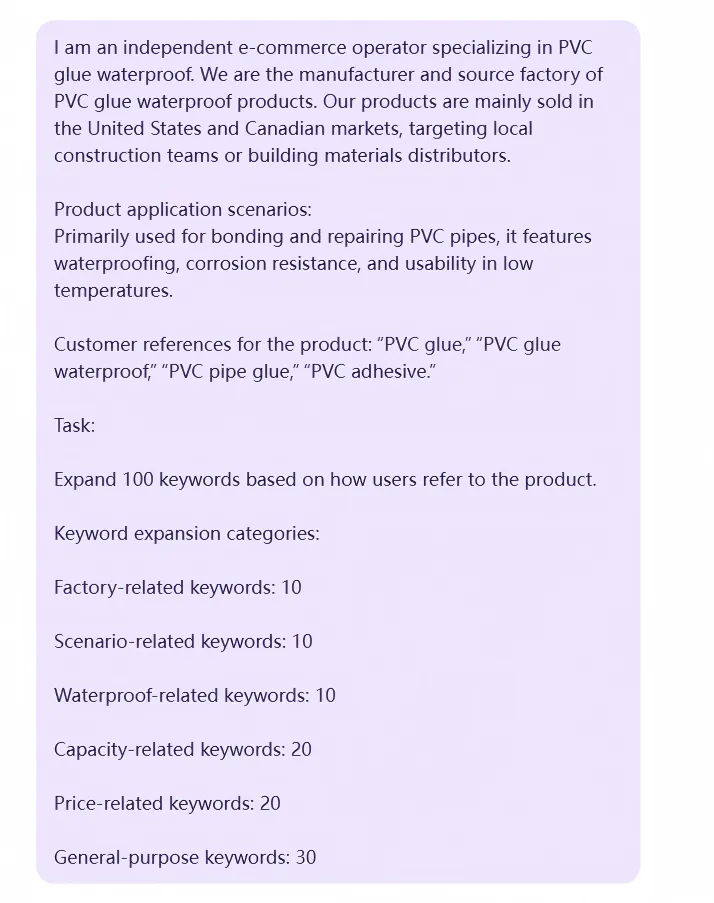
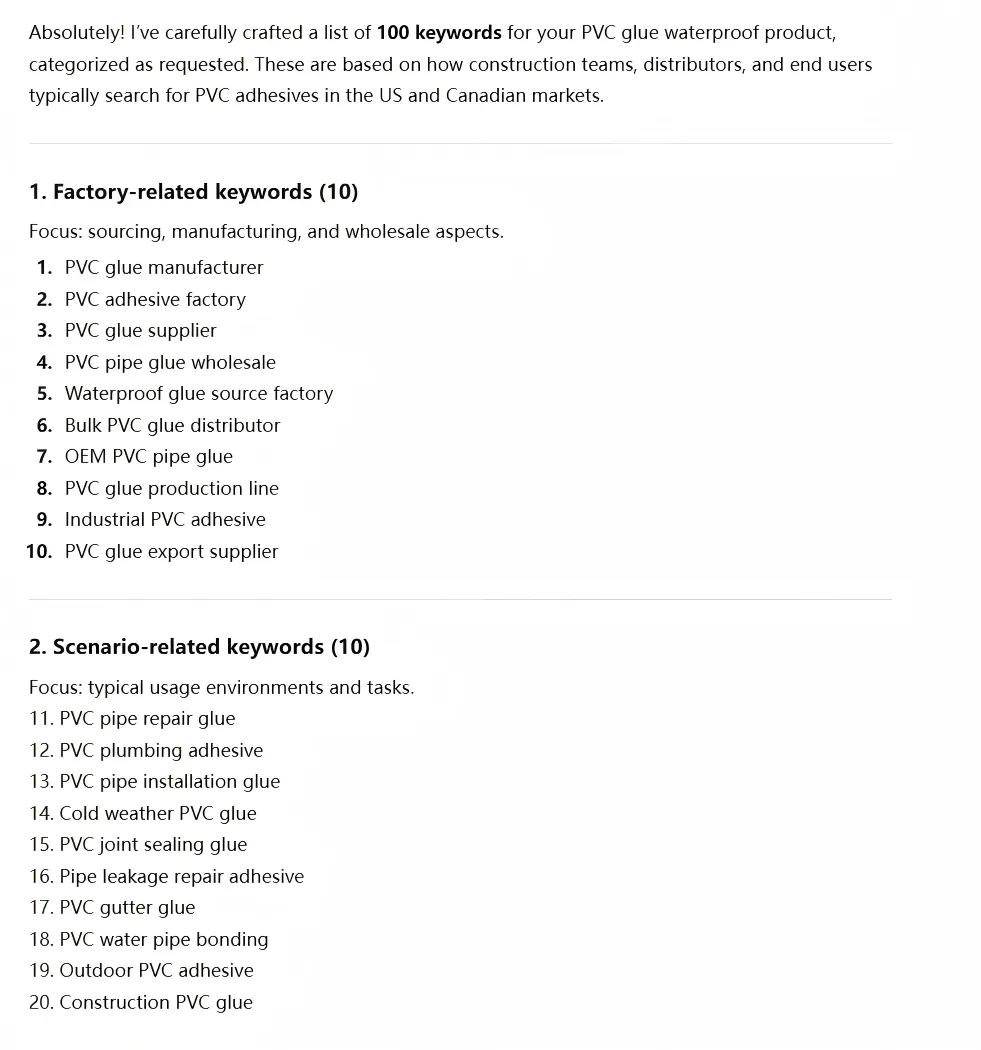
Figure 3. Chat GPT prompt generation result
Of course, the dimensions and number of keywords can be adjusted according to your needs. Secondly, we import the AI-generated keywords into the verification tool for keyword screening.
3. Screening keywords
Using Google Keyword Planner and SEMrush, we can analyze keyword search volume, relevance, SEO KD, and attribute screening. Without further ado, let's get to the point: to use Google Keyword Planner, you need to register for Google Ads.
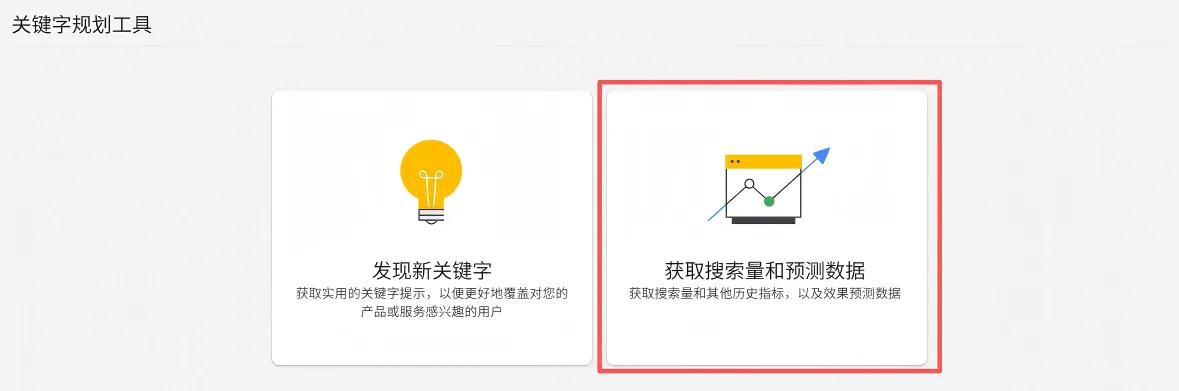
Figure 4 Google Keyword Planner
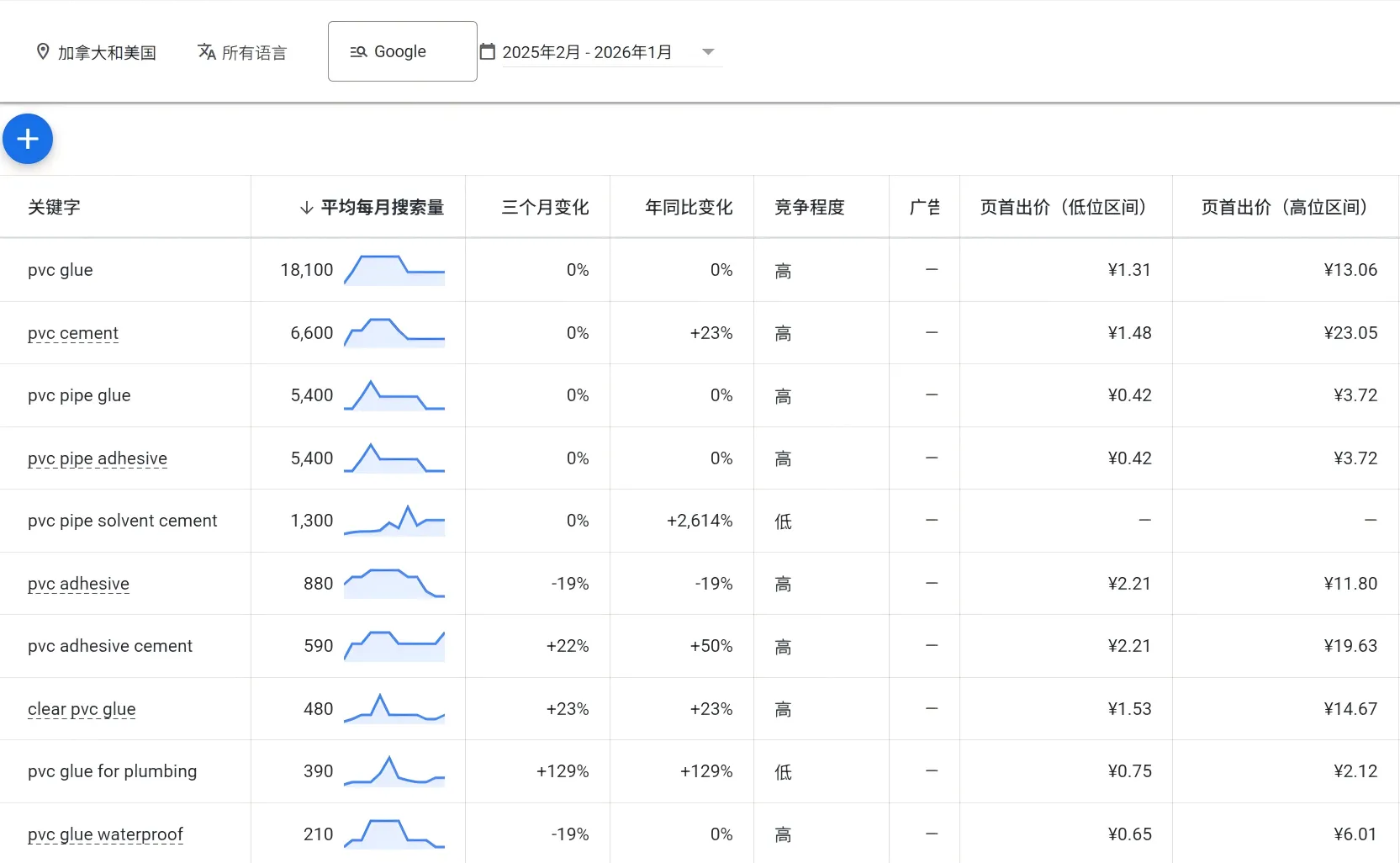
Figure 5 Google Keyword Planner
The above is the predicted search volume data result after clicking "Get Search Volume and Prediction Data" in the keyword tool, importing AI keywords (supports copying or file import), setting the target country and target language, and selecting the time.
Then, through SEMrush, click on the keyword checker under "Relevance, SEO KD, Attribute Screening" to copy the keyword query. At the same time, pay attention to the selection of the target country.
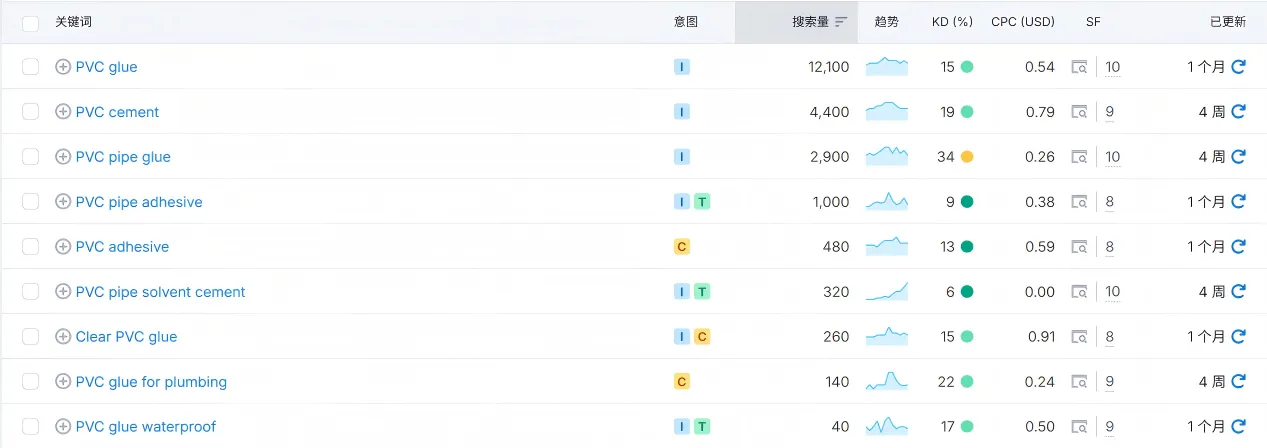
Figure 6 SEMrush Keyword Tool
4. Subdivide keywords
As the final step in keyword research and the output of results, keyword segmentation presents the keyword optimization strategy and determines the efficiency of keyword optimization for a business website. The pyramid structure of a business website dictates that different pages correspond to different content and user value points, and the hierarchical structure also leads to different traffic and weight distributions, resulting in differences in keyword placement.
Based on the business website's structure, keyword user intent, and attributes—three dimensions—keywords can be broken down into a corresponding thesaurus for the business website's structure.
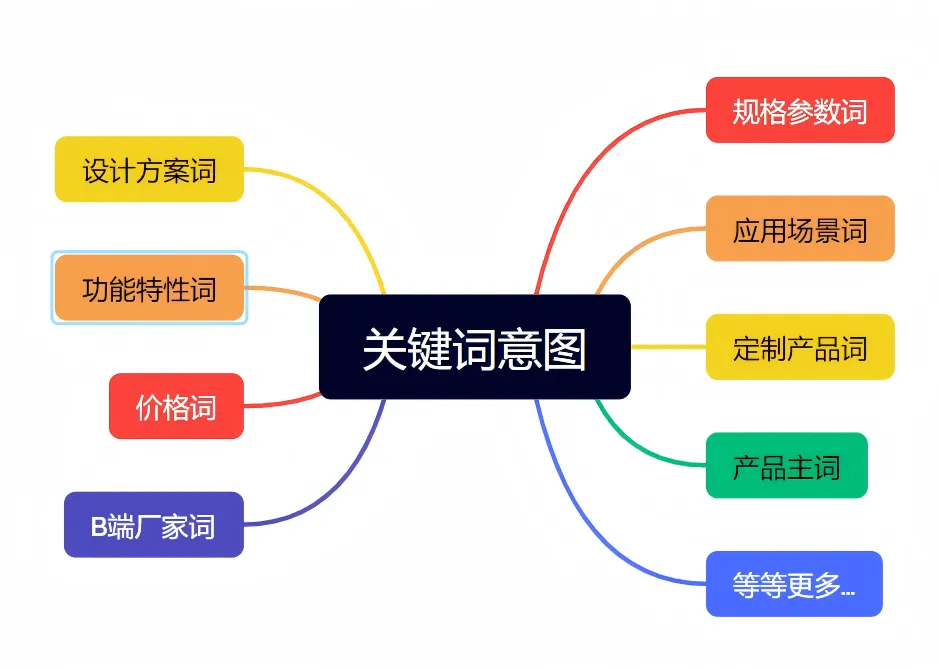
Figure 7 Keyword User Intent Segmentation
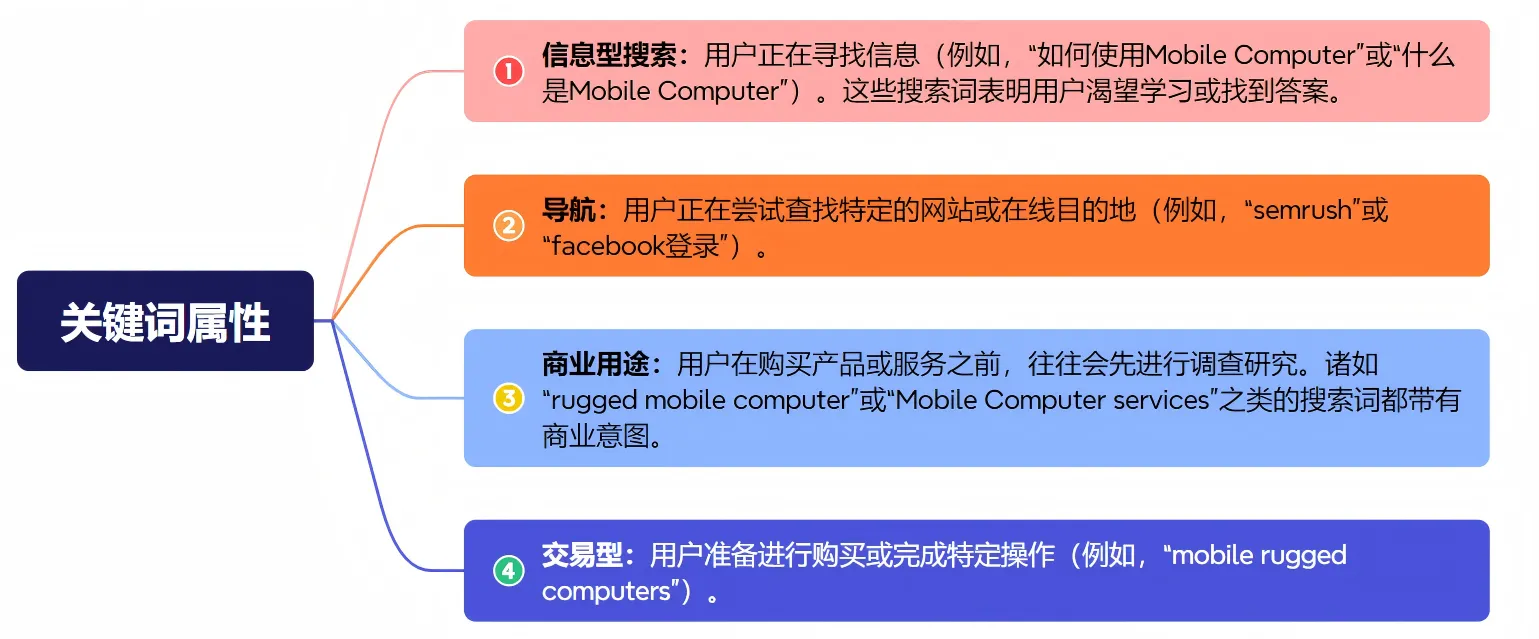
Figure 8 Keyword Attribute Breakdown
Then, based on the keyword optimization efficiency model, a table is generated, typically consisting of 1 main keyword + 3 secondary keywords + 5 long-tail keywords (this can be adjusted appropriately depending on the traffic corresponding to the industry keywords):
① Main keyword: The keyword that best matches the product category and has the highest traffic. Each group should have a main keyword as the center, accompanied by different modifiers.
② Adverb: that is, synonym. For example, the word "bicycle" in English can be either "bike" or "bicycle".
③ Long-tail keywords: These are combined keywords related to the main keyword and can also bring search traffic. They often consist of 2-3 words, or even phrases.
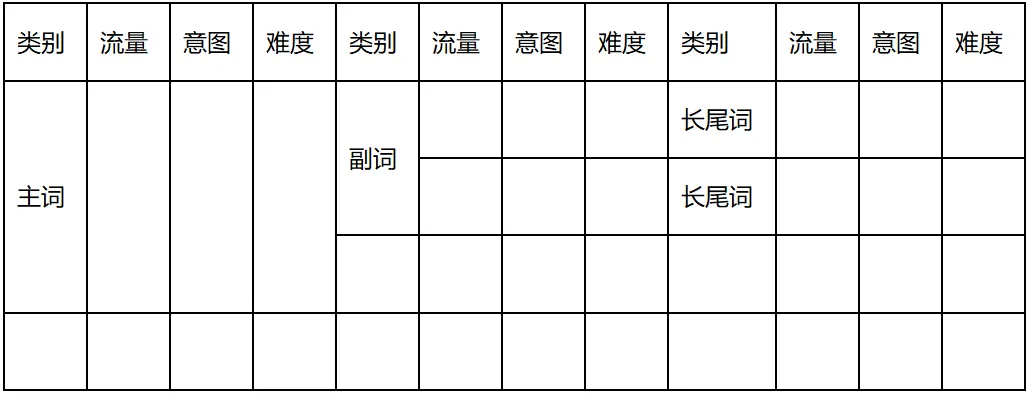
Figure 9. Screenshot of Keyword SEO header
Keyword research breakdown results presentation
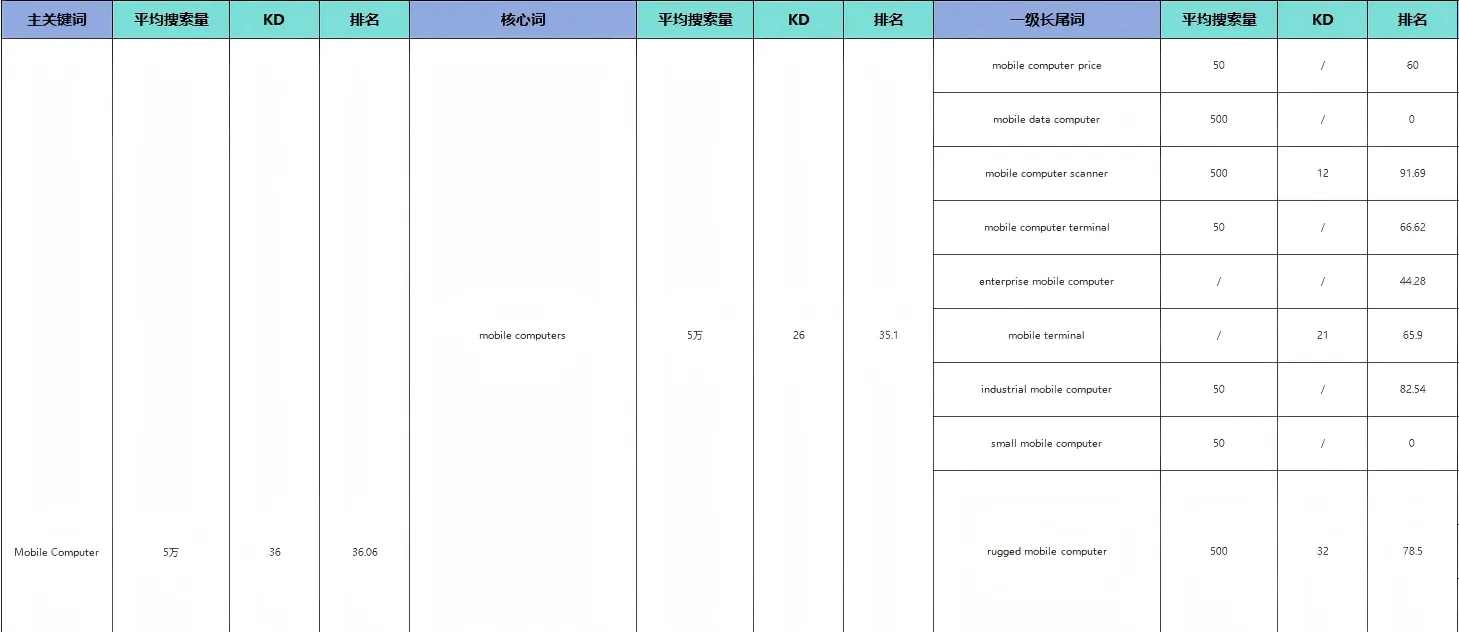
Figure 10 Keyword Breakdown Table
summary
Using AI for business website SEO keyword research can provide guidance for operational efficiency and overall business website SEO strategy thinking. AI helps businesses shift from a single-point mindset to a holistic strategic approach, improving both results and efficiency. AI tools are now integrated into the end-to-end of business website SEO work, finding traffic, rankings, providing supporting evidence, and generating inquiries. We welcome everyone to leave comments and explore effective applications of AI in business website SEO.
Some content in this article involves the project's privacy policy; some content has been replaced without affecting the reference results.
Leave a comment to receive for free: Business Website SEO Toolkit Guide/including worksheets;
What does international social media management service include? 2026 Guide to Social Media Management for Export Businesses
2026-10-28
How to write a WordPress product page that will make overseas buyers want to send inquiries?
2026-10-28

How to fix WordPress form emails not sending: Practical WP Mail SMTP configuration
2026-10-27
Are foreign trade promotion companies reliable? Six key criteria for businesses to judge promotion service providers in 2026.
2026-10-26
How do I set up an email account for export businesses? How can I configure it to avoid it ending up in the spam/junk mail folder?
2026-10-26
Related Articles
What are the differences between Google SEO and Google Ads? Which should B2B export businesses do first?
2026 Shenzhen Google SEO Optimization Company Recommendations: Service Provider Comparison and Selection Guide
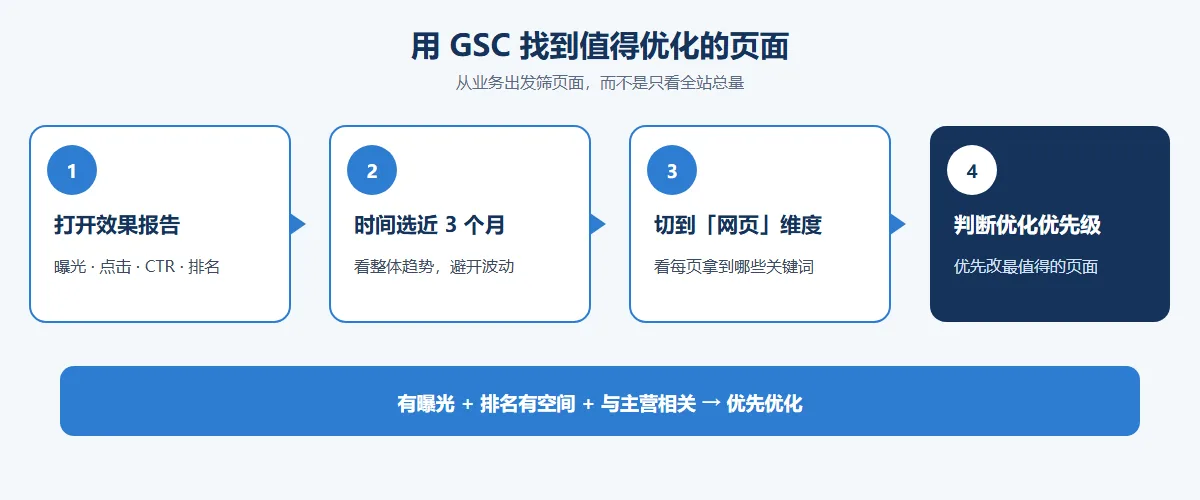
How to improve Google rankings through SEO optimization for international trade? 7 practical methods and steps.

Recommended Shenzhen B2B export website operation company: How to choose a suitable international lead generation service provider for your enterprise?

Why is the Google ranking of Shenzhen export businesses' business websites not improving?

