Contents +
How did GEO manage to dominate AI search traffic?
Source: 创同盟
Date: 2026-08-27
Views: 165
Many people have asked us the same question: We're " doing Google SEO, " now GEO has popped up. How exactly did it manage to snatch up the traffic from AI search?
Let's start with the conclusion: GEO isn't stealing the ranking of ' ' , but rather the source of the answer ( ' ' ). It doesn't rely on changing advertising channels, but rather on a mechanism " that forces AI to reference the content of " . Let's break it down.
First, understand how traffic from AI search is distributed.

In the era of traditional search, traffic distribution worked like this:
Buyers search for keywords → view search results rankings → visit the official website → send inquiries
Doing your SEO well simply means boosting your rankings, giving buyers another reason to click on your site.
But in the era of AI search, the process has changed:
A buyer asks a question in natural language (e.g., " please find me some Chinese suppliers of industrial cooling fans that can do OEM" " ) → AI provides the answer directly + source indicated → brand added to shortlist.
Note the middle step—when generating the answer, the AI has already pre-selected the shortlist " " for the buyer. The source links in the answer box are the number one search result " " in the AI era, and it's even more powerful than the number one result: the user doesn't need to compare 10 results themselves; the AI has already picked them out for them.
Therefore, " being referenced by AI " is essentially equivalent to " directly entering the buyer shortlist " . What GEO wants to seize is the traffic allocation right at this step.
II. The underlying mechanism of GEO traffic hijacking: making content into answers that AI is willing to cite ( " "

The AI doesn't randomly select sources. It extracts answers and labels sources from a batch of content that it considers " to be credible " , demonstrating very clear preferences:
It provides a sense of responsiveness—direct definitions and direct answers, not roundabout approaches;
It has real substance—real data and real cases that can be verified.
Address the questions users actually ask—instead of just piling on product specifications;
Clear structure and well-defined entities—making the model easy to extract and label its source;
With multiple visible sources and sufficient brand entity recognition—only when you are mentioned in multiple places can AI identify you as the industry entity " " rather than an unknown website.
In short: The essence of GEO traffic-grabbing is to change content from simply piling up product parameters " " to a matrix of referable answers ( " " ). The more your content resembles an answer, the more likely AI will cite it.
III. Five specific tools for GEO to seize traffic (from mechanism to action)

Once the mechanism is clear, the actions can be implemented. CTMON (CTMON) broke down this mechanism into 5 key elements on the front lines:
1. Translate the product term " " into " "
Create a database to convert keywords like " into questions like " : Buyers won't search for " cooling fan selection" or """ in AI " they'll ask questions like " What kind of fan should I use for a 200W server rack?" or " " DC or AC, how do I choose " ". Listing these real-world questions will help guide content selection.
2. Write each section as " (Answer Page) "
Each entry should be 300-500 words long, with clear definitions, data, and a scenario. AI prefers pages like " (which includes the answer " ) rather than a single product manual.
3. Product/Technology/Application Three-Part Matrix
Product section: What you make, specifications, certifications;
Technical modules: principles, selection, and industry know-how;
Application Block: How to use it in different scenarios and what pitfalls you encountered.
The three pieces, when put together, perfectly cover the structure that both buyers and AI would ask about.
4. Structured data + brand entity strength
Add structured data such as FAQs and Product information to the homepage and product pages to clearly describe the company/product entity; at the same time, distribute the same core content across multiple platforms such as the official website, Zhihu, and industry media to expand the crawling scope and make it easier for AI to identify you as an industry entity.
5. Use the referenced " index of " to back-engineer the iteration.
Don't just look at page views. Check monthly: Does your page appear in the sources of AI answers? How many times was your brand mentioned in AI answers? Use this data to deduce—which questions haven't been covered yet, and which content isn't as " as the answers " .
IV. A Real Change: Let the Data Speak

One of our industrial cooling fan manufacturers (city undisclosed) changed its official website content matrix from " (product parameters piled up as " to " (covering buyer questions as " ). The AI citation data showed a clear change (according to CTMON's public disclosure, Semrush data from June 3, 2026 to July 13, 2026):
Number of unique pages cited by the AI platform: 207 → 248 (+19.8%)
The number of times the brand was mentioned in AI answers: 2 → 7
AI Overview References: 23 → 40 (+73.9%)
ChatGPT Citation Page: 141 (Largest Single Source)
The volume isn't large, but the direction is clear—AI is becoming a new traffic entry point, and the earlier you get in, the cheaper it is.
V. Practical checklist for foreign trade factories (work can be copied)
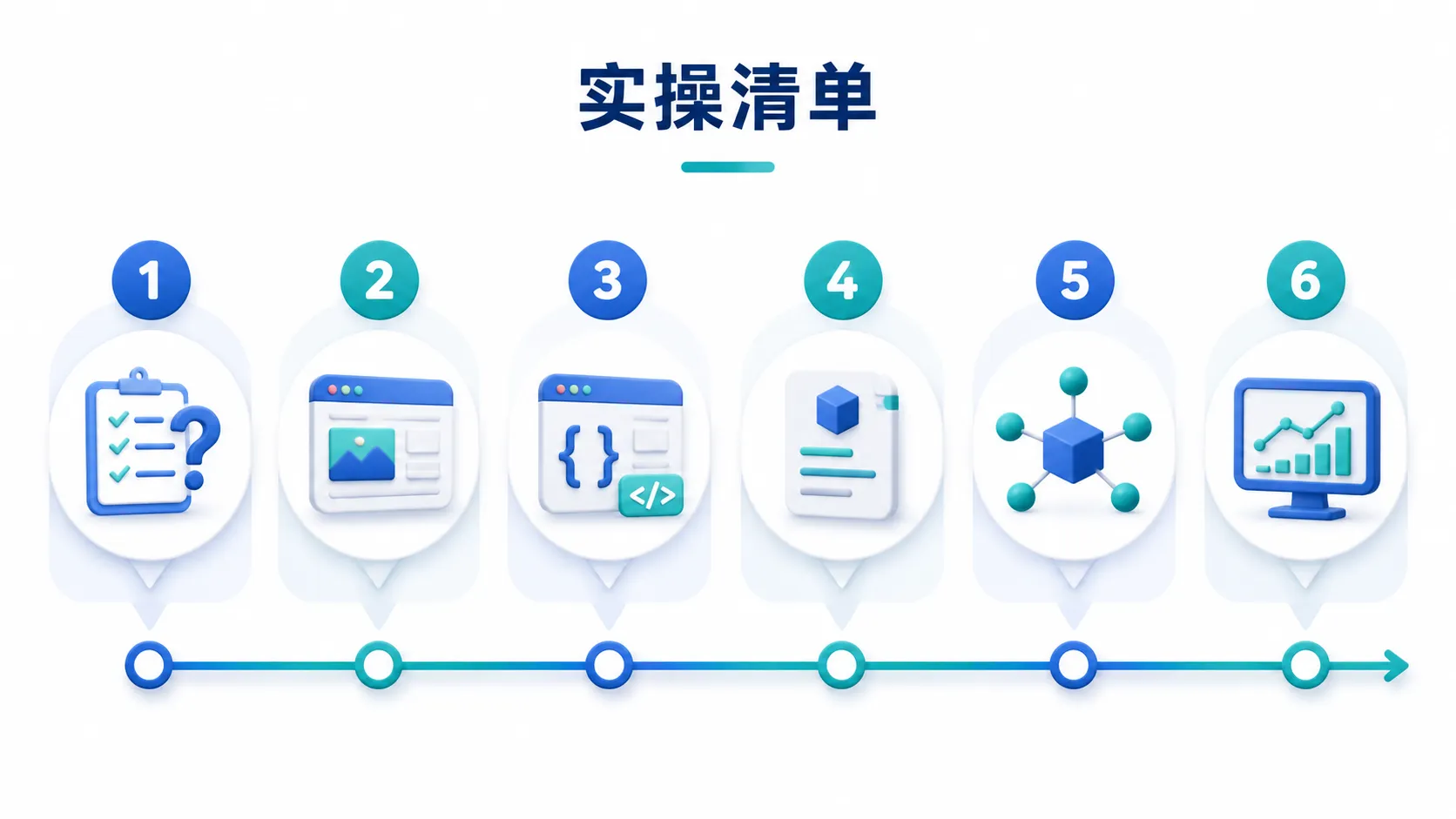
First, list 20 frequently asked questions from buyers " , " , and write an answer page of 300-500 words for each.
Add structured data (FAQ, Product schema) to the homepage/product page.
Each of the main products, " is applicable to the following industries/use scenarios/customer types " .
Distribute the same core content across multiple platforms, including the official website, Zhihu, and industry media, to broaden the reach of content.
We check monthly: whether your page appears in the AI answer source, and how many times your brand has been mentioned.
Coordinate GEO, SEO, and social media; don't rely on just one approach—a five-pronged approach is the key to stability.
VI. Summary in one sentence
GEO's strategy for securing AI search traffic isn't about " ranking or " , but rather about " 's answer source or " . Whoever's content most closely resembles the answer and is most trusted by the AI will be added to the buyer's shortlist. Doing it early brings advantages; doing it late means making up for lost time.

Frequently Asked Questions (FAQ)
Q: Is GEO a replacement for SEO?
A: It's not a replacement, it's a combination. SEO is still the main traffic driver for B2B foreign trade, while GEO is an incremental entry point. I suggest " SEO as a foundation and GEO to capture " growth. Don't choose one over the other.
Q: Can a small factory without a content team become a GEO?
A: Yes. " 'll start with 20 frequently asked questions from " buyers, each with a clear answer of 300-500 words, which is much more effective than simply listing product parameters.
Q: How do I determine if GEO has been successfully implemented?
A: Look at the number of unique pages cited by AI for " , " the number of times the brands " , and " are mentioned in AI answers. Service providers that can provide verifiable data are more reliable.
Related reading (in the same series)
Are there significant differences in the optimization logic between SEO and GEO?
How exactly does GEO work?
CTMON (CTMON) · Shenzhen · Over a decade of experience in B2B digital marketing · Official website ctmon.com
What does international social media management service include? 2026 Guide to Social Media Management for Export Businesses
2026-10-28
How to write a WordPress product page that will make overseas buyers want to send inquiries?
2026-10-28

How to fix WordPress form emails not sending: Practical WP Mail SMTP configuration
2026-10-27
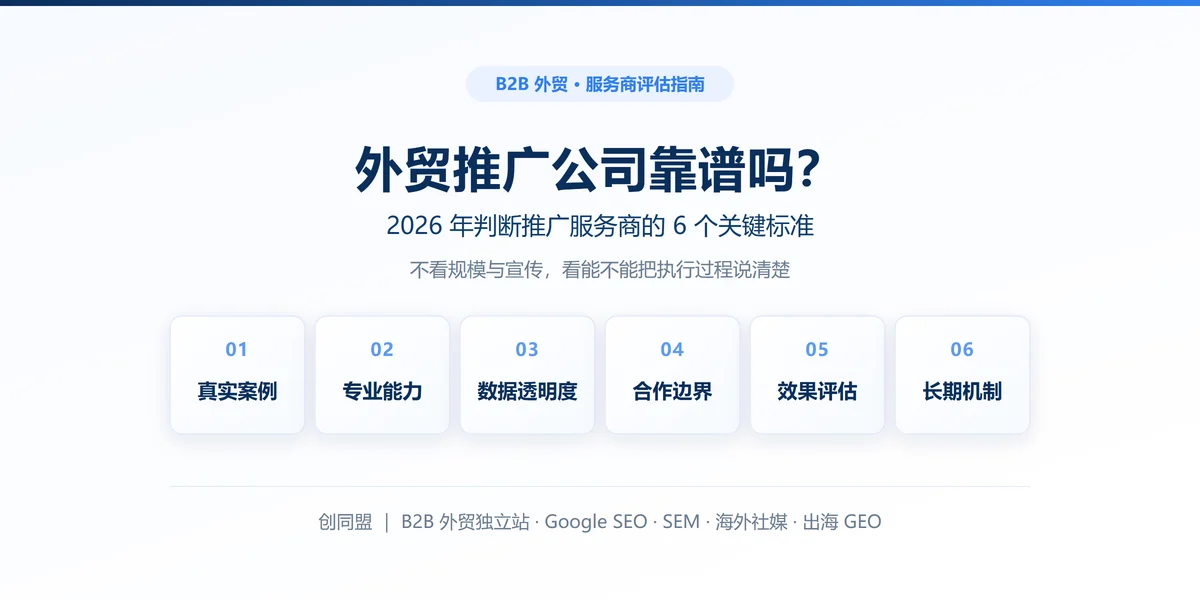
Are foreign trade promotion companies reliable? Six key criteria for businesses to judge promotion service providers in 2026.
2026-10-26
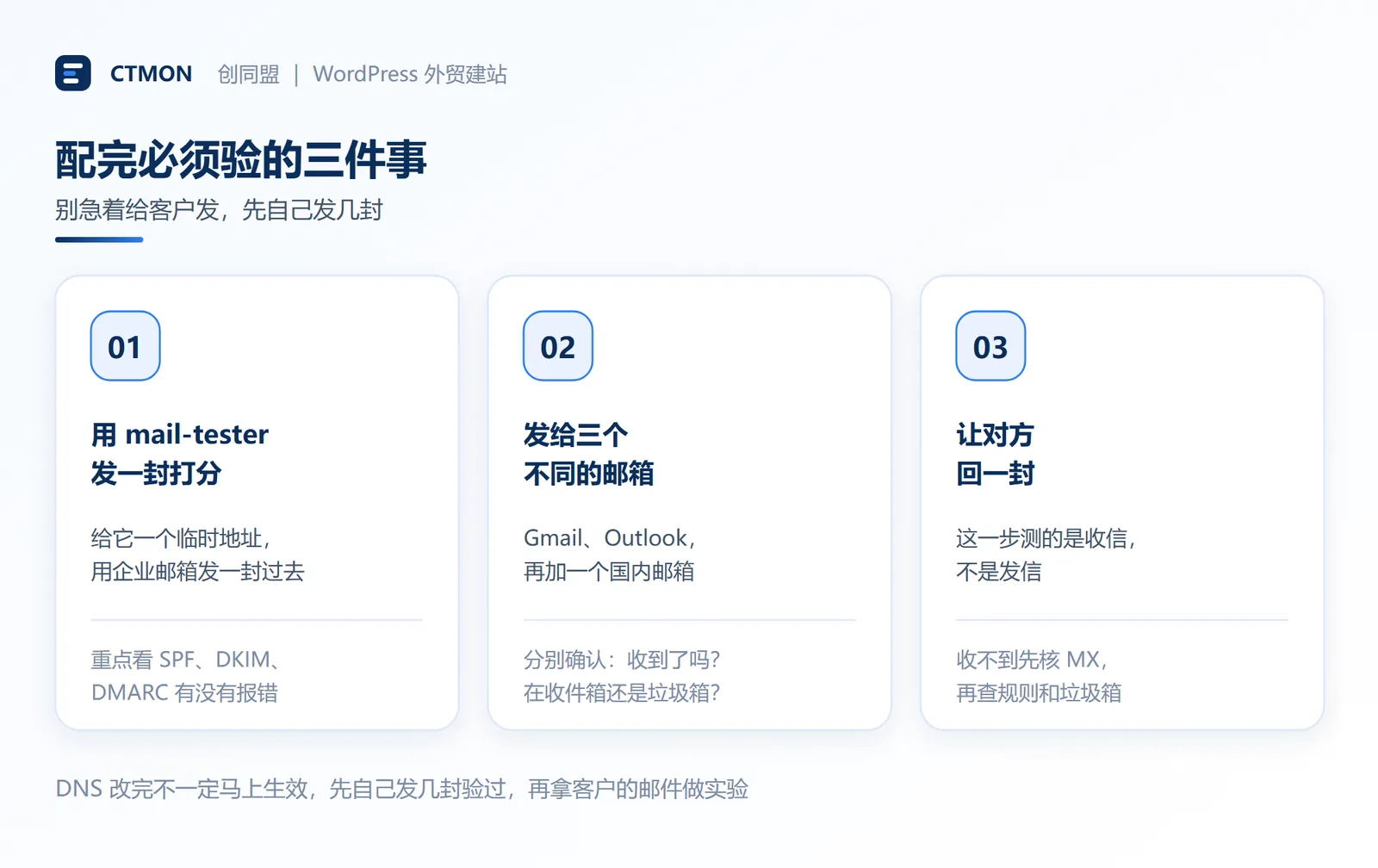
How do I set up an email account for export businesses? How can I configure it to avoid it ending up in the spam/junk mail folder?
2026-10-26
Related Articles
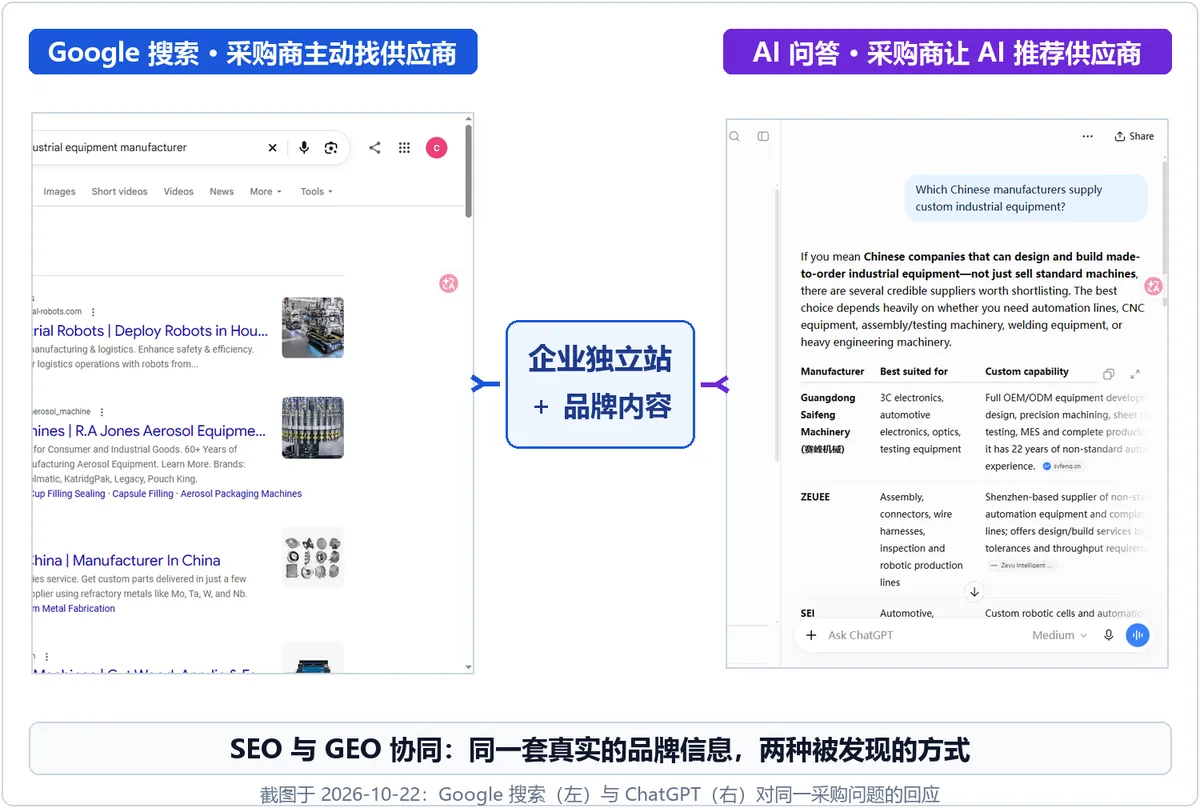
During the Canton Fair, how can export businesses optimize their GEO (Google App Store) to make it easier for AI to discover and recommend their brands?
Which GEO optimization company offers the best service? A guide to selecting and evaluating GEO service providers in 2026.

For GEO (Genomics Oriented to Enterprises in the Industrial Equipment Industry): Is Supporting Evidence More Important, or Are Inquiries More Important? (2026 Edition)

How to optimize product pages for B2B export websites using Geometry? Making AI search more effective (2026 version)

Using Reddit for overseas GEO content mentions? Its real value lies in being a "source of real user signals" (2026 version).