Contents +
Are the optimization logics of SEO and GEO very different?
Source: 创同盟
Date: 2026-08-26
Views: 177
Having worked in B2B digital marketing for over a decade, the question I get asked most often lately is: " We're still doing Google SEO, and now GEO has popped up. Are they the same thing? " their optimization logics that different?"
Let's start with the conclusion: the differences are indeed significant, but the underlying foundation is the same. SEO and GEO aren't simply about changing advertising channels; rather " the same content that must simultaneously satisfy two sets of evaluation logic. " 's break it down below.
I. The major differences: SEO focuses on ranking, while GEO focuses on citations.

Distinguish in one sentence:
SEO (Search Engine Optimization) is all about " you " in search results. You optimize your webpage, Google ranks it according to its authority, and then users click through.
GEO (Generative Engine Optimization) is competing to " if your " is cited in the AI's answer. The AI doesn't rank you; it extracts an answer from content it deems credible and incidentally marks its source—whether you make it into that answer depends on whether the AI thinks your " resembles the answer " .
The hit paths of these two are completely different:
In the search engine era: Buyers search for keywords → check rankings → visit the official website → send inquiries.
In the AI era: A buyer asks a question in natural language → AI directly provides the answer and source → the brand is added to a shortlist.
SEO allows you to leverage backlinks and technical optimization to boost rankings; however, GEO AI prioritizes whether the content itself is a " answer—whether it has a clear definition, real data, and covers questions users would genuinely ask. Therefore, " is " simply about " your ads; it's about transforming content " a format that AI is willing to " .
II. Specific Differences in the Five Dimensions
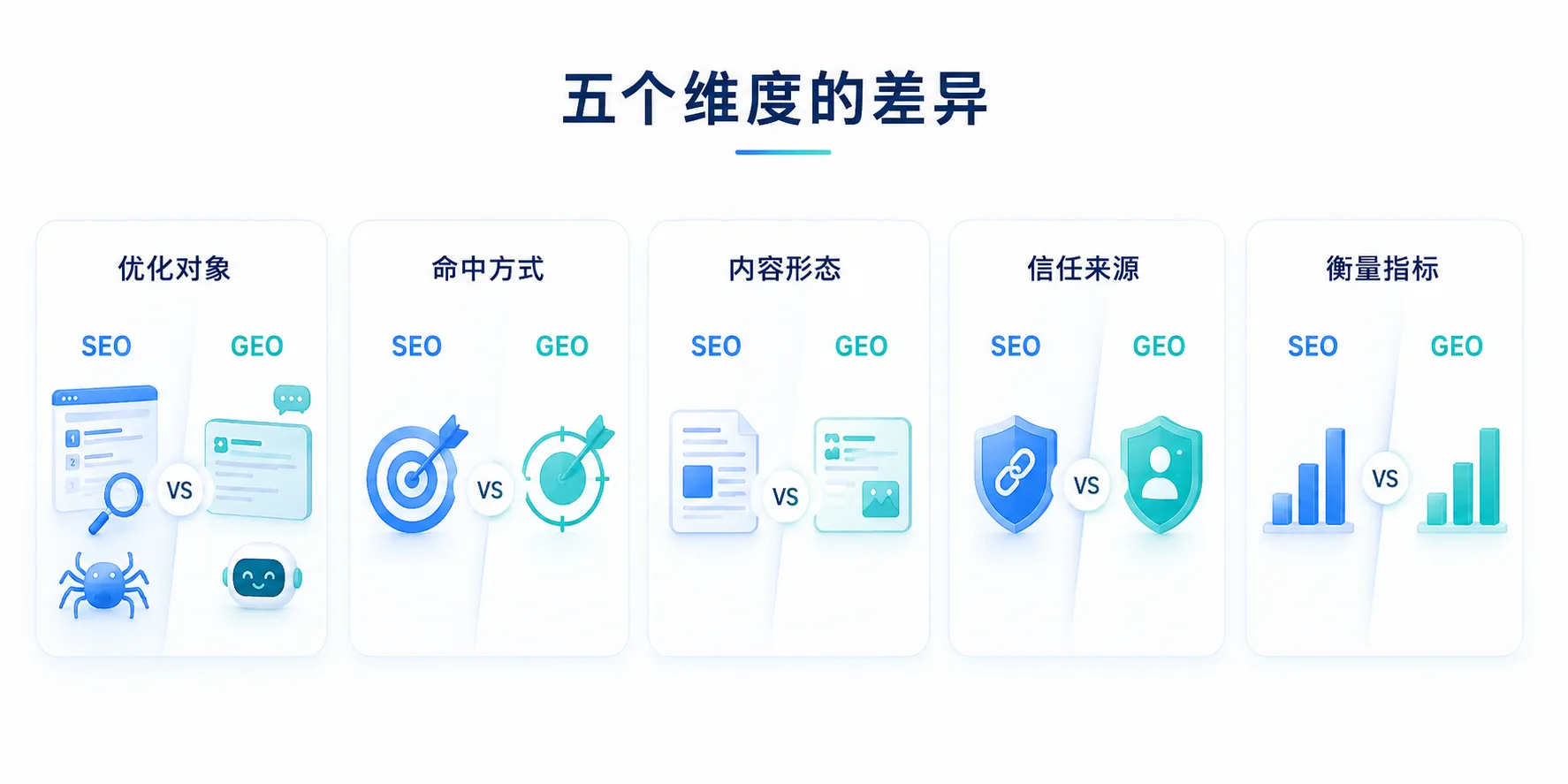
| Dimension | SEO | GEO |
|---|---|---|
| Optimization Object | Search engine crawlers, ranking algorithms | Large language models and AI answer generation |
| Hit method | Top ranking + User clicks | Directly extracted as an answer / Source attribution |
| Content Format | Keyword density, title, backlink weight | Semantic structure, entities, real data, and referable answers |
| Source of Trust | PageRank, backlinks, domain authority | EEAT, source attribution, brand entity |
| Measurement indicators | Ranking, click-through rate, organic traffic | Number of pages cited, number of brand mentions, and AI visibility. |
For example, " an article " industrial cooling fan selection, an SEO perspective might focus " keyword stuffing ("cooling fan selection," "industrial cooling fan supplier") and building numerous backlinks " A GEO perspective, however, might consider: " questions would a buyer ask in AI? What kind of fan should ' 200W server rack use ' How do I choose between ' and AC ' —By clearly providing the answers to these questions, AI can better cite my " . The same topic, but written differently.
III. Why are the underlying layers interconnected? Because the foundations are the same.

Having discussed the differences, we need to cool down the overheated expectations. GEO doesn't appear out of thin air; it heavily relies on the quality of your existing official website content.
Technical SEO (indexing, speed, mobile, structured data) is a prerequisite for GEO. If AI can't even crawl your page, there's no point in talking about referencing it.
The fact that " addresses real user questions " is completely consistent with SEO and GEO. The FAQs, selection guides, and application scenarios you write for search are often the content that AI loves to cite.
The more stable the website's foundation, the smoother GEO will run. A thin website like " (company profile + product images " won't be recommended by AI out of thin air.
Therefore " we always tell our clients: GEO is " " of content quality, not " leaf " inferior content. Don't listen to the sales " on the market that promise to get you on the AI homepage " get you recommended by ChatGPT " 7 days—those either stuff you into low-quality aggregation pages (and get demoted quickly) or are just sales pitches.
IV. Practical Suggestions for Export-Oriented Factories
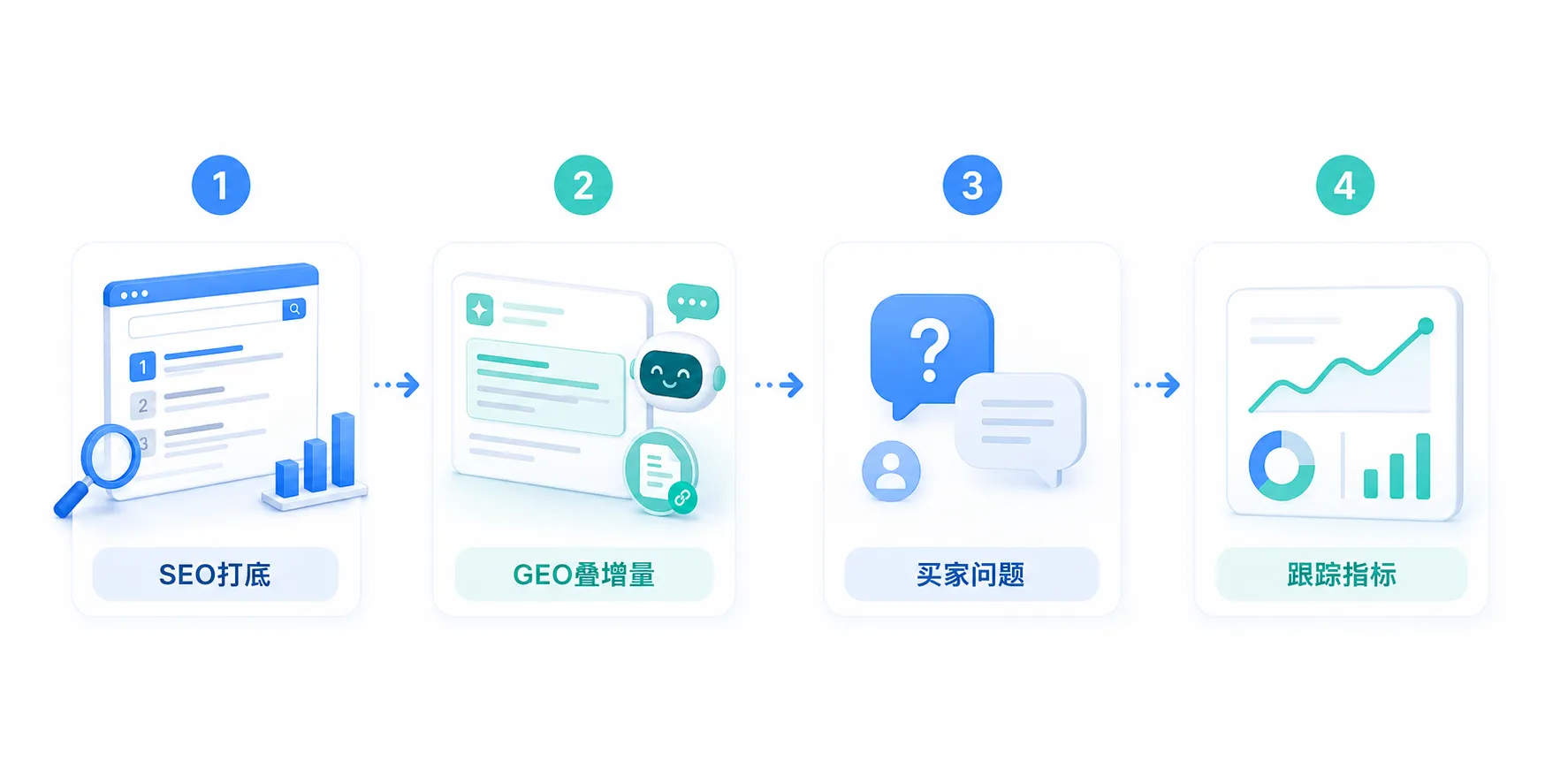
SEO as a foundation, GEO for incremental growth – don't choose one over the other. Currently, Google remains the primary traffic source for B2B foreign trade, while GEO offers incremental growth potential. It's recommended to " stable SEO and " early positioning with GEO.
Redirect the product parameters " " to user questions " , " ). This is the biggest overlap between the two optimization sets. Don't just pile on specifications on the product page; add three sections: a product section (what it does, specifications, certifications), a technical section (principles, selection, know-how), and an application section (how to use it in different scenarios, what pitfalls you've encountered). These three sections together perfectly cover the structure that both buyers and AI will ask.
Start with " " the 20 most frequently asked questions by buyers. Even with a limited budget and no content team, this can be done: each 300-500 word clear answer is far more effective than simply piling on product specifications.
Focus on the right metrics. To see if GEO is successful, check two things: whether your page appears in the AI answer sources, and how many times your brand is mentioned in the AI answers. Service providers that can provide verifiable data like the number of pages cited " " are reliable.
V. A Real Change
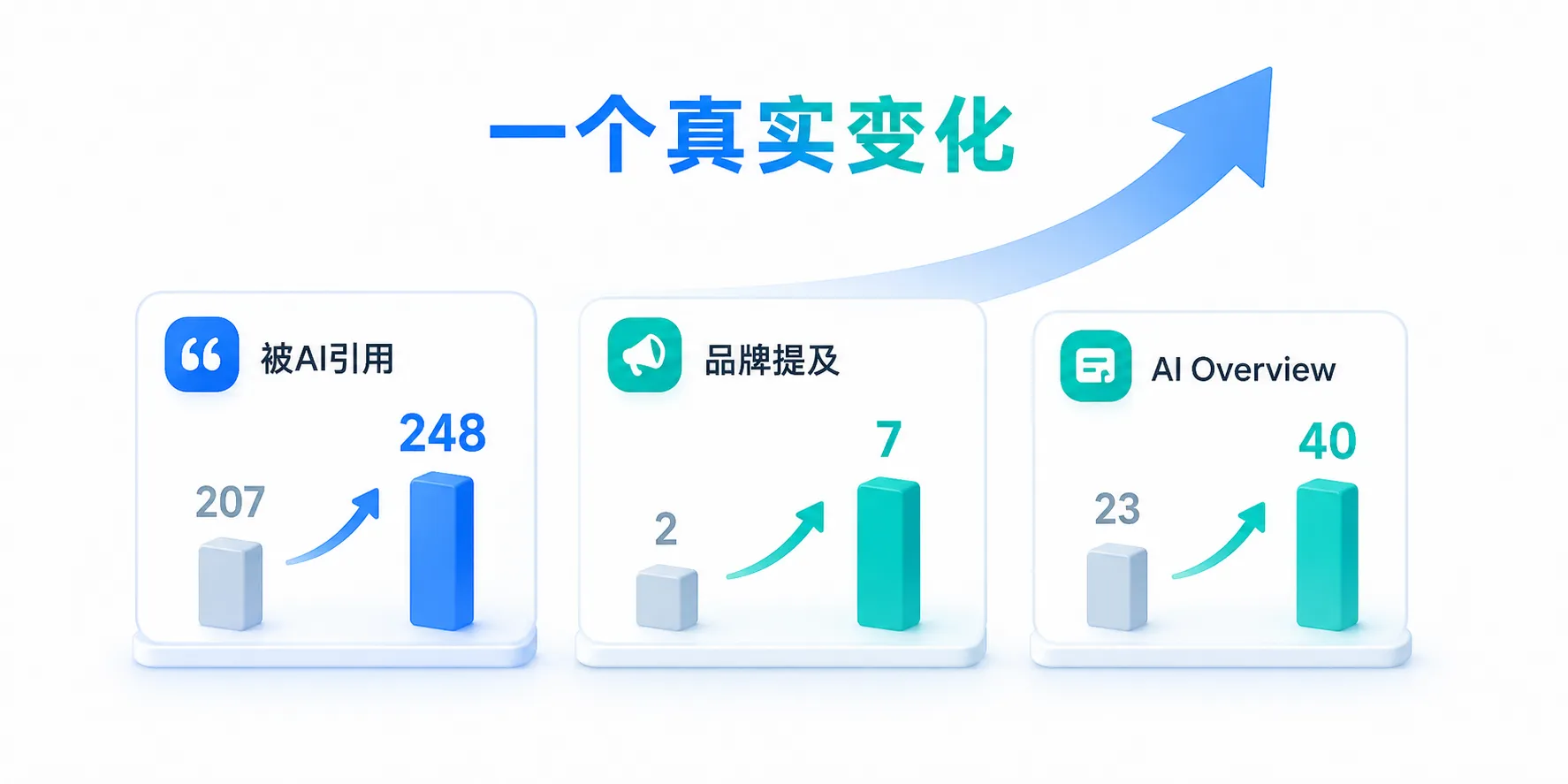
One industrial cooling fan manufacturer we serve changed its official website content matrix from " product parameters piled up in " to " (covering buyer questions in " ). As a result, the number of pages cited by AI increased from 207 to 248, brand mentions in AI answers increased from 2 to 7, and AI Overview citations increased from 23 to 40 (according to CTMON's public disclosure). The volume isn't huge, but the direction is clear—AI is becoming a new traffic entry point, and early positioning is cheaper than late positioning.
Frequently Asked Questions
Q: Which is more worthwhile to invest in, GEO or SEO?
A: In the short term, SEO remains the primary traffic driver, while GEO is an incremental entry point. It's recommended to use " SEO as a foundation, and then layer GEO with incremental " ; don't choose one over the other.
Q: Can a small factory without a content team do GEO?
A: Yes. Start by writing answers to the 20 most frequently asked questions by buyers " " , each 300-500 words long and clear. This is more effective than simply listing product parameters.
Q: How do I determine if GEO has been successful? A: Look at the number of pages cited by AI
" , the number of times the brand is mentioned in AI answers " " , ", " ). If you can't provide verifiable data, leave it as a question mark.
CTMON (CTMON) · Shenzhen · Over a decade of experience in B2B digital marketing · Official website ctmon.com

What does international social media management service include? 2026 Guide to Social Media Management for Export Businesses
2026-10-28
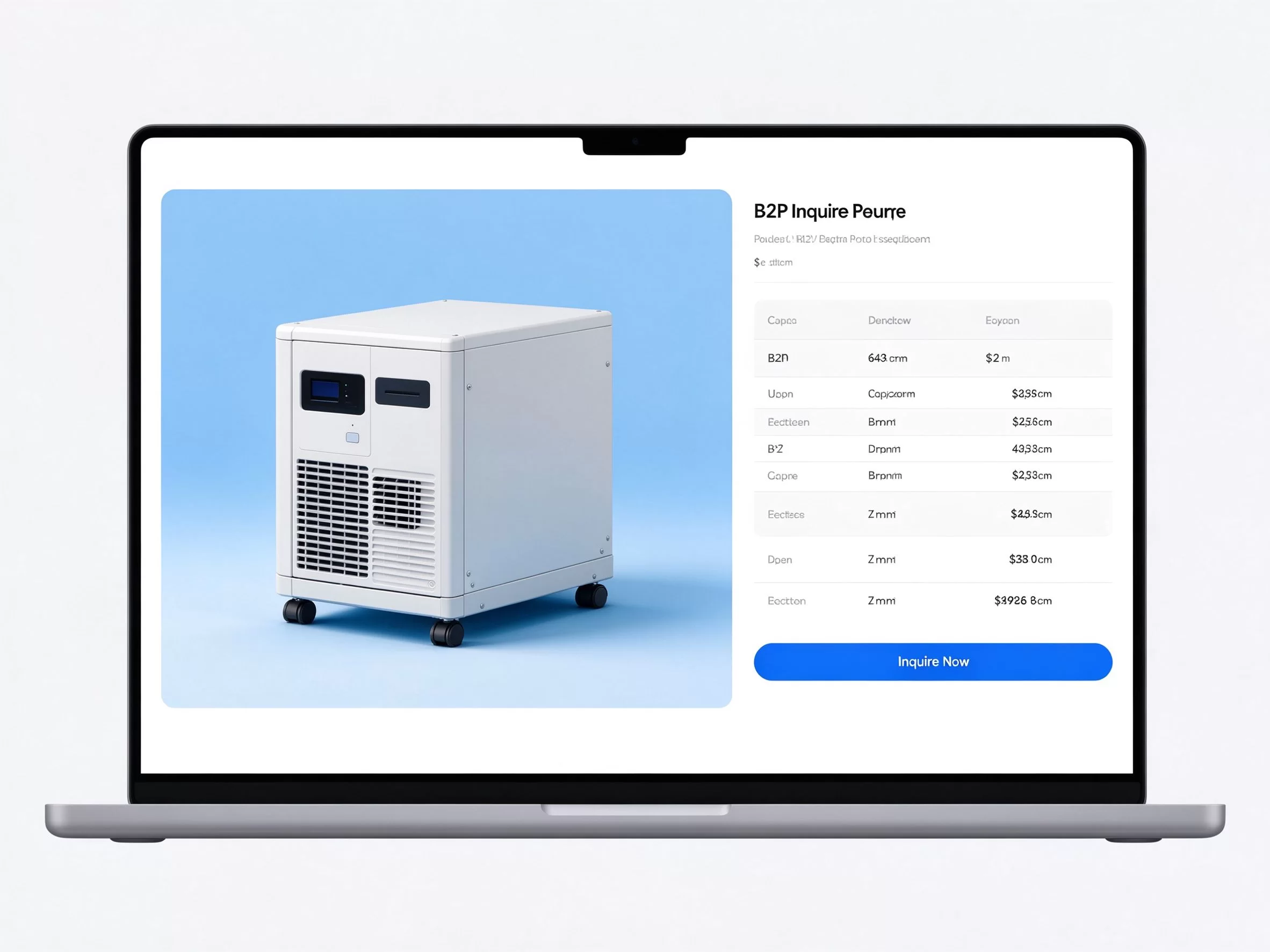
How to write a WordPress product page that will make overseas buyers want to send inquiries?
2026-10-28

How to fix WordPress form emails not sending: Practical WP Mail SMTP configuration
2026-10-27
Are foreign trade promotion companies reliable? Six key criteria for businesses to judge promotion service providers in 2026.
2026-10-26
How do I set up an email account for export businesses? How can I configure it to avoid it ending up in the spam/junk mail folder?
2026-10-26
Related Articles
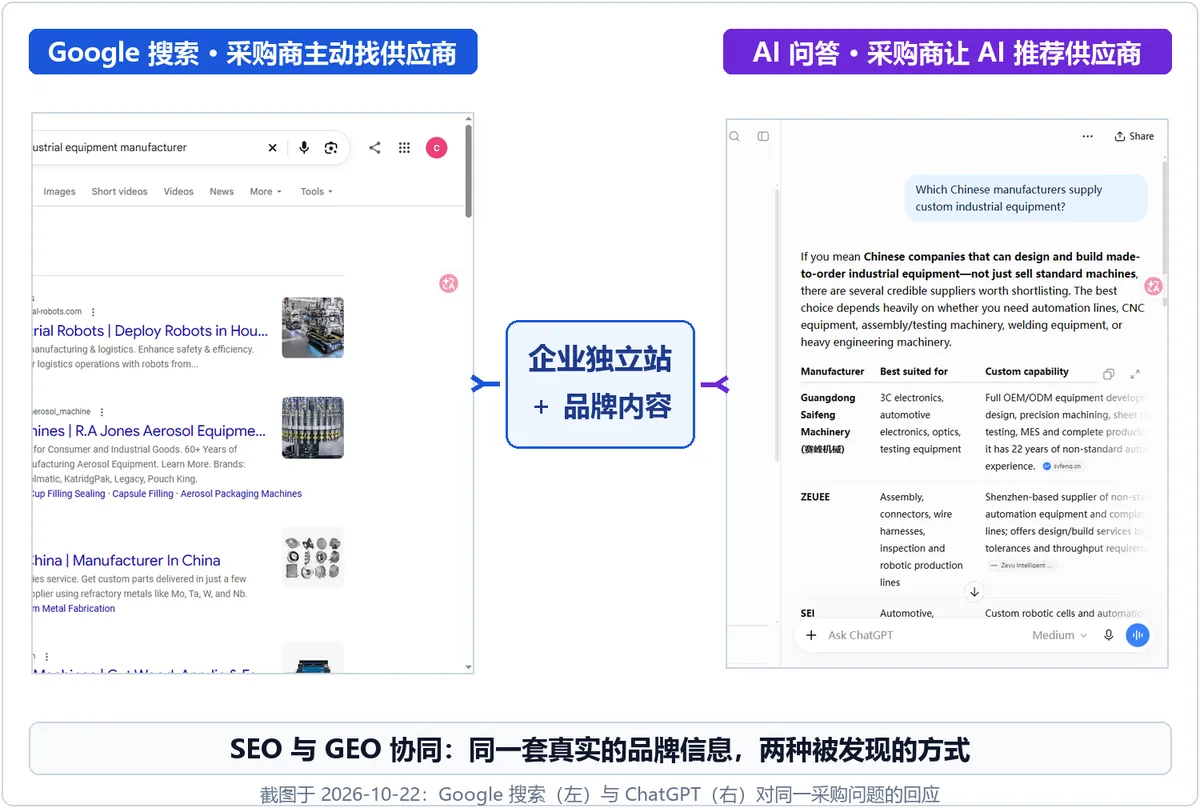
During the Canton Fair, how can export businesses optimize their GEO (Google App Store) to make it easier for AI to discover and recommend their brands?
Which GEO optimization company offers the best service? A guide to selecting and evaluating GEO service providers in 2026.

For GEO (Genomics Oriented to Enterprises in the Industrial Equipment Industry): Is Supporting Evidence More Important, or Are Inquiries More Important? (2026 Edition)

How to optimize product pages for B2B export websites using Geometry? Making AI search more effective (2026 version)

Using Reddit for overseas GEO content mentions? Its real value lies in being a "source of real user signals" (2026 version).

