Contents +
How to increase mentions in Google AI Overview? Use PAA to create an issue map and use content clusters to support it (2026 version)
Source: 创同盟
Date: 2026-09-11
Views: 130
Abstract : When a user searches for a question on Google, AI Overview generates an integrated answer at the top of the results, citing several sources. If a brand appears in this list, it effectively occupies a very high position in the decision-making process. This article defines AI Overview mention rate, the use of PAA (Also Asked by Users) as a question map, and the specific content structure of "internal + external" search.
In short: the key to increasing AIO mentions is not "writing more articles", but rather building a content system that can be understood, cited, and recommended by AI, centered around users' real questions.
I. Why AI Overview deserves serious attention
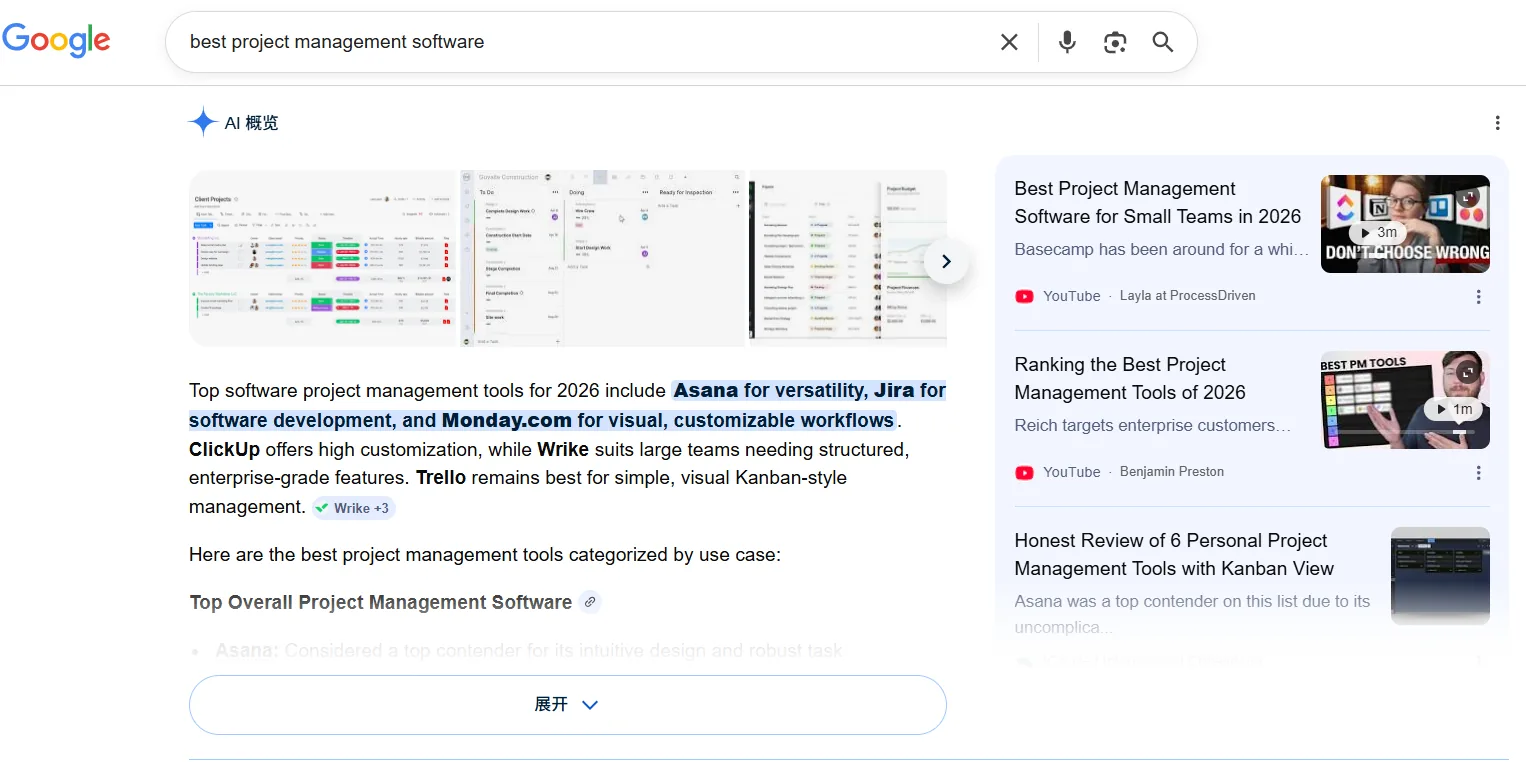
When a user searches for a question on Google, Google AI Overview generates an integrated answer directly at the top of the search results, citing several sources. For brands, this means that users have already completed their first round of cognitive judgment in the AI-generated answer before even clicking on any webpage.
If our brand, products, opinions, or official website appear in the AI Overview, it's equivalent to securing a very prominent position in brand awareness. Therefore, GEO's core goal is not just "to make the page rank higher," but to increase the brand's mention rate, citation rate, and positive visibility in AI search results.
Second, first define the indicators clearly: three rates.
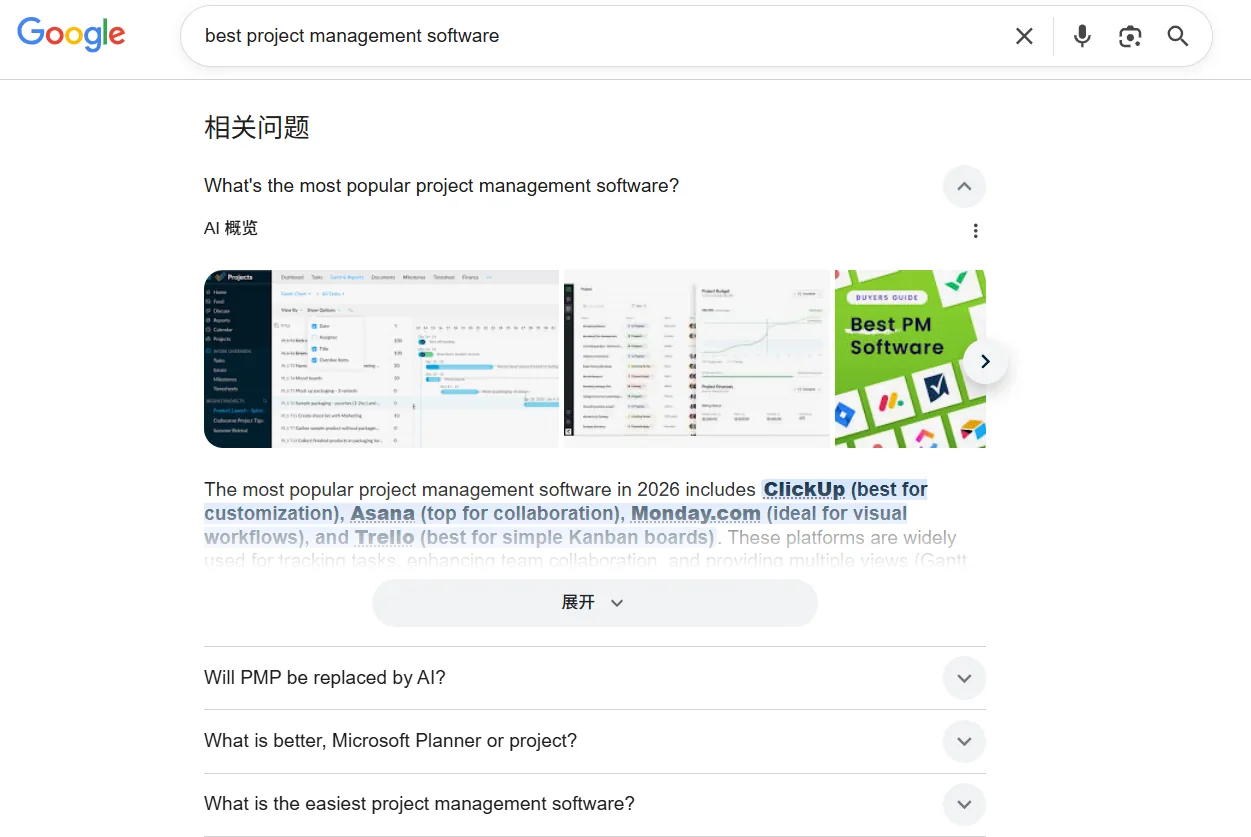
Many people talk about "increasing mention rate," but they don't specify which one. I suggest breaking the metrics down into three:
- AI Overview Mention Rate = Number of keywords in the target keywords that AI Overview mentions our brand/product ÷ Total number of target keywords.
- AI Overview Citation Rate = Number of keywords in AI Overview that cite our official website URL ÷ Total number of target keywords.
- AI Overview Positive Mention Rate = Number of keywords in AI Overview that provide a positive description of our brand ÷ Total number of keywords mentioned.
These three metrics answer three questions: a) When users search for related questions, will AI mention us? b) Will AI cite our own content? c) When AI mentions us, is it helping us build trust?
III. PAA is the best "problem map"
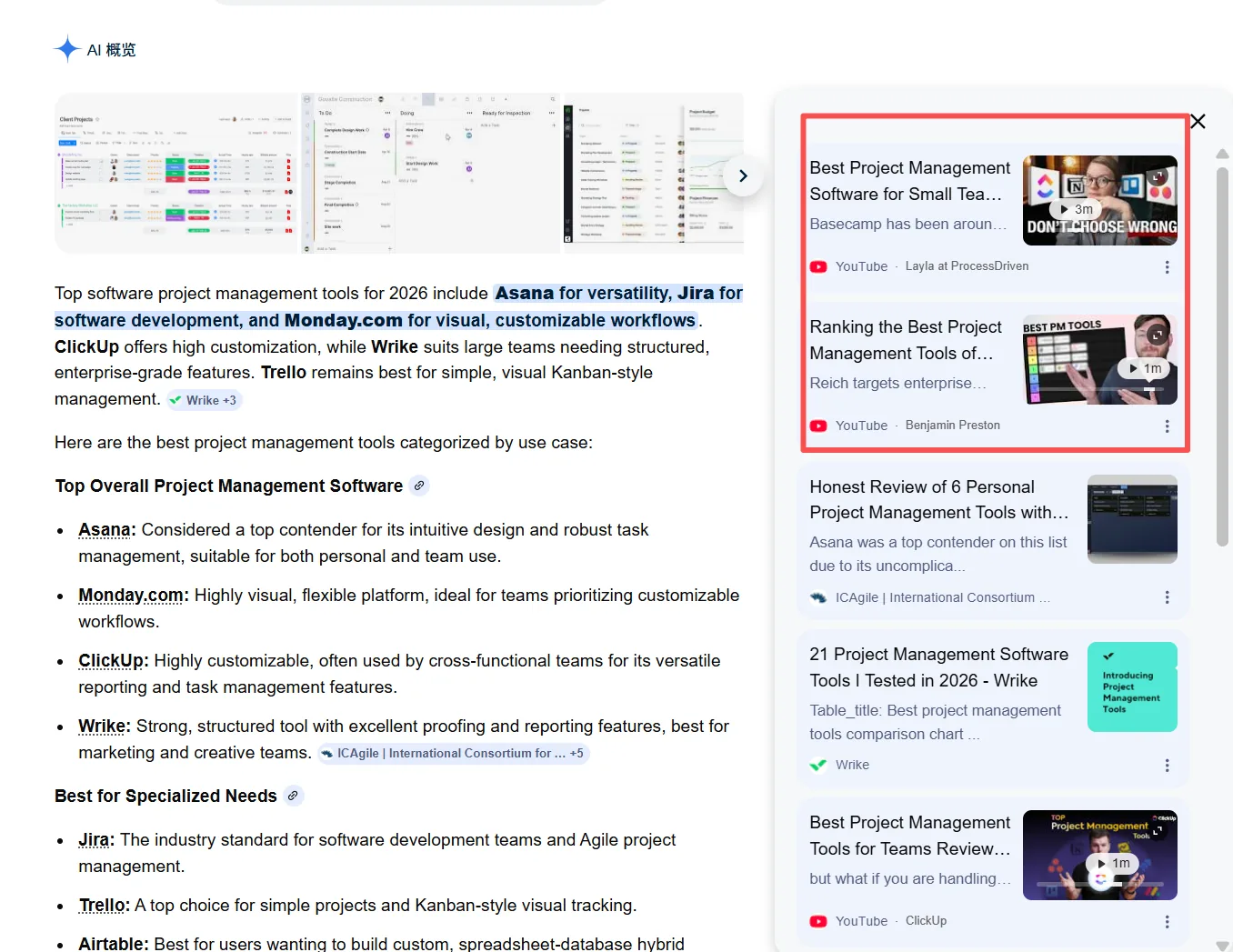
People Also Ask (PAA) is a perfect topic pool for AI Overviews. The reason is simple: PAA is essentially a collection of real user questions that Google has identified, reflecting what users will continue to care about around a particular keyword—price, comparisons, applicable scenarios, advantages and disadvantages, alternatives, usage methods, etc.
When generating answers, Google AI Overview doesn't just understand a single keyword; instead, it breaks down the question into multiple related sub-questions based on the user's intent. This is highly consistent with the logic of PAA. Therefore, PAA is not simply FAQ material, but a very important "question map" in GEO content planning.
For example, if the core keyword is "best project management software", the PAA might include questions like: "Which project management software is best for small teams?", "What is the easiest project management tool to use?", and "How much does project management software cost?". These questions correspond to the user's actual decision-making process: first, learn about it; then, compare it; then, determine if it suits them; and finally, they may convert.
IV. PAA cannot be copied verbatim; topic clustering must be performed.
Classifying PAA issues into a complete content cluster can be divided into three layers:
| hierarchy | Content type | Example |
|---|---|---|
| First layer: Core issues | Answer the main question directly | How to choose a CRM suitable for a small team? |
| Second layer: Auxiliary issues | Comparison, price, differences | How much does a CRM cost? What are the differences between a CRM and sales management software? |
| Third layer: FAQ questions | Long Tail Decision-Making Questions | Do small businesses need CRM? |
In this way, instead of answering questions piecemeal, we are building a GEO content asset that covers the full range of user intent.
V. What kind of content is more likely to be cited by AI Overview?
AI Overview prefers to cite content that is clearly structured, provides direct answers, offers credible information, and provides comprehensive coverage. Therefore, each page should ideally have the following structure:
- Start by giving a direct answer , and it's best to state the core conclusion within 40-80 words;
- The different sub-problems are broken down using subheadings .
- Important information is presented using tables, lists, steps, and comparison modules ;
- When it comes to matters requiring judgment, provide the criteria rather than just the conclusion ;
- A FAQ is added at the bottom of the page, covering long-tail questions in PAA, Autocomplete, and Related Searches;
- If you have data, case studies, product screenshots, expert opinions, or practical experience, you should also include them to enhance credibility.
VI. This needs to be done both inside and outside the station.
Improving AI Overview mentions cannot rely solely on official website content. AI search integrates multiple sources, so both on-site and off-site strategies must be implemented.
1. On the website itself , the following should be prioritized for development: category pages, product comparison pages, competitor alternative pages, industry solution pages, pricing pages, case studies, FAQ Hub, data reports, and white papers.
2. Externally , we need to encourage more credible third-party mentions:
- Industry media reports
- Evaluation website inclusion
- Partner Page
- YouTube video introduction
- Reddit, Quora, forum discussions
- Ranking articles
- Expert interviews and podcast content
If our brand appears in AI Overview across different sources, and the context is positive, clear, and consistent, the probability of it being mentioned will naturally increase. Therefore, what we need to do is not simply "write more articles," but rather build a content system around real user questions that AI can understand, cite, and recommend.
Frequently Asked Questions (FAQ)
Q1: AI Overview What is the relationship between mention rate and traditional ranking?
The two are related but not equivalent. A higher ranking helps AI find your content, but whether AI cites it depends on whether the content directly answers the question, whether it is structured, and whether it has third-party corroboration.
Q2: Do all the questions in PAA need to be written as articles?
It's not necessary to write it all at once. First, cluster it in three layers: "core - auxiliary - FAQ". Prioritize covering core issues and issues with strong conversion intent, and then use the FAQ page to support long tails.
Q3: Will giving the answer directly in the first 40-80 words of the page affect SEO?
No. The direct answer is that "Featured Summary" is a user-friendly term that serves both AI Overview and curated summaries for traditional search, achieving two goals at once.
Q4: Is it better to have more mentions from external third parties?
Prioritize quality over quantity. A few authoritative, positive, and consistent mentions are better than dozens of low-quality or contradictory ones. Be especially wary of self-answered questions and inflated metrics.
Q5: What if a small team doesn't have the resources to create a white paper and data report?
Start with what you can do: first, solidify your category pages, comparison pages, and FAQ Hub, then gradually add case studies and expert opinions. For external resources, start with low-cost channels such as Reddit and industry forums.
Q6: How do I monitor AI Overview mentions?
Using brand keywords, product category keywords, and region keywords, regularly check Google searches manually or using tools to see if the AI Overview mentions you, cites your official website, and uses positive wording. Record changes in these three rates.
Q7: Are the optimization methods for AI Overview and ChatGPT / Perplexity the same?
The underlying logic is consistent (clear, credible, and citationable), but the source preferences differ: AIO favors Google-indexed web pages, while ChatGPT/Perplexity relies more on real-time retrieval and third-party context. It is recommended to adapt the same set of content assets to multiple platforms.
Q8: How long will it take to see a change in AIO mention rate?
It depends on the site's foundation and content investment. Initial signs typically appear in 3–6 months, and more stable mentions form in 6–12 months. Treat it as an asset to be built, rather than a one-time investment.
Related Reading
- [Conclusions after completing 30 GEO projects? How long does it take to see results, and what's the correct approach?] ( https://www.ctmon.com/newsdetail/geo-30-projects-conclusion.html) )
- [Why must a B2B export website adapt to AI search in 2026?] ( https://www.ctmon.com/newsdetail/waimao-dulizhan-weihe-bixu-shipei-ai-sousuo.html)
- [A business website has traffic but no inquiries; what's the problem?] ( https://www.ctmon.com/newsdetail/waimao-dulizhan-liuliang-xunpan.html) )
- [What exactly is a B2B export website? Many factories misunderstand it from the very beginning.]( https://www.ctmon.com/newsdetail/what-is-independent-website.html)
About this article
This article was written by the CTMON overseas digital marketing team . Founded in 2013, CTMON is a digital marketing service provider specializing in B2B foreign trade enterprises, offering GEO and B2B export website content creation and overseas digital marketing services to industrial equipment and manufacturing companies.
Data Scope Explanation : The metric definitions (mention rate/citation rate/positive mention rate) and PAA/AI Overview mechanisms described in this article are based on publicly available product documentation and industry-standard methods, used to illustrate operational paths. The search interface screenshots in this article are public examples, used only for methodology illustration and do not represent the effects generated by our company. CTMON has accumulated implemented projects in the manufacturing GEO field, primarily in packaging machinery, industrial components, and electronic equipment, mainly targeting the European, American, and Southeast Asian markets. The effectiveness period is an observational range, not a committed value.
Connect the "three rates" to the fifth level of effect.
The mention rate, citation rate, and positive mention rate defined above actually correspond to two key layers in measuring GEO performance:
- Coverage layer : In your target question, does the AI mention you, and does it cite the official website (corresponding to mention rate and citation rate)?
- Impact layer : Whether the AI uses positive language when mentioning you, and whether it associates you with specific abilities (corresponding to positive mention rate).
By continuously recording the signals from these two layers, we can trace the cause from "whether it was seen" all the way to "how it was described"—this is the minimum feasible monitoring framework for determining whether AIO optimization is effective.

What does international social media management service include? 2026 Guide to Social Media Management for Export Businesses
2026-10-28

How to write a WordPress product page that will make overseas buyers want to send inquiries?
2026-10-28

How to fix WordPress form emails not sending: Practical WP Mail SMTP configuration
2026-10-27

Are foreign trade promotion companies reliable? Six key criteria for businesses to judge promotion service providers in 2026.
2026-10-26

How do I set up an email account for export businesses? How can I configure it to avoid it ending up in the spam/junk mail folder?
2026-10-26
Related Articles
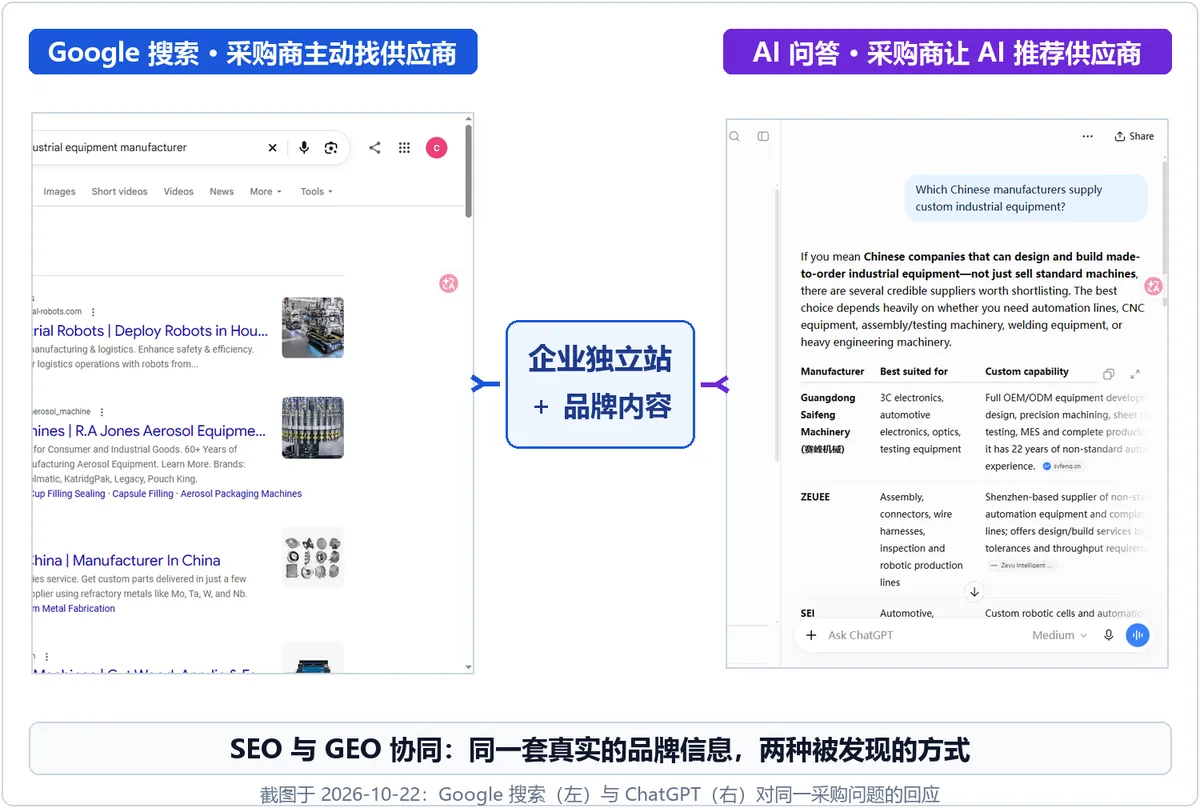
During the Canton Fair, how can export businesses optimize their GEO (Google App Store) to make it easier for AI to discover and recommend their brands?
Which GEO optimization company offers the best service? A guide to selecting and evaluating GEO service providers in 2026.

For GEO (Genomics Oriented to Enterprises in the Industrial Equipment Industry): Is Supporting Evidence More Important, or Are Inquiries More Important? (2026 Edition)

How to optimize product pages for B2B export websites using Geometry? Making AI search more effective (2026 version)

Using Reddit for overseas GEO content mentions? Its real value lies in being a "source of real user signals" (2026 version).

